


























Across the hospitality sector, a major shift is underway. Payment companies are buying up EPoS providers, with some EPoS providers now trying to build their own payment rails – a move that raises more questions than answers. The market is filled with promises of all-in-one simplicity, where blending your tech stack with your transaction fees is positioned as the fastest route to operational ease.
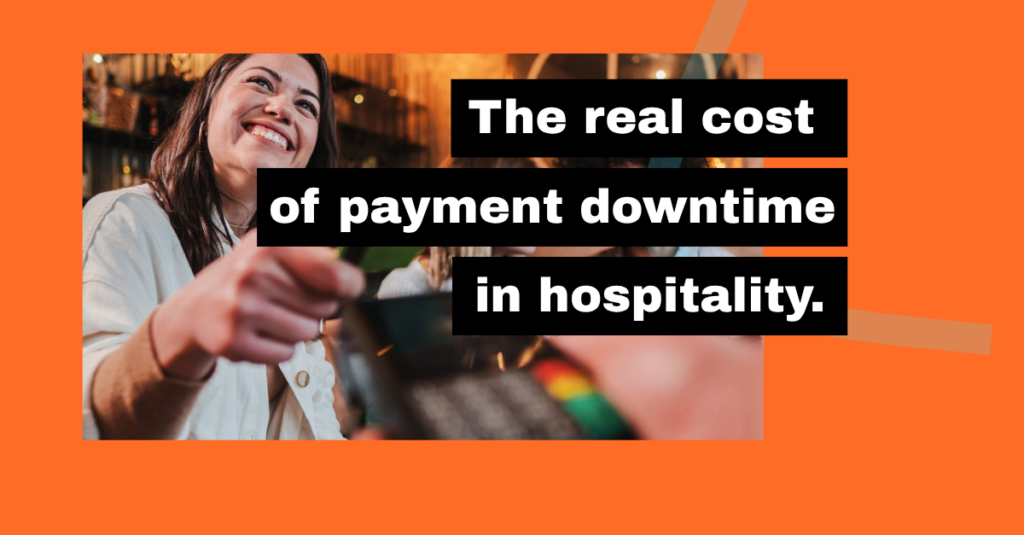
But while the industry has spent years in a race to the bottom on rates, smart operators are waking up to a different reality. The highest cost in your business is not a 0.1% difference in transaction fees. It is the moment your payment system goes down during a peak service window.
The 20-minute nightmare
The reality on the floor is simple. As one operator said:
“If your payment solution goes down for ten or twenty minutes… you are making zero money. That can be quite a costly affair, especially when you are scaling up to 15, 20, or 30 venues.”
A short outage is not a minor inconvenience. It is a complete operational freeze. The kitchen slows, the bar backs up, and the atmosphere in the venue shifts instantly. Guests become frustrated, staff become stressed, and the trust you have worked so very hard to build evaporates. The financial loss is immediate, but the reputational damage lasts far longer.
Beyond the transaction: The power of the stack
Payments used to be a small, functional part of the guest journey. Today, they are the centre of the hospitality ecosystem. When you stop looking at payments in isolation and start looking at them as part of your integrated environment, everything changes.
By blending payments with your stock control, EPoS, and reporting, you are not just taking money; you are capturing data. Whether it is a QR code at the table, an online order, or a checkout at a hotel reception, it should all be a single, seamless transaction path.
But here’s the truth operators rarely hear: even the best in class stack is only as good as its ability to stay online. Newer, untested platforms often look slick on the surface but struggle under real-world pressure. That’s where support, resilience, and operational maturity matter – and where NFS has built its reputation.
The goal is not just to take a payment; it’s to use that payment to understand guest behaviour, protect your margins, and keep the rhythm of your business perfectly in sync.
“I cannot afford the interruption”
We hear it all the time from busy operators: “I know I need to switch, but I have multiple sites, and I cannot afford the downtime of a transition.”
The real risk isn’t the transition – it’s the ongoing cost of staying with a provider that values a low rate over a stable connection. Every minute of downtime is a minute of zero revenue. Today, hospitality ecosystems are built for resilience, ensuring that when you do make the move, you’re protecting your bottom line for the long haul.
The NFS perspective: Partnering for resilience
At NFS, we have seen the race to the bottom first-hand, and we have seen who it hurts the most – the operator.
We don’t believe in just selling you a terminal or bundling you into a one‑size‑fits‑all package. We believe in building a resilient hospitality ecosystem that stays standing when the pressure is on. Our approach is about more than just a rate; it is about making sure that from the first order to the final bill, your tech is a silent partner, not a bottleneck.
In a competitive landscape, resilience is your greatest strategic advantage – because at the end of the day, the most expensive payment system is the one that doesn’t work.
With NFS, you don’t just get technology – you get a partner invested in your success.