


















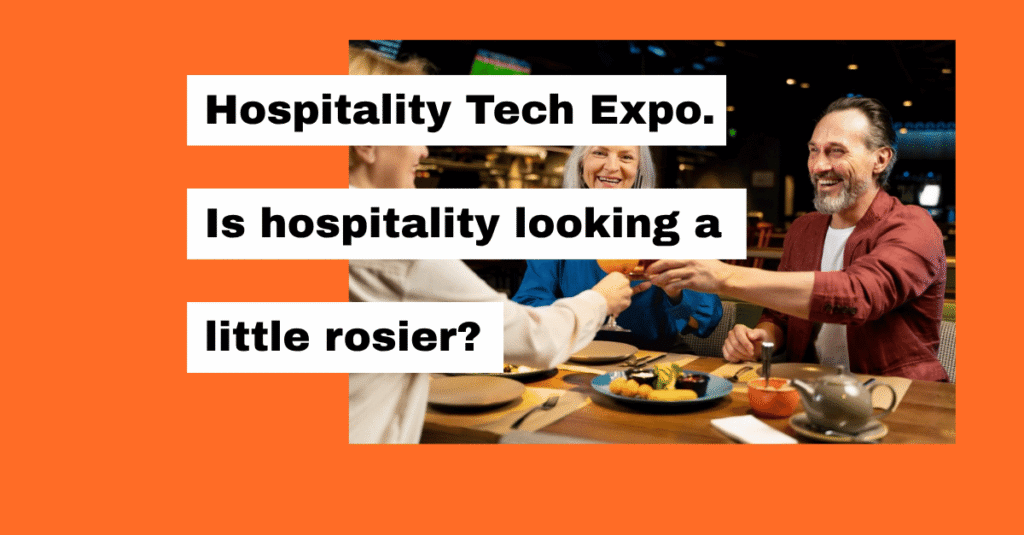
For the first time in a while, I found myself having more conversations about opportunity than survival at last week’s Hospitality Tech Expo.
The challenges facing our industry are well documented, and nobody I met was pretending they’ve gone away, but there was a noticeable shift in tone. Operators seemed more prepared to talk about where their businesses were heading and how they planned to get there, rather than simply the latest challenge facing the industry.
Confidence is returning, albeit cautiously
Nobody was talking about throwing caution to the wind. Hospitality remains a challenging environment, and every investment decision is still scrutinised carefully. What felt different was the willingness to think beyond the immediate pressures we are facing.
In recent years, many operator conversations have focused on navigating and managing costs and protecting profitability while continuing to run the business effectively. Those conversations are still happening, but they no longer seem to be the only conversations taking place. More operators were willing to discuss where they wanted their businesses to be a year or two from now, and what they needed to do to get there.
Value is becoming more important than price
One theme surfaced repeatedly during my discussions throughout the event: cost.
Cost remains important and it always will, but what interested me was how quickly many of those conversations moved beyond price and towards value.
Operators spoke about reliability and support, and wanting partners that understand their business, and can help them achieve their goals.
The cheapest option is not always the most attractive if it creates additional work, causes operational challenges, or fails to deliver when support is needed most.
Increasingly, businesses seem to be evaluating technology and services through a wider lens, thinking about what they gain, not just what they spend. For me, that’s an encouraging trend because it moves the conversation away from products and towards outcomes.
Good partnerships are hard to replace
Another observation that stuck with me was the value operators place on relationships. The most interesting conversations I had were around operational challenges and what businesses were trying to achieve.
Every hospitality operation is different; the pressures facing an independent café are not the same as those facing a busy pub group or restaurant operator, and understanding those differences matters.
At NFS, we have always believed that solutions should follow understanding. The more time you spend listening, the more likely you are to recommend something that really helps, and that approach still appears to align strongly with operators.
A practical view of AI
It would be impossible to write about a hospitality tech event without mentioning AI. As you would expect, it featured in plenty of conversations, although what interested me most was the way operators were talking about it. Discussions centred on where AI could make everyday operations easier to manage and reduce the administrative burden placed on teams. The focus was on practical applications that support day-to-day operations.
Hospitality remains a people-driven industry, and we know tech adds the greatest value when it supports those people and helps them focus more of their time on customers.
So, is hospitality looking a little rosier?
I think it just might be. The sector still faces challenges, and we can’t underestimate them, but I left the event feeling encouraged.
My conversations felt more forward-looking than they have for some time. Businesses appear increasingly willing to invest when they can see genuine value. The importance of trust hasn’t changed, and neither has the value of working with people who understand the realities of hospitality. Tech is attracting attention where it solves a problem, not where it creates another one.
Most importantly, more operators seemed willing to talk about where they’re heading rather than simply where they’ve been, and after the last few years, that’s a positive sign for the industry.