
















If it ain’t broke, why fix it? When it comes to hospitality EPOS, if a system is familiar, reliable, and gets the job done, there’s little appetite to change it. What is changing, however, is the pressure hospitality businesses face.
Rising costs, increasing customer expectations, ongoing staffing challenges, and tightening margins are forcing operators to look more closely at every part of their operation. As a result, many are starting to ask a different question.
“Is our technology helping us meet the challenges facing the business today?”
The conversation has changed
Only a few years ago, technology conversations often centred around functionality. What can it do? What features does it have? How does it compare to what we have today? Those questions haven’t disappeared, but they no longer dominate conversations.
Instead, operators are more focused on outcomes. Can technology help control costs? Can it support teams more effectively? Can it improve visibility across the business? Can it create a better customer experience? Perhaps most importantly, can it help the business grow without adding unnecessary complexity?
Discussions have shifted from what technology can do to what it can help a hospitality business achieve.
Making every pound work harder
Cost pressures are one of the biggest challenges facing hospitality operators today. Margins remain under pressure, labour costs have risen, and operators are under constant pressure to do more with less, which is why visibility from your hospitality EPOS has become so important.
Whether it’s understanding menu performance, monitoring stock levels, identifying opportunities to improve margins, or gaining a clearer picture of day-to-day trading, operators want access to meaningful information that helps them make better decisions.
I’m also hearing more questions around visibility. Operators want a clearer picture of what’s happening across the business, whether that’s stock levels, menu performance, margins, or day-to-day trading. They’re not necessarily looking for more systems; they’re looking to get more value from the information they already have.
“NFS does help us a lot with back office, understanding our percentage of staff labour costs, our percentages of goods against sales and how to judge staff and labour for each night based on various weeks, months, and years of trading. All that gives us a better idea on how to run our business on a day-to-day basis.”
Steve Lewis
Efficiency without compromise
Staffing challenges have become a fact of life for many hospitality businesses, making operational efficiency more important than ever.
The most successful operators aren’t simply asking teams to work harder; they’re looking for ways to remove unnecessary effort from the day-to-day operation.
Simple tasks should be straightforward, and new starters should feel confident using the systems quickly. Teams shouldn’t be relying on workarounds or duplicate processes just to get through a busy shift, and managers shouldn’t be spending valuable time dealing with avoidable frustrations.
The best technology is the technology that barely gets noticed; it simply helps teams do their jobs more effectively.
Customer experience drives loyalty
Guests and customers have more choices than ever before. Whether they’re booking a hotel stay, visiting a restaurant, or stopping for a coffee, they expect the experience to be smooth, efficient, and consistent. Technology doesn’t create loyalty on its own; it does, however, support the experiences that encourage people to return.
Reducing friction, improving speed of service, supporting staff, and helping businesses deliver consistently positive experiences all play an important role in building loyalty over time. Customers don’t come back because a venue has great technology. They come back because it consistently delivers a great experience.
More than a hospitality EPOS system
I’ve sat through plenty of technology demonstrations over the years, and they’re often impressive, but the conversations that happen afterwards are usually much more interesting.
Operators are rarely discussing features alone. They’re asking whether the system will fit their business, whether teams will use it, whether support will be there when it’s needed, and whether the technology can evolve alongside the operation as it grows.
Hospitality businesses are looking beyond software alone. They want confidence that their systems are working together, and that support is available when needed. That’s where the conversation often moves beyond technology and towards partnership.
Helping hospitality businesses thrive
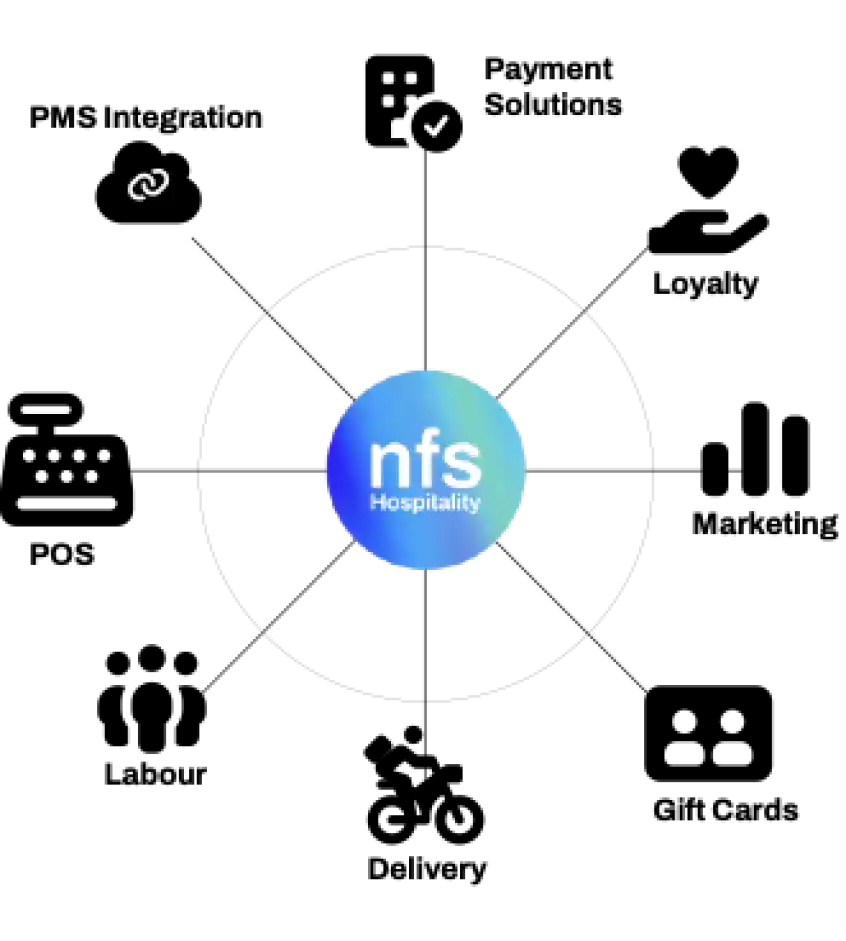
At NFS, we’ve always believed that technology is only part of the picture. The most successful hospitality businesses aren’t simply investing in software. They’re investing in the right technology, the right partners, and the right support to help them achieve their goals.
Whether the priority is managing costs, improving efficiency, strengthening customer loyalty, enhancing the customer experience, or supporting future growth, technology should be helping operators move forward rather than creating additional complexity.
Operators also want confidence that the technology they invest in today can support the business tomorrow, whether that means opening new sites, introducing new services, or adapting to changing customer expectations.
Because at the end of the day, nobody gets into hospitality because they’re passionate about technology. They do it because they’re passionate about people, service, and creating great experiences. The best technology simply helps them focus on exactly that.