


























There is a saying I have always found painfully accurate in this industry:
“The bitterness of poor service remains long after the sweetness of a cheap price is forgotten.”
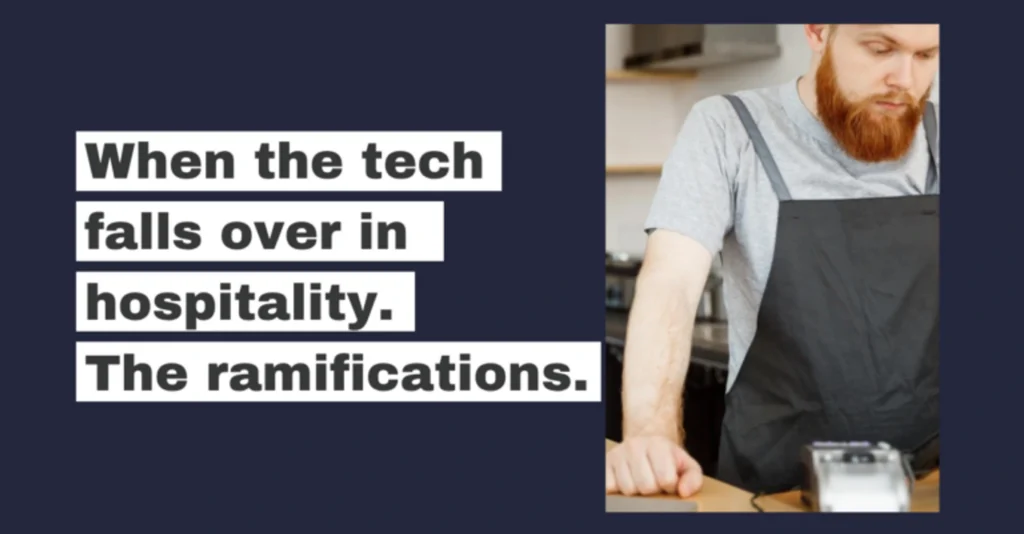
People usually quote it when talking about front‑of‑house behaviour, but after years working in hospitality technology, I have seen how brutally it applies to the systems that keep service alive. Modern tech is reliable, until the moment it is not – and when it fails, the collapse is instant and very public. One second, the room is humming, and the next, you can’t take payments, orders die mid‑flow, screens freeze, and guests look up in confusion. Staff stop dead, the air snaps tight, and the whole operation slams to a halt in front of a packed room. In hospitality, there is nowhere to hide. When everything stops at once, it is a disaster unfolding in real time.
When the room suddenly feels different
Picture any busy hospitality space: a bar, café, restaurant, lounge, terrace, or quick service counter. Guests are arriving, orders are moving cleanly through the POS, drinks are reaching tables quickly, and the kitchen display is keeping chefs aligned. Everything feels smooth, confident, and under control.
Then something shifts. A terminal stops responding, a payment fails, a kitchen screen freezes, or a handheld device drops its connection. It may only last seconds, but in hospitality, that is all it takes for the atmosphere to change. Staff hesitate, guests notice, and the room feels different in a way no one wants.
The issue is technical, but the fallout is human
A device can be reset, and a system can be rebooted, but the impact on the guest experience is not so easily undone. You see it in slower service, in staff who suddenly look unsure, in guests who feel ignored, and in the confidence that drains from the room. You see it in reduced spending and in reviews that focus on the experience rather than the explanation.
“Hospitality is emotional – people remember how a place made them feel.”
A brief technical issue can ripple through an entire evening, affecting revenue, reputation, and team morale long after the system is back online.
Support is what separates a blip from a blow
Technology matters, but what matters more is what happens when something goes wrong. This is where the difference between a low-cost, multi-vendor setup and a fully supported ecosystem becomes clear. When something breaks, you do not want suppliers pointing fingers. You want one partner who owns the issue and fixes it fast.
Clients often tell us that the biggest reassurance is simply knowing someone will answer the phone when they need help.
As one put it,
“They are always there for you, they never let us down, and they have never failed to answer my phone call.” Another valued “the human interaction with the team… the friendly relationship rather than a desperate plea to sell something.”
Others highlight how we listen and respond.
One client said,
“The relationship was born out of NFS listening and choosing appropriate ways of delivering solutions without over-promising or over-extending themselves.” Another added, “NFS installs the software so they can tell you how to use it, and it helps a business immensely because they can throw ideas together.”
That is what happens when your provider behaves like a partner, not a vendor. We are invested in your success, and that level of support keeps service moving when it matters most.
Your tech stack is an ecosystem
Hospitality technology is an ecosystem: POS, payments, kitchen management, stock, reservations, loyalty, and reporting – each part relies on the others. When one element falters, the whole operation feels it. This is why the partner behind the technology matters as much as the technology itself.
The simple truth
Most issues are not caused by the systems themselves. They come from the world around them: a contractor cutting a cable, a storm knocking out the network, a power surge, or a supplier outage you cannot predict. When those moments hit, the question is not whether your tech is good enough. It is whether your partner is ready to step in and keep your operation moving.
With the right partner, even the unexpected becomes manageable. Without one, the smallest disruption can bring service to a standstill.
Is your tech partner ready for 6.00 pm on a Friday evening?