Walk into almost any hotel today, and you’ll see a familiar scene – a POS terminal fixed to the bar, another in the restaurant, and a workstation tucked behind the lounge. These are the last traces of the till era, still bolted to counters even as the hotel around them has moved on. Staff move between them constantly, weaving through service like they’re following choreography written years ago. Guests wait to sign bills or confirm room charges, and managers try to make sense of what’s happening across the property using systems that don’t speak to each other.
Meanwhile, the guest journey has changed dramatically. A guest might start with breakfast, grab a coffee in the lobby, order lunch in a meeting room, enjoy drinks on the terrace, dine in the brasserie, and finish the night with room service. They move freely, and they expect the hotel to move with them.
“The hotel POS isn’t dying. It’s simply outgrowing the role it used to play.”
The age of the till has passed, and hotels are stepping into the era of the connected ecosystem. The POS is no longer a counter‑bound device; it is becoming the engine that holds the modern hotel together.
The real issue: hotel technology built in silos
For years, hotels built their technology one system at a time. A PMS for rooms, a POS for F&B, a separate platform for events, another for loyalty, another for payments, and another for inventory. Each system worked well enough on its own, but none were designed to work together.
The result is something every hotelier recognises – duplicated work, repeated guest questions, slow handovers between departments, and a sense that technology is adding friction rather than removing it. Guests don’t care which system does what. They don’t see the plumbing behind the scenes.
“Guests don’t see systems; they see one hotel. And they expect it to behave like one.”
That expectation is reshaping the role of the POS more than any hardware trend ever could.
The shift: from till to hotel-wide operational engine
The POS is no longer just the place where orders are keyed in; it is no longer a till at all. It has become the connective tissue of the hotel ecosystem, the system that understands guest preferences, tracks spending, connects to the PMS, handles payments, and gives managers a real-time view of what is happening. It is the difference between a tool and a nervous system.
A modern POS can quietly orchestrate the flow of service, sending orders to the right prep station, reducing walking time for staff, and smoothing out room-charge workflows so they feel effortless rather than awkward. It can help managers spot issues before they escalate, whether that is an understaffed bar, a meeting room running ahead of schedule, or a menu item that is suddenly trending.
When the POS is connected properly, it becomes the foundation for practical AI, helping teams make better decisions by forecasting demand, highlighting guest preferences, guiding purchasing decisions, and getting new staff up to speed faster.
“This isn’t the death of the POS. It’s the evolution of it, from a till on a counter to the intelligent engine that quietly powers the entire hotel.”
Why this evolution is happening now
Hotels are being pushed forward by forces that can’t be ignored. Guests expect to order, pay, and personalise their stay on their own terms, without losing the human touch. Labour is harder to find and more expensive to retain, F&B margins are under pressure, and managers need real-time visibility, not yesterday’s reports.
At the same time, the old idea that the PMS should do everything is fading. Hotels are moving toward ecosystems, choosing best-in-class systems that integrate cleanly rather than relying on one platform that tries to be all things to all departments. The till era was built on single systems; the ecosystem era depends on many systems working as one. In that world, the POS becomes the anchor – the system that quietly keeps everything connected.
How hotels are responding
The hotels that are getting this right aren’t simply replacing hardware; they’re rethinking how their teams work. Mobile devices are replacing fixed-terminal bottlenecks so staff can take orders anywhere without breaking the flow of service. Guests can pay how they want, when they want. Data is being used to personalise service in ways that feel natural rather than intrusive. The technology doesn’t replace hospitality; it gives staff more time to deliver it.
Real-time data and intelligent insight
One of the biggest shifts is the move from reactive reporting to real-time insight. When the POS is connected to the PMS, inventory, payments, and workforce systems, managers can finally see what is happening as it happens. Margins update automatically as ingredient costs change, server performance becomes visible in the moment, menu items can be adjusted based on live demand, stock can be reordered before it runs out, and labour can be matched to forecasted occupancy and outlet activity. This data helps hotels make better decisions faster.
Integration as a competitive edge
Hotels used to purchase systems based on features, but now they buy based on how well those systems integrate. A POS that doesn’t talk to the PMS creates friction, a POS that doesn’t talk to payments creates errors, and a POS that doesn’t talk to loyalty or events creates operational blind spots.
The hotels that win are the ones whose systems behave like one ecosystem rather than a collection of disconnected tools. This is where supplier collaboration matters, and it is where NFS has built its reputation.
Why NFS leads this shift
Hotels don’t need another system; they need a partner who understands how their operation really works, including the pressure points, the guest expectations, the financial realities, and the rhythm of service that no piece of software can see on its own.
NFS has spent years inside hotel operations, not just selling technology but shaping it around the way real teams work, communicate, and serve. We don’t arrive with a product pitch. We arrive with questions, curiosity, and a commitment to building an ecosystem that fits the hotel.
With NFS, you don’t just get technology – you get a partner invested in your success.
Looking ahead
The future hotel POS won’t sit on a counter. It won’t be something guests notice or staff think about. It will sit quietly at the centre of the ecosystem, powering every interaction, every decision, and every moment of service.
As Luis DeSouza, CEO of NFS, says:
“The till may be dead, but the hotel tech ecosystem it gave rise to is now indispensable. The hotels that embrace this shift will deliver the most seamless, most human, and most memorable guest experiences both now, and in the years ahead.”
“And this will deliver lower operating costs and staff better equipped to focus on the guest.”
The hidden stress points that shape the guest experience
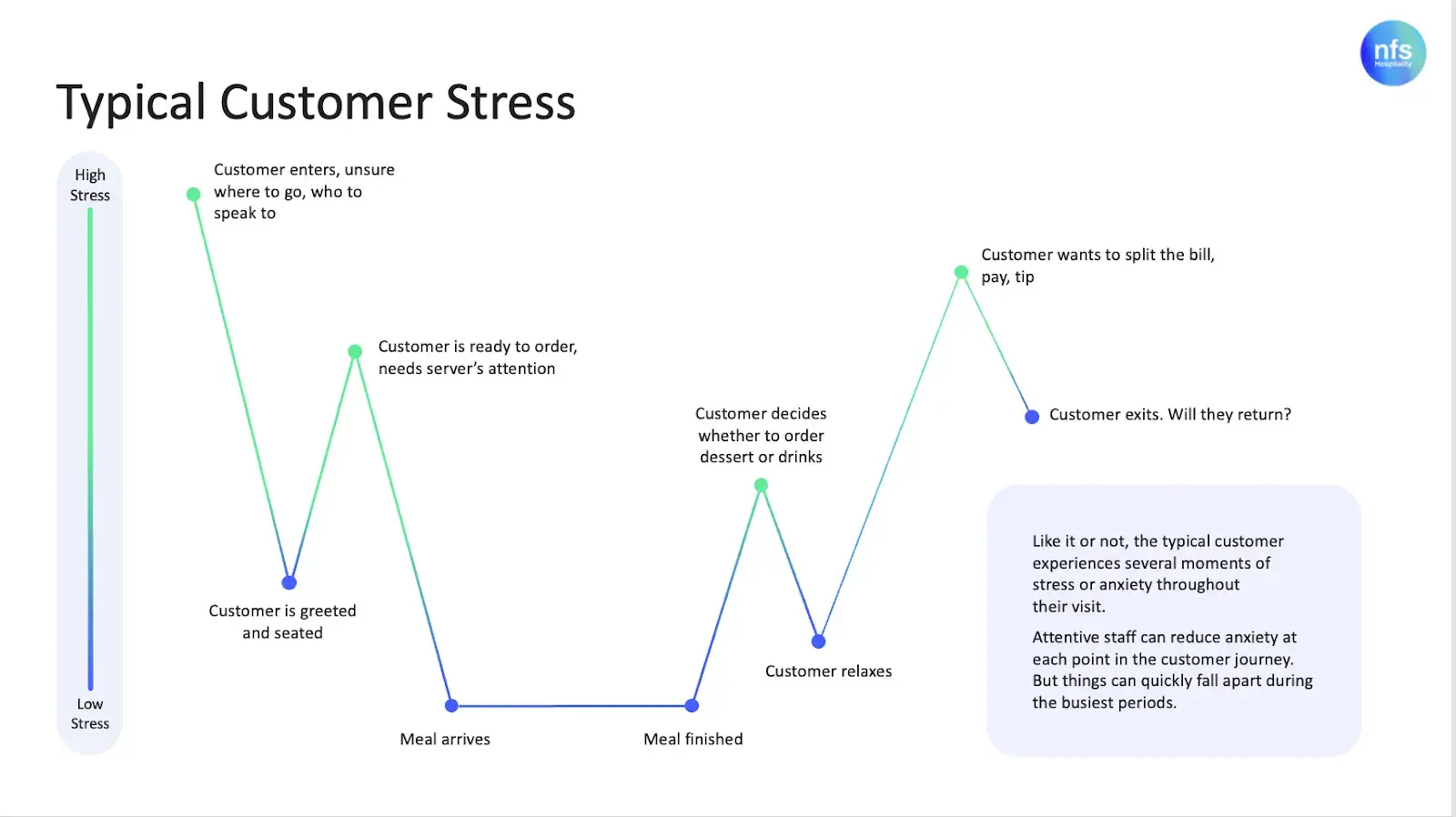
You walk into a restaurant on a busy Saturday night. You’re hungry, tired, and looking for a relaxed experience. But as you step inside, you’re not sure where to go or who you should speak to. That little moment of uncertainty sparks an immediate rise in stress, a feeling you recognise instantly, even if you rarely acknowledge it.
You’re shown to your table and the tension eases. When you’re ready to order and no one’s nearby, it creeps back in. Your food arrives and you relax, until you fancy another drink or dessert and the wait starts again. Then comes the bill – the stress of splitting it, tipping, and waiting for the card machine. That final spike hits just as you hoped the night would end smoothly. Only when you step outside does the pressure lift. These hidden stress points shape how you feel about the entire experience, often more than the food itself. These moments feel emotional to guests, but they’re operational at their core.
“The guest experience begins long before the food arrives.”
Why Stress Points Happen
Guests feel stress when the operation behind the scenes is under pressure. Slow ordering, missing items, overwhelmed staff, and clunky payment processes all stem from one issue – disconnected systems. These moments aren’t about the food. They’re about the systems supporting the team. When technology isn’t connected, everything slows down, and guests feel the impact immediately. This isn’t just a technology problem – it’s a sign that the wider hospitality ecosystem isn’t working in harmony.
“A smooth service creates a calmer, more enjoyable experience once guests walk through the door.”
Joining Up the Journey
Whether guests walk in or book ahead, their emotional journey starts early. When EPOS is connected to a smart booking system, the team knows who’s arriving, any dietary needs, and special occasions before the guest even sits down. It’s not extra tech; it’s a joined‑up journey that reduces stress and helps guests feel recognised and respected. This is what a true hospitality ecosystem looks like – booking, EPOS, payments, and operations all connected, all sharing information, and all working together instead of in silos.
“A booking is not just a transaction. It is the first chapter of the guest experience and journey.”
How EPOS Smooths the Journey
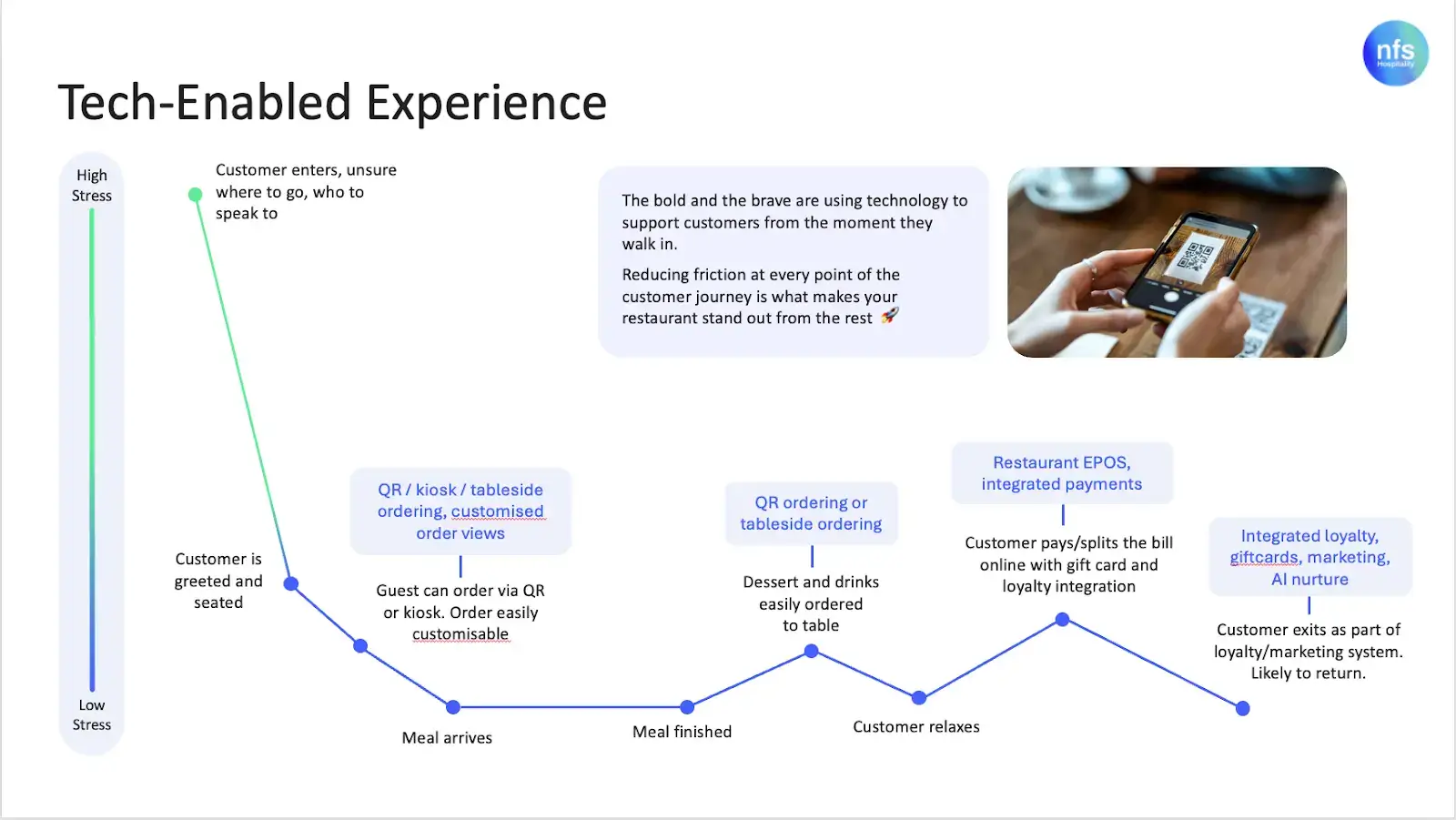
That first click on the EPOS is where the guest experience truly begins, and everything until the first bite is shaped by how smoothly that technology works.
A Confident Start
EPOS gives staff instant visibility of table status, so guests can be greeted and seated quickly, removing the first stress spike.
Ordering Without Uncertainty
Guests can order at the table, via app, or by scanning a QR code – and traditional ordering still fits seamlessly into the same ecosystem. However guests choose to order, there’s no waiting, and no wondering if the order was captured correctly.
A Kitchen That Flows
Orders go straight to the kitchen with no lost notes, no misread handwriting, no bottlenecks. Food arrives on time, and stress levels drop.
Drinks and Desserts Without Delay
Guests can browse menus and reorder without waiting for a server, or choose traditional service – either way, the mid-meal stress spike disappears.
Payment Without Pressure
QR code payments, split bills, gift cards, and loyalty points are all handled digitally – but traditional payments still fit seamlessly into the Hospitality ecosystem. No waiting, no awkwardness, no stress.
When the pressure eases for guests, it eases for staff too. A connected EPOS removes the frantic back‑and‑forth, the guesswork, and the bottlenecks that drain energy during service. Teams feel more in control, more supported, and more able to focus on hospitality rather than firefighting. And when staff morale rises, the atmosphere of the venue rises with it.
“The last impression is as important as the first; a seamless goodbye keeps guests coming back.”
The Experience Guests Remember
When EPOS works quietly in the background, guests feel:
calm
confident
in control
respected
And that emotional ease leads to better reviews, higher spend, and more return visits.
Why NFS Hospitality? Because it’s never just about providing EPOS, it’s about partnership
Every venue has its own challenges and pressure points. That’s why NFS works closely with operators to understand what really happens on the floor – the bottlenecks, the stress moments, the guest expectations.
Rather than delivering a one-size-fits-all system, NFS focuses on building the right setup with operators, creating an environment that supports teams, fits existing workflows, and strengthens the guest journey from first click to first bite.
At the heart of this approach is a connected hospitality EPoS ecosystem – one designed to support smoother operations, reduce stress points, empower staff, and create consistency across sites. When the ecosystem works, the business works, and guests feel the difference.
This isn’t a transaction. It’s a partnership built around understanding how hospitality really operates and shaping the technology around it.
Is there a hidden formula for sustained growth in hospitality? Successful leaders know it – and our big-brand NFS Hospitality clients have been letting us into their secrets. We work hand in hand with industry leaders including Dishoom, Marugame Udon, and Cosmo Restaurants, all forging forward in today’s tough climate.
In this guide, we explore exactly what makes these operators so successful – and show how the right technology toolkit can put your business on the same path to growth.
Dishoom’s dramatic success: Authenticity at scale
Dishoom is a striking example of sustained success in the UK dining scene. Since launching its first Irani-style café in 2010, the brand has expanded to 12 restaurants and four Permit Room bars across the UK.
Their recipe for success is a blend of: Compelling storytelling: A brand narrative that resonates deeply with diners The Queue Culture effect: Building anticipation by making queues part of the unique experience Strategic site selection: Expanding carefully into prime, well-chosen locations.
Dishoom always keeps focus on its core strengths, resisting the pull of delivery-only models or franchising to maintain a self-sustaining growth strategy. Now, with backing from LVMH-backed investment firm L Catterton, Dishoom is preparing for international expansion into New York City in 2026.
Powered by technology from NFS
Dishoom is a striking example of sustained success in the UK dining scene. Since launching its first Irani-style café in 2010, the brand has expanded to 12 restaurants and four Permit Room bars across the UK.
As a long-time NFS client, Dishoom’s operations are supported by a comprehensive technology stack centred on the robust and innovative Aloha EPOS system. This provides: Integrated payments and QR code solutions Tools for loyalty and reputation management Actionable operational insights that improve efficiency and guest experience.
Integrated payments and QR code solutions
Tools for loyalty and reputation management
Actionable operational insights that improve efficiency and guest experience.
Recently, Dishoom implemented a new reputation management solution through NFS to amplify its online presence. The results are clear: their Covent Garden branch alone has more than 27,000 Google Reviews, and the new app can generate up to five times as many reviews for the brand – Read Case Study
Another giant in the industry is Marugame Udon, an NFS client whose Digitally-driven strategy has fuelled massive growth across the UK and Europe.
In addition to a best-of-breed restaurant EPOS solution, NFS provides the brand’s loyalty system, which unifies all customer information into an enormously valuable single platform.
Every touchpoint, from tills and wi-fi to email marketing, is connected, giving Marugame Udon a 360-degree view of its guests. This ‘single point of truth’ wipes out the need to enter data into multiple systems – great for operational efficiency and consistency.
This investment in technology has been crucial to the company’s expansion strategy. Marugame Udon UK recently entered a major master franchise agreement with Karali Group, a move designed to accelerate its growth across the UK and Ireland.
This marks a significant transition from a corporate-owned model to a fully franchised approach, underpinned by a scalable technology foundation – Read Case Study
Cosmo Restaurants: Engineered for robust and rapid growth
With an estate of Large buffet restaurants offering multi-national cuisine. Cosmo is engineered for speed and scale. It has ambitious expansion plans – in addition to 21 Cosmo sites, it’s rapidly rolling out its new Smokin’ Hot Buffet & Grill concept.
With Restaurants boasting robot waiters, technology and innovation is at the core of this brand’s offering.
Fulfilling high demand and a requirement for fast table turns, Cosmo’s EPOS solution – Aloha from NFS – Delivers efficiency while enabling strong management of this evolving estate.
Aloha EPOS provides Cosmo with:
Efficient table-side ordering via Aloha Mobile
Integrated and Seamless payment processing
Real-time multi-site management information
The ability for head office to drill down on data to store level – Every aspect of the business can be managed and improved upon.
This winning combination of Expertise, project management and technology enables Cosmo to turn over tables every 90 minutes, and provides solid foundations for further growth, efficiency and increased revenue.
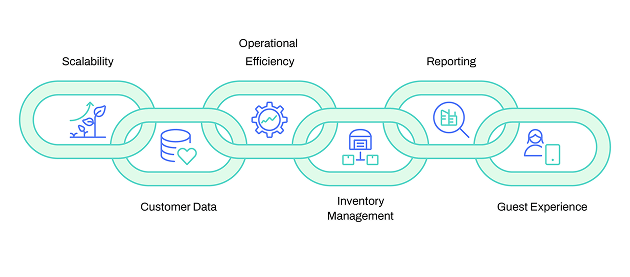
Your Restaurant Growth Checklist: 6 Key Requirements
A modern EPOS is more than a till – it’s the beating heart of your operation. When choosing your system, demand that it delivers on these 6 key requirements:
Scales easily – as you add can easily add tables, sites, or delivery channels
Captures customer data – to fuel loyalty and personalised marketing
Streamlines operations – to reduce errors and speed up service
Tracks inventory in real time – to cut waste and control costs
Provides clear reporting – for smarter, data-driven decisions
Enhances guest experience – with modern ordering and payment options
Takeaways for ambitious operators
The success of Dishoom, Marugame Udon, and Cosmo Restaurants offers a masterclass in modern restaurant growth. Key lessons include:
Defining your growth strategy – Cautious, self-sustained growth can be just as powerful as a rapid, franchise-led model. The key is choosing the most appropriate path for your brand.
Embracing technology – From QR code ordering to integrated loyalty and reputation management, the best systems drive efficiency and guest satisfaction.
Demanding authenticity – Staying true to your brand’s core ethos while you scale is what ensures lasting success and customer loyalty.
Don’t let anything hold you back in your ambitions for your restaurant. The winning formula combines a Clear vision, a commitment to authenticity, and the right technology toolkit – and as our big-grand clients show so conclusively, getting it right adds up success. Even in the most challenging trading conditions.
Ready to build your success story?
If you’re looking to follow in the footsteps of these leading operators, NFS Hospitality is here to help. Our consultative approach ensures you have the technology and Expertise needed to deliver outstanding service and achieve sustainable growth.
Contact us today to start building your growth story
In high-volume restaurants, efficiency is crucially important and can make a huge difference to the bottom line. How quickly you seat guests, take orders, serve food, and complete payments has a direct impact on table turnover, so it’s essential to have streamlined processes and systems in place to keep service flowing smoothly.
While traditional counter or bar ordering still works for some venues, others are moving toward more flexible alternatives that increase efficiency. From mobile apps to QR codes, the main aim is the same: make the ordering process easier, faster and more accurate. One of the most common solutions that modern restaurants are incorporating is a tableside ordering system. By allowing staff to take orders directly at the table, these systems streamline operations and create a more enjoyable dining experience.
For high-volume restaurants, this type of software is about more than just convenience; it’s key to keeping service quick, accurate and profitable. Below, we have explored the benefits of tableside ordering systems in more detail.
What is a Tableside Ordering System?
A tableside ordering system is a mobile point of sale (POS) solution that enables staff to take orders directly at the table using a handheld device. They can manage menu modifications, make notes of dietary restrictions and even suggest upsell options. Once an order is entered into the system, it’s immediately sent to the kitchen display system, so chefs can start preparing the food straight away.
POS software provides an end-to-end solution for restaurants. In addition to taking orders via a mobile or tablet device, tableside ordering systems can handle payments, allowing staff to apply discounts and split bills, all without having to leave the table. For guests, this results in a smoother dining experience and for businesses, it can streamline operations, increase accuracy and even provide valuable insights into customer preferences.
Streamlining Service from Order to Payment
One of the biggest benefits of tableside ordering with a POS system is that no one has to go anywhere. Guests won’t have to leave their table to place their orders, and staff won’t have to repeatedly return to the bar or kitchen to input orders. Instead, all orders are placed digitally and transmitted instantly. This seamless process reduces delays, speeds up service and reduces the time taken dealing with errors that result in dishes being sent back.
For high-traffic venues, the ability to increase restaurant efficiency with POS technology is a game-changer. With less time spent running back and forth, staff can focus more on interacting with customers, discussing specials, providing menu recommendations, and ultimately, delivering a memorable dining experience that encourages repeat visits.
Enhancing Accuracy and Reducing Errors
Even the most experienced staff can make mistakes, especially when they’re juggling multiple tables. By entering orders directly into a mobile POS device at the table, staff can read the details back to guests, whether it’s allergy information or cooking preferences, and confirm everything is correct. This reduces the risk of misunderstandings and miscommunication, ensuring every dish is exactly as the guest expects.
With orders being sent directly to kitchen display systems, there is a reduced likelihood of errors being made by chefs as well. This will prevent the time, hassle and cost associated with having to remake dishes, and the knock-on effects this can have on customer satisfaction.
Faster Table Turnover and Higher Revenue
Every minute that can be saved during service will have a direct impact on a restaurant’s bottom line. Tableside ordering systems speed up order processing, which shortens wait times and enables much quicker table turnover. In turn, this means more guests can be served every day, without compromising on quality.
When tableside ordering is combined with convenient contactless payment options, the process becomes even smoother. There will be no more waiting around for the bill, having to go up to the bar to make payment, or manually having to split the bill among guests. By supporting table management, these ordering systems will help you ensure tables are ready for the next party in less time, resulting in higher revenue.
Using Data for Improved Operations
An easy-to-overlook benefit, but arguably one of the most valuable, is that tableside POS systems provide an abundance of data. Every guest interaction, order and payment is tracked through the system, giving you detailed insights into things like menu item performance, sales patterns and even staff efficiency.
By analysing this data, restaurant managers can make informed decisions to boost growth. Whether it’s refining menus, developing targeted marketing campaigns or improving staff training, you can ensure restaurant operations are as efficient as possible. This level of insight can help build a long-term strategy for success and profitability.
Using a Restaurant POS System to Increase Efficiency
Ultimately, tableside ordering systems are a proven way to increase efficiency in restaurants, particularly in high-volume venues where time is of the essence. When staff can take orders and process payments at the table, you can ensure the entire guest experience is more enjoyable.
For customers, tableside ordering means faster service, accurate meals, and a hassle-free payment process. For businesses, it leads to quicker table turnover, higher revenue, and valuable insights. To find out more about POS for high-volume restaurants, get in touch with our team at NFS Hospitality today. We will be happy to discuss our range of products with you and help you determine which are the best fit for your business.
Restaurant owners often face a fundamental operational challenge: maintaining peak efficiency and service quality in an extremely demanding environment.
When service lags, communication breaks down, or errors occur, the easy temptation for some leaders is to scrutinise their team. The assumption is that staff require more training, or that high turnover is an inevitable part of the hospitality industry. However, this perspective often overlooks a critical factor: the tools and systems employees are forced to use.
Hardworking and dedicated staff can only ever be as efficient as their technology allows them to be. Manual processes, disconnected systems, and outdated equipment create friction that leads to errors, delays, and frustration. At NFS Hospitality, we operate on a fundamental principle: the solution to many operational problems isn’t about changing your people; it’s about changing your technology.
By providing a modern, integrated tech stack, you empower your staff to perform their jobs with precision and confidence, leading to improved productivity, increased morale, and a more profitable business.
This blog explores in depth some of the challenges you may be facing in your business and just why a restaurant technology upgrade could be the answer you are looking for.
The Operational and Financial Costs of Outdated Systems
Every inefficiency in your restaurant has a direct impact on your bottom line. These aren’t minor inconveniences; they are measurable costs that detract from your revenue and put a strain on your team.
Let’s explore the specific challenges.
Inefficient Order Taking and Processing
Relying on manual order taking, such as handwritten tickets, introduces multiple points of failure. A server’s hasty handwriting, a misheard order in a noisy restaurant environment, or a misplaced modifier can all lead to an incorrect dish being prepared. The direct costs include wasted food and ingredients, which can unnecessarily inflate your food cost percentage by several points. The indirect costs are equally significant: a delayed or incorrect order diminishes the customer experience, potentially leading to negative reviews and a loss of repeat business. In a competitive market, a single mistake can erode customer loyalty built over months of quality service.
Communication Breakdown Between Front and Back-of-House
A lack of seamless, real-time communication between the front-of-house (FOH) and back-of-house (BOH) is a constant source of friction. When servers must physically run orders to the kitchen, and the kitchen team relies on a cluttered rail of paper tickets, the risk of miscommunication is high. This disconnect prevents the BOH from having a clear, organised view of the order queue, making it difficult to manage ticket times and prioritise dishes effectively. The result is a chaotic workflow, slower service, and a high-stress environment that can lead to staff burnout and high turnover.
Flawed Inventory Management
Manual inventory tracking using spreadsheets or clipboards is a time-consuming and error-prone process. This method provides only a static snapshot of your stock, making it nearly impossible to maintain an accurate, real-time view of your inventory levels. This leads to two critical financial issues: overstocking, which results in spoilage and tied-up capital, and understocking, which leads to lost sales when popular menu items are unavailable. Without accurate data, it is also difficult to analyse your menu’s profitability, identify high-waste areas, or make informed purchasing decisions. The labour hours dedicated to manual counts are an additional, unnecessary expense.
Slow and Inconvenient Payment Processing
The end of a meal should be as smooth as the beginning. However, outdated payment systems can slow down this final, critical step. Processing credit cards manually or requiring a customer to wait for a bill and then a payment device extends their stay at the table. This directly impacts your table turnover rate, which is a key metric for profitability, especially during peak hours. Furthermore, with the growing consumer demand for contactless and mobile payment options, a slow or inconvenient payment process can detract from the overall customer experience and make your business seem outdated.
The NFS Hospitality Solution: A Comprehensive, Integrated Platform
NFS Hospitality provides a powerful, integrated technology suite that addresses these operational challenges head-on. By connecting every part of your restaurant, our platform creates a seamless workflow that improves efficiency, enhances communication, and provides valuable business insights.
The Integrated Point-of-Sale (POS) System
Our modern restaurant POS system is the central nervous system of your operation. Its intuitive, touch-screen interface allows staff to take orders quickly and accurately, with features for customizable menus, modifiers, and allergy notes. Orders are instantly and wirelessly transmitted to the kitchen from the restaurant POS software, totally eliminating the risk of miscommunication and speeding up service. The restaurant epos softwaresystem also handles complex tasks like bill splitting and payment processing with ease and efficiency, allowing your staff to focus on the guest experience.
The Kitchen Display System (KDS)
The KDS replaces paper tickets with a clear, digital display in the kitchen. Orders are automatically organised and prioritised, providing the BOH team with a real-time, comprehensive view of the order queue. Features like integrated timers help manage ticket times, ensuring dishes are prepared in the correct sequence and delivered fresh. This system reduces noise and stress in the kitchen, leading to a more focused and productive team. The improved communication between FOH and BOH ensures synchronised service and faster table turnover.
Automated Inventory and Actionable Analytics
Our platform automates inventory management by connecting directly with your restaurant POS system. Every sale is automatically recorded, providing a real-time view of your stock levels. The system can be configured to alert you when items are running low, helping you prevent stockouts and lost sales. Our robust analytics engine provides deep insights into your menu’s performance, staff productivity, and overall profitability. This data-driven approach allows managers to move from reactive decision-making to proactive, strategic planning.
Seamless Online Ordering and Reservations
In today’s market, a strong digital presence is non-negotiable. Our integrated solution allows you to manage online orders and reservations from a single platform. This eliminates the need for manual data entry from third-party apps, reducing errors and saving valuable time. All customer data and orders are centralised, providing a consistent experience and a single source of truth for your business.
Secure and Efficient Mobile Payments
Our system provides customers with fast and secure mobile and contactless payment options. With pay-at-the-table devices, your staff can complete transactions quickly, reducing customer wait times and increasing table turnover. Our platform is EMV-compliant, which protects your business and your customers from fraud.
The Return on Investment: Empowering Your Staff for Success
The most significant return on your technology investment is not just in operational efficiency, but in the positive impact on your staff. By providing a streamlined, user-friendly platform, you create a more stable, productive, and satisfied workforce.
Elevated Roles: When your staff is no longer bogged down by manual, tedious tasks, their roles are elevated. Servers can dedicate more time to providing personalised guest service, building rapport, and improving the dining experience. Kitchen staff can focus on the culinary quality of their dishes. Managers can use data to develop strategies for growth instead of spending hours on administrative duties.
Improved Training and Onboarding: Intuitive, integrated systems significantly reduce the learning curve for new employees. A standardised, easy-to-use interface means new hires can become productive members of your team in a fraction of the time, reducing the costs associated with training and onboarding.
Higher Morale and Retention: A less stressful work environment, where staff feel supported by their tools, leads to higher job satisfaction. By demonstrating your commitment to providing an efficient workplace, you reduce employee burnout and improve staff retention. This creates a more cohesive and skilled team and that is a valuable asset to your business.
Conclusion
The success of your restaurant is built on the talent and dedication of your people. Don’t let outdated restaurant technology hinder their performance. By investing in an integrated solution from NFS Hospitality, you equip your team for success, create a more efficient operation, and build a stronger, more profitable business.
Our approach is highly consultative, recommending the right solutions for you and our product experts will be with you every step of the way to help you maximise your return on investment.
Want to find out more? Our FAQ section will help answer any remaining questions you may have.
Or are you fully ready to consider a restaurant technology upgrade? To discover how a modern technology platform can transform your restaurant operation and empower your team, contact NFS Hospitality today to arrange a demonstration.
Over the years, the hospitality industry has seen an increase in technological innovations that make day-to-day operations much easier and more efficient. QR code ordering has become the ‘new normal’ for many restaurants, and it’s reshaping customer interactions and operational efficiency. What started as a trend driven by the need for contactless dining in 2020 has now become a standard feature, and one that customers often take advantage of.
As customer needs and expectations evolve, more and more restaurants are embracing the convenience of self-ordering via QR codes and providing customers with the ability to place orders directly from their smartphones without having to speak to a member of staff. In this post, we have explored how QR ordering systems are changing the way restaurants operate and why they have become the new normal across the industry.
The Popularity of QR Code Ordering
QR code ordering is revolutionising the dining experience. By simply scanning a QR code on their table, customers can access digital menus, place their orders and even pay their bill, all directly from their mobile device. This way of ordering prevents the need for traditional paper menus or front-of-house staff taking orders, speeding up the entire process and providing a more enjoyable experience for some diners.
In recent years, QR codes have become increasingly popular due to their convenience and ease of use. They are used across a range of industries in various settings, and as long as customers have a smartphone, they can make the most of self-ordering. With the growing demand for contactless and quick-service options, QR code ordering has quickly become a game-changer for restaurant businesses.
Empowering Customers
One of the main reasons why QR code ordering has become so popular is that it provides customers with more control over their dining experience. They can browse the menu without feeling rushed, exploring various offers and discounts available. Customers can also customise their orders, adding any special requests, and review their choices before submitting them straight to the kitchen. Once they’ve finished eating, they can also pay for their bill via multiple payment methods and without any delays, allowing them to get on with their day.
Since customers are no longer dependent on a server, they can enjoy their dining experience at their own pace. They can immediately place their orders as soon as they’re ready, reducing wait times and preventing delays that often occur when they’re trying to get someone’s attention. This streamlined process is particularly beneficial for quick-service restaurants with a high turnover of tables, making the entire experience more enjoyable.
Minimising Errors
When customers have the option to place their orders themselves, there’s less room for error. Traditional methods, where front-of-house staff write down orders and input them at service kiosks, are often prone to mistakes. From misheard requests to forgotten items, customers can be left dissatisfied and send orders back to the kitchen.
With QR code ordering, customers will directly input their choices into the ordering system. They can double-check the details before proceeding, which reduces the chance of errors. Not to mention, online orders are sent straight to the kitchen display system, reducing the likelihood of miscommunication between teams. This higher level of accuracy, combined with the faster service, will result in a better customer experience and fewer complaints.
Improving Operational Efficiency
In addition to benefiting customers, QR code orders can be incredibly useful for restaurants and will help improve operational efficiency. By reducing the need for employees to take orders manually, they will have more time to focus on other tasks, like serving drinks and meals, and maintaining a clean and welcoming environment.
Self-ordering will also speed up the overall dining process, helping with table turnover and increasing revenue. Since customers can order and pay without waiting for a server, you can seat more guests during busy periods and make the most of seasonal or promotional menus. This low-contact, streamlined process allows for a much more efficient workflow, so you can serve more customers in less time without impacting the guest experience.
Integrating with Restaurant POS Systems
When integrated with a restaurant POS system and kitchen management system, QR code ordering becomes even more effective. Together, these modern systems will enable accurate inventory control and immediate ordering processing. You can provide an uninterrupted service and even update menus in real time if required.
A modern POS system for restaurants also allows you to collect valuable data from QR code orders. From customer preferences and most popular menu items to overall sales trends, you can gain useful insights with advanced reporting capabilities. The data collected can then be used to improve everything from inventory management to staff scheduling, or even make adjustments to menus to meet customer demand more effectively.
Why QR Code Ordering is Here to Stay
As customers’ wants, needs and expectations continue to evolve, QR code ordering is proving to be a lasting trend in the hospitality industry. It perfectly meets the growing demand for fast, efficient and contactless dining experiences, putting the customer in full control. With the benefits for both guests and restaurant staff, it’s no surprise that so many businesses are offering self-ordering solutions to customers.
As QR codes become more of a common sight in restaurants, self-ordering will likely be the standard expectation. Guests enjoy the speed and convenience that comes with ordering and paying directly from their smartphones, and many don’t miss the interaction with servers. For restaurant owners, investing in a QR code ordering system that integrates with a restaurant POS system is a smart move that both improves customer satisfaction and optimises operations, supporting long-term success.
Looking to Implement QR Code Ordering?
It’s fair to say that QR code ordering is reshaping the way restaurants operate and interact with guests. If you’re looking to incorporate QR code ordering into your operations, NFS Hospitality can provide you with a comprehensive system that is trusted by many leading brands in the hospitality industry. Get in touch with our team today to learn more about how QR code ordering can benefit your business.
An Electronic Point of Sale (EPOS) system can optimise restaurant operations. This comprehensive software will manage all key aspects of your restaurant business, from order-taking to inventory control, providing you with one central system that can improve overall efficiency. However, it’s important to ensure you’re choosing the right EPOS software for your specific needs to truly reap the benefits of this powerful tool.
When narrowing down the available options, it’s important to consider more than just the features available. It’s essential to find an EPOS system that suits your operations, budget and long-term goals. Regardless of what type of restaurant you operate, you should evaluate your business needs and ensure the software is suitable for the day-to-day running of your business. Below, we have explored the key factors that will influence which EPOS system will work best for your restaurant and how you can make the most informed decision.
Size and Type of Venue
The type of restaurant you operate and the scale of your operations will play a crucial role in determining which EPOS system is best. For instance, smaller independent restaurants often have simpler workflows and fewer members of staff. Therefore, a user-friendly system that covers all the essentials, such as order-taking, payment processing and simple reporting, might be sufficient. Budget may also be a key consideration for smaller businesses.
On the other hand, larger restaurants or franchises typically need a more powerful system. Multi-location restaurants can benefit from cloud-based EPOS systems that provide centralised control over all sites and make it easy to manage operations from anywhere. Whether it’s updating menus or monitoring sales performance, having the ability to do so from a single dashboard offers several benefits and can streamline operations.
Menu Complexity and Workflow Requirements
Whether you have a simple menu that doesn’t change much throughout the year or a complex menu with multiple promotions and seasonal offerings will also impact which EPOS software is best suited to your needs. If your menu includes various customisation options and multiple courses, an EPOS system that sends orders directly to kitchen display systems can be beneficial, reducing the likelihood of mistakes and speeding up service.
Review your entire current workflow, from order-taking to payment processing, and consider the current communication between front-of-house and kitchen staff. The best EPOS software for restaurants should solve any pain points, such as offering tableside ordering to reduce wait times and optimise table turnover, or tracking inventory in real-time to update menus and prevent customer disappointment.
Integration with Other Systems
A restaurant EPOS system should do more than just process transactions; it should integrate with the other tools you rely on. When your EPOS software speaks to key systems, such as your reservation platforms, loyalty programmes and omni-channel ordering solutions, you can benefit from a seamless flow of information.
Look at which systems you use at different stages of the customer journey and consider how integration can streamline operations. When your software is in sync, it will improve accuracy and efficiency, and prevent issues with data loss.
Budget and Pricing Structure
Your budget is always an important factor when investing in new software. When it comes to a restaurant EPOS system, you need to consider the total cost of ownership, not just the upfront price. In addition to initial setup costs, covering hardware and installation, there are often ongoing subscription fees to be aware of.
Factors such as number of users and locations, amount of cloud data storage, customer support and updates, and also additional features will all impact the monthly costs associated with an EPOS system. When comparing costs, it’s important to factor the long-term return on investment into your decision too. While one EPOS system may cost more, if it offers significant benefits that can boost revenue, it could be more cost-effective over time.
Scalability and Future-Proofing
It’s wise to think ahead when you’re investing in new software. Choosing an EPOS system that can grow with your business can save you a lot of hassle in the long run. You can avoid having to switch platforms and re-train staff if your small business expands into new locations.
A future-proof EPOS solution should allow you to add more locations, terminals or users easily, supporting business growth. It should also support updates and new technologies, ensuring your restaurant remains compliant with industry standards and continues to meet customer expectations. With improved business intelligence, EPOS software can even help you grow your restaurant quicker. By using reporting tools, you can make data-driven decisions and reach your goals much sooner.
Technical Support and User Experience
Your software should always be straightforward to use, for both customer-facing and back-of-house teams. A confusing interface can slow down service and result in mistakes that negatively affect customer experience, especially during busy periods. Training should be simple too, making it easy to take on new staff and hit the ground running.
For restaurant EPOS systems, responsive customer support is essential. Whether you need help setting up hardware, adding new features or troubleshooting an issue, a provider with reliable technical support can make a huge difference. You can have peace of mind that your EPOS software is robust and reliable, and you will have an uninterrupted service.
Choosing the Best EPOS Software for Your Restaurant
Choosing an EPOS system is a key decision and one that will have a direct impact on your operations moving forward. At NFS Hospitality, we understand that no two restaurants are the same, and we deliver the best of breed software. Our EPOS solutions are designed to adapt to a wide range of operational needs, and they provide you with one smart, centralised system.
Our expert team will work closely with you to evaluate your current setup, identify your pain points, and recommend tailored solutions that suit your goals and budget. We have experience working with the biggest brands in hospitality and invite you to read some of the case studies on our website. If you have any questions about EPOS software for restaurants, feel free to get in touch with NFS Hospitality today.
No matter how a customer chooses to engage with your brand, there’s no doubt that they’ll expect a smooth and convenient experience. Whether they choose to reserve a table online, dine in at your restaurant or even place an order via an app, maintaining a clear brand consistency and experience across all touchpoints is now a baseline expectation.
As the hospitality sector continues to become increasingly digital, delivering a unified and frictionless journey is key to building loyalty and staying competitive. A fully integrated omnichannel ordering system is a powerful starting point. When aligned with your existing restaurant management software, it lays the groundwork for streamlining operations and improving customer experience.
At NFS Hospitality, we believe that top restaurant management software should allow operators to deliver a consistent and high-quality experience across every channel. In this article, we’ll explore how an omnichannel approach can help you achieve exactly that.
Why Consistency Matters in Hospitality
Inconsistent service can lead to confusion, customer dissatisfaction, and even lost revenue. On the other hand, delivering a consistent experience helps build trust in your brand. When customers receive the same high level of quality and service, whether online, in-app, or in your venue, it reinforces confidence and strengthens loyalty.
Consider the typical customer journey in today’s world: A customer may browse your menu online, place an order for delivery via a third-party app, and later visit in person. Each of these interactions contributes to their overall perception of your brand. If the information, pricing, or service quality differs from one touchpoint to another, it creates a disjointed experience. This is where omnichannel strategy – backed by intelligent systems – comes into play.
What is an Omnichannel Ordering Experience?
Omnichannel ordering allows customers to interact with your restaurant across multiple channels in a connected and consistent way. Whether they’re ordering from a kiosk, app, website, or at the table, the experience should feel seamless and unified.
This differs from a multichannel setup, where services exist on multiple platforms but operate independently. Omnichannel systems integrate those channels, allowing data, preferences, and communication to flow across the entire customer journey.
An effective omnichannel approach means:
Menus and prices are consistent across all platforms.
Loyalty points or offers apply regardless of ordering method.
Customer data is centralised for more personalised interactions.
Staff have visibility into every transaction, regardless of origin.
The Role of Restaurant Management Software
Delivering a consistent omnichannel experience depends heavily on the technology behind the scenes. Restaurant management software platforms play a central role in integrating these channels.
At NFS Hospitality, our innovative restaurant management solutions have been designed with this in mind. Our restaurant EPOS systems enable operators to manage menus, pricing, promotions, and ordering across multiple platforms – all from a single, centralised system. This ensures consistency from back-of-house to front-of-house and beyond.
For example:
Menu management: Update your menu just once and reflect changes across all channels simultaneously to ensure accuracy.
Order management: Whether orders come from online, third-party platforms, or in-house tablets, they flow into the same kitchen display and reporting system, reducing errors and improving speed of service.
Loyalty integration: Track customer preferences and rewards in real time, whether guests are dining in, ordering takeaway, or booking a future visit.
The Benefits of Integrated Omnichannel Tools
When your restaurant management software supports integrated omnichannel ordering, the benefits go far beyond operational efficiency – it enables a smooth and connected experience across every customer interaction.
Customers can enjoy effortless ordering, whether through a mobile app, website, or in-venue kiosk, with consistent menus, clear pricing and reliable functionality throughout. Accuracy also improves thanks to the automation of orders routed to the kitchen, reducing the risk of mistakes in the process.
A centralised view of customer behaviour allows for smarter personalisation, enabling teams to tailor promotions and upselling strategies more effectively. Most importantly, consistent service across all channels builds trust and strengthens brand loyalty, encouraging repeat visits and positive word of mouth.
Operational Advantages for Hospitality Teams
In addition to customer-facing benefits, integrated omnichannel systems offer several operational advantages:
Real-time reporting: Gain accurate insights into sales, performance and demand across all channels in one dashboard.
Inventory management: Automatically track stock usage across dine-in, delivery, and takeaway to reduce waste and manage stock more efficiently.
Workforce optimisation: Align staffing levels with real-time order volume across all channels.
By implementing top restaurant management software, hospitality operators can adapt quickly to changing demand and manage operations in a more centralised and strategic manner.
Ready to Streamline your Omnichannel Experience?
Ensuring the success of your restaurant both today and in the future requires agility as customer expectations and technologies evolve at pace. Thankfully, with integrated restaurant management software, you can scale services, launch new ordering channels, and explore innovations like self-service, without any compromise on consistency or control.
At NFS Hospitality, we help hospitality operators build scalable digital ecosystems that deliver exceptional and connected customer experiences. Ready to streamline your omnichannel journey? Get in touch with our team today to discover how our solutions can help your business grow and thrive in a digital-first world.
Within the competitive hospitality landscape, leveraging technology is no longer optional—it’s a necessity. Restaurant management software has evolved to become the backbone of efficient operations, integrating everything from a robust POS system and kitchen management software to seamless inventory management and customer engagement tools. Choosing the right solution is a strategic decision that can streamline operations, reduce costs, and elevate the customer experience. This comprehensive guide will help you navigate the critical features and emerging trends in restaurant management software, ensuring your business stays ahead of the curve.
Understanding Restaurant Management Software
Restaurant management software is a comprehensive digital tool designed to integrate and streamline various aspects of your restaurant’s operations. It combines multiple functionalities that are critical for managing daily tasks efficiently.
Some of the key components include:
POS (Point of Sale) Systems: The central hub for processing orders, payments, and transactions.
Kitchen Management Software: Tools that help streamline order preparation and kitchen communication.
Inventory Management: Software to track ingredients and supplies, and reduce waste.
Scheduling Compliance Software: Solutions to manage employee schedules, payroll, and performance.
Customer Engagement: Features like QR code ordering and loyalty programmes that enhance the dining experience.
By understanding these elements, restaurant owners can tailor their technology investments to meet specific operational needs, ensuring every aspect of the business runs smoothly.
Key Features to Look For
When selecting restaurant management software, it’s essential to evaluate features that align with your operational requirements. Consider the following critical components:
Integrated POS System
Arobust POS system is the heart of any restaurant management solution. In the realm of cloud-based POS systems, having the most up-to-date features is crucial. It handles order processing and payments while providing valuable sales data.
Key benefits include:
Streamlined Transactions: Quick and efficient processing reduces wait times and improves service.
Real-Time Reporting: Access to sales analytics helps make informed business decisions.
Integration: Seamlessly connects with other systems like inventory and kitchen management software.
Kitchen Management Software
Efficient restaurant kitchen management is crucial for timely order preparation and ensuring food quality—Optimise kitchen operations with advanced kitchen display systems. Connect seamlessly with POS systems, reduce paper waste, and automate order flows.
Modern kitchen management software helps:
Improve Communication: Bridge the gap between front-of-house and kitchen staff.
Enhance Order Accuracy: Reduce errors through digital order management.
Optimise Workflow: Prioritise and manage orders during peak hours effectively.
Inventory Management
Perform inventory counts whenever needed, accurately forecast demand, access in-depth analytics, and streamline supplier management through automation. Real-time tracking minimised waste, and precise inventory management all contribute to enhanced profitability and operational efficiency.
Benefits can be like:
Real-Time Tracking: Monitor ingredient usage and prevent shortages.
Cost Control: Identify high-cost items and streamline purchasing processes.
Waste Reduction: Maintain optimal stock levels to minimise food waste.
Scheduling Compliance Software
Managing a restaurant’s staff can be challenging. Get a clear view of your schedule with weekly, fortnightly, and monthly overview options.Restaurant scheduling compliance software simplifies scheduling, attendance tracking, and payroll processing, ensuring:
Optimised Schedules: Align staffing levels with peak business hours.
Improved Productivity: Reduce labour costs by efficiently managing employee shifts.
Enhanced Communication: Facilitate timely updates and feedback between management and staff.
QR Code Ordering & Mobile Capabilities
Embracing technology such asQR code ordering is vital in today’s fast-paced hospitality environment. Transform the dining experience by enabling customers to scan codes, view digital menus, place orders, and pay directly from their mobile devices. This approach minimises the need for server interactions and speeds up service. Seamlessly unify in-store, online, and mobile ordering experiences with an omni-channel ordering system. Customers can place orders via a website, mobile app, or in-store kiosk while ensuring real-time synchronization with your POS system. This frictionless approach enhances convenience, reduces wait times, and maximizes revenue opportunities by catering to customers across multiple touchpoints.
This feature allows guests to:
Order Directly from Their Phones: Enhances convenience and minimises contact.
Reduce Wait Times: Accelerates the ordering process during busy periods.
Improve Accuracy: Digital menus reduce the risk of human error in order taking.
Loyalty Programme Integration
Promote sustainable growth with customised loyalty programs. Deliver individualised promotions and connect with guests across various touchpoints. Leverage data insights to track key metrics and uncover opportunities that drive repeat visits. Consider a gift card integration on top of this as a way to further drive customer retention and repeat business.
Integrating a loyalty programme within your restaurant management software can:
Reward Frequent Customers: Incentivise repeat visits through exclusive offers.
Gather Valuable Data: Understand customer preferences and behaviour.
Boost Revenue: Increase average order values and overall customer satisfaction.
Reservation System Integration
A reservation system streamlines the booking process, reduces wait times, and enhances customer satisfaction. By integrating reservations with your restaurant management software, you can:
Allow customers to book tables online, through an app, or via phone.
Automatically update table availability and prevent overbooking.
Send automated confirmation and reminder messages to reduce no-shows.
Track guest preferences and special requests to personalize the dining experience.
Seamlessly connecting a reservation system with your POS and customer database ensures smooth operations and better guest management.
POS System: The Heart of Restaurant Management Software
Areliable POS system is critical for any restaurant looking to enhance operational efficiency. Beyond processing transactions, modern POS systems integrate seamlessly with other management tools to provide a holistic view of your business.
Consider these advantages:
Efficient Order Processing: Speed up service and reduce customer wait times.
Integrated Payment Solutions: Manage restaurant deposits and streamline financial transactions.
Comprehensive Reporting: Access detailed analytics to monitor sales trends, inventory levels, and employee performance.
By choosing a POS system that fits your restaurant’s unique needs, you ensure that every transaction is smooth and secure, contributing to overall operational excellence.
Restaurant Inventory Management
Effective restaurant inventory management is critical to maintaining cost control and ensuring your kitchen runs smoothly. An integrated inventory management module within your restaurant management software can revolutionise how you handle supplies.
Why Inventory Management Matters
Proper inventory management offers several key benefits:
Cost Reduction: Prevent over-ordering and reduce waste with accurate tracking.
Streamlined Ordering: Automate the reordering processes to ensure you never run out of essential ingredients.
Improved Forecasting: Analyse your historical data to predict future needs and adjust orders accordingly.
Multi-location Coordination: Centralised inventory management ensures consistency and efficiency for restaurants operating in multiple locations
Essential Features for Inventory Management
When evaluating inventory solutions, look for features that address your specific needs:
Real-Time Tracking: Get immediate updates on stock levels, expiration dates, and usage trends.
Automated Alerts: Set up notifications for low stock or unusual consumption patterns.
Integration with POS: Ensure each sale is automatically reflected in your inventory count.
Reporting Tools: Make informed purchasing decisions by utilising detailed reports.
By implementing a robust inventory management system, restaurants can minimise waste, reduce costs, and ensure their kitchen is always stocked with fresh ingredients.
Kitchen Management Software: Cleaning it Up
Behind every successful restaurant is a well-coordinated kitchen. Kitchen Management Software (often integrated as epos kitchen solutions) plays a vital role in maintaining communication between the front-of-house and the kitchen, ensuring that orders are fulfilled efficiently and accurately.
Key Functions of Kitchen Management Software
Efficient kitchen operations rely on several core functionalities:
Order Routing: Automatically send orders to the appropriate kitchen stations for timely preparation.
Real-Time Updates: Keep the kitchen informed of order modifications, cancellations, or special requests.
Performance Monitoring: Track preparation times and kitchen efficiency to identify areas for improvement.
Seamless Integration: Ensuring kitchen operations are synchronised with your overall restaurant management software.
Benefits for Kitchen Operations
Adopting specialised kitchen management software can lead to:
Improved Efficiency: Streamlined communication reduces errors and speeds up service.
Better Quality Control: Consistent order tracking helps maintain high food quality and presentation.
Enhanced Staff Coordination: Clear, concise order details minimise miscommunication and delays.
Incorporating these tools into your restaurant’s workflow ensures that your kitchen keeps up with demand but also contributes significantly to an exceptional dining experience.
Hospitality Technology Trends
The hospitality industry is rapidly evolving, driven by technological advancements that redefine how restaurants operate. Here are some of the latest trends shaping the industry:
Cloud-Based Restaurant POS
The era of traditional, on-premise systems is giving way to the more agile, adaptable cloud-based models. Cloud-based restaurant software offers several crucial advantages in today’s dynamic market.
Benefits of Cloud-Based Solutions
Embracing POS cloud solutions can transform your restaurant operations in the following ways:
Real-Time Data Access: Monitor sales, inventory, and customer data in real-time from any device.
Scalability: Easily add new locations or upgrade features without extensive hardware investments.
Cost Efficiency: Reduce the need for expensive IT infrastructure and maintenance.
Enhanced Security: Benefit from regular security updates and data backups provided by cloud service providers.
Remote Management: Manage your restaurant from anywhere, making it ideal for multi-location businesses.
How Cloud-Based Systems Improve Operations
By moving to a cloud-based system, restaurants can:
Optimise Workflow: Seamless integration with various modules (order management, kitchen management, CRM) ensures a smooth operational flow.
Reduce Downtime: Cloud systems are designed to be resilient and reliable, minimising disruptions.
Facilitate Training: With accessible interfaces, new staff can be trained faster, reducing onboarding times and errors.
A cloud-based approach modernises your operations, positioning your restaurant for future technological advancements.
Contactless and Mobile Ordering
In today’s health-conscious environment, contactless ordering solutions are necessary for restaurants aiming to ensure customer safety and operational efficiency. Integrating mobile ordering with secure, contactless payment systems minimises physical interaction and modernises the dining experience for tech-savvy guests.
Benefits of Contactless and Mobile Ordering
Enhanced Safety: Customers can browse menus, place orders, and make payments directly from their smartphones—reducing the need for physical menus and cash handling.
Streamlined Service: With orders sent directly to the kitchen and payments processed digitally, wait times are reduced, and the overall dining experience becomes more efficient.
Improved Customer Experience: An intuitive digital interface allows diners to customise their orders and pay at their own pace, resulting in higher satisfaction and repeat visits.
Operational Efficiency: Reduced manual entry and paper-based processes lower the risk of errors, while real-time updates ensure every team member stays informed.
Cost Savings: Less reliance on printed menus and physical payment devices can cut operational costs, freeing up resources for other critical areas of your business.
Key Features to Look For
When considering contactless and mobile ordering solutions for your restaurant, keep these features in mind:
Mobile App Integration: A dedicated restaurant app can showcase your menu, allow for customisations, and handle secure payments – all in one place.
QR Code Ordering: Placing QR codes on tables or at pickup points directs customers to a digital menu, offering a quick and hygienic way to order.
Secure Payment Processing: To guarantee safe and fast transactions, ensure your system supports modern, secure payment methods, including NFC and mobile wallets.
Real-Time Order Updates: Instant notifications keep both the customer and the kitchen informed about order status, reducing miscommunication and delays.
Integrate contactless and mobile ordering into your restaurant operations, and keep pace with modern technology trends to significantly enhance the dining experience.
Customer Insights with Restaurant Analytics
Data is a powerful tool for decision-making. Restaurant reporting software provides deep insights into every aspect of your operations, enabling you to fine-tune your strategies and maximise revenue.
The Role of Analytics in Restaurant Success
Analytics help restaurants understand patterns and trends, which can lead to significant operational improvements:
Sales Trends: Identify peak hours, best-selling items, and seasonal variations.
Customer Behaviour: Learn about dining preferences, frequency of visits, and feedback to tailor your service.
Staff Performance: Monitor individual and team performance to optimise scheduling and training.
Marketing Effectiveness: Evaluate the success of restaurant marketing campaigns and adjust strategies accordingly.
Benefits of Integrated Analytics
Modern restaurant management systems seamlessly integrate analytics into their core functionalities, allowing you to:
Make Data-Driven Decisions: Utilise real-time reports to adjust operations on the fly.
Optimise Inventory: Avoid overstocking or understocking by analysing usage patterns.
Enhance Customer Experience: Use insights to improve service speed and personalisation.
In an increasingly competitive market, leveraging detailed analytics can provide the edge needed to drive sustained success.
QR Code Ordering: Enhancing Customer Experience
QR code ordering is rapidly becoming a staple in the modern dining experience. This technology offers several benefits that not only improve service speed but also elevate customer satisfaction:
Enhanced Safety: Minimises physical contact between staff and customers.
Streamlined Process: Allows guests to browse menus, place orders, and pay directly from their smartphones.
Operational Efficiency: Reduces errors associated with manual order taking, leading to faster service.
Increased Convenience: Supports a contactless experience that is particularly appealing in today’s health-conscious environment.
For restaurants seeking to modernise their operations, incorporating QR code ordering can lead to a significant competitive advantage.
User-Friendly Interface: Make Work Easy
A critical factor in the success of any epos system for restaurants is its ease of use. A user-friendly interface minimises training time, reduces errors, and ultimately enhances the overall efficiency of your operations.
Importance of an Intuitive Design
When choosing restaurant management software, the interface should be intuitive and straightforward. Consider these benefits:
Quick Adoption: Ensure peak hours are not disrupted by steep learning curves.
Efficient Operations: A clear, uncluttered design helps reduce mistakes and speeds up service.
Enhanced Communication: Easy-to-read displays facilitate better communication between the front-of-house and the kitchen.
Features That Enhance Usability
Look for systems with features designed to improve usability:
Touchscreen POS: Systems with touchscreen POS for restaurants provide a tactile, responsive experience.
Mobile Accessibility: Mobile POS for restaurants allow staff to manage orders and payments tableside.
Customisable Dashboards: Adapt the interface to highlight the metrics most important to your operations.
Prioritising an interface with simplicity and efficiency can be a game-changer, especially during the high-pressure periods that restaurants frequently encounter.
Click & Collect: Mobile Ordering Solution
In the wake of increasing demand for convenience, Click & Collect and mobile ordering solutions have become indispensable. These technologies not only enhance customer service but also streamline internal processes.
Advantages of Mobile Ordering
Implementing a mobile ordering solution can benefit your restaurant in multiple ways:
Increased Efficiency: Orders are transmitted directly to the kitchen, reducing wait times and improving accuracy.
Enhanced Customer Experience: Diners enjoy the convenience of ordering from their smartphones, whether on-site or off-premise.
Contactless Transactions: Particularly important in today’s health-conscious environment, contactless options ensure safety and convenience.
Key Features to Look For
For a robust mobile ordering system, ensure the software includes:
Tableside Ordering and Payment Systems: Enable staff to process orders and payments directly at the table, streamlining service.
Integration with Existing Systems: The mobile solution should integrate with your core POS, inventory, and analytics systems.
Real-Time Updates: Ensure both the kitchen and front-of-house are immediately notified of new orders or changes.
By adopting a mobile ordering system, restaurants can cater to the modern diner’s expectations and maintain a competitive edge.
Effective marketing is the lifeblood of any restaurant, driving repeat business and attracting new customers. Integrated marketing modules within restaurant management software can automate and optimise your restaurant marketing campaigns.
The Power of Automated Marketing
Automated marketing tools enable you to:
Target the Right Audience: Use customer data and behavioural insights to tailor promotions and offers.
Save Time and Resources: Schedule and automate email, SMS, and social media campaigns, reducing manual efforts.
Measure Campaign Success: Track engagement, conversion rates, and ROI to refine your strategies.
Key Marketing Features to Look For
When considering software for automated marketing, make sure it includes:
Loyalty Program Integration: Reward regular customers with incentives that encourage repeat visits.
Social Media Integration: Synchronise your campaigns across various platforms for broader reach.
Detailed Reporting: Monitor the performance of each campaign to identify what works best for your audience.
By leveraging automated marketing, restaurants can maintain consistent communication with their clientele and create campaigns that drive traffic and revenue.
Loyalty Programme: Building Repeat Customers
A well-integratedloyalty programme within your restaurant management software can transform occasional visitors into loyal patrons.
Here’s why a loyalty programme is essential:
Customer Retention: Reward frequent customers with points, discounts, or exclusive offers.
Data Collection: Gain insights into customer preferences to tailor promotions and services.
Enhanced Engagement: Foster a deeper connection between your brand and your customers.
Increased Revenue: Encourage repeat visits and higher spending per visit through targeted incentives.
By investing in loyalty programme features, you create a win-win situation where customers feel valued, and your restaurant enjoys sustained growth.
Making the Final Decision: Best Restaurant Management Software
The world of restaurant management software is expansive and ever-evolving, providing powerful tools that can streamline operations, boost customer satisfaction, and enhance profitability. From choosing the best POS system for restaurant operations to integrating cutting-edge cloud-based restaurant software and leveraging detailed restaurant analytics, every aspect of your business can benefit from these advanced solutions.
Choosing the best restaurant management software involves careful consideration of your unique business needs. Here are some actionable steps to help you make an informed decision:
Assess Your Requirements:
Determine which features (e.g., POS, kitchen management software, inventory management, and scheduling compliance software) are essential for your operations.
Consider whether advanced functionalities like QR codeordering and loyalty programme integration are a priority.
Scalability and Integration:
Ensure the software can grow with your business.
Look for solutions that seamlessly integrate with existing systems and third-party applications.
User-Friendly Interface:
Choose software that is intuitive and easy for your staff to learn and use.
Prioritize solutions with strong customer support and training resources.
Cost Considerations:
Evaluate the total cost of ownership, including subscription fees and any associated restaurant deposits or hardware investments.
Balance features and functionality against your budget.
Vendor Reputation and Reviews:
Research vendor history and read reviews from other restaurant owners.
Request a demo or trial period to assess the software’s capabilities first-hand.
By following these steps, you can confidently select a restaurant management software solution that not only meets your current needs but also positions your business for future growth.
Within the competitive hospitality landscape, leveraging technology is no longer optional—it’s a necessity. Restaurant management software has evolved to become the backbone of efficient operations, integrating everything from a robust POS system and kitchen management software to seamless inventory management and customer engagement tools. Choosing the right solution is a strategic decision that can streamline operations, reduce costs, and elevate the customer experience. This comprehensive guide will help you navigate the critical features and emerging trends in restaurant management software, ensuring your business stays ahead of the curve.
Understanding Restaurant Management Software
Restaurant management software is a comprehensive digital tool designed to integrate and streamline various aspects of your restaurant’s operations. It combines multiple functionalities that are critical for managing daily tasks efficiently.
Some of the key components include:
POS (Point of Sale) Systems: The central hub for processing orders, payments, and transactions.
Kitchen Management Software: Tools that help streamline order preparation and kitchen communication.
Inventory Management: Software to track ingredients and supplies, and reduce waste.
Workforce Management Software: Solutions to manage employee schedules, payroll, and performance.
Customer Engagement: Features like QR code ordering and loyalty programmes that enhance the dining experience.
By understanding these elements, restaurant owners can tailor their technology investments to meet specific operational needs, ensuring every aspect of the business runs smoothly.
Key Features to Look For
When selecting restaurant management software, it’s essential to evaluate features that align with your operational requirements. Consider the following critical components:
Integrated POS System
Arobust POS system is the heart of any restaurant management solution. In the realm of cloud-based POS systems, having the most up-to-date features is crucial. It handles order processing and payments while providing valuable sales data.
Key benefits include:
Streamlined Transactions: Quick and efficient processing reduces wait times and improves service.
Real-Time Reporting: Access to sales analytics helps make informed business decisions.
Integration: Seamlessly connects with other systems like inventory and kitchen management software.
Kitchen Management Software
Efficient kitchen management is crucial for timely order preparation and ensuring food quality—Optimise kitchen operations with advanced kitchen display systems. Connect seamlessly with POS systems, reduce paper waste, and automate order flows.
Modern kitchen management software helps:
Improve Communication: Bridge the gap between front-of-house and kitchen staff.
Enhance Order Accuracy: Reduce errors through digital order management.
Optimise Workflow: Prioritise and manage orders during peak hours effectively.
Inventory Management
Perform inventory counts whenever needed, accurately forecast demand, access in-depth analytics, and streamline supplier management through automation. Real-time tracking minimised waste, and precise inventory control all contribute to enhanced profitability and operational efficiency.
Benefits can be like:
Real-Time Tracking: Monitor ingredient usage and prevent shortages.
Cost Control: Identify high-cost items and streamline purchasing processes.
Waste Reduction: Maintain optimal stock levels to minimise food waste.
Workforce Management Software
Managing a restaurant’s staff can be challenging. Get a clear view of your schedule with weekly, fortnightly, and monthly overview options.Workforce management software simplifies scheduling, attendance tracking, and payroll processing, ensuring:
Optimised Schedules: Align staffing levels with peak business hours.
Improved Productivity: Reduce labour costs by efficiently managing employee shifts.
Enhanced Communication: Facilitate timely updates and feedback between management and staff.
QR Code Ordering & Mobile Capabilities
Embracing technology such asQR code ordering is vital in today’s fast-paced hospitality environment. Transform the dining experience by enabling customers to scan codes, view digital menus, place orders, and pay directly from their mobile devices. This approach minimizes the need for server interactions and speeds up service.
This feature allows guests to:
Order Directly from Their Phones: Enhances convenience and minimizes contact.
Reduce Wait Times: Accelerates the ordering process during busy periods.
Improve Accuracy: Digital menus reduce the risk of human error in order taking.
Loyalty Programme Integration
Promote sustainable growth with customized loyalty programs. Deliver individualized promotions and connect with guests across various touchpoints. Leverage data insights to track key metrics and uncover opportunities that drive repeat visits.
Integrating a loyalty programme within your restaurant management software can:
Reward Frequent Customers: Incentivize repeat visits through exclusive offers.
Gather Valuable Data: Understand customer preferences and behaviour.
Boost Revenue: Increase average order values and overall customer satisfaction.
Hospitality Technology Trends
The hospitality industry is rapidly evolving, driven by technological advancements that redefine how restaurants operate. Here are some of the latest trends shaping the industry:
Embracing Cloud-Based Solutions
Scalability:Cloud-based systems grow with your business, ensuring you’re never left behind.
Real-Time Updates: Access the latest features and security enhancements seamlessly.
Cost-Effective: Lower upfront costs compared to traditional on-premise systems.
Contactless and Mobile Ordering
The rise of QR code ordering and mobile apps has transformed the dining experience, providing:
Safety: Contactless transactions reduce health risks.
Convenience: Streamlined processes allow customers to order and pay with ease.
Enhanced Data Collection: Track customer preferences and order history for personalized marketing.
Data-Driven Decision Making
Modern restaurantmanagement software offers robust analytics and reporting features, enabling you to:
Monitor Performance: Real-time dashboards provide insights into sales, inventory, and staff productivity.
Optimize Operations: Data-driven insights help identify areas for improvement.
Forecast Trends: Anticipate demand and adjust inventory and staffing accordingly.
POS System: The Heart of Restaurant Management Software
Areliable POS system is critical for any restaurant looking to enhance operational efficiency. Beyond processing transactions, modern POS systems integrate seamlessly with other management tools to provide a holistic view of your business.
Consider these advantages:
Efficient Order Processing: Speed up service and reduce customer wait times.
Integrated Payment Solutions: Manage restaurant deposits and streamline financial transactions.
Comprehensive Reporting: Access detailed analytics to monitor sales trends, inventory levels, and employee performance.
By choosing a POS system that fits your restaurant’s unique needs, you ensure that every transaction is smooth and secure, contributing to overall operational excellence.
QR Code Ordering: Enhancing Customer Experience
QR code ordering is rapidly becoming a staple in the modern dining experience. This technology offers several benefits that not only improve service speed but also elevate customer satisfaction:
Enhanced Safety: Minimizes physical contact between staff and customers.
Streamlined Process: Allows guests to browse menus, place orders, and pay directly from their smartphones.
Operational Efficiency: Reduces errors associated with manual order taking, leading to faster service.
Increased Convenience: Supports a contactless experience that is particularly appealing in today’s health-conscious environment.
For restaurants seeking to modernize their operations, incorporating QR code ordering can lead to a significant competitive advantage.
Loyalty Programme: Building Repeat Customers
A well-integratedloyalty programme within your restaurant management software can transform occasional visitors into loyal patrons.
Here’s why a loyalty programme is essential:
Customer Retention: Reward frequent customers with points, discounts, or exclusive offers.
Data Collection: Gain insights into customer preferences to tailor promotions and services.
Enhanced Engagement: Foster a deeper connection between your brand and your customers.
Increased Revenue: Encourage repeat visits and higher spending per visit through targeted incentives.
By investing in loyalty programme features, you create a win-win situation where customers feel valued, and your restaurant enjoys sustained growth.
Making the Final Decision
Choosing the best restaurant management software involves careful consideration of your unique business needs. Here are some actionable steps to help you make an informed decision:
Assess Your Requirements:
Determine which features (e.g., POS, kitchen management software, inventory management, and workforce management software) are essential for your operations.
Consider whether advanced functionalities like QR codeordering and loyalty programme integration are a priority.
Scalability and Integration:
Ensure the software can grow with your business.
Look for solutions that seamlessly integrate with existing systems and third-party applications.
User-Friendly Interface:
Choose software that is intuitive and easy for your staff to learn and use.
Prioritize solutions with strong customer support and training resources.
Cost Considerations:
Evaluate the total cost of ownership, including subscription fees and any associated restaurant deposits or hardware investments.
Balance features and functionality against your budget.
Vendor Reputation and Reviews:
Research vendor history and read reviews from other restaurant owners.
Request a demo or trial period to assess the software’s capabilities first-hand.
By following these steps, you can confidently select a restaurant management software solution that not only meets your current needs but also positions your business for future growth.