The hidden stress points that shape the guest experience
You walk into a restaurant on a busy Saturday night. You’re hungry, tired, and looking for a relaxed experience. But as you step inside, you’re not sure where to go or who you should speak to. That little moment of uncertainty sparks an immediate rise in stress, a feeling you recognise instantly, even if you rarely acknowledge it.
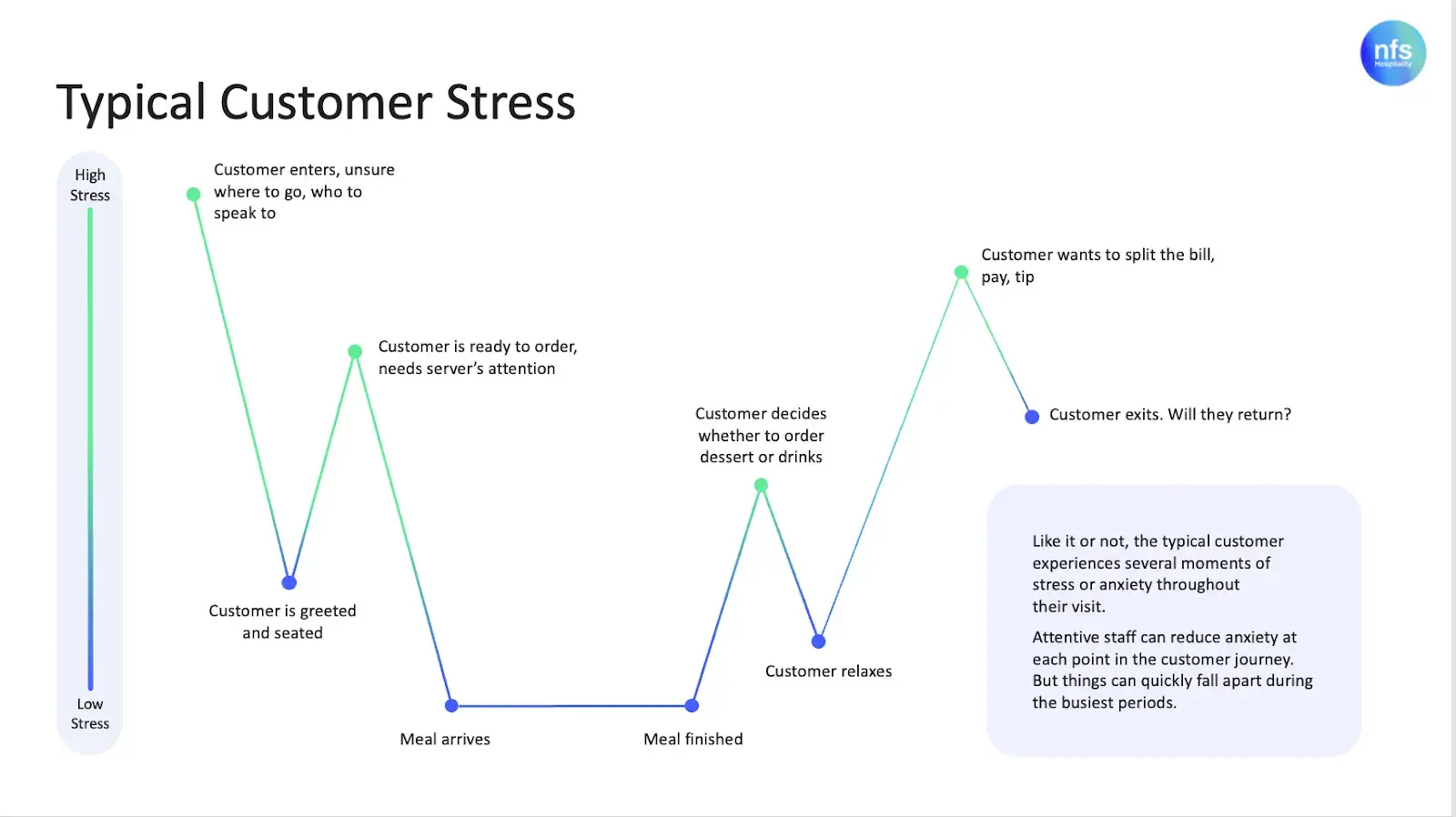
You’re shown to your table and the tension eases. When you’re ready to order and no one’s nearby, it creeps back in. Your food arrives and you relax, until you fancy another drink or dessert and the wait starts again. Then comes the bill – the stress of splitting it, tipping, and waiting for the card machine. That final spike hits just as you hoped the night would end smoothly. Only when you step outside does the pressure lift. These hidden stress points shape how you feel about the entire experience, often more than the food itself. These moments feel emotional to guests, but they’re operational at their core.
“The guest experience begins long before the food arrives.”
Why Stress Points Happen
Guests feel stress when the operation behind the scenes is under pressure. Slow ordering, missing items, overwhelmed staff, and clunky payment processes all stem from one issue – disconnected systems. These moments aren’t about the food. They’re about the systems supporting the team. When technology isn’t connected, everything slows down, and guests feel the impact immediately. This isn’t just a technology problem – it’s a sign that the wider hospitality ecosystem isn’t working in harmony.
“A smooth service creates a calmer, more enjoyable experience once guests walk through the door.”
Joining Up the Journey
Whether guests walk in or book ahead, their emotional journey starts early. When EPOS is connected to a smart booking system, the team knows who’s arriving, any dietary needs, and special occasions before the guest even sits down. It’s not extra tech; it’s a joined‑up journey that reduces stress and helps guests feel recognised and respected. This is what a true hospitality ecosystem looks like – booking, EPOS, payments, and operations all connected, all sharing information, and all working together instead of in silos.
“A booking is not just a transaction. It is the first chapter of the guest experience and journey.”
How EPOS Smooths the Journey
That first click on the EPOS is where the guest experience truly begins, and everything until the first bite is shaped by how smoothly that technology works.
- A Confident Start
EPOS gives staff instant visibility of table status, so guests can be greeted and seated quickly, removing the first stress spike.
- Ordering Without Uncertainty
Guests can order at the table, via app, or by scanning a QR code – and traditional ordering still fits seamlessly into the same ecosystem. However guests choose to order, there’s no waiting, and no wondering if the order was captured correctly.
- A Kitchen That Flows
Orders go straight to the kitchen with no lost notes, no misread handwriting, no bottlenecks. Food arrives on time, and stress levels drop.
- Drinks and Desserts Without Delay
Guests can browse menus and reorder without waiting for a server, or choose traditional service – either way, the mid-meal stress spike disappears.
- Payment Without Pressure
QR code payments, split bills, gift cards, and loyalty points are all handled digitally – but traditional payments still fit seamlessly into the Hospitality ecosystem. No waiting, no awkwardness, no stress.
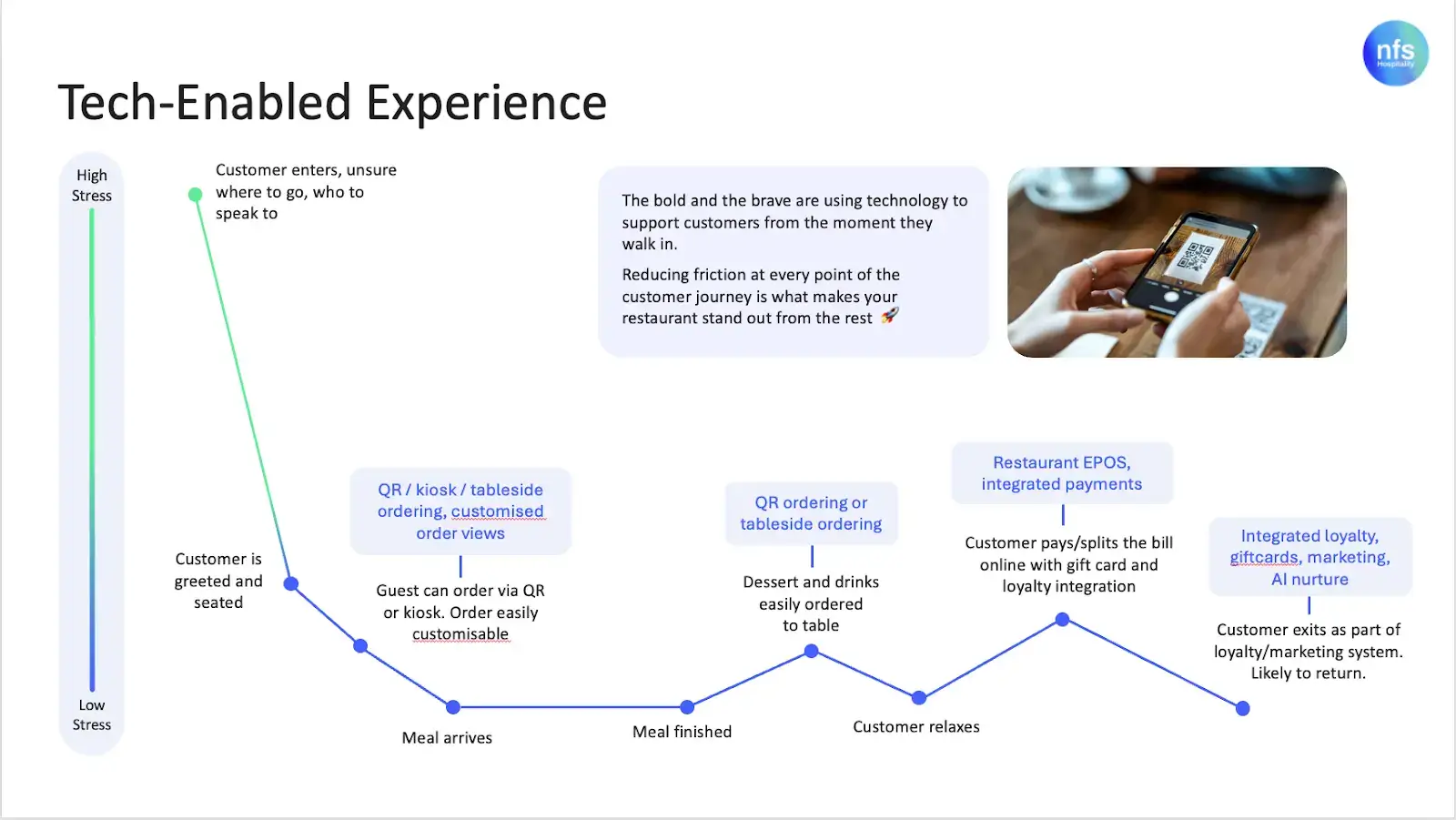
When the pressure eases for guests, it eases for staff too. A connected EPOS removes the frantic back‑and‑forth, the guesswork, and the bottlenecks that drain energy during service. Teams feel more in control, more supported, and more able to focus on hospitality rather than firefighting. And when staff morale rises, the atmosphere of the venue rises with it.
“The last impression is as important as the first; a seamless goodbye keeps guests coming back.”
The Experience Guests Remember
When EPOS works quietly in the background, guests feel:
- calm
- confident
- in control
- respected
And that emotional ease leads to better reviews, higher spend, and more return visits.
Why NFS Hospitality? Because it’s never just about providing EPOS, it’s about partnership
Every venue has its own challenges and pressure points. That’s why NFS works closely with operators to understand what really happens on the floor – the bottlenecks, the stress moments, the guest expectations.
Rather than delivering a one-size-fits-all system, NFS focuses on building the right setup with operators, creating an environment that supports teams, fits existing workflows, and strengthens the guest journey from first click to first bite.
At the heart of this approach is a connected hospitality EPoS ecosystem – one designed to support smoother operations, reduce stress points, empower staff, and create consistency across sites. When the ecosystem works, the business works, and guests feel the difference.
This isn’t a transaction. It’s a partnership built around understanding how hospitality really operates and shaping the technology around it.
Is there a hidden formula for sustained growth in hospitality? Successful leaders know it – and our big-brand NFS Hospitality clients have been letting us into their secrets. We work hand in hand with industry leaders including Dishoom, Marugame Udon, and Cosmo Restaurants, all forging forward in today’s tough climate.
In this guide, we explore exactly what makes these operators so successful – and show how the right technology toolkit can put your business on the same path to growth.

Dishoom’s dramatic success: Authenticity at scale
Dishoom is a striking example of sustained success in the UK dining scene. Since launching its first Irani-style café in 2010, the brand has expanded to 12 restaurants and four Permit Room bars across the UK.
Their recipe for success is a blend of: Compelling storytelling: A brand narrative that resonates deeply with diners The Queue Culture effect: Building anticipation by making queues part of the unique experience Strategic site selection: Expanding carefully into prime, well-chosen locations.
Dishoom always keeps focus on its core strengths, resisting the pull of delivery-only models or franchising to maintain a self-sustaining growth strategy. Now, with backing from LVMH-backed investment firm L Catterton, Dishoom is preparing for international expansion into New York City in 2026.
Powered by technology from NFS
Dishoom is a striking example of sustained success in the UK dining scene. Since launching its first Irani-style café in 2010, the brand has expanded to 12 restaurants and four Permit Room bars across the UK.
As a long-time NFS client, Dishoom’s operations are supported by a comprehensive technology stack centred on the robust and innovative Aloha EPOS system. This provides: Integrated payments and QR code solutions Tools for loyalty and reputation management Actionable operational insights that improve efficiency and guest experience.
- Integrated payments and QR code solutions
- Tools for loyalty and reputation management
- Actionable operational insights that improve efficiency and guest experience.
Recently, Dishoom implemented a new reputation management solution through NFS to amplify its online presence. The results are clear: their Covent Garden branch alone has more than 27,000 Google Reviews, and the new app can generate up to five times as many reviews for the brand – Read Case Study
Marugame Udon: Digitally-driven hospitality powerhouse
Another giant in the industry is Marugame Udon, an NFS client whose Digitally-driven strategy has fuelled massive growth across the UK and Europe.
In addition to a best-of-breed restaurant EPOS solution, NFS provides the brand’s loyalty system, which unifies all customer information into an enormously valuable single platform.
Every touchpoint, from tills and wi-fi to email marketing, is connected, giving Marugame Udon a 360-degree view of its guests. This ‘single point of truth’ wipes out the need to enter data into multiple systems – great for operational efficiency and consistency.
This investment in technology has been crucial to the company’s expansion strategy. Marugame Udon UK recently entered a major master franchise agreement with Karali Group, a move designed to accelerate its growth across the UK and Ireland.
This marks a significant transition from a corporate-owned model to a fully franchised approach, underpinned by a scalable technology foundation –
Read Case Study
Cosmo Restaurants: Engineered for robust and rapid growth

With an estate of Large buffet restaurants offering multi-national cuisine. Cosmo is engineered for speed and scale. It has ambitious expansion plans – in addition to 21 Cosmo sites, it’s rapidly rolling out its new Smokin’ Hot Buffet & Grill concept.
With Restaurants boasting robot waiters, technology and innovation is at the core of this brand’s offering.
Fulfilling high demand and a requirement for fast table turns, Cosmo’s EPOS solution – Aloha from NFS – Delivers efficiency while enabling strong management of this evolving estate.
Aloha EPOS provides Cosmo with:
- Efficient table-side ordering via Aloha Mobile
- Integrated and Seamless payment processing
- Real-time multi-site management information
- The ability for head office to drill down on data to store level – Every aspect of the business can be managed and improved upon.
This winning combination of Expertise, project management and technology enables Cosmo to turn over tables every 90 minutes, and provides solid foundations for further growth, efficiency and increased revenue.
Your Restaurant Growth Checklist: 6 Key Requirements
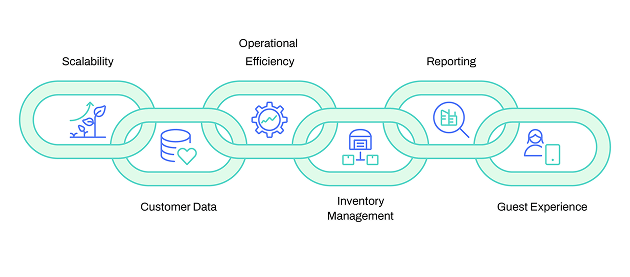
A modern EPOS is more than a till – it’s the beating heart of your operation. When choosing your system, demand that it delivers on these 6 key requirements:
Scales easily – as you add can easily add tables, sites, or delivery channels
Captures customer data – to fuel loyalty and personalised marketing
Streamlines operations – to reduce errors and speed up service
Tracks inventory in real time – to cut waste and control costs
Provides clear reporting – for smarter, data-driven decisions
Enhances guest experience – with modern ordering and payment options
Takeaways for ambitious operators
The success of Dishoom, Marugame Udon, and Cosmo Restaurants offers a masterclass in modern restaurant growth. Key lessons include:
Defining your growth strategy – Cautious, self-sustained growth can be just as powerful as a rapid, franchise-led model. The key is choosing the most appropriate path for your brand.
Embracing technology – From QR code ordering to integrated loyalty and reputation management, the best systems drive efficiency and guest satisfaction.
Demanding authenticity – Staying true to your brand’s core ethos while you scale is what ensures lasting success and customer loyalty.
Don’t let anything hold you back in your ambitions for your restaurant. The winning formula combines a Clear vision, a commitment to authenticity, and the right technology toolkit – and as our big-grand clients show so conclusively, getting it right adds up success. Even in the most challenging trading conditions.
Ready to build your success story?
If you’re looking to follow in the footsteps of these leading operators, NFS Hospitality is here to help. Our consultative approach ensures you have the technology and Expertise needed to deliver outstanding service and achieve sustainable growth.
Contact us today to start building your growth story
An Electronic Point of Sale (EPOS) system can optimise restaurant operations. This comprehensive software will manage all key aspects of your restaurant business, from order-taking to inventory control, providing you with one central system that can improve overall efficiency. However, it’s important to ensure you’re choosing the right EPOS software for your specific needs to truly reap the benefits of this powerful tool.
When narrowing down the available options, it’s important to consider more than just the features available. It’s essential to find an EPOS system that suits your operations, budget and long-term goals. Regardless of what type of restaurant you operate, you should evaluate your business needs and ensure the software is suitable for the day-to-day running of your business. Below, we have explored the key factors that will influence which EPOS system will work best for your restaurant and how you can make the most informed decision.
Size and Type of Venue
The type of restaurant you operate and the scale of your operations will play a crucial role in determining which EPOS system is best. For instance, smaller independent restaurants often have simpler workflows and fewer members of staff. Therefore, a user-friendly system that covers all the essentials, such as order-taking, payment processing and simple reporting, might be sufficient. Budget may also be a key consideration for smaller businesses.
On the other hand, larger restaurants or franchises typically need a more powerful system. Multi-location restaurants can benefit from cloud-based EPOS systems that provide centralised control over all sites and make it easy to manage operations from anywhere. Whether it’s updating menus or monitoring sales performance, having the ability to do so from a single dashboard offers several benefits and can streamline operations.
Menu Complexity and Workflow Requirements
Whether you have a simple menu that doesn’t change much throughout the year or a complex menu with multiple promotions and seasonal offerings will also impact which EPOS software is best suited to your needs. If your menu includes various customisation options and multiple courses, an EPOS system that sends orders directly to kitchen display systems can be beneficial, reducing the likelihood of mistakes and speeding up service.
Review your entire current workflow, from order-taking to payment processing, and consider the current communication between front-of-house and kitchen staff. The best EPOS software for restaurants should solve any pain points, such as offering tableside ordering to reduce wait times and optimise table turnover, or tracking inventory in real-time to update menus and prevent customer disappointment.
Integration with Other Systems
A restaurant EPOS system should do more than just process transactions; it should integrate with the other tools you rely on. When your EPOS software speaks to key systems, such as your reservation platforms, loyalty programmes and omni-channel ordering solutions, you can benefit from a seamless flow of information.
Look at which systems you use at different stages of the customer journey and consider how integration can streamline operations. When your software is in sync, it will improve accuracy and efficiency, and prevent issues with data loss.
Budget and Pricing Structure
Your budget is always an important factor when investing in new software. When it comes to a restaurant EPOS system, you need to consider the total cost of ownership, not just the upfront price. In addition to initial setup costs, covering hardware and installation, there are often ongoing subscription fees to be aware of.
Factors such as number of users and locations, amount of cloud data storage, customer support and updates, and also additional features will all impact the monthly costs associated with an EPOS system. When comparing costs, it’s important to factor the long-term return on investment into your decision too. While one EPOS system may cost more, if it offers significant benefits that can boost revenue, it could be more cost-effective over time.
Scalability and Future-Proofing
It’s wise to think ahead when you’re investing in new software. Choosing an EPOS system that can grow with your business can save you a lot of hassle in the long run. You can avoid having to switch platforms and re-train staff if your small business expands into new locations.
A future-proof EPOS solution should allow you to add more locations, terminals or users easily, supporting business growth. It should also support updates and new technologies, ensuring your restaurant remains compliant with industry standards and continues to meet customer expectations. With improved business intelligence, EPOS software can even help you grow your restaurant quicker. By using reporting tools, you can make data-driven decisions and reach your goals much sooner.
Technical Support and User Experience
Your software should always be straightforward to use, for both customer-facing and back-of-house teams. A confusing interface can slow down service and result in mistakes that negatively affect customer experience, especially during busy periods. Training should be simple too, making it easy to take on new staff and hit the ground running.
For restaurant EPOS systems, responsive customer support is essential. Whether you need help setting up hardware, adding new features or troubleshooting an issue, a provider with reliable technical support can make a huge difference. You can have peace of mind that your EPOS software is robust and reliable, and you will have an uninterrupted service.
Choosing the Best EPOS Software for Your Restaurant
Choosing an EPOS system is a key decision and one that will have a direct impact on your operations moving forward. At NFS Hospitality, we understand that no two restaurants are the same, and we deliver the best of breed software. Our EPOS solutions are designed to adapt to a wide range of operational needs, and they provide you with one smart, centralised system.
Our expert team will work closely with you to evaluate your current setup, identify your pain points, and recommend tailored solutions that suit your goals and budget. We have experience working with the biggest brands in hospitality and invite you to read some of the case studies on our website. If you have any questions about EPOS software for restaurants, feel free to get in touch with NFS Hospitality today.
Restaurant operations are notoriously difficult to organise, because of their immense complexity – not only are there everyday issues of the business to sort out, but there are also the ever-evolving behaviours of customers to satisfy.
It’s not surprising, then, that the integration of restaurant management technology has become the secret of success for many operations.
Restaurant systems are sophisticated solutions designed to streamline operations, enhance customer experiences and elevate profitability. From optimising order processing to facilitating inventory management, it’s fair to say that these systems are revolutionising the way modern restaurants operate.
A restaurant management platform integrates various functionalities, including point of sale, inventory management, and customer relationship management, eliminating the need for multiple disparate systems.
As your restaurants grow and evolve, management systems offer scalability, allowing for seamless expansion and integration of additional features and modules.
In helping you grow your business in what is always an incredibly crowded market, restaurant management software helps give you a competitive edge, whether you run a single independent outlet or a whole group.
7 top benefits of restaurant management systems:
- Better relationships with your customers
- An end-to-end view of your business
- Analysis and forecasting
- Employee satisfaction and retention
- Better labour and stock control
- Enhanced financial management
- Targeted marketing for wider reach.
Better relationships with your customers
Restaurant’s relationships with customers have always been intense and important, but since the days of the pandemic they have evolved to cater for new and changed demands.
Customers now have a strong emphasis on convenience and speed as well as on the quality of food and service you provide. Restaurant systems that include EPOS are an immense help in this area, making it quicker for customers to place their order and also to pay.
For instance, serving staff provided with Epos on a tablet or phone can send orders direct from the table to the kitchen so food preparation can begin immediately, and service is faster. There’s no room for human error, either, so fewer dishes get sent back and there’s less waste.
Once the meal is over, your staff can take payment at tableside so the customer can pay and go. It adds up to a satisfying customer experience that encourages loyalty and repeat visits.
Restaurant management systems also make it easy for customers to order online or to make a table reservation, a valuable and convenient service that also cuts down the time your staff have to spend on the phone.
An end-to-end view of your business
The complexity of restaurant operations can mean it’s tricky to keep an overview. A restaurant management system is available online and provides up to date reports on all aspects of your business from automated inventory showing stock levels to sales.
For groups, this online availability of reports is invaluable when keeping track of the position of the business at any given time.
Analysis and forecasting
Data has become the lifeblood of most organisations these days. Coupled with effective analysis, it gives insight into everything from customer preferences to your busiest times and best-selling dishes. It can even provide forecasts to help you anticipate when extra labour etc is likely to be required.
Employee satisfaction and retention
A real hot potato in the industry, which has seen such labour shortages in recent years that some outlets have decided to curtail their hours or even shut on certain days of the week.
Restaurant management systems can help you provide a healthy and enjoyable working environment that encourages valuable staff to stay and reduces the time you need to spend recruiting and training.
A restaurant order management system reduces the amount of time serving staff need to spend running back and forth to the kitchen with orders, and also minimises admin when it comes to taking reservations – when customers can do it themselves online, staff involvement is minimised.
It all allows more time for your people to engage with customers, building loyalty and creating the friendly impression they will appreciate – and it makes the working day more rewarding for your staff and encourages them to stay.
Managers can also track employee performance metrics, identify training needs, and recognise top performers, fostering a culture of accountability and excellence.
Better labour and stock control
The cost of living crisis has exacerbated problems for the industry as restaurants struggle to cope with increases in the cost of supplies and balance that with keeping customers happy.
A restaurant order management system will give you far better control of your stock, providing real-time information on inventory and also on your supply chain.
The same systems make it easier to control labour, highlighting busy and quiet times and enabling you to have the right staffing levels at the right times.
A further enhancement that keeps things running smoothly is integration with restaurant maintenance software, which helps identify potential equipment issues, enabling proactive maintenance and minimising downtime.
Enhanced financial management
Using the reports generated by your restaurant software on sales, expenses and profits, empowers you and your managers to make data-driven decisions and take measures that optimise financial performance.
By tracking costs and identifying areas of inefficiency, restaurant management platforms enable proactive cost control measures, ultimately boosting your profitability.
Targeted marketing for wider reach
Special offers can make a huge difference to your hospitality business, keeping existing customers happy and enticing those who have never tried your restaurant to give it a to.
When it comes to loyal customers, your restaurant management platform and CRM can give incredible insight into their preferences. By capturing data every time they book or eat, you identify their preferences so you can produce timely and appropriate marketing emails that you know will hit the mark.
For instance, if you know they visited last Valentine’s Day, you can offer them two free glasses of champagne this year; or you can send them a birthday greeting that will put your restaurant top of their mind when they want to celebrate.
Restaurant management software also helps you with your social media presence, alerting you to any adverse reviews so you can put the situation right immediately and put a shine on your reputation.
Conclusion
Deploying carefully-selected restaurant software represents a strategic investment in operational efficiency, customer satisfaction, staff retention and financial performance – and it’s an investment that provides definite ROI.
By leveraging the power of technology, you can optimise your processes, empower their staff, and deliver unparalleled dining experiences. From order management to inventory control, these systems serve as the cornerstone of modern restaurant operations, paving the way for sustained success.
Whether your business is a bustling bistro or a multi-location group, the benefits of a restaurant management system are undeniable. And in a world where customers are increasingly demanding, staff are hard to find and competition is raging, it can give you the edge you need to succeed.
Discover more about how a restaurant management system will benefit you: