Customers expect speed, accuracy and convenience, every time.
Whether it’s ordering food, booking a room, paying a bill or making a reservation, customers expect every interaction to be simple and seamless. Through our Managed Service approach, we help ensure the technology behind every transaction works together, creating smoother experiences for customers and teams alike.
Your best people should be serving customers, not systems.
Our Managed Service removes operational friction by connecting technology,simplifying processes and reducing manual tasks. With less time spent managing systems and administration, your teams have more time to focus on delivering great hospitality.
Growth and resilience come from making better decisions, not bigger guesses.
By bringing together operational, financial and customer insight, we help you see what’s happening across your business in real time. The result is greater visibility,more informed decision-making and a stronger foundation for sustainable growth.
Through our Managed Service, we bring together the technology that powers your business, giving you one point of accountability and helping every part of the operation work together more effectively.
Successful implementations take more than software. We test, pilot, and validate solutions in real hospitality environments before they go live, helping to minimise risk and build confidence across your teams. If something isn’t working as it should, we’ll be there to put it right. Because implementation doesn’t end at go-live.
Restaurant owners often face a fundamental operational challenge: maintaining peak efficiency and service quality in an extremely demanding environment.
When service lags, communication breaks down, or errors occur, the easy temptation for some leaders is to scrutinise their team. The assumption is that staff require more training, or that high turnover is an inevitable part of the hospitality industry. However, this perspective often overlooks a critical factor: the tools and systems employees are forced to use.
Hardworking and dedicated staff can only ever be as efficient as their technology allows them to be. Manual processes, disconnected systems, and outdated equipment create friction that leads to errors, delays, and frustration. At NFS Hospitality, we operate on a fundamental principle: the solution to many operational problems isn’t about changing your people; it’s about changing your technology.
By providing a modern, integrated tech stack, you empower your staff to perform their jobs with precision and confidence, leading to improved productivity, increased morale, and a more profitable business.
This blog explores in depth some of the challenges you may be facing in your business and just why a restaurant technology upgrade could be the answer you are looking for.
The Operational and Financial Costs of Outdated Systems
Every inefficiency in your restaurant has a direct impact on your bottom line. These aren’t minor inconveniences; they are measurable costs that detract from your revenue and put a strain on your team.
Let’s explore the specific challenges.
Inefficient Order Taking and Processing
Relying on manual order taking, such as handwritten tickets, introduces multiple points of failure. A server’s hasty handwriting, a misheard order in a noisy restaurant environment, or a misplaced modifier can all lead to an incorrect dish being prepared. The direct costs include wasted food and ingredients, which can unnecessarily inflate your food cost percentage by several points. The indirect costs are equally significant: a delayed or incorrect order diminishes the customer experience, potentially leading to negative reviews and a loss of repeat business. In a competitive market, a single mistake can erode customer loyalty built over months of quality service.
Communication Breakdown Between Front and Back-of-House
A lack of seamless, real-time communication between the front-of-house (FOH) and back-of-house (BOH) is a constant source of friction. When servers must physically run orders to the kitchen, and the kitchen team relies on a cluttered rail of paper tickets, the risk of miscommunication is high. This disconnect prevents the BOH from having a clear, organised view of the order queue, making it difficult to manage ticket times and prioritise dishes effectively. The result is a chaotic workflow, slower service, and a high-stress environment that can lead to staff burnout and high turnover.
Flawed Inventory Management
Manual inventory tracking using spreadsheets or clipboards is a time-consuming and error-prone process. This method provides only a static snapshot of your stock, making it nearly impossible to maintain an accurate, real-time view of your inventory levels. This leads to two critical financial issues: overstocking, which results in spoilage and tied-up capital, and understocking, which leads to lost sales when popular menu items are unavailable. Without accurate data, it is also difficult to analyse your menu’s profitability, identify high-waste areas, or make informed purchasing decisions. The labour hours dedicated to manual counts are an additional, unnecessary expense.
Slow and Inconvenient Payment Processing
The end of a meal should be as smooth as the beginning. However, outdated payment systems can slow down this final, critical step. Processing credit cards manually or requiring a customer to wait for a bill and then a payment device extends their stay at the table. This directly impacts your table turnover rate, which is a key metric for profitability, especially during peak hours. Furthermore, with the growing consumer demand for contactless and mobile payment options, a slow or inconvenient payment process can detract from the overall customer experience and make your business seem outdated.
The NFS Hospitality Solution: A Comprehensive, Integrated Platform
NFS Hospitality provides a powerful, integrated technology suite that addresses these operational challenges head-on. By connecting every part of your restaurant, our platform creates a seamless workflow that improves efficiency, enhances communication, and provides valuable business insights.
The Integrated Point-of-Sale (POS) System
Our modern restaurant POS system is the central nervous system of your operation. Its intuitive, touch-screen interface allows staff to take orders quickly and accurately, with features for customizable menus, modifiers, and allergy notes. Orders are instantly and wirelessly transmitted to the kitchen from the restaurant POS software, totally eliminating the risk of miscommunication and speeding up service. The restaurant epos softwaresystem also handles complex tasks like bill splitting and payment processing with ease and efficiency, allowing your staff to focus on the guest experience.
The Kitchen Display System (KDS)
The KDS replaces paper tickets with a clear, digital display in the kitchen. Orders are automatically organised and prioritised, providing the BOH team with a real-time, comprehensive view of the order queue. Features like integrated timers help manage ticket times, ensuring dishes are prepared in the correct sequence and delivered fresh. This system reduces noise and stress in the kitchen, leading to a more focused and productive team. The improved communication between FOH and BOH ensures synchronised service and faster table turnover.
Automated Inventory and Actionable Analytics
Our platform automates inventory management by connecting directly with your restaurant POS system. Every sale is automatically recorded, providing a real-time view of your stock levels. The system can be configured to alert you when items are running low, helping you prevent stockouts and lost sales. Our robust analytics engine provides deep insights into your menu’s performance, staff productivity, and overall profitability. This data-driven approach allows managers to move from reactive decision-making to proactive, strategic planning.
Seamless Online Ordering and Reservations
In today’s market, a strong digital presence is non-negotiable. Our integrated solution allows you to manage online orders and reservations from a single platform. This eliminates the need for manual data entry from third-party apps, reducing errors and saving valuable time. All customer data and orders are centralised, providing a consistent experience and a single source of truth for your business.
Secure and Efficient Mobile Payments
Our system provides customers with fast and secure mobile and contactless payment options. With pay-at-the-table devices, your staff can complete transactions quickly, reducing customer wait times and increasing table turnover. Our platform is EMV-compliant, which protects your business and your customers from fraud.
The Return on Investment: Empowering Your Staff for Success
The most significant return on your technology investment is not just in operational efficiency, but in the positive impact on your staff. By providing a streamlined, user-friendly platform, you create a more stable, productive, and satisfied workforce.
Elevated Roles: When your staff is no longer bogged down by manual, tedious tasks, their roles are elevated. Servers can dedicate more time to providing personalised guest service, building rapport, and improving the dining experience. Kitchen staff can focus on the culinary quality of their dishes. Managers can use data to develop strategies for growth instead of spending hours on administrative duties.
Improved Training and Onboarding: Intuitive, integrated systems significantly reduce the learning curve for new employees. A standardised, easy-to-use interface means new hires can become productive members of your team in a fraction of the time, reducing the costs associated with training and onboarding.
Higher Morale and Retention: A less stressful work environment, where staff feel supported by their tools, leads to higher job satisfaction. By demonstrating your commitment to providing an efficient workplace, you reduce employee burnout and improve staff retention. This creates a more cohesive and skilled team and that is a valuable asset to your business.
Conclusion
The success of your restaurant is built on the talent and dedication of your people. Don’t let outdated restaurant technology hinder their performance. By investing in an integrated solution from NFS Hospitality, you equip your team for success, create a more efficient operation, and build a stronger, more profitable business.
Our approach is highly consultative, recommending the right solutions for you and our product experts will be with you every step of the way to help you maximise your return on investment.
Want to find out more? Our FAQ section will help answer any remaining questions you may have.
Or are you fully ready to consider a restaurant technology upgrade? To discover how a modern technology platform can transform your restaurant operation and empower your team, contact NFS Hospitality today to arrange a demonstration.
An Electronic Point of Sale (EPOS) system can optimise restaurant operations. This comprehensive software will manage all key aspects of your restaurant business, from order-taking to inventory control, providing you with one central system that can improve overall efficiency. However, it’s important to ensure you’re choosing the right EPOS software for your specific needs to truly reap the benefits of this powerful tool.
When narrowing down the available options, it’s important to consider more than just the features available. It’s essential to find an EPOS system that suits your operations, budget and long-term goals. Regardless of what type of restaurant you operate, you should evaluate your business needs and ensure the software is suitable for the day-to-day running of your business. Below, we have explored the key factors that will influence which EPOS system will work best for your restaurant and how you can make the most informed decision.
Size and Type of Venue
The type of restaurant you operate and the scale of your operations will play a crucial role in determining which EPOS system is best. For instance, smaller independent restaurants often have simpler workflows and fewer members of staff. Therefore, a user-friendly system that covers all the essentials, such as order-taking, payment processing and simple reporting, might be sufficient. Budget may also be a key consideration for smaller businesses.
On the other hand, larger restaurants or franchises typically need a more powerful system. Multi-location restaurants can benefit from cloud-based EPOS systems that provide centralised control over all sites and make it easy to manage operations from anywhere. Whether it’s updating menus or monitoring sales performance, having the ability to do so from a single dashboard offers several benefits and can streamline operations.
Menu Complexity and Workflow Requirements
Whether you have a simple menu that doesn’t change much throughout the year or a complex menu with multiple promotions and seasonal offerings will also impact which EPOS software is best suited to your needs. If your menu includes various customisation options and multiple courses, an EPOS system that sends orders directly to kitchen display systems can be beneficial, reducing the likelihood of mistakes and speeding up service.
Review your entire current workflow, from order-taking to payment processing, and consider the current communication between front-of-house and kitchen staff. The best EPOS software for restaurants should solve any pain points, such as offering tableside ordering to reduce wait times and optimise table turnover, or tracking inventory in real-time to update menus and prevent customer disappointment.
Integration with Other Systems
A restaurant EPOS system should do more than just process transactions; it should integrate with the other tools you rely on. When your EPOS software speaks to key systems, such as your reservation platforms, loyalty programmes and omni-channel ordering solutions, you can benefit from a seamless flow of information.
Look at which systems you use at different stages of the customer journey and consider how integration can streamline operations. When your software is in sync, it will improve accuracy and efficiency, and prevent issues with data loss.
Budget and Pricing Structure
Your budget is always an important factor when investing in new software. When it comes to a restaurant EPOS system, you need to consider the total cost of ownership, not just the upfront price. In addition to initial setup costs, covering hardware and installation, there are often ongoing subscription fees to be aware of.
Factors such as number of users and locations, amount of cloud data storage, customer support and updates, and also additional features will all impact the monthly costs associated with an EPOS system. When comparing costs, it’s important to factor the long-term return on investment into your decision too. While one EPOS system may cost more, if it offers significant benefits that can boost revenue, it could be more cost-effective over time.
Scalability and Future-Proofing
It’s wise to think ahead when you’re investing in new software. Choosing an EPOS system that can grow with your business can save you a lot of hassle in the long run. You can avoid having to switch platforms and re-train staff if your small business expands into new locations.
A future-proof EPOS solution should allow you to add more locations, terminals or users easily, supporting business growth. It should also support updates and new technologies, ensuring your restaurant remains compliant with industry standards and continues to meet customer expectations. With improved business intelligence, EPOS software can even help you grow your restaurant quicker. By using reporting tools, you can make data-driven decisions and reach your goals much sooner.
Technical Support and User Experience
Your software should always be straightforward to use, for both customer-facing and back-of-house teams. A confusing interface can slow down service and result in mistakes that negatively affect customer experience, especially during busy periods. Training should be simple too, making it easy to take on new staff and hit the ground running.
For restaurant EPOS systems, responsive customer support is essential. Whether you need help setting up hardware, adding new features or troubleshooting an issue, a provider with reliable technical support can make a huge difference. You can have peace of mind that your EPOS software is robust and reliable, and you will have an uninterrupted service.
Choosing the Best EPOS Software for Your Restaurant
Choosing an EPOS system is a key decision and one that will have a direct impact on your operations moving forward. At NFS Hospitality, we understand that no two restaurants are the same, and we deliver the best of breed software. Our EPOS solutions are designed to adapt to a wide range of operational needs, and they provide you with one smart, centralised system.
Our expert team will work closely with you to evaluate your current setup, identify your pain points, and recommend tailored solutions that suit your goals and budget. We have experience working with the biggest brands in hospitality and invite you to read some of the case studies on our website. If you have any questions about EPOS software for restaurants, feel free to get in touch with NFS Hospitality today.
No matter how a customer chooses to engage with your brand, there’s no doubt that they’ll expect a smooth and convenient experience. Whether they choose to reserve a table online, dine in at your restaurant or even place an order via an app, maintaining a clear brand consistency and experience across all touchpoints is now a baseline expectation.
As the hospitality sector continues to become increasingly digital, delivering a unified and frictionless journey is key to building loyalty and staying competitive. A fully integrated omnichannel ordering system is a powerful starting point. When aligned with your existing restaurant management software, it lays the groundwork for streamlining operations and improving customer experience.
At NFS Hospitality, we believe that top restaurant management software should allow operators to deliver a consistent and high-quality experience across every channel. In this article, we’ll explore how an omnichannel approach can help you achieve exactly that.
Why Consistency Matters in Hospitality
Inconsistent service can lead to confusion, customer dissatisfaction, and even lost revenue. On the other hand, delivering a consistent experience helps build trust in your brand. When customers receive the same high level of quality and service, whether online, in-app, or in your venue, it reinforces confidence and strengthens loyalty.
Consider the typical customer journey in today’s world: A customer may browse your menu online, place an order for delivery via a third-party app, and later visit in person. Each of these interactions contributes to their overall perception of your brand. If the information, pricing, or service quality differs from one touchpoint to another, it creates a disjointed experience. This is where omnichannel strategy – backed by intelligent systems – comes into play.
What is an Omnichannel Ordering Experience?
Omnichannel ordering allows customers to interact with your restaurant across multiple channels in a connected and consistent way. Whether they’re ordering from a kiosk, app, website, or at the table, the experience should feel seamless and unified.
This differs from a multichannel setup, where services exist on multiple platforms but operate independently. Omnichannel systems integrate those channels, allowing data, preferences, and communication to flow across the entire customer journey.
An effective omnichannel approach means:
Menus and prices are consistent across all platforms.
Loyalty points or offers apply regardless of ordering method.
Customer data is centralised for more personalised interactions.
Staff have visibility into every transaction, regardless of origin.
The Role of Restaurant Management Software
Delivering a consistent omnichannel experience depends heavily on the technology behind the scenes. Restaurant management software platforms play a central role in integrating these channels.
At NFS Hospitality, our innovative restaurant management solutions have been designed with this in mind. Our restaurant EPOS systems enable operators to manage menus, pricing, promotions, and ordering across multiple platforms – all from a single, centralised system. This ensures consistency from back-of-house to front-of-house and beyond.
For example:
Menu management: Update your menu just once and reflect changes across all channels simultaneously to ensure accuracy.
Order management: Whether orders come from online, third-party platforms, or in-house tablets, they flow into the same kitchen display and reporting system, reducing errors and improving speed of service.
Loyalty integration: Track customer preferences and rewards in real time, whether guests are dining in, ordering takeaway, or booking a future visit.
The Benefits of Integrated Omnichannel Tools
When your restaurant management software supports integrated omnichannel ordering, the benefits go far beyond operational efficiency – it enables a smooth and connected experience across every customer interaction.
Customers can enjoy effortless ordering, whether through a mobile app, website, or in-venue kiosk, with consistent menus, clear pricing and reliable functionality throughout. Accuracy also improves thanks to the automation of orders routed to the kitchen, reducing the risk of mistakes in the process.
A centralised view of customer behaviour allows for smarter personalisation, enabling teams to tailor promotions and upselling strategies more effectively. Most importantly, consistent service across all channels builds trust and strengthens brand loyalty, encouraging repeat visits and positive word of mouth.
Operational Advantages for Hospitality Teams
In addition to customer-facing benefits, integrated omnichannel systems offer several operational advantages:
Real-time reporting: Gain accurate insights into sales, performance and demand across all channels in one dashboard.
Inventory management: Automatically track stock usage across dine-in, delivery, and takeaway to reduce waste and manage stock more efficiently.
Workforce optimisation: Align staffing levels with real-time order volume across all channels.
By implementing top restaurant management software, hospitality operators can adapt quickly to changing demand and manage operations in a more centralised and strategic manner.
Ready to Streamline your Omnichannel Experience?
Ensuring the success of your restaurant both today and in the future requires agility as customer expectations and technologies evolve at pace. Thankfully, with integrated restaurant management software, you can scale services, launch new ordering channels, and explore innovations like self-service, without any compromise on consistency or control.
At NFS Hospitality, we help hospitality operators build scalable digital ecosystems that deliver exceptional and connected customer experiences. Ready to streamline your omnichannel journey? Get in touch with our team today to discover how our solutions can help your business grow and thrive in a digital-first world.
Forget a swipe-right kind of relationship – today’s hospitality guests want a proper romance with your restaurant. In this article, you’ll discover what happens when good loyalty programmes go bad, and how AI is powering up data to create long-lasting partnerships with customers.
Because guests have changed – they want a love relationship with your business. The simple equation of “You make my food = I pay for it” just doesn’t add up to success anymore.
In other words, transactional has been blown away by experiential customer service.
What’s the difference between transactional and experiential?
You can compare it with someone seeking romance and long-term potential, rather than just a swipe right…and like any life relationship, that takes effort and commitment from you.
How offers can ruin your relationship
Good personalised loyalty programmes are solid gold. As one recent report on next generation dining says: “In a highly competitive hospitality environment, creating memorable guest experiences is the ultimate differentiator.”
Research shows in 2025:
– 29% Of consumers and
– 32% Of families will actively seek out discounts or offers for dining or drinking out.
But a badly-targeted offer can cost you money – or threaten the relationship you want to encourage – See Full Research
When loyalty goes wrong – an example:
You need to drive more business on a Monday, so you decide to send your customers an offer for big discounts. But if you haven’t fully worked out the economics, you’ll end up out of pocket.
Will the extra business cover the labour and supply costs? Even worse…might some of your high spenders simply change to a cheaper day to eat? Or – ouch – will you cause offence by offering, say, committed vegans a steak deal?
Experiential dining? It’s not dating, but data
You want your restaurant to be their One and Only, the ultimate in customer loyalty. Tailoring the experience to their exact requirements is the way to win their hearts, but you need to truly know what they want.
As New York restaurateur Danny Meyer says:
“Hospitality is present when something happens FOR you. It is absent when something happens TO you. Those two simple prepositions – for and to – express it all”.
You definitely want your guests to believe your service is FOR them, in the most individual of ways.
So, building a great experiential relationship is not exactly dating, but it is all about data – segmenting your market using technology-captured information that enables personalised, effective reward programmes and grows your business.
We know each other sooo well…
AI, working with specialised hospitality technology, is making incredible strides forward in capturing and analysing customer data to power up customer engagement.
“Artificial intelligence allows restaurants to go far beyond generic service, offering true personalization at scale. AI-driven systems can remember dietary restrictions, favorite dishes, preferred seating, and even special occasions like birthdays or anniversaries. This data enables staff to offer tailored greetings, suggest relevant menu items, or seat returning guests at their usual table — all without extra training or manual entry. The result? A guest experience that feels effortless and genuine.” – AI Time Journal
Customers’ personal requirements are now really specific. High spenders might demand a special menu just for them, or exclusive events or dishes. Maybe they want you to understand without asking that they always prefer salad to chips.
Even in fast food the experiential approach pays off, with easy and responsive kiosk ordering – McDonald’s Chairman and CEO Chris Kempczinski cited AI adoption among his top three trends in 2025 for the quick service restaurant industry.
So that disastrous offer of steak to a vegan? With great data at your fingertips, that kind of slip is never going to happen. There’s going to be nothing to break up this growing relationship.
AI helps the human in the room
AI as a data-harvester and analyst is not an alternative for your restaurateur’s knowledge and expertise, but simply an enhancer and enabler. As EY comments:
“Technology should not be considered a replacement for human touchpoints but as an enabler for better human-led experiences… an AI-led customer experience will be far richer if it has a human element at the right time.”
Unprecedented opportunity
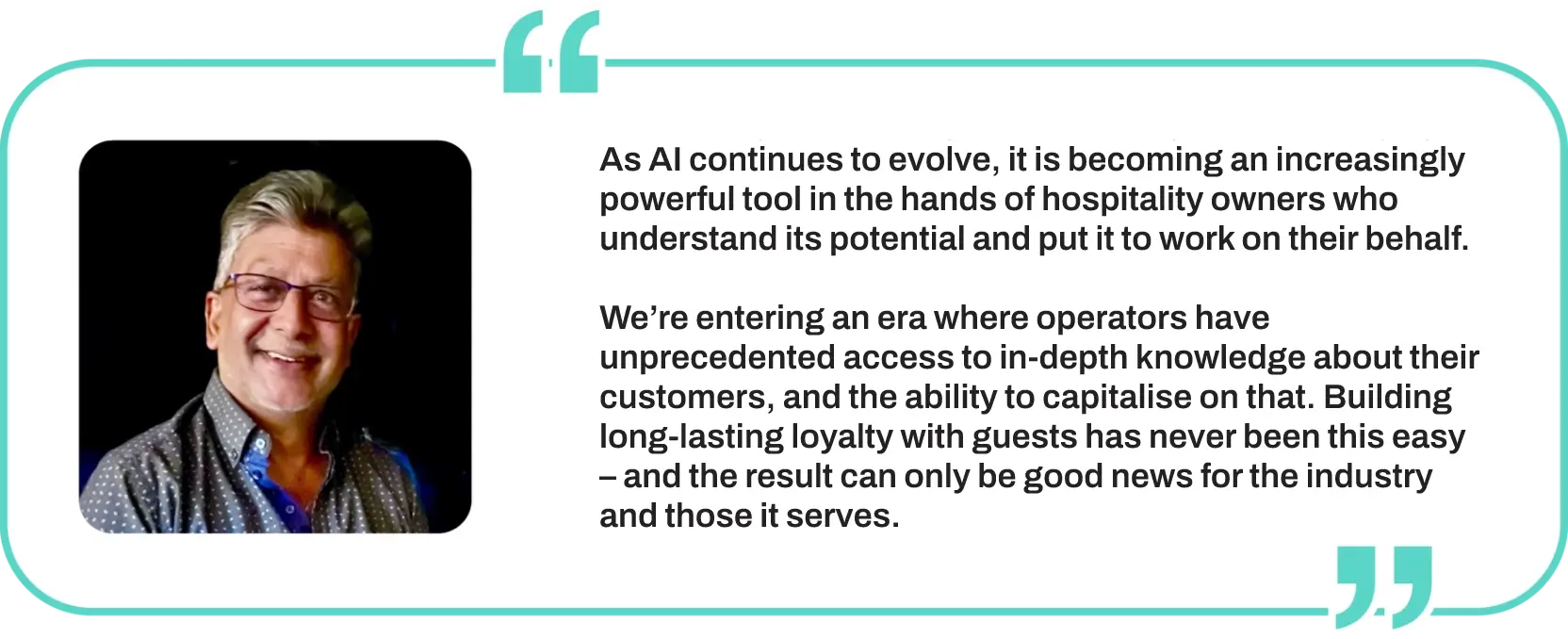
As hospitality technology experts, we can’t agree more with this. As our Chairman Luis De Souza says:
The hospitality landscape is constantly changing, and convenience is king, especially when it comes to ordering food. Customers expect more than just a transaction; they desire a seamless and personalised ordering experience. If your restaurant isn’t offering online ordering, you’re missing out on a significant opportunity to cater to these expectations and drive business growth.
But fear not! Implementing an online ordering system doesn’t have to be daunting or expensive. In fact, with the right system in place, it’s easier and more affordable than you might think. Let’s explore why online ordering is a must for restaurants and how it can revolutionise your business.
Advantages of Online Ordering for Restaurants
Online ordering offers several key advantages for restaurants, including streamlining operations, increasing revenue, and improving order accuracy. Let’s dive into each of these benefits and see how they can transform your business.
Streamlining Restaurant Operations
Running a restaurant is no easy feat, but online ordering can help simplify and streamline your operations. By centralising your online ordering system with one provider, you can integrate various functions such as ordering, payments, and menu optimisation into a single, easy-to-use platform.
This streamlines your operations, saving time and resources for both your team and your customers. Additionally, a unified system provides enhanced analytics and reporting, giving you valuable insights into guest data and supporting better decision-making and business planning.
Increasing Restaurant Revenue
Boosting revenue is crucial in the competitive restaurant industry, and online ordering can help you achieve this goal. By investing in a scalable online ordering system, you can save money in the long run and accommodate future growth without breaking the bank.
Moreover, powerful analytics and reporting tools provided by online ordering systems allow you to identify trends and patterns in customer behaviour. Armed with this information, you can optimise everything from pricing to promotions, ultimately improving profitability and revenue.
Improving Order Accuracy
Order accuracy is paramount in the restaurant business, and online ordering systems can significantly reduce errors compared to traditional phone orders. When customers can specify their selections and preferences online, they feel more in control of their orders, leading to increased satisfaction and loyalty.
Furthermore, online ordering systems can facilitate upselling opportunities by promoting recommended menu items and limited-time offers. This can incentivise customers to spend more per order and drive additional revenue for your restaurant.
How to Get Started with Online Ordering
Now that you understand the benefits of online ordering, it’s time to take the plunge and get started. Here are a few tips to help you navigate the process:
Choose the right online ordering system for your restaurant, considering factors like features, integrations, and cost.
Follow industry best practices for a successful implementation to optimise your usage and maximise benefits.
Promote your online ordering platform to raise awareness among customers and incentivise them to place orders online.
Online ordering is no longer a luxury; it’s a necessity for restaurants looking to thrive in the digital age. By embracing online ordering, you can streamline operations, increase revenue, and improve customer satisfaction—all while staying ahead of the competition.
Now is the time to launch online ordering for your restaurant. Don’t miss out on this opportunity to take your business to new heights.
In today’s fast-paced world, customers prioritise convenience, speed, and personalised experiences, driving the escalating demand for online food ordering, delivery, and takeout. While off-premise dining boasts advantages like increased revenue, an expanded customer base, and higher check sizes, some restaurant owners remain hesitant due to concerns about losing valuable in-person customer interactions. To address these apprehensions and empower restaurateurs to elevate their online ordering experiences, here are four insightful tips for staying connected with customers in the digital realm.
Tailor Your Platform Listing and Online Menu
Consider your restaurant’s page on third-party platforms as a virtual storefront—a canvas that needs to captivate potential customers. Infuse it with the essence of your brand’s voice and personality. Craft a compelling introduction that narrates the story of your restaurant, its culinary offerings, and your vision. The menu, the heartbeat of the experience, should showcase delivery-friendly, high-quality, and customisable dishes.
Engage potential customers through visually appealing content, such as high-definition images of your culinary creations. Complement this with imaginative dish names and clever descriptions that evoke curiosity. For instance, would you prefer ordering a “Large Cheese Plate” or a “Sweet Dreams are Made of Cheese Plate?” Descriptions offer a unique opportunity to let your brand personality shine in the digital space.
Harness the Power of Social Media
Social media stands as a potent tool for fostering customer interaction. Establish a connection with your followers through contests, giveaways, and user-generated content. Organise engaging photo contests, encourage customers to share their culinary experiences, and create custom hashtags exclusive to your restaurant. Use the platform to share behind-the-scenes stories, communicate hygiene measures, and introduce the faces behind your brand.
Invest time in nurturing your social media accounts to establish a genuine connection with customers. The organic growth of these accounts over time can serve as a cost-effective means to disseminate messages to your loyal customer base.
Infuse a Personal Touch in Each Order
Once an order embarks on its delivery journey, it’s essential to maintain a connection with the customer. Employ a point-of-sale (POS) system integrated with your online ordering solution to ensure precision and completeness. Timeliness and order accuracy resonate deeply with customers, making it imperative to get these aspects right.
Elevate customer interaction by personalising food orders. Consider including handwritten thank-you notes, short messages, or branded freebies like stickers or utensils. Thoughtfully branded packaging contributes to a unique ‘unboxing’ experience, potentially prompting customers to share their delight on social media.
Consider offering a ‘build your own’ meal option to provide customers with an ultra-personalized dining experience. This showcases an understanding of personal preferences without burdening your kitchen staff.
Actively Seek and Welcome Feedback
While reaching customers who utilise third-party services can be challenging, actively seek feedback through alternative channels. Utilise polls, surveys, and social media platforms to encourage customers to share their thoughts. Include a feedback card in delivery and take-out bags, complete with a custom QR code for seamless online submissions. Consider incentivizing feedback with discounts or coupons.
Monitor and respond to reviews on delivery platforms, transparently communicating actions taken based on feedback. For those with their own delivery service or online ordering app, leverage customer relationship management (CRM) data to send personalised offers, discounts, and feedback forms.
In conclusion, fostering customer interaction in the online realm may pose challenges, but it’s far from impossible. By tailoring your platform, leveraging social media, infusing a personal touch into each order, and actively seeking feedback, you can bridge the gap and forge meaningful connections with customers. Embrace these strategies not only to streamline operations but also to cultivate growth and customer loyalty in the competitive landscape of online food ordering.