The hidden stress points that shape the guest experience
You walk into a restaurant on a busy Saturday night. You’re hungry, tired, and looking for a relaxed experience. But as you step inside, you’re not sure where to go or who you should speak to. That little moment of uncertainty sparks an immediate rise in stress, a feeling you recognise instantly, even if you rarely acknowledge it.
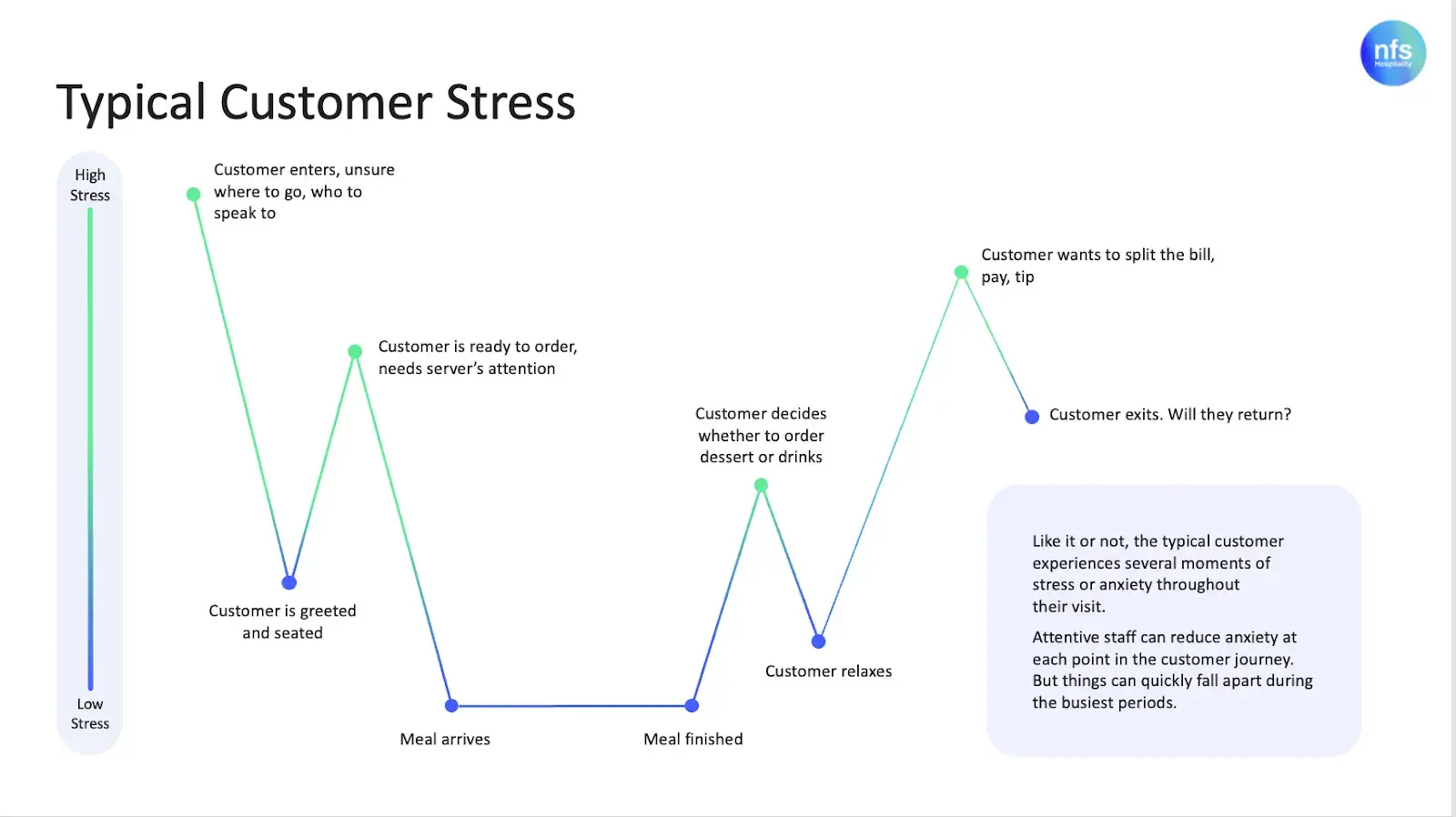
You’re shown to your table and the tension eases. When you’re ready to order and no one’s nearby, it creeps back in. Your food arrives and you relax, until you fancy another drink or dessert and the wait starts again. Then comes the bill – the stress of splitting it, tipping, and waiting for the card machine. That final spike hits just as you hoped the night would end smoothly. Only when you step outside does the pressure lift. These hidden stress points shape how you feel about the entire experience, often more than the food itself. These moments feel emotional to guests, but they’re operational at their core.
“The guest experience begins long before the food arrives.”
Why Stress Points Happen
Guests feel stress when the operation behind the scenes is under pressure. Slow ordering, missing items, overwhelmed staff, and clunky payment processes all stem from one issue – disconnected systems. These moments aren’t about the food. They’re about the systems supporting the team. When technology isn’t connected, everything slows down, and guests feel the impact immediately. This isn’t just a technology problem – it’s a sign that the wider hospitality ecosystem isn’t working in harmony.
“A smooth service creates a calmer, more enjoyable experience once guests walk through the door.”
Joining Up the Journey
Whether guests walk in or book ahead, their emotional journey starts early. When EPOS is connected to a smart booking system, the team knows who’s arriving, any dietary needs, and special occasions before the guest even sits down. It’s not extra tech; it’s a joined‑up journey that reduces stress and helps guests feel recognised and respected. This is what a true hospitality ecosystem looks like – booking, EPOS, payments, and operations all connected, all sharing information, and all working together instead of in silos.
“A booking is not just a transaction. It is the first chapter of the guest experience and journey.”
How EPOS Smooths the Journey
That first click on the EPOS is where the guest experience truly begins, and everything until the first bite is shaped by how smoothly that technology works.
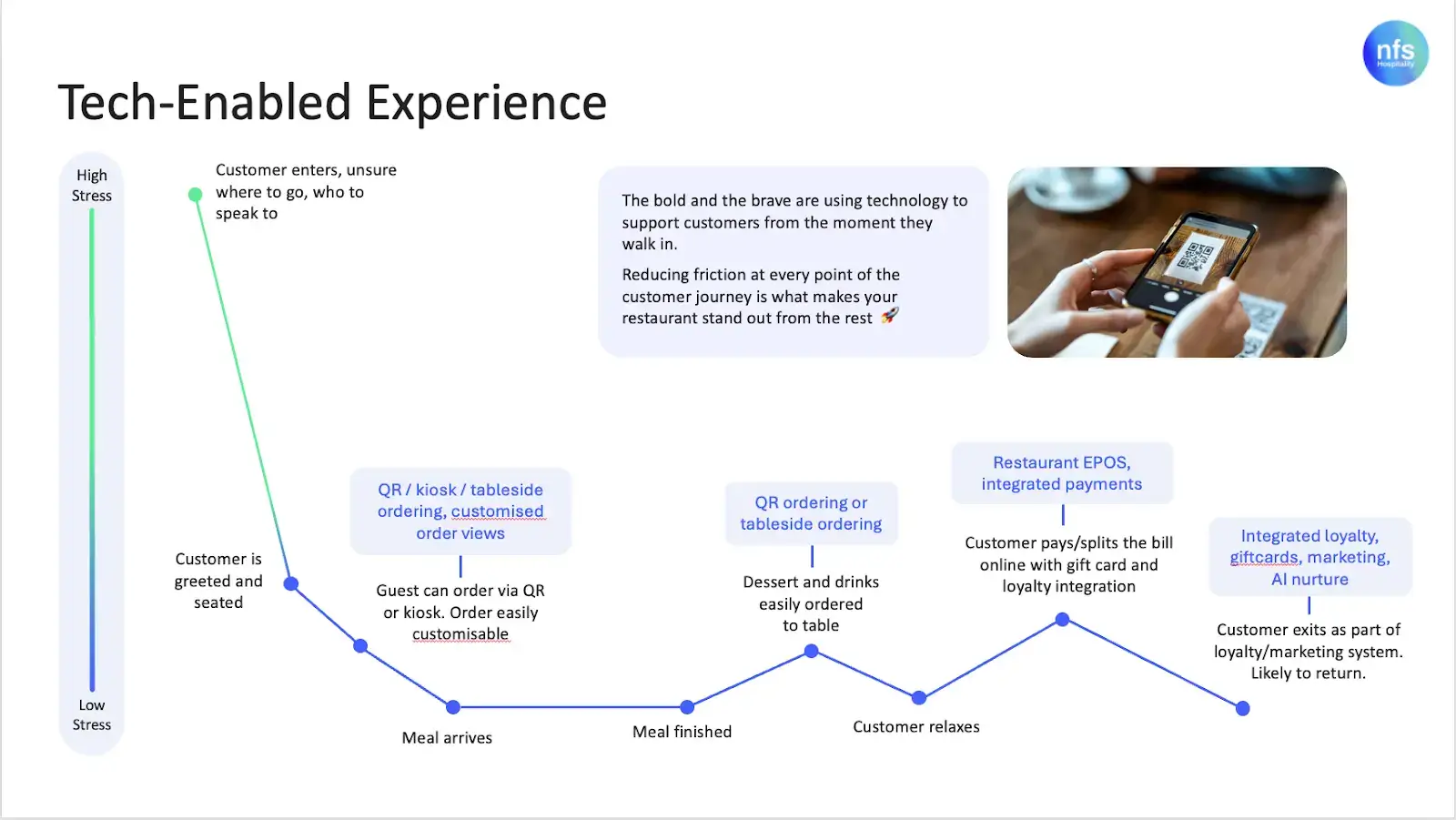
- A Confident Start
EPOS gives staff instant visibility of table status, so guests can be greeted and seated quickly, removing the first stress spike.
- Ordering Without Uncertainty
Guests can order at the table, via app, or by scanning a QR code – and traditional ordering still fits seamlessly into the same ecosystem. However guests choose to order, there’s no waiting, and no wondering if the order was captured correctly.
- A Kitchen That Flows
Orders go straight to the kitchen with no lost notes, no misread handwriting, no bottlenecks. Food arrives on time, and stress levels drop.
- Drinks and Desserts Without Delay
Guests can browse menus and reorder without waiting for a server, or choose traditional service – either way, the mid-meal stress spike disappears.
- Payment Without Pressure
QR code payments, split bills, gift cards, and loyalty points are all handled digitally – but traditional payments still fit seamlessly into the Hospitality ecosystem. No waiting, no awkwardness, no stress.
When the pressure eases for guests, it eases for staff too. A connected EPOS removes the frantic back‑and‑forth, the guesswork, and the bottlenecks that drain energy during service. Teams feel more in control, more supported, and more able to focus on hospitality rather than firefighting. And when staff morale rises, the atmosphere of the venue rises with it.
“The last impression is as important as the first; a seamless goodbye keeps guests coming back.”
The Experience Guests Remember
When EPOS works quietly in the background, guests feel:
- calm
- confident
- in control
- respected
And that emotional ease leads to better reviews, higher spend, and more return visits.
Why NFS Hospitality? Because it’s never just about providing EPOS, it’s about partnership
Every venue has its own challenges and pressure points. That’s why NFS works closely with operators to understand what really happens on the floor – the bottlenecks, the stress moments, the guest expectations.
Rather than delivering a one-size-fits-all system, NFS focuses on building the right setup with operators, creating an environment that supports teams, fits existing workflows, and strengthens the guest journey from first click to first bite.
At the heart of this approach is a connected hospitality EPoS ecosystem – one designed to support smoother operations, reduce stress points, empower staff, and create consistency across sites. When the ecosystem works, the business works, and guests feel the difference.
This isn’t a transaction. It’s a partnership built around understanding how hospitality really operates and shaping the technology around it.
The choice of a Point of Sale (POS) system can significantly impact the operational efficiency, customer experience, and ultimately, the success of a business. POS systems, serving as the hub of sales, inventory management, and customer management, have evolved from mere cash registers to sophisticated platforms that offer many features to support businesses in their daily operations. You need to get the right software as on-premise or cloud based pos systems for retail are not designed for restaurants – you need to get something tailored.
At the heart of this evolution is a critical decision that businesses, regardless of size and industry, find themselves grappling with: should they opt for a cloud-based POS system that boasts flexibility and real-time access, or a traditional on-premise solution known for its reliability and control? The answer is not straightforward, as each option comes with its unique set of advantages and challenges.
It is essential to keep in mind that the right choice varies from one business to another, depending on various factors such as the nature of the business, budget constraints, and specific operational requirements.
With this guide we want you to be able to choose the best EPOS system for restaurants for your business.
Overview of Cloud-based POS systems
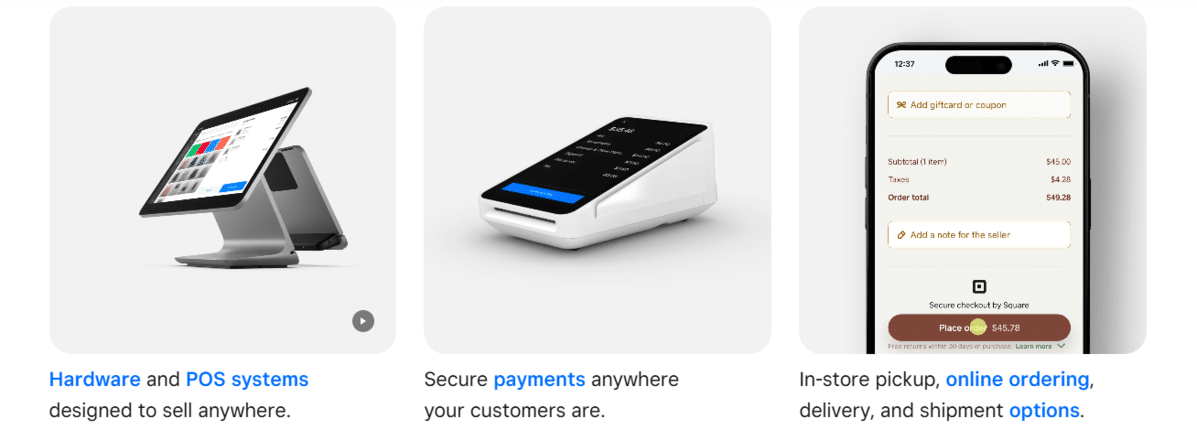
Cloud-based POS systems represent a modern approach to managing sales and operations, harnessing the power of the internet to offer businesses a flexible and scalable solution. Unlike traditional systems, a cloud POS operates on a software-as-a-service (SaaS) model, where the software is hosted on remote servers and accessed via the web or an app. This model offers several distinct advantages and some drawbacks that businesses need to consider.
Key features and benefits:
Accessibility: one of the hallmark features of cloud-based POS systems is their accessibility. Business owners and managers can access sales data, inventory levels, and customer information in real-time from anywhere in the world, provided they have an internet connection. This level of accessibility supports informed decision-making and allows for greater flexibility in managing operations remotely.
Scalability: as businesses grow, their needs change. Cloud POS systems are inherently scalable, allowing businesses to add more registers, locations, or features with minimal hassle. This adaptability ensures that the POS system can grow alongside the business, without the need for significant overhauls or investments.
Cost-effectiveness: initially, cloud-based systems may appear more budget-friendly, especially for small to medium-sized businesses, due to their subscription-based pricing models. There’s no need for substantial upfront investments in hardware or software licenses. Instead, businesses pay a monthly or annual fee that often includes updates, maintenance, and technical support, reducing the total cost of ownership.
Potential drawbacks:
Dependency on internet connection: The primary limitation of cloud-based POS systems is their reliance on a stable and fast internet connection. Should the internet go down, accessing the POS system or processing transactions can become challenging, potentially disrupting business operations.
Ongoing costs: while the initial costs are lower, the subscription fees can add up over time, making it more expensive in the long run. Businesses need to carefully consider their long-term costs when opting for a cloud-based system.
Data security concerns: storing sensitive business and customer data on remote servers brings about concerns regarding data security and privacy. Reputable cloud POS providers invest heavily in security measures, but businesses should conduct thorough research to ensure their data will be protected against breaches.
Overview of On-premise POS systems
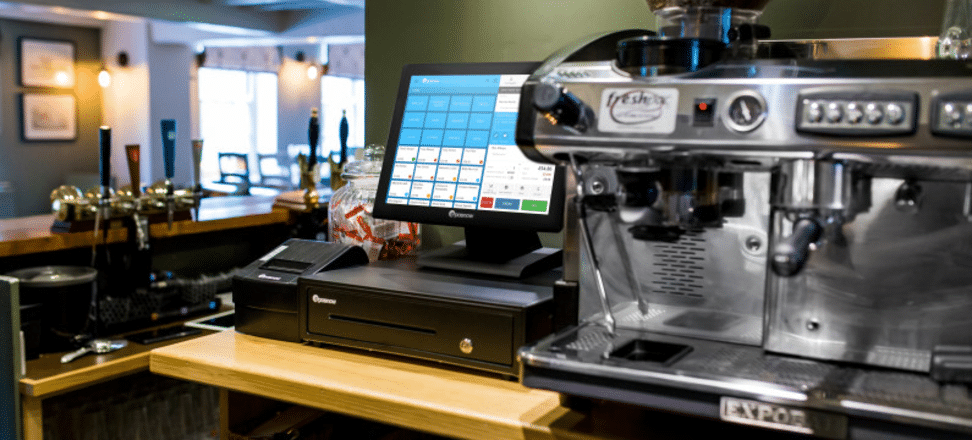
On-premise POS systems are the traditional choice for many businesses, offering a more conventional approach to sales and inventory management. Unlike their cloud-based counterparts, on-premise solutions are installed locally on a business’s servers and run on its network. This setup provides businesses with full control over their POS system and data, but it also comes with its set of challenges and considerations.
Key features and benefits:
Control and ownership: the most significant advantage of on-premise POS systems is the level of control and ownership they offer. Businesses have complete autonomy over their system, including customisation, data management, and security protocols. This control is particularly appealing for businesses with highly specific needs or those operating in industries with stringent data protection regulations.
Offline functionality: on-premise systems do not rely on an internet connection to operate. Transactions and operations can continue seamlessly, even during internet outages, making them reliable in environments where connectivity is inconsistent or unreliable.
One-time investment: although the initial cost of an on-premise POS system can be high—due to hardware purchases, software licenses, and setup fees—it’s a one-time investment. Over time, this can be more cost-effective than recurring subscription fees associated with cloud-based solutions, especially for larger businesses with the capital to invest upfront.
Limitations:
High upfront costs: the initial investment for on-premise POS systems is significant, making it a less viable option for small businesses or startups with limited budgets. The cost includes not only the software and hardware but also maintenance and potential upgrades.
Maintenance and updates: businesses are responsible for maintaining their on-premise systems, including hardware repairs and software updates. This responsibility requires in-house IT expertise or external support contracts, adding to the operational costs.
Scalability issues: scaling an on-premise POS system can be more complex and costly than a cloud-based solution. Expanding the system to accommodate business growth often requires additional hardware purchases and software licensing fees, as well as potential downtime during the upgrade process.
Comparative analysis
When choosing between a cloud based POS system and on-premise POS systems, businesses must weigh various factors to determine which solution aligns best with their operational requirements, budget, and long-term goals. This comparative analysis delves into the performance, security, and cost implications of each system, offering insights to help make an informed decision.
Cloud based POS systems are ideal for businesses that operate in multiple locations or require remote access to their sales and inventory data. The flexibility and real-time data synchronization make it easier to manage operations on the go. However, performance for cloud based pos systems heavily depends on internet connectivity, which can be a limiting factor in areas with unreliable internet service.
On-premise POS systems excel in environments where stability and speed are paramount, and internet connectivity might be sporadic. Since the system operates independently of an internet connection, businesses can ensure consistent performance even in offline modes. This makes it suitable for high-volume transactions in settings like large bars, clubs and restaurants.
Security Aspects: data security in cloud-based systems involves trusting a third-party provider to safeguard sensitive information. While reputable cloud-based POS systems for restaurants providers implement robust security measures, the nature of cloud storage inherently poses risks, especially in scenarios of widespread cyber threats. Businesses must assess the provider’s security credentials and compliance with industry standards.
On-premise systems offer businesses the opportunity to tailor their security measures to specific needs, potentially providing a higher security level. Since the data is stored locally, businesses have more control over access and protection. However, this also means that the responsibility for security updates and breach prevention falls squarely on the business, requiring a dedicated IT security team.
Cost implications: cloud-based pos systems for restaurants typically have lower initial costs due to their subscription model, which includes updates and support, making them attractive for small to medium businesses. On-premise systems, with their high upfront investment for hardware and software, might seem less appealing initially but can offer cost benefits in the long run.
The ongoing subscription costs of cloud-based POS systems can accumulate, potentially making them more expensive over an extended period. Conversely, on-premise systems, despite their higher initial cost, may become more economical, as businesses only incur significant costs during upgrades or expansions.
How EPOS Systems Improve Customer Experience
A modern point of sale system goes beyond processing transactions; it enhances the customer experience. For instance, restaurants using EPOS solutions can speed up table service with mobile ordering and payment options.
Additionally, you’ll benefit from quicker checkout processes and personalised promotions based on purchase history. These features not only improve customer satisfaction but also drive repeat business, making POS systems a valuable investment.
Sustainability: Cloud POS vs Traditional POS
Hospitality businesses are increasingly prioritising sustainability, and a cloud POS system often aligns with these goals. Cloud-based systems eliminate the need for bulky hardware and reduce energy consumption associated with on-premise servers.
The ability to access data remotely minimises the need for printed reports and paperwork. For eco-conscious businesses, this is an additional advantage of choosing a cloud POS solution.
Integrating EPOS with Other Business Tools
To maximise the benefits of your EPOS system, integration with other tools such as accounting software, payroll systems, and marketing platforms is essential. These integrations save time and reduce errors by automating tasks such as syncing sales data with your financial records.
For restaurants, integrating an EPOS system with online ordering platforms ensures seamless order management, enhancing operational efficiency.
Conclusion
Deciding between a cloud based POS system and on-premise POS systems requires a careful assessment of your business’s operational requirements, budget, and growth aspirations.
While cloud-based systems offer flexibility and ease of scaling, on-premise systems provide control and reliability, especially in environments where internet connectivity is a concern. It’s crucial to weigh the pros and cons of each system against your business needs and consider the long-term implications.
We encourage restaurateurs to thoroughly research the market. We can help. Our experts at NFS offer unbiased consultancy providing a tailored best of breed solution based on your needs and future growth plans. We integrate with industry-leading partners to provide functionality that will streamline your efficiency and drive profits today and for many years to come.
Contact us today to find out more.