





















Efficiency and adaptability are key to holding a competitive edge in the hospitality industry.

That’s why successful restaurants turn to cloud-based EPOS (Electronic Point of Sale) systems to streamline operations and customer service, while boosting profitability.

Unlike traditional EPOS systems, a cloud based POS system offers real-time data access, greater flexibility, and seamless integration with other software, making them an essential tool for modern dining.

Reasons Restaurants Use Cloud EPOS

  1. Streamlining Operations and Reducing Errors
  2. Improved Customer Experience
  3. Real-Time Data & Analytics
  4. Seamless Integration with Other Tools
  5. Scalability for Growing Businesses

1. Streamlining Operations and Reducing Errors

restaurant pos software

Automating Key Restaurant Tasks

One of the greatest advantages of cloud-based EPOS systems is automating essential restaurant tasks.

Traditional methods of order processing, inventory management, and staff scheduling are prone to human error. Cloud EPOS automates these tasks, ensuring these tasks are managed smoothly and more accurately.

For example, orders placed at the front of the restaurant are instantly sent to the kitchen, reducing the chances of miscommunication or order mix-ups.

Automation not only enhances accuracy but also speeds up service, improving workflow.

Real-Time Inventory Tracking

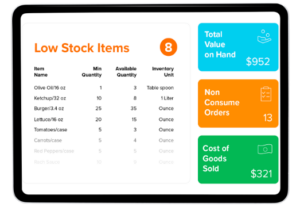
Restaurant management software helps restaurant managers keep a constant eye on stock levels by automatically adjusting inventory based on sales.

This ensures that restaurants always know what they have in stock, reducing the likelihood of shortages or over-ordering.

Real-time updates allow for more precise control over inventory, helping prevent costly mistakes and wastage.

Optimised Staff Scheduling

Scheduling staff becomes a lot easier with cloud EPOS systems.

By analysing sales and foot traffic data, managers can create more efficient work schedules.

This ensures that the restaurant is neither overstaffed or understaffed at any given time. Additionally, cloud EPOS platforms can integrate with payroll systems, allowing staff hours to be automatically calculated and recorded.

Remote Oversight and Decision Making

With cloud EPOS systems, managers and owners can monitor sales, orders, and operational performance remotely.

This gives them full control over operations, even if they are not physically at the restaurant. Tracking key metrics in real-time helps managers make quick, informed decisions, improving overall oversight.

2. Improved Customer Experience

managing multiple locations

Speeding Up Service

Cloud EPOS systems significantly improve service speed by allowing orders to be sent instantly from the server to the kitchen.

This reduces wait times and ensures that dishes are prepared more quickly, particularly during busy periods. Whether for dine-in or takeaway, faster service leads to increased customer satisfaction and higher table turnover.

Boosting Order Accuracy

Manual processes often lead to errors, but cloud EPOS systems ensure that orders are accurately recorded and delivered to the correct stations in the kitchen.

Special instructions, such as dietary requirements or modifications, are transmitted in real-time, reducing the risk of mistakes and ensuring customers receive exactly what they ordered.

Offering Flexible Payment Options

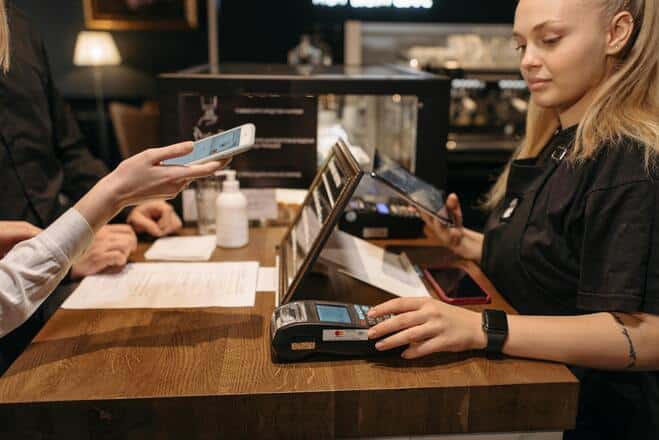
Cloud EPOS systems accommodate a wide range of payment processing methods, from traditional cards to mobile and contactless payments like Apple Pay and Google Pay.

This flexibility ensures a frictionless checkout experience for customers, making it easier for them to complete their transactions quickly and conveniently.

Additionally, cloud EPOS systems support split payments and self-checkout options, enhancing customer convenience. 

Enhancing Loyalty Programs and Personalised Promotions

Restaurants can leverage the data collected by cloud EPOS systems to create personalised promotions and loyalty programs. 

By analysing customer preferences and purchase history, restaurants can offer tailored discounts, special offers, and rewards, fostering customer loyalty. 

Integrating these programs directly into the EPOS system makes them easy to manage and track, encouraging repeat business. 

3. Real-Time Data and Analytics
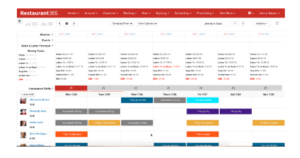
transaction data

Valuable Insights into Sales Trends

Cloud based POS systems provide restaurants with instant access to detailed sales data.

This allows them to track which menu items are performing well, which dishes may need adjustments, and identify peak sales periods. 

With this real-time information, restaurants can quickly spot trends and make data-driven decisions that can enhance their menu offerings, optimise pricing, and boost sales. 

Understanding Customer Behaviour

Beyond just tracking sales, cloud EPOS systems offer insights into customer behaviour, such as dining frequency, spending patterns, and preferred payment methods.

By analysing this data, restaurants can tailor their service offerings and create targeted promotions that resonate with their customer base. 

For instance, a restaurant might notice that a particular demographic prefers certain dishes, allowing them to create specials that attract repeat business.

Real-Time Inventory Monitoring

Cloud EPOS systems update inventory levels in real-time, allowing restaurants to maintain precise control over stock levels.

This helps reduce waste by alerting managers when items are running low or about to expire.

With a clear view of what’s in stock and what needs replenishing, restaurants can avoid over-ordering or understocking, improving inventory management and reducing the likelihood of wasteful spoilage.

Demand Forecasting for Better Planning

This real-time data also aids in demand forecasting.

By analysing historical sales data and identifying seasonal trends, restaurant owners can predict which items will be in higher demand during specific times. 

This allows for more accurate ordering of ingredients and better staff scheduling, helping the restaurant run smoothly, even during peak periods. 

Demand forecasting reduces the risk of stock shortages and ensures that the restaurant is prepared to meet customer demand, ultimately boosting profitability. 

Boosting Profitability Through Data-Driven Decisions

With real-time analytics, restaurant owners can make strategic decisions to improve profitability.

By tracking metrics like average spend per customer or the performance of special promotions, managers can identify opportunities to maximise revenue.

The ability to reduce food waste, optimise labour costs, and improve overall efficiency through data-driven insights can lead to significant cost savings over time.

4. Seamless Integration with Other Tools
online ordering

Flexibility in Integrating with Third-Party Applications

One of the standout features of cloud EPOS systems is integration with third-party tools, making them a powerful hub for managing various aspects of a restaurant’s operations.

From accounting software to delivery platforms and customer relationship management (CRM) systems, cloud EPOS systems offer a high degree of flexibility.

This integration centralises operations and reduces the need for manual data entry across different platforms.

Many cloud EPOS systems integrate directly with payroll and accounting tools, such as QuickBooks, Xero, or Sage, helping restaurants automatically sync sales data, calculate staff wages, and generate financial reports with ease. 

This eliminates the hassle of transferring data manually and minimises the risk of accounting errors.

Integrating with Delivery Platforms

With the rise of food delivery services, restaurants need to keep up with demand across both dine-in and delivery channels.

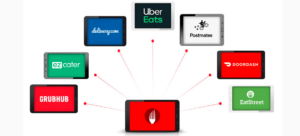
Cloud EPOS systems offer integrations with popular delivery platforms like Uber Eats, Deliveroo, and Just Eat, allowing restaurants to manage orders from these services directly.

These integrations help streamline the process by sending delivery orders straight to the kitchen.

This real-time synchronisation prevents any delays or miscommunication between platforms, ensuring a seamless customer experience across all sales channels.

Customer Relationship Management (CRM) Integrations

Cloud EPOS systems also integrate with CRM tools, helping restaurants build and maintain strong relationships with their customers.

By connecting with CRM systems like Salesforce or HubSpot, restaurants can track customer interactions, purchase history, and preferences.

This data can be used to send personalised offers, create tailored loyalty programs, or automate marketing campaigns. Centralising customer data allows restaurants to create deeper connections with their diners, driving repeat business and fostering long-term loyalty.

Streamlining Operations with Kitchen Display Systems (KDS)

Cloud EPOS systems often integrate with KDS to further streamline order management.

Instead of relying on printed tickets or manual processes, orders are instantly sent to digital displays in the kitchen.

This increases the speed and accuracy of order preparation, especially during busy periods.

KDS integrations help ensure that the kitchen and front-of-house teams are always in sync.

Other Useful Integrations

Cloud EPOS systems can also integrate with inventory management systems, reservation platforms, and employee scheduling tools.

These integrations simplify workforce management by automatically pulling sales data to adjust staffing needs based on real-time demand.

Examples of Popular Cloud EPOS Integrations

5. Scalability for Growing Businesses

menu management

Easily Expand to New Locations

Cloud EPOS systems are designed to scale seamlessly as your restaurant grows.

One of the key benefits of these systems is that they require minimal hardware, making expansion to new locations both simple and cost-effective.

Cloud-based solutions allow you to add new locations to your existing system without the need for additional costly equipment.

The cloud EPOS system is hosted off-site, so there’s no need to install physical servers or network infrastructure. This makes setting up a new location quicker and easier, allowing you to focus on growing your business rather than worrying about complex technical setups.

Centralised Management Across Locations

As your restaurant expands, cloud EPOS provides a unified management platform that lets you oversee multiple locations from a single dashboard.

You can monitor sales, track inventory, and manage staff across all your locations in real time. This centralised control simplifies operations and ensures consistency, no matter how many restaurants you open.

If you’re managing a franchise or chain, cloud EPOS systems allow you to implement company-wide menu changes, promotions, or pricing adjustments instantly.

There’s no need to manually update each location’s system. This centralised approach reduces complexity and ensures that all locations are operating under the same standards and guidelines.

Cost Savings and Reduced Infrastructure Needs

For growing businesses, cloud EPOS systems present significant cost savings.

Cloud-based EPOS systems eliminate the need for expensive servers and hardware at each location, resulting in lower upfront costs and minimal maintenance fees.

Since the system is cloud-based, there are no complicated installations required for new sites.

Most cloud EPOS providers offer scalable pricing plans, meaning you only pay for what you use.

This allows restaurants that experience seasonal fluctuations or gradual expansion to adjust their system needs according to demand without incurring unnecessary expenses.

Adapting to Growth and Change

Cloud EPOS systems are adaptable, making them ideal for restaurants with ambitious growth plans.

Whether you’re opening a second location or expanding into new regions, cloud EPOS can grow with you. As your business scales, the system can accommodate increased transaction volume, more staff, and additional inventory without affecting performance.

This flexibility allows restaurants to expand confidently, knowing that their EPOS system will support their operational needs as they grow.

Streamlined Employee Management

As a restaurant grows, managing a larger workforce becomes more complex.

Cloud EPOS systems can streamline staff management by tracking employee hours, managing shifts, and integrating with payroll systems.

These tools scale with your business, so as you hire more staff across multiple locations, your EPOS system can handle the increased data, ensuring efficient and accurate employee management.

Conclusion

Adopting cloud EPOS systems is not just a trend—it’s a necessity for long-term success. These systems streamline operations by automating key tasks, ensuring order accuracy, and providing real-time data that helps restaurants make informed decisions.

By integrating seamlessly with other tools, such as delivery platforms, accounting software, and CRM systems, cloud EPOS simplifies complex processes and enhances overall efficiency.

The flexibility to manage the restaurant remotely, adapt to menu changes, and expand to new locations without heavy infrastructure investments makes cloud EPOS the ideal solution for growing businesses. 

It also elevates the customer experience by enabling faster service, personalised promotions, and a wide variety of payment options. 

Ultimately, cloud EPOS systems empower restaurant owners and managers with the tools they need to stay competitive, reduce operational friction, and foster customer loyalty. 

For helping finding the right cloud EPOS system for your business, contact NFS Hospitality.  
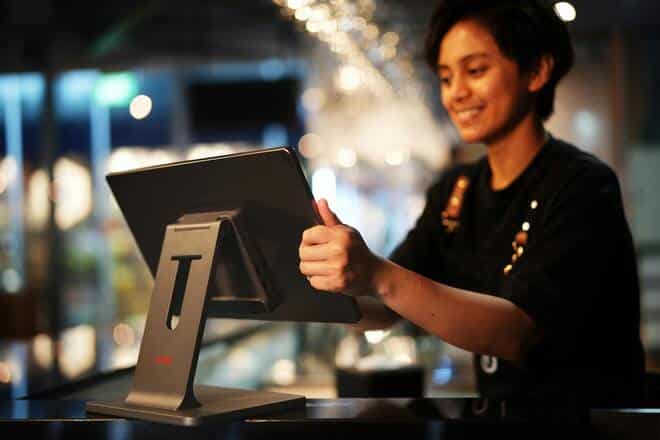
When it comes to selecting a restaurant point of sale solution, there are two choices – either an on premise POS system or a cloud POS solution.

A traditional on premise POS system is typically linked to computer or server on the premises whereas a cloud POS solution is accessed online as all data processing is conducted in the cloud.

Let’s explore the advantages and disadvantages of both approaches so you can make an informed choice – whether you are looking to replace an existing solution or are starting fresh.

What is a cloud-based POS system?

epos

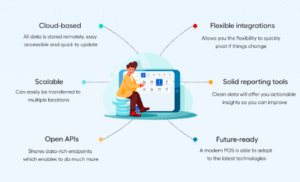
A cloud based POS system or a SaaS (software as a service) based POS system is accessed through the internet.

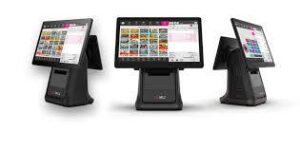
A key feature of a cloud based POS system is that it doesn’t require a dedicated POS terminal – it will work happily on an iPad, a desktop PC or an Android tablet. It can, therefore, be a lot more portable than the traditional on premise POS system which is based around dedicated fixed terminals.

In terms of core functionality, a cloud POS solution will perform the same tasks as an on premise POS system – managing stock, printing receipts and processing orders.

What are the advantages of a cloud-based POS system?

The advantages of a cloud-based POS system are:

Remote access

With a cloud-based POS system you are not tethered to a physical location. You can run reports on the business from anywhere in the world with an internet connection.

Data security

SaaS technology is incredibly resilient. All data is backed up online in the cloud so even if you drop and break your iPad – no problem – the data is still there, protected and readily available.

Scalability

As restaurant operators grow their business it will be necessary for the POS system to be scaled up when needed to match their business size. Cloud POS systems are designed with scalability in mind so that restaurateurs can choose to scale up the POS without spending too much time, effort, and budget. Adding additional users and sites is straightforward.

Business insights

A cloud POS system enables you to track all transactions, or sale histories so you can view this information anywhere at any time with real-time data synchronisation. This is a great feature for multi-site operators as they can get a holistic view of their business in real-time at the touch of a button.

Choice of hardware

With an on premise POS system you are limited to relatively expensive and largely immobile terminals. With cloud POS systems you can use an iPad or Android tablet for table service or a desktop PC at the front desk. With appropriate accessories such as stands and cash drawers you can also use the tablet front of house as well as tableside.

Regular updates

The beauty of a cloud-based POS system is that all updates are rolled out automatically and there is no need for additional software installation. You can enjoy new features and benefits straight away at no additional cost!

What are disadvantages of a cloud POS solution?

While it is a great option, there are a few disadvantages to selecting a cloud POS solution:

Requires good internet

If you are in a location where internet is intermittent it may be prudent to consider an on premise POS system. A bad connection will at best impede service and, at worst, cause your POS system to fail completely with a potential loss of data.

Non-customisable Solution

POS cloud software solutions do not allow room for customisation. This poses no problem for small operators who lack time and budget for such upgrades. However, larger operators may prefer to be able to make changes to reflect their brand and/or their specific requirements.

Limited customer support

While they typically offer online support, cloud-based POS systems often do not require tailored support as they are usually intuitive and easy to use. For larger operators, a traditional on premise POS systems may be more suitable as support for these platforms can be tailored to suit their needs.

What are the advantages of an on premise POS system?

cloud based epos

A traditional on premise POS system has some distinct benefits over its POS cloud counterparts. Simply, it is a perfect option for large enterprises and restaurants.

Not relying on the internet

Unlike cloud POS, a traditional system does not depend on the internet as servers are in a closed network. POS can work smoothly and efficiently with the Wi-Fi disconnection.

One-time payment

Most of the time, a traditional POS is sold with a one-time cost. Unlike the monthly subscription fee of cloud POS, you only pay once to own an on premise POS.

Full control and customisation

On premise POS systems reside entirely on your own servers, giving you complete control over the software configuration and customisation. You can tailor the system to your business’s specific needs and processes.

Data security and privacy

With on premise POS systems, your sensitive business data remains entirely within your physical premises. This enhanced security reduces the risk of data breaches or unauthorized access compared to cloud-based systems that store data remotely.

Faster transaction processing

On premise POS systems typically offer faster transaction processing compared to cloud-based systems, as they don’t rely on internet connectivity for data transfer and processing. This can be crucial for businesses with high transaction volumes.

Offline operation

On premise POS systems can operate independently of an internet connection, ensuring uninterrupted transactions even during network outages or power disruptions. This is crucial for businesses that rely on their POS systems for critical operations.

Local support and expertise

On premise POS systems typically provide local support from the provider or their authorized partners. This can be more convenient for businesses that need immediate assistance or prefer face-to-face interactions with support personnel.

What are the disadvantages of on premise POS system?

On premise POS systems also have certain disadvantages that may make them less appealing for some operators:

Higher initial investment

On premise POS systems involve a higher upfront cost due to the hardware and software purchase requirements. You’ll need to purchase or lease servers, manage hardware maintenance, and invest in software licenses.

Technical expertise required

On premise POS systems require technical expertise to install, configure, and maintain the software and hardware components. Businesses may need to hire IT staff or rely on external consultants to manage their POS infrastructure.

Limited scalability

On premise POS systems may have limited scalability in terms of the number of users or transactions they can handle. Adding more hardware or software components can become expensive and complex.

Data security concerns

While on premise POS systems offer greater data security, potential security breaches can still occur due to human error, malware attacks, or hardware malfunctions. Businesses need to implement proper security measures and regularly conduct backups.

Software updates and patches

On premise POS systems require businesses to manually install software updates and security patches, which can be time-consuming and error prone. Missed updates can leave the system vulnerable to security risks.

How to Choose the Right POS System for Your Restaurant

Selecting the best restaurant EPOS or cloud POS solution depends on your business’s specific needs. Consider the size of your restaurant, transaction volumes, and internet reliability.

For instance, a busy restaurant with high turnover may prioritise speed and offline capability, making an on-premise POS appealing. Meanwhile, smaller restaurants or multi-location operators often prefer cloud POS systems for scalability and remote management capabilities.

Integrating POS Systems with Other Restaurant Technologies

cloud based epos

Modern restaurant EPOS and cloud POS systems can integrate seamlessly with other technologies, like kitchen display systems, inventory management software, and customer loyalty programs. These integrations streamline operations, reduce human error, and improve the customer experience.

For example, a cloud POS system can automatically update inventory levels in real time when orders are processed, saving time and effort for staff.

Cloud POS for Multi-Site Restaurants: A Game Changer

For restaurant groups or multi-location operators, a cloud POS system offers unparalleled convenience. These systems centralise data management, enabling owners to track performance across all sites in real time.

Whether analysing sales trends or making menu adjustments, a cloud POS ensures consistency and efficiency across locations.

Cost Comparison: On-Premise vs. Cloud POS Systems

An on-premise POS typically involves a higher initial investment, including the purchase of servers, dedicated hardware, and software licenses. These systems often require ongoing maintenance, which can lead to additional costs for technical expertise or IT staff.

A cloud POS system operates on a subscription model, spreading costs over time with a predictable monthly or annual fee. This reduces the upfront expense. Hardware requirements for cloud POS solutions are generally more flexible and affordable, as they can run on devices like tablets or desktop PCs.

For restaurant EPOS systems, the right choice depends on the its operational needs. Either way, choosing the right system can deliver a strong return on investment (ROI) by streamlining operations and enhancing efficiency.

Conclusion

Both cloud POS systems and on premise POS systems have their pros and cons. Generally speaking, cloud POS systems are an affordable option for smaller operations whereas on premise is ideal for larger operators particularly those where speed and volume are paramount.

An on premise POS system offers greater control, security, and offline capability, but they require higher upfront investment, technical expertise to implement and maintain, and need ongoing maintenance. With faster transaction speeds and specialised hardware, they are a good choice for, say, quick service.

Cloud POS systems offer a convenient approach to managing hospitality operations. They provide restaurants with 24/7 access, scalability, and flexibility. A POS cloud based system also simplifies updates and maintenance, ensuring that businesses always have the latest features and security patches. Additionally, a POS cloud based system offers real-time data insights, enabling businesses to make informed decisions about inventory management, marketing, and customer service.

At NFS we offer a best of breed approach as one size does not fit all. We recommend solutions which will meet your needs today and into the future.

Contact us today so we can discuss which option best meets your needs.

EPOS

Choosing the right restaurant POS system for your business is the best way to up its efficiency.

To summarise, EPOS systems (or electronic point of sale systems) are an end-to-end solution to all manner of daily problems in the hospitality industry.

They cover everything from payment processing and stock control, to table management and custom pricing. Hospitality Businesses also use them to track online orders and dispense digital receipts.

Good POS systems can manage all this and more across multiple locations, while providing a wealth of reporting features to make sure you get the most out of your tools.

Best POS Systems Available

Aloha EPOS System

cloud epos

Aloha is designed as a holistic solution for restaurant EPOS management across multiple locations.

The system is easy to use, but extensive and regularly updated to meet the evolving needs of restaurant owners, while offering stellar customer support.

Aloha excels in managing the entire process from ordering to delivery, with a suite of cloud-based support features.

Where the Aloha point of sale system truly thrives is in its management of stock control, labour, payroll, and other back-house operations.

The key focus of the system is automation of these processes.

Ease of Use

Aloha scores major points for its accessible, easy-to-understand user interface.

Anyone familiar with Windows will have no trouble using Aloha and its layout can be easily customised to suit the needs of you and your staff.

Customer Experience Management

Aloha provides everything restaurant owners need to integrate their customer loyalty programs with the EPOS, as well as the means to customise orders and split bills easily.

Reporting and Analytics

Clear, actionable reporting and pertinent insights on inventory management, sales, and staffing costs are included.

Compatibility

The system integrates well with a range of other services and software such as payroll and accounting tools.

Revel EPOS System

restaurant epos

For an all-purpose restaurant EPOS that’s easy to set up, frequently updated, and scalable, consider Revel. This POS system is designed to support both front-of-house and back-of-house operations.

It provides robust controls for menus, stock management ordering, and reporting.

In a market where point of sale systems are becoming increasingly overcomplicated, Revel’s simplicity is one of its greatest strengths.

Revel is optimised for order accuracy and provides tools for preventing delays and boosting customer satisfaction through tableside ordering.

More advanced features include the ability to map out a unique floor plan for individual sections of your restaurant for seamless order management, schedule management, and focused reporting.

Ease of Use

Revel’s design and user interface are simple and adaptable, with a personalised onboarding process that provides guidance on both the hardware and operating system.

Customer Experience Management

Customer retention is one of Revel’s primary concerns. The platform contains various tools for loyalty programs, customer relationship management, discounts, gift cards, and online ordering.

Reporting and Analytics

This restaurant EPOS Operations Report feature combines critical data on sales, order history, product mix, and more into one detailed report, providing a holistic view of the business’ performance.

Compatibility

Revel is designed for compatibility with your existing EPOS hardware, but replacing old systems with their solutions is recommended to get the most out of their impressive suite of features.

Pricing

The comprehensive monthly package comes in at around £80 per month.

CloudPOS

POS hardware

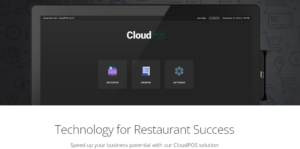
CloudPOS is an easy-to-use restaurant EPOS system with multiple features designed to assist order management, integrated payments, sales reports, online ordering, and more.

Better yet, CloudPOS kitchen display system and other user interfaces are built from the ground up for accessibility, dramatically reducing necessary staff training time.

An all-in-one order management tools allows users to easily edit and filter orders, make advance bookings, and take partial payments accordingly.

Speaking of payments, CloudPOS boasts some of the lowest payment processing rates available, as well as simple bill splitting, tipping, and gratuity features.

Ease of Use

The CloudPOS touch screen register is built for simplicity, while its manager dashboard includes straightforward customisations tools for catering the system to your staff.

Customer Experience Management

Every part of the CloudPOS platform is streamlined to smooth and speed up the checkout process, allowing customers to tip and sign directly on your device.

Reporting and Analytics

You can expect to receive daily sales reports, in-depth monthly summaries, and information on your top sellers, allowing you to tailor your operations for productivity and your menu for your customer’s tastes.

Compatibility

Their custom touch screen POS system is designed as the ideal replacement for traditional cash registers and takes minimal hassle to set up. It also integrates well with programs like QuickBooks, SHOGO, and XERO. Additionally, it won’t drop you when your wi-fi does.

Pricing

CloudPOS’ basic package runs at £16.65/MO, its Pro package at £41.65/MO, and its Enterprise package at £74.99/MO.

Square POS

cloud based solutions

The Square restaurant POS system implements numerous features specifically designed to cater to the restaurant industry, with a transparent pricing model, multi location management, reporting, and more.

It’s tool add-on system enables restaurant owners to pay for only what they need and cut costs in other areas. While the system is operational from any mobile device, the Square EPOS system also has a range of bespoke, optional hardware available.

The Square EPOS system is capable of processing customer payments in person, via mobile, or online, while their custom hardware requires little to no set up to get working.

Better yet, the system is built to easily customise menus, speed up the check out process, provide in-depth sales and product reports, and consolidate customer data into automated customer profiles.

Ease of Use

Navigating the Square user interface is intuitive from beginning to end and set up is painless, catering to operations of all sizes.

Customer Experience Management

Square allows restaurant owners to open direct lines of communication with customers for resolving any feedback, sending coupons, and delivering tailored service accordingly.

Reporting and Analytics

The interface lays all the groundwork for informed decision making by providing detailed reporting on best sellers, average customer spend, employee performance, and stock.

Compatibility

The Square dashboard is fully compatible with a wide range of devices, but your chosen point of sale device may limit the features you have access to.

Pricing

The Square POS platform begins as free-to-use, but charges when you begin taking payments, with 1.75% processing rate on chip and PIN or contactless payments, 2.5% for virtual terminal and invoices, and its hardware range beginning at £19, not including VAT.

Toast POS System

repeat business

Toast is one of the most popular EPOS in the restaurant business for a reason.

It offers all-encompassing solutions for order and inventory management, menu management, payments, and more.

It provides seamless payment processing, menu customisation and profitability tools, CRM functionality, and thorough analytical reporting on performance and operations.

Ease of Use

Toast is arguably most well known for its excellent user interface. While the initial setup may contain a learning curve, everyday usage is quick and easy.

Customer Experience Management

The package contains all the features you’d expect for tableside payments and quick, bother-free feedback collection from your guests.

Reporting and Analytics

Toast provides key data points across all channels in real time, cutting out waiting times and directly emailing daily results to your inbox every night.

Compatibility

While Toast integrates well with a variety of hardware and software, it’s worth noting that the platform is Android inclusive and doesn’t work on iOS devices.

Pricing

The Starter package goes for £50, while the Essentials package, designed for restaurant owners looking to scale their business, is £150.

LightSpeed POS

lightspeed pos

Lightspeed’s features focus on saving time and automation. It offers personalised user support with various multilocation tools and integrations to get you up and running quickly and efficiently.

It offers all the features needed to manage your teams, inventories, and suppliers from one location.

It’s specifically designed to increase visibility in key areas for multilocation operations and offers plenty of customisation options to help you get your ideal experience and functionality.

Ease of Use

Its user interface is simple and intuitive and set up is no challenge, though getting to grips with its various features will take some time.

Customer Experience Management

A key feature here is Lightspeed’s ability to offer customers the same benefits online that they would when visiting your restaurant.

Reporting and Analytics

Its detailed reports give you everything you need to know about staff performance, popular items, and more via its interactive reporting dashboard.

Compatibility

The Lightspeed POS system is compatible with a range of devices, as well as both the Windows and Mac operating systems.

Pricing

Users can expect to pay anywhere between £50 and £300+ for the service, depending on their chosen package.

What To Look For in a EPOS System

Professional Restaurant Hardware

When you sign up with a restaurant EPOS, you’re entrusting a huge part of your operations and performance onto software. In other words, it’s no small decision.

In fact, it’s something like choosing a business partner. As with any kind of relationship, there are a couple of key green flags you should be looking out for before making a choice.

Ease of Use

restaurant epos

You want to lower the learning curve for you and your staff as much as possible. Something as simple as a receipt printer should never be a headache.

Restaurant POS should have an intuitive, logically laid out user interface. You’ll need simple functionality for tipping and splitting bills, modifying menus, loyalty programs, and a strong customer support team.

Reliable, advanced features will minimise errors and stress, lower training time, and ensure quicker service across the board.

Customer Experience Management

From online ordering to the self service kiosk, an ideal cloud based POS software is designed to improve the customer experience from beginning to end.

Look out for products that personalise the customer’s service, track customer feedback, and organise customer data clearly, allowing you to develop targeted insights about their behaviour.

These can be used to market more directly to existing customers or enhance your customer loyalty programs.

Reporting and Analytics

Data management and analysis is one of the key bedrocks to improving any business’ performance. Hospitality is no different.

Your POS system should tell you about sales trends, item popularity, customer preferences, and more.

Whether it’s a chain franchise or independent restaurant, collecting and analysing data is how you judge the performance and operations of your business.

That means your POS terminals are a centralised location for data-based decision making, boosting revenue and efficiency, managing expenses, and viewing sales reports.

Stock Control

stock control

Monitoring stock levels is a key touchstone for a good restaurant EPOS.

With the right features at hand, the restaurant’s point of sale system becomes the best way to get ahead of stocking issues via automated ordering or more accurately track the cost of your dishes.

Compatibility

You’ll need to understand early on exactly what you’ll need in terms of tablets, printers, payment devices, and the like.

The idea is to avoid any surprises that could slow down service in the future and ideally to opt for an EPOS system that easily integrates with your existing hardware.

The same consideration should be made for integration with other essential technologies, such as your chosen accounting software.

Pricing

subscription model

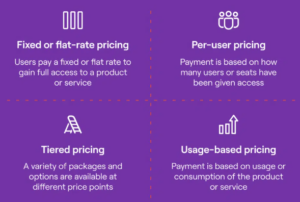
The cost of restaurant EPOS systems can vary significantly, especially when considering both hardware and software, as well as the potential costs involved in integration.

Different softwares may be based on either monthly or yearly subscriptions. They may be tailored to the size of your restaurant or multi location restaurants.

Some provide various options when it comes to contracts, while others may lock you into uncomfortable terms or feature a wealth of hidden costs and transaction fees.

Conclusion

The best restaurant POS systems in 2024 are those that most seamlessly combine advanced tools with user-friendly interfaces.

They provide restaurant owners, managers, and staff with what they need to improve the quality and efficiency of their inventory management, customer engagement, payment, online orders, and more.

A robust EPOS system is one whose sales systems work with minimal input or set up, allow for both payments via portable card machines, mobile payments, or integration with any accounting software.

Tools that allow you to customise your floor plan, manage bookings, tailor your menu, or receive analytical sales reports are extremely valuable as well.

Once again, the ideal point of sale system for you is dependent on your needs and the nature of your business. 

Contact NFS Hospitality for helping picking the best platform for your needs.

Investing in a new EPOS software solution is a significant undertaking both in terms of time and money. It is easy to make mistakes when choosing a restaurant EPOS software.

When considering the implementation of a restaurant EPOS software system to streamline your restaurant’s operations, selecting the right one is obviously crucial. The POS system you opt for will serve as the engine of your operation ensuring efficiency and streamlining operations.

Given its significance, it’s imperative to avoid errors during the purchase process, as a poor choice could result in being saddled with an ineffective system that offers no benefit and will leave you out of pocket. Below are the five most common mistakes made by purchasers of POS systems.

1. Buying the cheapest EPOS

The saying is “buy cheap, buy twice”. You certainly don’t want to be buying a restaurant EPOS twice – it needs to be a carefully thought-out and balanced decision. Unlike the worst restaurant pos systems, a great EPOS for restaurant will generate a return on investment from day one.

You may find a cheap restaurant EPOS system that does the basics, but you need to carefully weigh up whether it will give you the functionality you need – not just today but in the future.

Also, look into the hidden costs – the basic EPOS for restaurant software may be “cheap’ but if you need to pay extra to unlock features then it is a false economy and it can quickly start to add up and even surpass the more expensive solution.

With a fully-fledged EPOS software for restaurant, you will get more than just order processing and you will get additional features such as stock control, multi-site reporting, guest management and handheld ordering.

2. Choosing the wrong supplier

A trustworthy supplier ensures a dependable EPOS system for restaurant. Therefore, investigate potential EPOS system for restaurant suppliers before deciding.

Key questions to pose to your prospective EPOS supplier might encompass:

3. Overlooking future needs

An EPOS system becomes a repository for a vast array of your business information, making it crucial to choose a solution that won’t require replacement in just a few short years.

Therefore, it’s advisable to seek a solution that not only resolves your current challenges but also aligns with your future needs. Begin with a forward-looking strategy, outlining your objectives for the next five years (or more!), prioritizing your requirements, and ensuring that your plan is in harmony with your financial resources.

A cloud-based solution offers scalability as and when you need it – simply increase user licenses as your business grows and you open more sites. With a monthly licensing model, you can keep track of your investment while also ensuring that your software is fully up to date with all the latest features. New functionality is updated automatically – you never get left behind. With minimal implementation required and working on iPad/Android tablets the initial investment of time and money is very affordable.

4. Expecting a one-size-fits-all system

Every sector comes with its distinct demands, and each enterprise has its specific needs as well.

Discovering an EPOS that fulfills all your criteria right off the bat can be challenging. Therefore, aiming for a system that meets roughly 95% of your needs, with the option for customisation to cover the remaining aspects, is a practical approach.

Look for a solution which integrates online ordering, mobile payment apps, kitchen automation and loyalty programmes to manage all the key aspects of your operation.

5. Insufficient Training and Support

You may be tempted to cut costs on training and support. Resist this temptation at all costs.

It is a vital investment in your business to ensure that your staff get the most and best training they can. Learning from product experts means they will get exposure to the best practices that will ensure you get the best from your investment and will increase your staff’s efficiency in using the system.

Great after-care is vitally important. Look for a solution that covers all your opening shifts – having to pay per call outside covered hours can prove much more costly than investing in an annual support contract!

What NFS Technology offers

As a leading supplier NFS Technology offers:

Award-winning training and support – available 24/7, 365 days a year. Your support calls will be answered by a real human – not a chat bot. With their extensive IT expertise and hospitality experience you can rely on them to answer any questions promptly and knowledgeably.

Our helpdesk team is comprised of industry experts. Our training plans are designed so that you and your teams get the maximum return on your investment.

You will also be assigned a dedicated account manager to support you and guide you post-installation. We are supplier agnostic so we will only give advice and recommend solutions that align with your long-term business goals.

A long-term partnership – we have been supplying solutions for nearly thirty years and we work with many leading bar and restaurant operators from award-winning independents to large international chains. Our client references speak for themselves.

Check out this success story to discover how our solution is driving growth at the leading bar operator BrewDog.

Best of breed solutions – we provide best of breed solutions managing all aspects of our clients’ operation encompassing order processing, kitchen automation, enterprise management reporting, guest management, handheld ordering, stock control and labour management. And much more!

For group operators we offer enterprise solutions custom built to enable them to manage their whole estate from one powerful dashboard enabling them to make impactful decisions even on the fly.

Integration with leading partner solutions – we work with a carefully selected partner network. One size does not fit all so integration is a great way of delivering the solution that will truly meet your needs.

NFS solutions are designed to integrate seamlessly with loyalty programmes, kitchen display systems, mobile ordering apps, digital signage and online ordering to digitally transform your operation and provide an ecosystem that is future proof.

Conclusion

Choosing the right solution for your restaurant needs to be a considered choice – one that cannot be made on cost alone.

As we have shown, there are several factors to consider – from scalability to support to integration capabilities. You need to evaluate whether your supplier is going to be a long-term partner who can offer the best solutions that will help your business grow – today and into the future.

Contact us today to see how we can digitally transform your business.