There is a saying I have always found painfully accurate in this industry:
“The bitterness of poor service remains long after the sweetness of a cheap price is forgotten.”
People usually quote it when talking about front‑of‑house behaviour, but after years working in hospitality technology, I have seen how brutally it applies to the systems that keep service alive. Modern tech is reliable, until the moment it is not – and when it fails, the collapse is instant and very public. One second, the room is humming, and the next, you can’t take payments, orders die mid‑flow, screens freeze, and guests look up in confusion. Staff stop dead, the air snaps tight, and the whole operation slams to a halt in front of a packed room. In hospitality, there is nowhere to hide. When everything stops at once, it is a disaster unfolding in real time.
When the room suddenly feels different
Picture any busy hospitality space: a bar, café, restaurant, lounge, terrace, or quick service counter. Guests are arriving, orders are moving cleanly through the POS, drinks are reaching tables quickly, and the kitchen display is keeping chefs aligned. Everything feels smooth, confident, and under control.
Then something shifts. A terminal stops responding, a payment fails, a kitchen screen freezes, or a handheld device drops its connection. It may only last seconds, but in hospitality, that is all it takes for the atmosphere to change. Staff hesitate, guests notice, and the room feels different in a way no one wants.
The issue is technical, but the fallout is human
A device can be reset, and a system can be rebooted, but the impact on the guest experience is not so easily undone. You see it in slower service, in staff who suddenly look unsure, in guests who feel ignored, and in the confidence that drains from the room. You see it in reduced spending and in reviews that focus on the experience rather than the explanation.
“Hospitality is emotional – people remember how a place made them feel.”
A brief technical issue can ripple through an entire evening, affecting revenue, reputation, and team morale long after the system is back online.
Support is what separates a blip from a blow
Technology matters, but what matters more is what happens when something goes wrong. This is where the difference between a low-cost, multi-vendor setup and a fully supported ecosystem becomes clear. When something breaks, you do not want suppliers pointing fingers. You want one partner who owns the issue and fixes it fast.
Clients often tell us that the biggest reassurance is simply knowing someone will answer the phone when they need help.
As one put it, “They are always there for you, they never let us down, and they have never failed to answer my phone call.” Another valued “the human interaction with the team… the friendly relationship rather than a desperate plea to sell something.”
Others highlight how we listen and respond.
One client said, “The relationship was born out of NFS listening and choosing appropriate ways of delivering solutions without over-promising or over-extending themselves.” Another added, “NFS installs the software so they can tell you how to use it, and it helps a business immensely because they can throw ideas together.”
That is what happens when your provider behaves like a partner, not a vendor. We are invested in your success, and that level of support keeps service moving when it matters most.
Your tech stack is an ecosystem
Hospitality technology is an ecosystem: POS, payments, kitchen management, stock, reservations, loyalty, and reporting – each part relies on the others. When one element falters, the whole operation feels it. This is why the partner behind the technology matters as much as the technology itself.
The simple truth
Most issues are not caused by the systems themselves. They come from the world around them: a contractor cutting a cable, a storm knocking out the network, a power surge, or a supplier outage you cannot predict. When those moments hit, the question is not whether your tech is good enough. It is whether your partner is ready to step in and keep your operation moving.
With the right partner, even the unexpected becomes manageable. Without one, the smallest disruption can bring service to a standstill.
Is your tech partner ready for 6.00 pm on a Friday evening?
Walk into almost any hotel today, and you’ll see a familiar scene – a POS terminal fixed to the bar, another in the restaurant, and a workstation tucked behind the lounge. These are the last traces of the till era, still bolted to counters even as the hotel around them has moved on. Staff move between them constantly, weaving through service like they’re following choreography written years ago. Guests wait to sign bills or confirm room charges, and managers try to make sense of what’s happening across the property using systems that don’t speak to each other.
Meanwhile, the guest journey has changed dramatically. A guest might start with breakfast, grab a coffee in the lobby, order lunch in a meeting room, enjoy drinks on the terrace, dine in the brasserie, and finish the night with room service. They move freely, and they expect the hotel to move with them.
“The hotel POS isn’t dying. It’s simply outgrowing the role it used to play.”
The age of the till has passed, and hotels are stepping into the era of the connected ecosystem. The POS is no longer a counter‑bound device; it is becoming the engine that holds the modern hotel together.
The real issue: hotel technology built in silos
For years, hotels built their technology one system at a time. A PMS for rooms, a POS for F&B, a separate platform for events, another for loyalty, another for payments, and another for inventory. Each system worked well enough on its own, but none were designed to work together.
The result is something every hotelier recognises – duplicated work, repeated guest questions, slow handovers between departments, and a sense that technology is adding friction rather than removing it. Guests don’t care which system does what. They don’t see the plumbing behind the scenes.
“Guests don’t see systems; they see one hotel. And they expect it to behave like one.”
That expectation is reshaping the role of the POS more than any hardware trend ever could.
The shift: from till to hotel-wide operational engine
The POS is no longer just the place where orders are keyed in; it is no longer a till at all. It has become the connective tissue of the hotel ecosystem, the system that understands guest preferences, tracks spending, connects to the PMS, handles payments, and gives managers a real-time view of what is happening. It is the difference between a tool and a nervous system.
A modern POS can quietly orchestrate the flow of service, sending orders to the right prep station, reducing walking time for staff, and smoothing out room-charge workflows so they feel effortless rather than awkward. It can help managers spot issues before they escalate, whether that is an understaffed bar, a meeting room running ahead of schedule, or a menu item that is suddenly trending.
When the POS is connected properly, it becomes the foundation for practical AI, helping teams make better decisions by forecasting demand, highlighting guest preferences, guiding purchasing decisions, and getting new staff up to speed faster.
“This isn’t the death of the POS. It’s the evolution of it, from a till on a counter to the intelligent engine that quietly powers the entire hotel.”
Why this evolution is happening now
Hotels are being pushed forward by forces that can’t be ignored. Guests expect to order, pay, and personalise their stay on their own terms, without losing the human touch. Labour is harder to find and more expensive to retain, F&B margins are under pressure, and managers need real-time visibility, not yesterday’s reports.
At the same time, the old idea that the PMS should do everything is fading. Hotels are moving toward ecosystems, choosing best-in-class systems that integrate cleanly rather than relying on one platform that tries to be all things to all departments. The till era was built on single systems; the ecosystem era depends on many systems working as one. In that world, the POS becomes the anchor – the system that quietly keeps everything connected.
How hotels are responding
The hotels that are getting this right aren’t simply replacing hardware; they’re rethinking how their teams work. Mobile devices are replacing fixed-terminal bottlenecks so staff can take orders anywhere without breaking the flow of service. Guests can pay how they want, when they want. Data is being used to personalise service in ways that feel natural rather than intrusive. The technology doesn’t replace hospitality; it gives staff more time to deliver it.
Real-time data and intelligent insight
One of the biggest shifts is the move from reactive reporting to real-time insight. When the POS is connected to the PMS, inventory, payments, and workforce systems, managers can finally see what is happening as it happens. Margins update automatically as ingredient costs change, server performance becomes visible in the moment, menu items can be adjusted based on live demand, stock can be reordered before it runs out, and labour can be matched to forecasted occupancy and outlet activity. This data helps hotels make better decisions faster.
Integration as a competitive edge
Hotels used to purchase systems based on features, but now they buy based on how well those systems integrate. A POS that doesn’t talk to the PMS creates friction, a POS that doesn’t talk to payments creates errors, and a POS that doesn’t talk to loyalty or events creates operational blind spots.
The hotels that win are the ones whose systems behave like one ecosystem rather than a collection of disconnected tools. This is where supplier collaboration matters, and it is where NFS has built its reputation.
Why NFS leads this shift
Hotels don’t need another system; they need a partner who understands how their operation really works, including the pressure points, the guest expectations, the financial realities, and the rhythm of service that no piece of software can see on its own.
NFS has spent years inside hotel operations, not just selling technology but shaping it around the way real teams work, communicate, and serve. We don’t arrive with a product pitch. We arrive with questions, curiosity, and a commitment to building an ecosystem that fits the hotel.
With NFS, you don’t just get technology – you get a partner invested in your success.
Looking ahead
The future hotel POS won’t sit on a counter. It won’t be something guests notice or staff think about. It will sit quietly at the centre of the ecosystem, powering every interaction, every decision, and every moment of service.
As Luis DeSouza, CEO of NFS, says:
“The till may be dead, but the hotel tech ecosystem it gave rise to is now indispensable. The hotels that embrace this shift will deliver the most seamless, most human, and most memorable guest experiences both now, and in the years ahead.”
“And this will deliver lower operating costs and staff better equipped to focus on the guest.”
NFS has helped BrewDog grow across the globe as far as Brisbane, as far west as Las Vegas, and have been pivotal in every bar that we’ve worked in.
It all just works really, really, really well. And as I said, we’ve been with others and we’ve looked at others and nothing compares.
What amazes me every time I speak to them is that there isn’t anything they haven’t done or cannot do.
Rocky Wilder-Conrad-Banks, Director of IT, Rhubarb Hospitality, talks about his relationship with NFS Hospitality.
Efficiency and adaptability are key to holding a competitive edge in the hospitality industry.
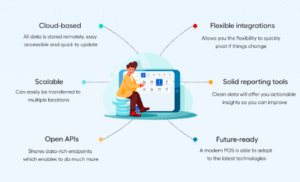
Unlike traditional EPOS systems, a cloud based POS system offers real-time data access, greater flexibility, and seamless integration with other software, making them an essential tool for modern dining.
Reasons Restaurants Use Cloud EPOS
Streamlining Operations and Reducing Errors
Improved Customer Experience
Real-Time Data & Analytics
Seamless Integration with Other Tools
Scalability for Growing Businesses
1. Streamlining Operations and Reducing Errors
Automating Key Restaurant Tasks
One of the greatest advantages of cloud-based EPOS systems is automating essential restaurant tasks.
Traditional methods of order processing, inventory management, and staff scheduling are prone to human error. Cloud EPOS automates these tasks, ensuring these tasks are managed smoothly and more accurately.
For example, orders placed at the front of the restaurant are instantly sent to the kitchen, reducing the chances of miscommunication or order mix-ups.
Automation not only enhances accuracy but also speeds up service, improving workflow.
Real-Time Inventory Tracking
Restaurant management software helps restaurant managers keep a constant eye on stock levels by automatically adjusting inventory based on sales.
This ensures that restaurants always know what they have in stock, reducing the likelihood of shortages or over-ordering.
Real-time updates allow for more precise control over inventory, helping prevent costly mistakes and wastage.
Optimised Staff Scheduling
Scheduling staff becomes a lot easier with cloud EPOS systems.
By analysing sales and foot traffic data, managers can create more efficient work schedules.
This ensures that the restaurant is neither overstaffed or understaffed at any given time. Additionally, cloud EPOS platforms can integrate with payroll systems, allowing staff hours to be automatically calculated and recorded.
Remote Oversight and Decision Making
With cloud EPOS systems, managers and owners can monitor sales, orders, and operational performance remotely.
This gives them full control over operations, even if they are not physically at the restaurant. Tracking key metrics in real-time helps managers make quick, informed decisions, improving overall oversight.
2. Improved Customer Experience
Speeding Up Service
Cloud EPOS systems significantly improve service speed by allowing orders to be sent instantly from the server to the kitchen.
This reduces wait times and ensures that dishes are prepared more quickly, particularly during busy periods. Whether for dine-in or takeaway, faster service leads to increased customer satisfaction and higher table turnover.
Boosting Order Accuracy
Manual processes often lead to errors, but cloud EPOS systems ensure that orders are accurately recorded and delivered to the correct stations in the kitchen.
Special instructions, such as dietary requirements or modifications, are transmitted in real-time, reducing the risk of mistakes and ensuring customers receive exactly what they ordered.
Offering Flexible Payment Options
Cloud EPOS systems accommodate a wide range of payment processing methods, from traditional cards to mobile and contactless payments like Apple Pay and Google Pay.
This flexibility ensures a frictionless checkout experience for customers, making it easier for them to complete their transactions quickly and conveniently.
Additionally, cloud EPOS systems support split payments and self-checkout options, enhancing customer convenience.
Enhancing Loyalty Programs and Personalised Promotions
Restaurants can leverage the data collected by cloud EPOS systems to create personalised promotions and loyalty programs.
By analysing customer preferences and purchase history, restaurants can offer tailored discounts, special offers, and rewards, fostering customer loyalty.
Integrating these programs directly into the EPOS system makes them easy to manage and track, encouraging repeat business.
3. Real-Time Data and Analytics
Valuable Insights into Sales Trends
Cloud based POS systems provide restaurants with instant access to detailed sales data.
This allows them to track which menu items are performing well, which dishes may need adjustments, and identify peak sales periods.
With this real-time information, restaurants can quickly spot trends and make data-driven decisions that can enhance their menu offerings, optimise pricing, and boost sales.
Understanding Customer Behaviour
Beyond just tracking sales, cloud EPOS systems offer insights into customer behaviour, such as dining frequency, spending patterns, and preferred payment methods.
By analysing this data, restaurants can tailor their service offerings and create targeted promotions that resonate with their customer base.
For instance, a restaurant might notice that a particular demographic prefers certain dishes, allowing them to create specials that attract repeat business.
Real-Time Inventory Monitoring
Cloud EPOS systems update inventory levels in real-time, allowing restaurants to maintain precise control over stock levels.
This helps reduce waste by alerting managers when items are running low or about to expire.
With a clear view of what’s in stock and what needs replenishing, restaurants can avoid over-ordering or understocking, improving inventory management and reducing the likelihood of wasteful spoilage.
Demand Forecasting for Better Planning
This real-time data also aids in demand forecasting.
By analysing historical sales data and identifying seasonal trends, restaurant owners can predict which items will be in higher demand during specific times.
This allows for more accurate ordering of ingredients and better staff scheduling, helping the restaurant run smoothly, even during peak periods.
Demand forecasting reduces the risk of stock shortages and ensures that the restaurant is prepared to meet customer demand, ultimately boosting profitability.
Boosting Profitability Through Data-Driven Decisions
With real-time analytics, restaurant owners can make strategic decisions to improve profitability.
By tracking metrics like average spend per customer or the performance of special promotions, managers can identify opportunities to maximise revenue.
The ability to reduce food waste, optimise labour costs, and improve overall efficiency through data-driven insights can lead to significant cost savings over time.
4. Seamless Integration with Other Tools
Flexibility in Integrating with Third-Party Applications
One of the standout features of cloud EPOS systems is integration with third-party tools, making them a powerful hub for managing various aspects of a restaurant’s operations.
From accounting software to delivery platforms and customer relationship management (CRM) systems, cloud EPOS systems offer a high degree of flexibility.
This integration centralises operations and reduces the need for manual data entry across different platforms.
Many cloud EPOS systems integrate directly with payroll and accounting tools, such as QuickBooks, Xero, or Sage, helping restaurants automatically sync sales data, calculate staff wages, and generate financial reports with ease.
This eliminates the hassle of transferring data manually and minimises the risk of accounting errors.
Integrating with Delivery Platforms
With the rise of food delivery services, restaurants need to keep up with demand across both dine-in and delivery channels.
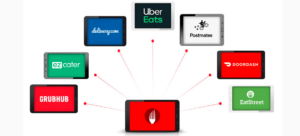
Cloud EPOS systems offer integrations with popular delivery platforms like Uber Eats, Deliveroo, and Just Eat, allowing restaurants to manage orders from these services directly.
These integrations help streamline the process by sending delivery orders straight to the kitchen.
This real-time synchronisation prevents any delays or miscommunication between platforms, ensuring a seamless customer experience across all sales channels.
Cloud EPOS systems also integrate with CRM tools, helping restaurants build and maintain strong relationships with their customers.
By connecting with CRM systems like Salesforce or HubSpot, restaurants can track customer interactions, purchase history, and preferences.
This data can be used to send personalised offers, create tailored loyalty programs, or automate marketing campaigns. Centralising customer data allows restaurants to create deeper connections with their diners, driving repeat business and fostering long-term loyalty.
Streamlining Operations with Kitchen Display Systems (KDS)
Cloud EPOS systems often integrate with KDS to further streamline order management.
Instead of relying on printed tickets or manual processes, orders are instantly sent to digital displays in the kitchen.
This increases the speed and accuracy of order preparation, especially during busy periods.
KDS integrations help ensure that the kitchen and front-of-house teams are always in sync.
Other Useful Integrations
Cloud EPOS systems can also integrate with inventory management systems, reservation platforms, and employee scheduling tools.
These integrations simplify workforce management by automatically pulling sales data to adjust staffing needs based on real-time demand.
Examples of Popular Cloud EPOS Integrations
QuickBooks, Xero, Sage (Accounting)
Uber Eats, Deliveroo, Just Eat (Delivery Platforms)
Salesforce, HubSpot (CRM Tools)
7shifts, Deputy (Staff Scheduling)
MarketMan, BlueCart (Inventory Management)
Toast KDS, Square KDS (Kitchen Display Systems)
5. Scalability for Growing Businesses
Easily Expand to New Locations
Cloud EPOS systems are designed to scale seamlessly as your restaurant grows.
One of the key benefits of these systems is that they require minimal hardware, making expansion to new locations both simple and cost-effective.
Cloud-based solutions allow you to add new locations to your existing system without the need for additional costly equipment.
The cloud EPOS system is hosted off-site, so there’s no need to install physical servers or network infrastructure. This makes setting up a new location quicker and easier, allowing you to focus on growing your business rather than worrying about complex technical setups.
Centralised Management Across Locations
As your restaurant expands, cloud EPOS provides a unified management platform that lets you oversee multiple locations from a single dashboard.
You can monitor sales, track inventory, and manage staff across all your locations in real time. This centralised control simplifies operations and ensures consistency, no matter how many restaurants you open.
If you’re managing a franchise or chain, cloud EPOS systems allow you to implement company-wide menu changes, promotions, or pricing adjustments instantly.
There’s no need to manually update each location’s system. This centralised approach reduces complexity and ensures that all locations are operating under the same standards and guidelines.
Cost Savings and Reduced Infrastructure Needs
For growing businesses, cloud EPOS systems present significant cost savings.
Cloud-based EPOS systems eliminate the need for expensive servers and hardware at each location, resulting in lower upfront costs and minimal maintenance fees.
Since the system is cloud-based, there are no complicated installations required for new sites.
Most cloud EPOS providers offer scalable pricing plans, meaning you only pay for what you use.
This allows restaurants that experience seasonal fluctuations or gradual expansion to adjust their system needs according to demand without incurring unnecessary expenses.
Adapting to Growth and Change
Cloud EPOS systems are adaptable, making them ideal for restaurants with ambitious growth plans.
Whether you’re opening a second location or expanding into new regions, cloud EPOS can grow with you. As your business scales, the system can accommodate increased transaction volume, more staff, and additional inventory without affecting performance.
This flexibility allows restaurants to expand confidently, knowing that their EPOS system will support their operational needs as they grow.
Streamlined Employee Management
As a restaurant grows, managing a larger workforce becomes more complex.
Cloud EPOS systems can streamline staff management by tracking employee hours, managing shifts, and integrating with payroll systems.
These tools scale with your business, so as you hire more staff across multiple locations, your EPOS system can handle the increased data, ensuring efficient and accurate employee management.
Conclusion
Adopting cloud EPOS systems is not just a trend—it’s a necessity for long-term success. These systems streamline operations by automating key tasks, ensuring order accuracy, and providing real-time data that helps restaurants make informed decisions.
By integrating seamlessly with other tools, such as delivery platforms, accounting software, and CRM systems, cloud EPOS simplifies complex processes and enhances overall efficiency.
The flexibility to manage the restaurant remotely, adapt to menu changes, and expand to new locations without heavy infrastructure investments makes cloud EPOS the ideal solution for growing businesses.
It also elevates the customer experience by enabling faster service, personalised promotions, and a wide variety of payment options.
Ultimately, cloud EPOS systems empower restaurant owners and managers with the tools they need to stay competitive, reduce operational friction, and foster customer loyalty.
For helping finding the right cloud EPOS system for your business, contactNFS Hospitality.
Choosing the right restaurantPOS system for your business is the best way to up its efficiency.
To summarise, EPOS systems (or electronic point of sale systems) are an end-to-end solution to all manner of daily problems in the hospitality industry.
They cover everything from payment processing and stock control, to table management and custom pricing. Hospitality Businesses also use them to track online orders and dispense digital receipts.
Good POS systems can manage all this and more across multiple locations, while providing a wealth of reporting features to make sure you get the most out of your tools.
Aloha is designed as a holistic solution for restaurant EPOS management across multiple locations.
The system is easy to use, but extensive and regularly updated to meet the evolving needs of restaurant owners, while offering stellar customer support.
Aloha excels in managing the entire process from ordering to delivery, with a suite of cloud-based support features.
Where the Aloha point of sale system truly thrives is in its management of stock control, labour, payroll, and other back-house operations.
The key focus of the system is automation of these processes.
Ease of Use
Aloha scores major points for its accessible, easy-to-understand user interface.
Anyone familiar with Windows will have no trouble using Aloha and its layout can be easily customised to suit the needs of you and your staff.
Customer Experience Management
Aloha provides everything restaurant owners need to integrate their customer loyalty programs with the EPOS, as well as the means to customise orders and split bills easily.
Reporting and Analytics
Clear, actionable reporting and pertinent insights oninventory management, sales, and staffing costs are included.
Compatibility
The system integrates well with a range of other services and software such as payroll and accounting tools.
For an all-purpose restaurant EPOS that’s easy to set up, frequently updated, and scalable, consider Revel. This POS system is designed to support both front-of-house and back-of-house operations.
It provides robust controls for menus, stock management ordering, and reporting.
In a market where point of sale systems are becoming increasingly overcomplicated, Revel’s simplicity is one of its greatest strengths.
Revel is optimised for order accuracy and provides tools for preventing delays and boosting customer satisfaction through tableside ordering.
More advanced features include the ability to map out a unique floor plan for individual sections of your restaurant for seamless order management, schedule management, and focused reporting.
Ease of Use
Revel’s design and user interface are simple and adaptable, with a personalised onboarding process that provides guidance on both the hardware and operating system.
Customer Experience Management
Customer retention is one of Revel’s primary concerns. The platform contains various tools forloyalty programs, customer relationship management, discounts, gift cards, and online ordering.
Reporting and Analytics
This restaurant EPOS Operations Report feature combines critical data on sales, order history, product mix, and more into one detailed report, providing a holistic view of the business’ performance.
Compatibility
Revel is designed for compatibility with your existing EPOS hardware, but replacing old systems with their solutions is recommended to get the most out of their impressive suite of features.
Pricing
The comprehensive monthly package comes in at around £80 per month.
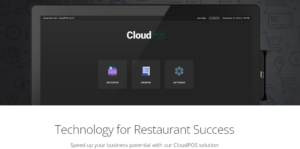
CloudPOS is an easy-to-use restaurant EPOS system with multiple features designed to assist order management, integrated payments, sales reports, online ordering, and more.
Better yet, CloudPOS kitchen display system and other user interfaces are built from the ground up for accessibility, dramatically reducing necessary staff training time.
An all-in-one order management tools allows users to easily edit and filter orders, make advance bookings, and take partial payments accordingly.
Speaking of payments, CloudPOS boasts some of the lowest payment processing rates available, as well as simple bill splitting, tipping, and gratuity features.
Ease of Use
The CloudPOS touch screen register is built for simplicity, while its manager dashboard includes straightforward customisations tools for catering the system to your staff.
Customer Experience Management
Every part of the CloudPOS platform is streamlined to smooth and speed up the checkout process, allowing customers to tip and sign directly on your device.
Reporting and Analytics
You can expect to receive daily sales reports, in-depth monthly summaries, and information on your top sellers, allowing you to tailor your operations for productivity and your menu for your customer’s tastes.
Compatibility
Their custom touch screen POS system is designed as the ideal replacement for traditional cash registers and takes minimal hassle to set up. It also integrates well with programs like QuickBooks, SHOGO, and XERO. Additionally, it won’t drop you when your wi-fi does.
Pricing
CloudPOS’ basic package runs at £16.65/MO, its Pro package at £41.65/MO, and its Enterprise package at £74.99/MO.
The Square restaurant POS system implements numerous features specifically designed to cater to the restaurant industry, with a transparent pricing model, multi location management, reporting, and more.
It’s tool add-on system enables restaurant owners to pay for only what they need and cut costs in other areas. While the system is operational from any mobile device, the Square EPOS system also has a range of bespoke, optional hardware available.
The Square EPOS system is capable of processing customer payments in person, via mobile, or online, while their custom hardware requires little to no set up to get working.
Better yet, the system is built to easily customise menus, speed up the check out process, provide in-depth sales and product reports, and consolidate customer data into automated customer profiles.
Ease of Use
Navigating the Square user interface is intuitive from beginning to end and set up is painless, catering to operations of all sizes.
Customer Experience Management
Square allows restaurant owners to open direct lines of communication with customers for resolving any feedback, sending coupons, and delivering tailored service accordingly.
Reporting and Analytics
The interface lays all the groundwork for informed decision making by providing detailed reporting on best sellers, average customer spend, employee performance, and stock.
Compatibility
The Square dashboard is fully compatible with a wide range of devices, but your chosen point of sale device may limit the features you have access to.
Pricing
The Square POS platform begins as free-to-use, but charges when you begin taking payments, with 1.75% processing rate on chip and PIN or contactless payments, 2.5% for virtual terminal and invoices, and its hardware range beginning at £19, not including VAT.
Toast is one of the most popular EPOS in the restaurant business for a reason.
It offers all-encompassing solutions for order and inventory management, menu management, payments, and more.
It provides seamless payment processing, menu customisation and profitability tools, CRM functionality, and thorough analytical reporting on performance and operations.
Ease of Use
Toast is arguably most well known for its excellent user interface. While the initial setup may contain a learning curve, everyday usage is quick and easy.
Customer Experience Management
The package contains all the features you’d expect for tableside payments and quick, bother-free feedback collection from your guests.
Reporting and Analytics
Toast provides key data points across all channels in real time, cutting out waiting times and directly emailing daily results to your inbox every night.
Compatibility
While Toast integrates well with a variety of hardware and software, it’s worth noting that the platform is Android inclusive and doesn’t work on iOS devices.
Pricing
The Starter package goes for £50, while the Essentials package, designed for restaurant owners looking to scale their business, is £150.
Lightspeed’s features focus on saving time and automation. It offers personalised user support with various multilocation tools and integrations to get you up and running quickly and efficiently.
It offers all the features needed to manage your teams, inventories, and suppliers from one location.
It’s specifically designed to increase visibility in key areas for multilocation operations and offers plenty of customisation options to help you get your ideal experience and functionality.
Ease of Use
Its user interface is simple and intuitive and set up is no challenge, though getting to grips with its various features will take some time.
Customer Experience Management
A key feature here is Lightspeed’s ability to offer customers the same benefits online that they would when visiting your restaurant.
Reporting and Analytics
Its detailed reports give you everything you need to know about staff performance, popular items, and more via its interactive reporting dashboard.
Compatibility
The Lightspeed POS system is compatible with a range of devices, as well as both the Windows and Mac operating systems.
Pricing
Users can expect to pay anywhere between £50 and £300+ for the service, depending on their chosen package.
What To Look For in a EPOS System
When you sign up with a restaurant EPOS, you’re entrusting a huge part of your operations and performance onto software. In other words, it’s no small decision.
In fact, it’s something like choosing a business partner. As with any kind of relationship, there are a couple of key green flags you should be looking out for before making a choice.
Ease of Use
You want to lower the learning curve for you and your staff as much as possible. Something as simple as a receipt printer should never be a headache.
Restaurant POS should have an intuitive, logically laid out user interface. You’ll need simple functionality for tipping and splitting bills, modifying menus, loyalty programs, and a strong customer support team.
Reliable, advanced features will minimise errors and stress, lower training time, and ensure quicker service across the board.
Customer Experience Management
From online ordering to the self service kiosk, an ideal cloud based POS software is designed to improve the customer experience from beginning to end.
Look out for products that personalise the customer’s service, track customer feedback, and organise customer data clearly, allowing you to develop targeted insights about their behaviour.
These can be used to market more directly to existing customers or enhance your customer loyalty programs.
Reporting and Analytics
Data management and analysis is one of the key bedrocks to improving any business’ performance. Hospitality is no different.
Your POS system should tell you about sales trends, item popularity, customer preferences, and more.
Whether it’s a chain franchise or independent restaurant, collecting and analysing data is how you judge the performance and operations of your business.
That means your POS terminals are a centralised location for data-based decision making, boosting revenue and efficiency, managing expenses, and viewing sales reports.
Stock Control
Monitoring stock levels is a key touchstone for a good restaurant EPOS.
With the right features at hand, the restaurant’s point of sale system becomes the best way to get ahead of stocking issues via automated ordering or more accurately track the cost of your dishes.
Compatibility
You’ll need to understand early on exactly what you’ll need in terms of tablets, printers, payment devices, and the like.
The idea is to avoid any surprises that could slow down service in the future and ideally to opt for an EPOS system that easily integrates with your existing hardware.
The same consideration should be made for integration with other essential technologies, such as your chosen accounting software.
Pricing
The cost of restaurant EPOS systems can vary significantly, especially when considering both hardware and software, as well as the potential costs involved in integration.
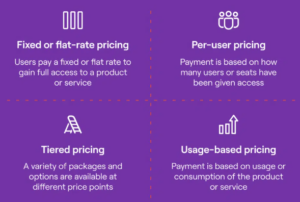
Different softwares may be based on either monthly or yearly subscriptions. They may be tailored to the size of your restaurant or multi location restaurants.
Some provide various options when it comes to contracts, while others may lock you into uncomfortable terms or feature a wealth of hidden costs and transaction fees.
Conclusion
The best restaurant POS systems in 2024 are those that most seamlessly combine advanced tools with user-friendly interfaces.
They provide restaurant owners, managers, and staff with what they need to improve the quality and efficiency of their inventory management, customer engagement, payment, online orders, and more.
A robust EPOS system is one whose sales systems work with minimal input or set up, allow for both payments via portable card machines, mobile payments, or integration with any accounting software.
Tools that allow you to customise your floor plan, manage bookings, tailor your menu, or receive analytical sales reports are extremely valuable as well.
Once again, the ideal point of sale system for you is dependent on your needs and the nature of your business.
Contact NFS Hospitality for helping picking the best platform for your needs.
The challenge
The multinational craft brewery and pub chain BrewDog has become a huge hit around the world in recent years – and its well-deserved reputation is built on providing the best in customer service.
When the company planned its biggest ever UK venue – a fantastic fun venue in Waterloo, London – it required an epos system up to the job of satisfying all the requirements of a huge number of highly demanding customers.
The solution
BrewDog turned once again to its longstanding partner NFS Technology, who stepped up to the challenge.
Chris Cartmell, Chief Operations Officer for restaurant technology at NFS, said: “We’ve partnered with BrewDog over many years and are delighted to have played our part in their amazing success.
Our Aloha epos technology supports 97 BrewDogs across the UK, India, Australia, Germany, Shanghai and Tokyo, so we were more than ready to provide everything the company needed for the amazing new Waterloo development.”
The bar epos software at the new BrewDog was one of the expert NFS team’s biggest installations to date.
Chris said: “The Waterloo bar has no fewer than 16 Aloha tills, and our team made sure everything was perfectly in place for the grand opening. It was a great job for a truly great client!”
The results
On its Waterloo website, BrewDog describes the new venue: “Two floors and 27,500ft of craft beer joy inside Waterloo station, next to the iconic London Southbank.
“With a restaurant, an on-site microbrewery and 60 taps of draft beer over two bars, we’re serving some of the freshest beer in London and some of the greatest food that’s ever graced the inside of a train station.
“But why stop there? With our Grind Cafe for your brunch and caffeinated needs, a cocktail hideaway, a co-working space, a podcast recording studio, duckpin bowling and AN ACTUAL SLIDE, there’s plenty to keep you occupied while they clear the leaves off the line.”
Marugame Udon is the world’s largest udon noodle chain, with more 800 fast casual restaurants in Japan and 250 across Asia. It opened its first European restaurant in London in 2021 with a noticeably QSR-style low price point, with freshly-made noodles from £3.45.
Four further London sites were lined up before the first opened, with the restaurant in the O2 also now open, and the company has big plans for a speedy further expansion.
Marugame Udon has a global audience on social platforms ranging from Tiktok to Facebook and Instagram, and is leveraging this presence – and the power of the Muragame Loyalty Scheme – to extend brand awareness and position the offering perfectly in its new market.
Marugame Udon Chief Executive Keith Bird says: “It’s crucial to get the values and culture right.” Helping customers to feel part of the Marugame Udon community is crucial – for example, in the run-up to opening, visitors were invited to take pictures of themselves in front of a special screen to share worldwide on social media.
The innovative use of digital technology is helping Marugame Udon to establish and grow its community of enthusiasts across the UK and beyond. A unique level of integration is enabling the company to gain an extraordinarily deep insight into its customers, enabling better customer service and engagement.
The loyalty system, implemented via Aloha EPOS from NFS, is so well integrated that important customer information is automatically shared across all platforms ranging from the till to wifi and email marketing.
It means Marugame Udon has a 360 degree view of the customer’s requirements and preferences – what the company calls a ‘single point of truth’ – and it eliminates the need to repeatedly input data into different systems.
The integration makes the customer journey effortless. It enables Marugame Udon to send highly-targeted marketing emails that are sure to hit the mark – and when the customer pays, the till automatically applies any discounts. On opening, members who had already signed up to the loyalty programme were given popular offers including free noodles.
Further integration means customers are never disappointed when ordering. When a menu change is made on the till it is instantly reflected across all menu screens and collection screens, and the company is now working with NFS to extend this to delivery channels.
Customer safety is also a priority, and as well as providing allergen alerts, the Aloha EPOS system deployed by Marugame Udon offers diners the ability to input an allergen and see an online menu of dishes they can eat safely. Calorie counts are also updated through the system.
* Discover how Aloha EPOS can benefit your restaurant: