No matter how a customer chooses to engage with your brand, there’s no doubt that they’ll expect a smooth and convenient experience. Whether they choose to reserve a table online, dine in at your restaurant or even place an order via an app, maintaining a clear brand consistency and experience across all touchpoints is now a baseline expectation.
As the hospitality sector continues to become increasingly digital, delivering a unified and frictionless journey is key to building loyalty and staying competitive. A fully integrated omnichannel ordering system is a powerful starting point. When aligned with your existing restaurant management software, it lays the groundwork for streamlining operations and improving customer experience.
At NFS Hospitality, we believe that top restaurant management software should allow operators to deliver a consistent and high-quality experience across every channel. In this article, we’ll explore how an omnichannel approach can help you achieve exactly that.
Why Consistency Matters in Hospitality
Inconsistent service can lead to confusion, customer dissatisfaction, and even lost revenue. On the other hand, delivering a consistent experience helps build trust in your brand. When customers receive the same high level of quality and service, whether online, in-app, or in your venue, it reinforces confidence and strengthens loyalty.
Consider the typical customer journey in today’s world: A customer may browse your menu online, place an order for delivery via a third-party app, and later visit in person. Each of these interactions contributes to their overall perception of your brand. If the information, pricing, or service quality differs from one touchpoint to another, it creates a disjointed experience. This is where omnichannel strategy – backed by intelligent systems – comes into play.
What is an Omnichannel Ordering Experience?
Omnichannel ordering allows customers to interact with your restaurant across multiple channels in a connected and consistent way. Whether they’re ordering from a kiosk, app, website, or at the table, the experience should feel seamless and unified.
This differs from a multichannel setup, where services exist on multiple platforms but operate independently. Omnichannel systems integrate those channels, allowing data, preferences, and communication to flow across the entire customer journey.
An effective omnichannel approach means:
Menus and prices are consistent across all platforms.
Loyalty points or offers apply regardless of ordering method.
Customer data is centralised for more personalised interactions.
Staff have visibility into every transaction, regardless of origin.
The Role of Restaurant Management Software
Delivering a consistent omnichannel experience depends heavily on the technology behind the scenes. Restaurant management software platforms play a central role in integrating these channels.
At NFS Hospitality, our innovative restaurant management solutions have been designed with this in mind. Our restaurant EPOS systems enable operators to manage menus, pricing, promotions, and ordering across multiple platforms – all from a single, centralised system. This ensures consistency from back-of-house to front-of-house and beyond.
For example:
Menu management: Update your menu just once and reflect changes across all channels simultaneously to ensure accuracy.
Order management: Whether orders come from online, third-party platforms, or in-house tablets, they flow into the same kitchen display and reporting system, reducing errors and improving speed of service.
Loyalty integration: Track customer preferences and rewards in real time, whether guests are dining in, ordering takeaway, or booking a future visit.
The Benefits of Integrated Omnichannel Tools
When your restaurant management software supports integrated omnichannel ordering, the benefits go far beyond operational efficiency – it enables a smooth and connected experience across every customer interaction.
Customers can enjoy effortless ordering, whether through a mobile app, website, or in-venue kiosk, with consistent menus, clear pricing and reliable functionality throughout. Accuracy also improves thanks to the automation of orders routed to the kitchen, reducing the risk of mistakes in the process.
A centralised view of customer behaviour allows for smarter personalisation, enabling teams to tailor promotions and upselling strategies more effectively. Most importantly, consistent service across all channels builds trust and strengthens brand loyalty, encouraging repeat visits and positive word of mouth.
Operational Advantages for Hospitality Teams
In addition to customer-facing benefits, integrated omnichannel systems offer several operational advantages:
Real-time reporting: Gain accurate insights into sales, performance and demand across all channels in one dashboard.
Inventory management: Automatically track stock usage across dine-in, delivery, and takeaway to reduce waste and manage stock more efficiently.
Workforce optimisation: Align staffing levels with real-time order volume across all channels.
By implementing top restaurant management software, hospitality operators can adapt quickly to changing demand and manage operations in a more centralised and strategic manner.
Ready to Streamline your Omnichannel Experience?
Ensuring the success of your restaurant both today and in the future requires agility as customer expectations and technologies evolve at pace. Thankfully, with integrated restaurant management software, you can scale services, launch new ordering channels, and explore innovations like self-service, without any compromise on consistency or control.
At NFS Hospitality, we help hospitality operators build scalable digital ecosystems that deliver exceptional and connected customer experiences. Ready to streamline your omnichannel journey? Get in touch with our team today to discover how our solutions can help your business grow and thrive in a digital-first world.
Forget a swipe-right kind of relationship – today’s hospitality guests want a proper romance with your restaurant. In this article, you’ll discover what happens when good loyalty programmes go bad, and how AI is powering up data to create long-lasting partnerships with customers.
Because guests have changed – they want a love relationship with your business. The simple equation of “You make my food = I pay for it” just doesn’t add up to success anymore.
In other words, transactional has been blown away by experiential customer service.
What’s the difference between transactional and experiential?
You can compare it with someone seeking romance and long-term potential, rather than just a swipe right…and like any life relationship, that takes effort and commitment from you.
How offers can ruin your relationship
Good personalised loyalty programmes are solid gold. As one recent report on next generation dining says: “In a highly competitive hospitality environment, creating memorable guest experiences is the ultimate differentiator.”
Research shows in 2025:
– 29% Of consumers and
– 32% Of families will actively seek out discounts or offers for dining or drinking out.
But a badly-targeted offer can cost you money – or threaten the relationship you want to encourage – See Full Research
When loyalty goes wrong – an example:
You need to drive more business on a Monday, so you decide to send your customers an offer for big discounts. But if you haven’t fully worked out the economics, you’ll end up out of pocket.
Will the extra business cover the labour and supply costs? Even worse…might some of your high spenders simply change to a cheaper day to eat? Or – ouch – will you cause offence by offering, say, committed vegans a steak deal?
Experiential dining? It’s not dating, but data
You want your restaurant to be their One and Only, the ultimate in customer loyalty. Tailoring the experience to their exact requirements is the way to win their hearts, but you need to truly know what they want.
As New York restaurateur Danny Meyer says:
“Hospitality is present when something happens FOR you. It is absent when something happens TO you. Those two simple prepositions – for and to – express it all”.
You definitely want your guests to believe your service is FOR them, in the most individual of ways.
So, building a great experiential relationship is not exactly dating, but it is all about data – segmenting your market using technology-captured information that enables personalised, effective reward programmes and grows your business.
We know each other sooo well…
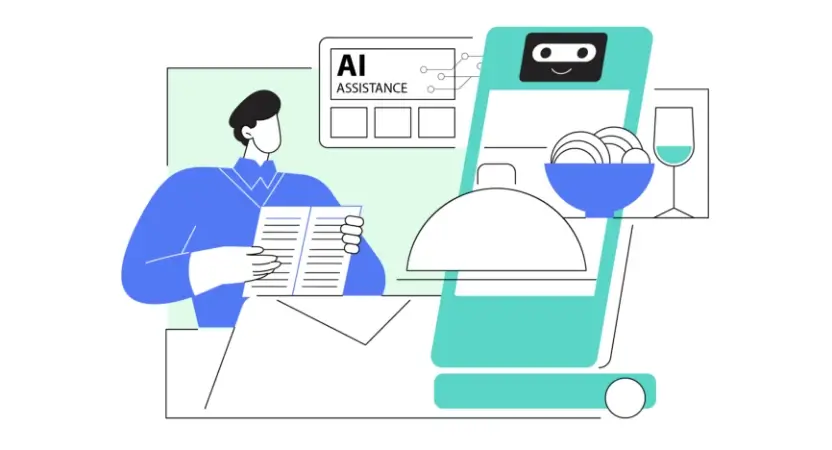
AI, working with specialised hospitality technology, is making incredible strides forward in capturing and analysing customer data to power up customer engagement.
“Artificial intelligence allows restaurants to go far beyond generic service, offering true personalization at scale. AI-driven systems can remember dietary restrictions, favorite dishes, preferred seating, and even special occasions like birthdays or anniversaries. This data enables staff to offer tailored greetings, suggest relevant menu items, or seat returning guests at their usual table — all without extra training or manual entry. The result? A guest experience that feels effortless and genuine.” – AI Time Journal
Customers’ personal requirements are now really specific. High spenders might demand a special menu just for them, or exclusive events or dishes. Maybe they want you to understand without asking that they always prefer salad to chips.
Even in fast food the experiential approach pays off, with easy and responsive kiosk ordering – McDonald’s Chairman and CEO Chris Kempczinski cited AI adoption among his top three trends in 2025 for the quick service restaurant industry.
So that disastrous offer of steak to a vegan? With great data at your fingertips, that kind of slip is never going to happen. There’s going to be nothing to break up this growing relationship.
AI helps the human in the room
AI as a data-harvester and analyst is not an alternative for your restaurateur’s knowledge and expertise, but simply an enhancer and enabler. As EY comments:
“Technology should not be considered a replacement for human touchpoints but as an enabler for better human-led experiences… an AI-led customer experience will be far richer if it has a human element at the right time.”
Unprecedented opportunity
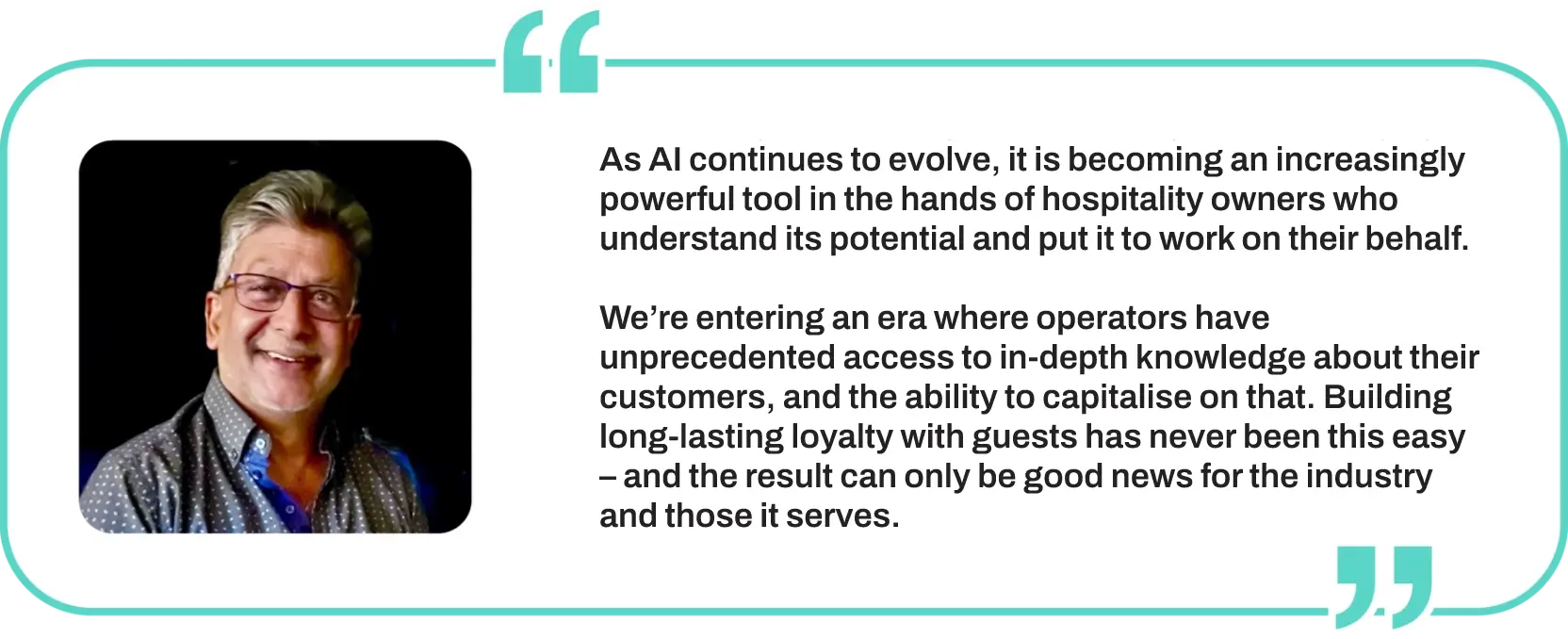
As hospitality technology experts, we can’t agree more with this. As our Chairman Luis De Souza says:
View Luis’ podcast on experiential dining and AI
WATCH NOW
×
Inspired by a thought-provoking discussion with Jo Lynch, Account Director at KAM Insight, on their most recent Hospitality Talks podcast, Luis explores the future of personalised guest experiences and smarter operational efficiencies.
Find out more about our Restaurant EPOS and contact us today if you have any questions.
Imagine your restaurant bustling with activity, yet tables remain occupied for extended periods. How can you enhance your table turnover to satisfy more customers?
A fine dining establishment thrives on its ability to seat guests efficiently without rushing the experience. Can you optimise your service while maintaining an air of sophistication?
With strategic tweaks, increasing table turnover is not only feasible but a source of pride. Let’s explore ten practical strategies to achieve seamless service harmony.
1. Streamline Payment Processes
Embrace innovative tools that enable swift, secure and seamless transactions at your dining establishment.
By adopting technologies such as contactless payment methods and portable point-of-sale systems, you ensure that the closing of each dining experience is efficient and pleasant. These advancements allow your staff to settle payments right at the table, thereby expediting the process and paving the way for the next guest’s unforgettable culinary adventure.
Consider the implementation of a digital platform for splitting bills. For larger groups, managing payments can sometimes elongate the overall time spent at a table. A streamlined, user-friendly system empowers guests to divide costs swiftly, enhancing their satisfaction while accelerating turnover and facilitating a smooth service flow.
Integrating digital solutions not only cultivates an air of modernity at your restaurant but also engrains a tradition of efficiency that appeals to the savvy consumer. This commitment to technology and streamlined processes not only boosts your table turnover but elevates the reputation of your dining venue in an increasingly competitive industry.
2. Optimise Reservation Management
Streamlining reservation management is paramount to enhancing table turnover while maintaining a seamless guest experience, and there are myriad paths to achieve this.
Leverage cutting-edge digital booking systems that sync with real-time table availability.
These systems have the remarkable capacity to manage reservations effortlessly, adjusting for cancellations and no-shows at a moment’s notice. This precision not only optimises occupancy rates but also allows staff to anticipate guest needs with strategic foresight, further enriching the dining experience.
By employing advanced algorithms, these systems can predict the likely duration of each sitting, enabling a refined orchestration of table allocations that balances guest satisfaction with operational efficiency. This intelligent approach not only maximises space usage but also ushers in a “wow” factor that distinguishes your establishment, crafting an indelible impression and spurring repeat visits while adeptly elevating table turnover figures.
3. Simplify Menu Options
Simplifying the menu can significantly streamline operations and enhance table turnover by reducing complexity and waiting times.
When diners are presented with a concise menu that emphasises quality over quantity, they find the decision-making process quicker and more enjoyable. This streamlined approach allows kitchen staff to focus on perfecting fewer dishes, ensuring consistency and excellence in every serving. Additionally, it minimises the time servers spend explaining the menu, thus speeding up table service and enhancing overall table turnover.
Furthermore, with fewer items on the menu, ordering from suppliers becomes a simpler task. It reduces potential confusion, lowers the risk of errors, and enables staff to manage inventory more efficiently, ensuring they have the necessary ingredients at all times.
Therefore, a thoughtfully simplified menu not only supports operational efficiency but also enhances the guest experience by showcasing strengths, allowing your restaurant to stand out with expertly crafted dishes that leave lasting impressions, ultimately fostering both guest satisfaction and a remarkable improvement in table turnover.
4. Improve Staff Training
Empowering your staff with the right training can significantly enhance the efficiency of table turnover.
Well-trained staff can manage tables more adeptly, anticipating customer needs, and reducing wait times efficiently. This proactivity fosters smoother service.
To achieve this, implement ongoing training programmes focused on customer interaction, problem-solving, and familiarisation with the menu. Such initiatives cultivate confidence.
Moreover, cross-training your team in various roles minimises service disruptions during peak hours and builds a more cohesive, agile workforce ready to tackle challenges.
Additionally, asking for feedback from employees on training programs can uncover valuable insights and ideas for improvement. Using idea management software provides a centralised platform to collect, refine and prioritise these suggestions, ensuring that employee input is not only heard but transformed into actionable strategies that enhance your restaurant’s operational efficiency.
Ultimately, investing in staff development not only uplifts morale but also accelerates table turnover significantly.
5. Enhance Table-Side Service
Streamlining table-side service is paramount for optimising table turnover without sacrificing quality. How can this be effectively achieved?
In 2023, restaurant innovations, like leveraging mobile point-of-sale systems, swiftly transformed how orders are taken and bills settled. This tech-savvy approach enhances service and minimises wait times, allowing seamless transitions between diners.
Moreover, it’s not just about speed but also the server’s ability to proffer a personable yet efficient interaction. Empower staff to suggest menu specials or pairings with enthusiasm, subtly quickening decision-making while enriching the dining experience.
Encouraging your team to anticipate diners’ needs, from drink refills to providing timely dessert menus, means the entire meal flows effortlessly. This elevates guest satisfaction and gently nudges table turnover without rush.
Prioritising personalised service blends efficiency with warmth, compelling customers to return and boosting turnover.
6. Implement QR Code Ordering technology
Incorporating QR code ordering into your restaurant’s operations can significantly enhance table turnover rates, offering a modern and efficient dining experience that meets the expectations of today’s tech-savvy customers.
QR code ordering simplifies the process by allowing diners to scan a code with their smartphones to access the menu, place orders, and even pay—all without waiting for a server. This seamless integration not only reduces wait times but also empowers guests to control their dining pace, leading to quicker table turnover.
QR code ordering can streamline operations by reducing the need for physical menus and minimising errors in order taking. This technology also enables real-time menu updates, ensuring that customers always have access to the latest offerings.
By adopting QR code ordering, you can free up your staff to focus on delivering exceptional service and personal touches, enhancing the overall dining experience. This innovative approach not only optimises efficiency but also positions your restaurant as a forward-thinking establishment, ready to meet the evolving demands of the hospitality industry.
7. Design Efficient Table Layouts
A strategic table layout is crucial for optimising your restaurant’s table turnover and driving increased profitability, making your venue not just a place to eat, but an experience to relish.
Effortless flow should define pathways, ensuring servers can swiftly cater to all guests.
Incorporating a balance of table sizes accommodates varying party needs, ensuring a mix of large and small tables that can be easily rearranged, minimising downtime, and maximising revenue.
The best layouts encourage the freedom for guests to move while still maintaining a sense of intimate dining. By integrating dynamic furniture that can be repositioned, you can creatively adapt the space to suit fluctuating demands. This adaptability, paired with an emphasis on “zones” for different dining experiences, cultivates an environment of flexibility and intrigue.
8. Encourage Flexible Dining Times
Flexibility in dining times can significantly enhance your restaurant’s table turnover and boost your profitability metrics.
By offering guests the opportunity to explore varied dining experiences, such as brunch, late lunch, or early dinner, your establishment can maximise occupancy and cater to different customer segments. These inventive time slots not only create additional dining windows but also help to stagger guest arrivals, reducing peak-hour bottlenecks and improving the overall dining experience.
Furthermore, this approach can lead to a consistent stream of patrons throughout the day. By implementing clever marketing strategies, restaurants can entice new customers who prefer off-peak dining and engage regulars through special menus and events tailored to these unconventional hours.
Ultimately, flexible dining times demonstrate a willingness to accommodate diverse customer needs and preferences. This not only highlights your restaurant’s adaptability but also establishes a loyal clientele eager to explore the varied culinary offerings available through unique dining times, thereby ensuring sustained growth and enhanced customer satisfaction.
9. Monitor Customer Feedback
In the dynamic world of modern dining, understanding customer feedback is pivotal for optimising table turnover.
Utilising insights from customer feedback can enhance service efficiency and identify areas needing improvement. Customer comments are valuable tools that highlight areas where you can exceed expectations.
Feedback, whether it be through online platforms or in-person comments, provides invaluable data. This helps refine operations, making your restaurant more responsive and tailored to customer needs, enhancing the overall dining experience.
Consistently analysing this feedback leads to actionable insights that create a more streamlined experience. By doing so, you can improve both table turnover rates and customer satisfaction, ensuring a winning strategy for sustained success.
Ultimately, proactive monitoring keeps you ahead, enabling immediate adjustments for optimal operations.
10. Enhance Ambiance and Atmosphere
Creating an inviting and efficient ambiance is a subtle yet powerful way to improve table turnover rates while ensuring guests enjoy their dining experience. The atmosphere of your restaurant can significantly influence how long patrons choose to stay, so it’s essential to strike the right balance between comfort and efficiency.
Lighting and music also play crucial roles in setting the mood. Opt for lighting that is bright enough to create a lively atmosphere but not so harsh that it feels unwelcoming. Similarly, choose background music that complements the dining experience without overpowering conversation. The right combination can subtly encourage diners to enjoy their meal and move on, making room for the next guests.
Moreover, consider the décor and overall theme of your restaurant. A cohesive and appealing design can make the dining experience more enjoyable, encouraging guests to return and recommend your establishment to others. By focusing on ambiance, you can create a space that not only attracts customers but also optimises table turnover, driving your business to new heights of success.
In conclusion, a refined approach to optimising table turnover rates assures higher profitability without compromising on visitor experience. By remaining attentive to both customer satisfaction and operational efficiencies, you achieve a meticulous equilibrium, paving the way for a successful and flourishing restaurant enterprise. Reach out to us today to learn more about how NFS Hospitality can help improve your restaurant’s table turnover.
We spent the morning on Tuesday this week, networking with the hospitality tech community and the operators they serve.
The restaurant industry is witnessing a significant transformation, propelled by the integration of automation into its operations. This change is not just about adopting new technologies but also redefining the customer journey to enhance their experience and streamline business processes. As we delve into various industry verticals, from upscale dining at JKS Restaurants to the bustling environment of Ballie Ballerson and the unique demands of food halls like Sessions and Market Halls, the impact of automation becomes increasingly apparent.
A recent survey by Tech on Toast highlighted a critical issue: 78% of customers stated their experience could be negatively impacted by delays in being seated, ordering, and paying. These are pivotal moments in the customer journey where efficiency can either make or break the dining experience. Further research by McKinsey supports this, showing that reducing wait times can not only improve customer satisfaction but potentially increase restaurant revenue by nearly 15%.
Addressing Efficiency and Productivity
In response to these challenges, industry leaders are turning to automation to streamline operations. For example, innovative solutions like restaurant ePOS software are being implemented to reduce wait times during crucial customer journey stages. These technologies are not just about speeding up transactions but also enhancing the overall service quality, leading to a more satisfying dining experience.
The Perceived Wait Time Dilemma
Insights reveal that once a wait surpasses three minutes, customers’ perception of time begins to distort, feeling much longer than it actually is. This perception can deter customers from returning, highlighting the importance of adopting technologies that minimise wait times and simplify transactions.
Operational Benefits and Customer Satisfaction
The adoption of automation technologies has shown substantial benefits in operational efficiency and customer satisfaction. For operators, this means not only smoother day-to-day operations but also an opportunity to significantly enhance the dining experience, turning first-time visitors into regular patrons.
The Shift Towards Off-Premise Dining
With off-premise dining expected to account for over 50% of restaurant sales by 2025, the need for efficient, automated systems becomes even more critical. This shift demands solutions that can handle the increased volume and complexity of orders without compromising service quality.
Looking to the Future
The ongoing advancements in hospitality technology promise to reshape the industry landscape further. As automation becomes more integrated into operations, we can anticipate improvements in customer experiences and significant business growth. This evolution towards a more digital, efficient operation model offers a win-win for both operators and customers alike.
In conclusion, the journey towards operational efficiency through automation is not just a trend but a strategic move to adapt to the evolving expectations of customers and the dynamic needs of the restaurant industry. By embracing these changes, restaurants can look forward to not only saving time and money but also securing a competitive edge in the market.
The multinational craft brewery and pub chain BrewDog has become a huge hit around the world in recent years – and its well-deserved reputation is built on providing the best in customer service.
When the company planned its biggest ever UK venue – a fantastic fun venue in Waterloo, London – it required an epos system up to the job of satisfying all the requirements of a huge number of highly demanding customers.
The solution
BrewDog turned once again to its longstanding partner NFS Technology, who stepped up to the challenge.
Chris Cartmell, Chief Operations Officer for restaurant technology at NFS, said: “We’ve partnered with BrewDog over many years and are delighted to have played our part in their amazing success.
Our Aloha epos technology supports 97 BrewDogs across the UK, India, Australia, Germany, Shanghai and Tokyo, so we were more than ready to provide everything the company needed for the amazing new Waterloo development.”
The bar epos software at the new BrewDog was one of the expert NFS team’s biggest installations to date.
Chris said: “The Waterloo bar has no fewer than 16 Aloha tills, and our team made sure everything was perfectly in place for the grand opening. It was a great job for a truly great client!”
The results
On its Waterloo website, BrewDog describes the new venue: “Two floors and 27,500ft of craft beer joy inside Waterloo station, next to the iconic London Southbank.
“With a restaurant, an on-site microbrewery and 60 taps of draft beer over two bars, we’re serving some of the freshest beer in London and some of the greatest food that’s ever graced the inside of a train station.
“But why stop there? With our Grind Cafe for your brunch and caffeinated needs, a cocktail hideaway, a co-working space, a podcast recording studio, duckpin bowling and AN ACTUAL SLIDE, there’s plenty to keep you occupied while they clear the leaves off the line.”
Marugame Udon is the world’s largest udon noodle chain, with more 800 fast casual restaurants in Japan and 250 across Asia. It opened its first European restaurant in London in 2021 with a noticeably QSR-style low price point, with freshly-made noodles from £3.45.
Four further London sites were lined up before the first opened, with the restaurant in the O2 also now open, and the company has big plans for a speedy further expansion.
Marugame Udon has a global audience on social platforms ranging from Tiktok to Facebook and Instagram, and is leveraging this presence – and the power of the Muragame Loyalty Scheme – to extend brand awareness and position the offering perfectly in its new market.
Marugame Udon Chief Executive Keith Bird says: “It’s crucial to get the values and culture right.” Helping customers to feel part of the Marugame Udon community is crucial – for example, in the run-up to opening, visitors were invited to take pictures of themselves in front of a special screen to share worldwide on social media.
The innovative use of digital technology is helping Marugame Udon to establish and grow its community of enthusiasts across the UK and beyond. A unique level of integration is enabling the company to gain an extraordinarily deep insight into its customers, enabling better customer service and engagement.
The loyalty system, implemented via Aloha EPOS from NFS, is so well integrated that important customer information is automatically shared across all platforms ranging from the till to wifi and email marketing.
It means Marugame Udon has a 360 degree view of the customer’s requirements and preferences – what the company calls a ‘single point of truth’ – and it eliminates the need to repeatedly input data into different systems.
The integration makes the customer journey effortless. It enables Marugame Udon to send highly-targeted marketing emails that are sure to hit the mark – and when the customer pays, the till automatically applies any discounts. On opening, members who had already signed up to the loyalty programme were given popular offers including free noodles.
Further integration means customers are never disappointed when ordering. When a menu change is made on the till it is instantly reflected across all menu screens and collection screens, and the company is now working with NFS to extend this to delivery channels.
Customer safety is also a priority, and as well as providing allergen alerts, the Aloha EPOS system deployed by Marugame Udon offers diners the ability to input an allergen and see an online menu of dishes they can eat safely. Calorie counts are also updated through the system.
* Discover how Aloha EPOS can benefit your restaurant:
Mobile ordering is massive now – but what’s the future? In this video, James Brown of BrewDog, Katy Moses of KAM and Daniel Rodgers of Qikserve share their opinion on what lies ahead in hospitality when it comes to ordering and payment.
Following a stylish renovation, the Rose and Crown at Essendon in Hertfordshire is enjoying its reputation as a venue that offers local people London quality without having to travel into the capital.
With a new Head Chef with Michelin stars under his belt, the pub and restaurant has roared back from the pandemic with a fantastic offering for guests – and a new tablet EPOS system from NFS.
It’s all paying off brilliantly, according to General Manager Rebecca Starling.
“Our owners Debbie and Charles Davis found our Head Chef Alex Parker, who came out of Claude Bosi at Bibendum at Chelsea, and he has created a fabulous a la carte menu,” she said.
“We’ve completely revamped and stay true to the ideology of being a country pub. We have the pub side and the restaurant side, so we need an epos system that can handle both.”
NFS Tablet EPOS
A highly flexible and capable system was needed – and the answer came in the shape of the tablet EPOS from NFS, leading providers of hospitality technology across the UK.
Rebecca said: “Our heavy footfall means we need to be speedy on the till on the pub side when people want to come up to the bar and pay for a single drink.
“On the restaurant side, you need to be able to really hone things down if people are having a drink in a certain way or the food in a certain way.
“You need to be able to add different options – even in areas such as the coffee menu where we have three different coffees to choose from. So we’ve had to create almost two separate sites and two separate approaches.”
Stringent selection process
Debbie and Charles’ son Glenn, the company Director, decided on the NFS tablet EPOS after a stringent selection process.
“He didn’t want to go for a huge system, he wanted something that was a little smaller and more intimate,” said Rebecca. “We wanted one-on-one time with people, rather than just telephone helplines or a company based in America.
“The whole ethos of this place is growing more intimate relationships with businesses, and that’s one of the big reasons we chose NFS.
“We were also pleased with the option NFS offers to have 4G back-up in case our wi-fi goes down. I’ve worked in so many placed where the wi-fi packs up and the whole till system goes down – so the 4G offering really stood out for us.”
Next steps for the Rose and Crown
NFS swiftly carried out the deployment of the tablet EPOS system and trained up the Rose and Crown team to make the most of it. The new system is working well at the busy venue, and the leadership team are now considering further developments with the NFS tablet EPOS.
“We’re very pleased with the way everything has gone, and particularly with the direct support we’ve received from the NFS team – it’s been really good,” said Rebecca.
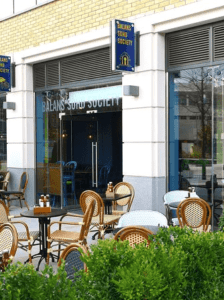
The famous Balans Soho Society group of restaurants and bars was about to open its seventh restaurant, in Ealing, London.
With a particularly demanding clientele – its slogan is: “A haven for the convivial” and the group numbers many celebrity guests – Balans decided to continue its relationship with NFS and deploy the Aloha restaurant management system that has already proved its worth at their other branches.
The deployment has paid off – and the group is particularly impressed with the loyalty programme it has been able to set up, with loyalty customers spending more than 40% more than non-loyalty guests.
At a glanceWho? Balans Soho Society’s new Ealing restaurant Where? London What? Aloha Table service EPOS software from NFS Why? Operational efficiency and great customer service, loyalty When? 2019 at the new Ealing branch
Balans Soho Society
Balans has always been ahead of trends. First started by business partners David Taylor and Prady Balan in the 1970s as a sandwich outlet, the group has become famous for hosting celebrity hangouts and delicious late-night dining.
Balans (now run by David Taylor) now has no fewer than seven restaurants across London and beyond, from Soho to Stratford City. Attracting the most up-to-date and savvy clientele, its menu is big on breath-taking brunches, quintessentially Balans mains and fabulous cocktails.
The challenge
Opening a new restaurant in Ealing – in the extraordinarily competitive London market – this famed group bills itself as a “haven for the convivial”.
So it knew it was crucial to deliver the same impeccable standards of operational efficiency and delicious customer service that have made its other six restaurants and bars such a celebrated three-decade success.
The results
The Ealing restaurant got off to a great start and is proving a real hit with customers with the help of its Aloha EPOS software.
“The system does exactly what we need – we find working with NFS very smooth thanks to having a key account person allocated.” – Kieran Crosby, Operations Director, Balans Soho Society
The benefits for Balans
As well as keeping operations streamlined and customer service moving effortlessly, Balans has had great success using its Aloha EPOS software to create targeted loyalty schemes and offer gift cards to enhance the customer experience.
The company believes the restaurant management software has created a big uplift – loyalty customers on average spend up to 42% more than non-loyalty customers.
“We’ve created an online loyalty programme where our customers are in control of how they use it, and that’s really helping to drive repeat visits,” says Kieran.
Balan’s staff also use Aloha Mobile to take customer orders and payments at tableside, using iPads. It means orders go directly to the kitchen for swift delivery, without any chance of human error.
Aloha EPOS software can integrate with kitchen automation to streamline food production, and the intuitive interface means it’s simple to get staff up and running on the system.
“Our FOH staff find Aloha very easy to use – the system is common in the restaurant industry and many have used it before, so they have familiarity with it.” – Kieran Crosby
Aloha has moved well beyond simple EPOS, and now creates a better-connected workflow within the restaurant and throughout the customer journey from online reservations through seating, dining, paying and loyalty – it even monitors social media reputation.
Like other users of Aloha, Balans also benefits from the business insight provided by the system. For restaurant groups, it gives an unprecedented end-to-end view of operations, with comprehensive reports including sales, labour and stock control, and accurate forecasting.
Why NFS?
NFS has a long-standing relationship with this prestigious restaurant chain, which made Aloha a natural choice when Balans was getting ready to open the new Ealing branch.
“We chose NFS because Aloha is working well in the rest of our estate,” says Kieran.
“Aloha does exactly what it needs to do – and we find it very reliable. We’d recommend it.”
What’s next?
Balans anticipates that using Aloha Mobile will increase efficiency, table turn and revenue during the coming summer months.