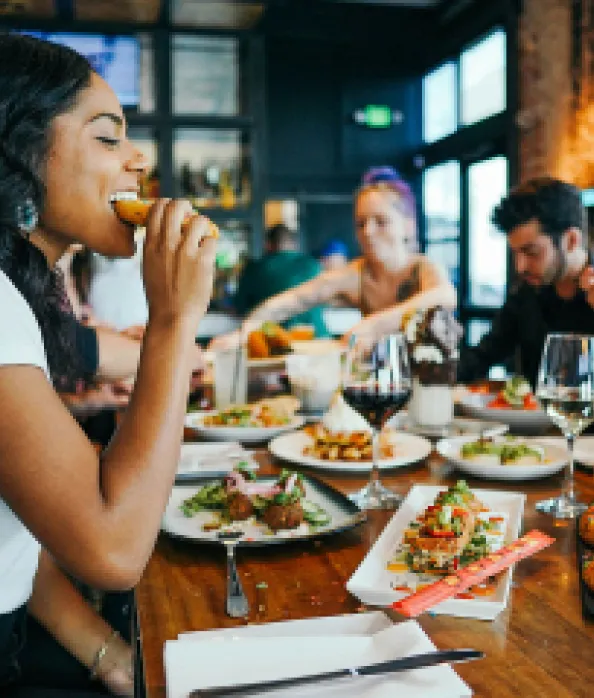
Every hospitality environment has its own unique rhythm. In a busy hotel lobby or a high‑volume bar, the guest’s priority is often speed and efficiency. In a luxury restaurant or a boutique stay, that same guest expects a personal connection and a conversation that cannot be replaced by a screen. The challenge for modern operators is choosing technology that supports their specific environment rather than forcing a one‑size‑fits‑all solution that risks compromising the brand.
Meeting the guest at their own pace
In environments where turnover is the primary driver, digital ordering has moved from a temporary measure to a permanent operational advantage. The benefit is simple: the faster an operator can serve, the quicker the guest receives their order. There is no waiting for a member of staff to become available; guests can sit down, scan, and begin their experience in seconds.
Beyond speed, there is a psychological advantage to digital prompts that goes beyond a simple list of items. Whether it is a beautifully photographed side dish or a premium room upgrade, a well-placed visual creates an immediate, visceral reaction.
“Suddenly [the guest] gets prompted, ‘Do you want to add fries to it?’ and they’re not just being told, they can see a beautiful picture of fries in a basket. Suddenly it’s like, oh, salivating, I want to order that.”
Leveraging technology in high‑touch environments
Many premium sectors stay away from guest‑facing technology because they value the personal interaction that defines their brand. However, this does not mean they have to avoid digital tools entirely. In these settings, the same logic of upselling and efficiency can be leveraged through mobile devices in the hands of the staff.
The technology prompts the server or concierge rather than the guest. It puts real‑time knowledge in their hands, allowing them to discuss the menu or amenities with confidence while the order is sent to the backend instantly. This keeps the team fully present with the guest, blending personal service with the efficiency of a digital infrastructure.
“The server has that knowledge in their hands to be able to discuss this with their customer and prompt those upsells… so it goes off to the kitchen while they are still chatting with the customer.”
Support as an operational consultant
Choosing the right technology is only half the battle; the other half is having a partner who understands the operation behind the screen. At NFS, our operations team comes from the industry, which means they can see behind the simple questions.
Whether you are running a high-volume bar or a single-site restaurant, our team speaks your language because they have lived it. They understand that a second saved at the terminal is a second gained with a guest. Support at NFS is not just about fixing problems; it is about identifying operational bottlenecks. We help you refine your service flow, ensure your kitchen isn’t overwhelmed by digital spikes, and give time back to the people running the floor.
“Having the operations team come out of the industry helps with that because they are able to see behind the customer’s question… a question that looks so simple can turn into a whole conversation about what they’re actually trying to achieve.”
Always discovering the next move
The best technology does not just sit on a counter; it evolves with the business. Whether it is using a hybrid model where guests order with a server but pay via a digital code or optimising your service layout to reduce travel time for staff, the goal is always the same. We aim to make the life of the operator easier, give them their time back, and ensure they have the tools to meet the ever‑changing expectations of their guests.
“With NFS, support is there to not only fix problems but also help identify areas in which we can improve the customer’s operation. How can we help them interact with their customers better? How can we give them some time back?”
Ready to find the right balance for your service?
If you are looking to improve your speed of service or want to give your team better tools for guest interaction, let’s start with a conversation. We will help you align your tech with your unique brand culture and ensure your operation is ready for the road ahead.
Contact the NFS team today to schedule your service style review and see what happens when your tech partner truly understands your operation.
Walk into almost any hotel today, and you’ll see a familiar scene – a POS terminal fixed to the bar, another in the restaurant, and a workstation tucked behind the lounge. These are the last traces of the till era, still bolted to counters even as the hotel around them has moved on. Staff move between them constantly, weaving through service like they’re following choreography written years ago. Guests wait to sign bills or confirm room charges, and managers try to make sense of what’s happening across the property using systems that don’t speak to each other.
Meanwhile, the guest journey has changed dramatically. A guest might start with breakfast, grab a coffee in the lobby, order lunch in a meeting room, enjoy drinks on the terrace, dine in the brasserie, and finish the night with room service. They move freely, and they expect the hotel to move with them.
“The hotel POS isn’t dying. It’s simply outgrowing the role it used to play.”
The age of the till has passed, and hotels are stepping into the era of the connected ecosystem. The POS is no longer a counter‑bound device; it is becoming the engine that holds the modern hotel together.
The real issue: hotel technology built in silos
For years, hotels built their technology one system at a time. A PMS for rooms, a POS for F&B, a separate platform for events, another for loyalty, another for payments, and another for inventory. Each system worked well enough on its own, but none were designed to work together.
The result is something every hotelier recognises – duplicated work, repeated guest questions, slow handovers between departments, and a sense that technology is adding friction rather than removing it. Guests don’t care which system does what. They don’t see the plumbing behind the scenes.
“Guests don’t see systems; they see one hotel. And they expect it to behave like one.”
That expectation is reshaping the role of the POS more than any hardware trend ever could.
The shift: from till to hotel-wide operational engine
The POS is no longer just the place where orders are keyed in; it is no longer a till at all. It has become the connective tissue of the hotel ecosystem, the system that understands guest preferences, tracks spending, connects to the PMS, handles payments, and gives managers a real-time view of what is happening. It is the difference between a tool and a nervous system.
A modern POS can quietly orchestrate the flow of service, sending orders to the right prep station, reducing walking time for staff, and smoothing out room-charge workflows so they feel effortless rather than awkward. It can help managers spot issues before they escalate, whether that is an understaffed bar, a meeting room running ahead of schedule, or a menu item that is suddenly trending.
When the POS is connected properly, it becomes the foundation for practical AI, helping teams make better decisions by forecasting demand, highlighting guest preferences, guiding purchasing decisions, and getting new staff up to speed faster.
“This isn’t the death of the POS. It’s the evolution of it, from a till on a counter to the intelligent engine that quietly powers the entire hotel.”
Why this evolution is happening now
Hotels are being pushed forward by forces that can’t be ignored. Guests expect to order, pay, and personalise their stay on their own terms, without losing the human touch. Labour is harder to find and more expensive to retain, F&B margins are under pressure, and managers need real-time visibility, not yesterday’s reports.
At the same time, the old idea that the PMS should do everything is fading. Hotels are moving toward ecosystems, choosing best-in-class systems that integrate cleanly rather than relying on one platform that tries to be all things to all departments. The till era was built on single systems; the ecosystem era depends on many systems working as one. In that world, the POS becomes the anchor – the system that quietly keeps everything connected.
How hotels are responding
The hotels that are getting this right aren’t simply replacing hardware; they’re rethinking how their teams work. Mobile devices are replacing fixed-terminal bottlenecks so staff can take orders anywhere without breaking the flow of service. Guests can pay how they want, when they want. Data is being used to personalise service in ways that feel natural rather than intrusive. The technology doesn’t replace hospitality; it gives staff more time to deliver it.
Real-time data and intelligent insight
One of the biggest shifts is the move from reactive reporting to real-time insight. When the POS is connected to the PMS, inventory, payments, and workforce systems, managers can finally see what is happening as it happens. Margins update automatically as ingredient costs change, server performance becomes visible in the moment, menu items can be adjusted based on live demand, stock can be reordered before it runs out, and labour can be matched to forecasted occupancy and outlet activity. This data helps hotels make better decisions faster.
Integration as a competitive edge
Hotels used to purchase systems based on features, but now they buy based on how well those systems integrate. A POS that doesn’t talk to the PMS creates friction, a POS that doesn’t talk to payments creates errors, and a POS that doesn’t talk to loyalty or events creates operational blind spots.
The hotels that win are the ones whose systems behave like one ecosystem rather than a collection of disconnected tools. This is where supplier collaboration matters, and it is where NFS has built its reputation.
Why NFS leads this shift
Hotels don’t need another system; they need a partner who understands how their operation really works, including the pressure points, the guest expectations, the financial realities, and the rhythm of service that no piece of software can see on its own.
NFS has spent years inside hotel operations, not just selling technology but shaping it around the way real teams work, communicate, and serve. We don’t arrive with a product pitch. We arrive with questions, curiosity, and a commitment to building an ecosystem that fits the hotel.
With NFS, you don’t just get technology – you get a partner invested in your success.
Looking ahead
The future hotel POS won’t sit on a counter. It won’t be something guests notice or staff think about. It will sit quietly at the centre of the ecosystem, powering every interaction, every decision, and every moment of service.
As Luis DeSouza, CEO of NFS, says:
“The till may be dead, but the hotel tech ecosystem it gave rise to is now indispensable. The hotels that embrace this shift will deliver the most seamless, most human, and most memorable guest experiences both now, and in the years ahead.”
“And this will deliver lower operating costs and staff better equipped to focus on the guest.”
NFS’ COO Laura Raccanello chats with Jack Holt, Account Executive, about how the Hotel EPoS now integrates like never before, offering hotel management new levels of control and insight.
Restaurant owners are constantly looking for ways to improve customer loyalty. It’s well known that the cost of retaining an existing customer is significantly less than acquiring a new one, and loyal customers can have a huge impact on overall profitability.
For decades, successful loyalty programs have been keeping customers coming back to hospitality businesses. However, many now find themselves asking whether loyalty card programs still deliver results in today’s competitive market.
The simple answer is a resounding yes. Yet, not all programs are created equal and modern diners expect more than just a chance to collect stamps, they want meaningful rewards and tailored experiences that create a genuine sense of belonging. When designed well, loyalty rewards programs for restaurants will not only boost repeat visits but turn first-time guests into regulars, driving business growth.
Why Loyalty Card Programs Still Work for Restaurants
Here are some of reasons why loyalty card programs still work for restaurants:
Driving Repeat Visits and Reliable Revenue
Loyalty card programs help create an ongoing relationship between restaurants and diners. They’re designed to encourage repeat visits and there is a psychological incentive for customers to return, as they know they’re working towards their next reward. As well as providing tangible rewards for patronage, they can also create a sense of belonging and build a connection between a brand and its customers.
Ultimately, members aren’t just returning for rewards, they’re coming back because they feel recognised and valued. When customers feel appreciated, they’re more likely to become regulars and choose your restaurant over competitors. They are also more likely to be ambassadors who recommend your restaurant to others, helping drive new business through word-of-mouth and positive reviews. This translates into more frequent visits, higher average spend, and a more reliable revenue base, even during off-peak periods.
Personalisation and Data-Driven Loyalty
Restaurant loyalty schemes don’t just reward transactions, they provide another way to gather valuable information about your customer base. You can learn more about menu preferences, ordering habits and visit patterns, enabling you to tailor your offerings to what your guests really want. Whether it’s a free drink on birthdays, mid-week special offers or exclusive tasting event invites, you can use the data collected to create more personalised experiences. This approach helps to improve the engagement of your rewards program, encouraging customers to return not only for value but for a bespoke experience that feels special.
Data-driven insights also allow you to measure what’s working and what needs to be improved by tracking repeat order rates, average spend increases, reward redemptions, and more. With this information on hand, you can improve your programs and confidently invest in rewarding the loyal guests who matter most to future growth.
Are Loyalty Card Programs for Restaurants Changing?
Over time, restaurant loyalty schemes have evolved, largely driven by advancements in technology. Traditional punch cards have been replaced by sophisticated mobile apps and online platforms. This evolution has also been impacted by how different generations interact with brands. In 2024, Millennials showed the highest level of brand loyalty and younger consumers put higher value into personalisation in comparison to Baby Boomers.
Restaurant loyalty schemes now go beyond providing discounts to creating experiences, from VIP nights to early access to new menus. By tapping into customer motivations with well-structured rewards programs, restaurants can boost brand loyalty, collect valuable data, and stay at the forefront of a crowded market.
Popular Types of Loyalty Programs
There are lots of different loyalty schemes for restaurants, and there’s a solution available for every type of restaurant, regardless of size or style. However, before choosing a platform, it’s best to decide which type of loyalty program you want to offer. Some of the most popular include:
Points-Based Programs – A tried-and-tested rewards program for restaurants is a points-based model where customers earn points for each pound they spend. These points can then be redeemed for discounts, free food, or special perks, making every meal feel more rewarding and boosting visit frequency.
Tiered Programs – You can give guests the opportunity to unlock better rewards based on their spending or visit frequency. As customers go through different levels, they will receive bigger benefits, improving engagement and encouraging higher spend.
Visit Frequency-Based Programs – Simple but effective, these loyalty schemes reward guests for every visit, regardless of how much they spend. They’re often digital or app-based, offering a free item after a set number of visits. This incentive is ideal for fast-food restaurants and coffee shops, emphasising the value of patronage.
Subscription-Based Programs – These are the latest evolution in loyalty programs. Customers pay a monthly fee for guaranteed benefits, such as priority reservations or member-only discounts. These encourage routine visits and offer predictable income for restaurants, making them popular among younger diners.
Best Practices for an Effective Restaurant Loyalty Scheme
Although times are changing, it’s still possible to create successful loyalty programs for restaurants. When you’re developing a loyalty card scheme, there are a few important points to remember to boost the likelihood of customer engagement:
Keep the rewards simple, visible and achievable
Offer a mix of instant rewards and long-term perks
Use modern technology for convenience and flexibility
Promote the program across all customer touchpoints
Analyse reward data to improve offerings
Introducing a Restaurant Loyalty Card Program
For restaurant owners, loyalty card programs remain a powerful tool. They’re not outdated, but they can be improved by implementing new technology and more enticing rewards. Whether it’s through points collection or subscription perks, loyalty rewards programs for restaurants can drive repeat business and nurture lasting guest relationships. By choosing the right type of restaurant loyalty program, you can turn everyday guests into loyal advocates.
If you’re interested in creating a loyalty scheme or updating your current program, our team at NFS Hospitality can help. We offer a range of software solutions that can help boost retention, and will be happy to discuss the benefits of different options with you in more detail.
Over the years, the hospitality industry has seen an increase in technological innovations that make day-to-day operations much easier and more efficient. QR code ordering has become the ‘new normal’ for many restaurants, and it’s reshaping customer interactions and operational efficiency. What started as a trend driven by the need for contactless dining in 2020 has now become a standard feature, and one that customers often take advantage of.
As customer needs and expectations evolve, more and more restaurants are embracing the convenience of self-ordering via QR codes and providing customers with the ability to place orders directly from their smartphones without having to speak to a member of staff. In this post, we have explored how QR ordering systems are changing the way restaurants operate and why they have become the new normal across the industry.
The Popularity of QR Code Ordering
QR code ordering is revolutionising the dining experience. By simply scanning a QR code on their table, customers can access digital menus, place their orders and even pay their bill, all directly from their mobile device. This way of ordering prevents the need for traditional paper menus or front-of-house staff taking orders, speeding up the entire process and providing a more enjoyable experience for some diners.
In recent years, QR codes have become increasingly popular due to their convenience and ease of use. They are used across a range of industries in various settings, and as long as customers have a smartphone, they can make the most of self-ordering. With the growing demand for contactless and quick-service options, QR code ordering has quickly become a game-changer for restaurant businesses.
Empowering Customers
One of the main reasons why QR code ordering has become so popular is that it provides customers with more control over their dining experience. They can browse the menu without feeling rushed, exploring various offers and discounts available. Customers can also customise their orders, adding any special requests, and review their choices before submitting them straight to the kitchen. Once they’ve finished eating, they can also pay for their bill via multiple payment methods and without any delays, allowing them to get on with their day.
Since customers are no longer dependent on a server, they can enjoy their dining experience at their own pace. They can immediately place their orders as soon as they’re ready, reducing wait times and preventing delays that often occur when they’re trying to get someone’s attention. This streamlined process is particularly beneficial for quick-service restaurants with a high turnover of tables, making the entire experience more enjoyable.
Minimising Errors
When customers have the option to place their orders themselves, there’s less room for error. Traditional methods, where front-of-house staff write down orders and input them at service kiosks, are often prone to mistakes. From misheard requests to forgotten items, customers can be left dissatisfied and send orders back to the kitchen.
With QR code ordering, customers will directly input their choices into the ordering system. They can double-check the details before proceeding, which reduces the chance of errors. Not to mention, online orders are sent straight to the kitchen display system, reducing the likelihood of miscommunication between teams. This higher level of accuracy, combined with the faster service, will result in a better customer experience and fewer complaints.
Improving Operational Efficiency
In addition to benefiting customers, QR code orders can be incredibly useful for restaurants and will help improve operational efficiency. By reducing the need for employees to take orders manually, they will have more time to focus on other tasks, like serving drinks and meals, and maintaining a clean and welcoming environment.
Self-ordering will also speed up the overall dining process, helping with table turnover and increasing revenue. Since customers can order and pay without waiting for a server, you can seat more guests during busy periods and make the most of seasonal or promotional menus. This low-contact, streamlined process allows for a much more efficient workflow, so you can serve more customers in less time without impacting the guest experience.
Integrating with Restaurant POS Systems
When integrated with a restaurant POS system and kitchen management system, QR code ordering becomes even more effective. Together, these modern systems will enable accurate inventory control and immediate ordering processing. You can provide an uninterrupted service and even update menus in real time if required.
A modern POS system for restaurants also allows you to collect valuable data from QR code orders. From customer preferences and most popular menu items to overall sales trends, you can gain useful insights with advanced reporting capabilities. The data collected can then be used to improve everything from inventory management to staff scheduling, or even make adjustments to menus to meet customer demand more effectively.
Why QR Code Ordering is Here to Stay
As customers’ wants, needs and expectations continue to evolve, QR code ordering is proving to be a lasting trend in the hospitality industry. It perfectly meets the growing demand for fast, efficient and contactless dining experiences, putting the customer in full control. With the benefits for both guests and restaurant staff, it’s no surprise that so many businesses are offering self-ordering solutions to customers.
As QR codes become more of a common sight in restaurants, self-ordering will likely be the standard expectation. Guests enjoy the speed and convenience that comes with ordering and paying directly from their smartphones, and many don’t miss the interaction with servers. For restaurant owners, investing in a QR code ordering system that integrates with a restaurant POS system is a smart move that both improves customer satisfaction and optimises operations, supporting long-term success.
Looking to Implement QR Code Ordering?
It’s fair to say that QR code ordering is reshaping the way restaurants operate and interact with guests. If you’re looking to incorporate QR code ordering into your operations, NFS Hospitality can provide you with a comprehensive system that is trusted by many leading brands in the hospitality industry. Get in touch with our team today to learn more about how QR code ordering can benefit your business.
An Electronic Point of Sale (EPOS) system can optimise restaurant operations. This comprehensive software will manage all key aspects of your restaurant business, from order-taking to inventory control, providing you with one central system that can improve overall efficiency. However, it’s important to ensure you’re choosing the right EPOS software for your specific needs to truly reap the benefits of this powerful tool.
When narrowing down the available options, it’s important to consider more than just the features available. It’s essential to find an EPOS system that suits your operations, budget and long-term goals. Regardless of what type of restaurant you operate, you should evaluate your business needs and ensure the software is suitable for the day-to-day running of your business. Below, we have explored the key factors that will influence which EPOS system will work best for your restaurant and how you can make the most informed decision.
Size and Type of Venue
The type of restaurant you operate and the scale of your operations will play a crucial role in determining which EPOS system is best. For instance, smaller independent restaurants often have simpler workflows and fewer members of staff. Therefore, a user-friendly system that covers all the essentials, such as order-taking, payment processing and simple reporting, might be sufficient. Budget may also be a key consideration for smaller businesses.
On the other hand, larger restaurants or franchises typically need a more powerful system. Multi-location restaurants can benefit from cloud-based EPOS systems that provide centralised control over all sites and make it easy to manage operations from anywhere. Whether it’s updating menus or monitoring sales performance, having the ability to do so from a single dashboard offers several benefits and can streamline operations.
Menu Complexity and Workflow Requirements
Whether you have a simple menu that doesn’t change much throughout the year or a complex menu with multiple promotions and seasonal offerings will also impact which EPOS software is best suited to your needs. If your menu includes various customisation options and multiple courses, an EPOS system that sends orders directly to kitchen display systems can be beneficial, reducing the likelihood of mistakes and speeding up service.
Review your entire current workflow, from order-taking to payment processing, and consider the current communication between front-of-house and kitchen staff. The best EPOS software for restaurants should solve any pain points, such as offering tableside ordering to reduce wait times and optimise table turnover, or tracking inventory in real-time to update menus and prevent customer disappointment.
Integration with Other Systems
A restaurant EPOS system should do more than just process transactions; it should integrate with the other tools you rely on. When your EPOS software speaks to key systems, such as your reservation platforms, loyalty programmes and omni-channel ordering solutions, you can benefit from a seamless flow of information.
Look at which systems you use at different stages of the customer journey and consider how integration can streamline operations. When your software is in sync, it will improve accuracy and efficiency, and prevent issues with data loss.
Budget and Pricing Structure
Your budget is always an important factor when investing in new software. When it comes to a restaurant EPOS system, you need to consider the total cost of ownership, not just the upfront price. In addition to initial setup costs, covering hardware and installation, there are often ongoing subscription fees to be aware of.
Factors such as number of users and locations, amount of cloud data storage, customer support and updates, and also additional features will all impact the monthly costs associated with an EPOS system. When comparing costs, it’s important to factor the long-term return on investment into your decision too. While one EPOS system may cost more, if it offers significant benefits that can boost revenue, it could be more cost-effective over time.
Scalability and Future-Proofing
It’s wise to think ahead when you’re investing in new software. Choosing an EPOS system that can grow with your business can save you a lot of hassle in the long run. You can avoid having to switch platforms and re-train staff if your small business expands into new locations.
A future-proof EPOS solution should allow you to add more locations, terminals or users easily, supporting business growth. It should also support updates and new technologies, ensuring your restaurant remains compliant with industry standards and continues to meet customer expectations. With improved business intelligence, EPOS software can even help you grow your restaurant quicker. By using reporting tools, you can make data-driven decisions and reach your goals much sooner.
Technical Support and User Experience
Your software should always be straightforward to use, for both customer-facing and back-of-house teams. A confusing interface can slow down service and result in mistakes that negatively affect customer experience, especially during busy periods. Training should be simple too, making it easy to take on new staff and hit the ground running.
For restaurant EPOS systems, responsive customer support is essential. Whether you need help setting up hardware, adding new features or troubleshooting an issue, a provider with reliable technical support can make a huge difference. You can have peace of mind that your EPOS software is robust and reliable, and you will have an uninterrupted service.
Choosing the Best EPOS Software for Your Restaurant
Choosing an EPOS system is a key decision and one that will have a direct impact on your operations moving forward. At NFS Hospitality, we understand that no two restaurants are the same, and we deliver the best of breed software. Our EPOS solutions are designed to adapt to a wide range of operational needs, and they provide you with one smart, centralised system.
Our expert team will work closely with you to evaluate your current setup, identify your pain points, and recommend tailored solutions that suit your goals and budget. We have experience working with the biggest brands in hospitality and invite you to read some of the case studies on our website. If you have any questions about EPOS software for restaurants, feel free to get in touch with NFS Hospitality today.
Whether you’re a small local cafe or part of a large corporate chain, staff shortages have become a nationwide problem affecting the entire hospitality industry. Maintaining exceptional service quality and a strong customer experience without the right team in place is a huge challenge, especially in an environment where you need all hands on deck.
At NFS Hospitality, we’ve been providing innovative restaurant technology solutions to some of the world’s leading hospitality operators for more than 25 years. Our platforms are designed to increase revenue, streamline operations, and improve the experience of every customer who walks through your doors. We understand the complex challenges hospitality businesses face today, including staff shortages. Thankfully, our unique hospitality EPOS systems are both practical and powerful solutions.
Read on to discover how our restaurant EPOS software solutions can help you manage operations and support your team, all without compromising on standards.
The Current Staffing Crisis in Hospitality
According to UKHospitality, there are approximately 132,000 vacancies in the hospitality and leisure sector, 48% above pre-pandemic levels. This eye-opening statistic is just one of many that highlight a sector still scrambling to fill critical roles, particularly in front-of-house and kitchen positions.
The impact is felt across the board. Many restaurants and cafes are being forced to deliver inconsistent service, endure longer wait times, or even reduce their opening hours. And all this is happening in an era where customer experience and online feedback are more influential than ever. Falling short on service isn’t an option.
Fortunately, technology can now work with us rather than against us. And that’s where hospitality EPOS becomes a real game-changer.
How Hospitality EPOS Systems Can Help
Hospitality EPOS systems of today, such as those at NFS Hospitality, are far more advanced than simple payment processors. They serve as the digital backbone of a restaurant, connecting and centralising activity across all teams. With one powerful platform, staff can manage everything from inventory to order taking, staff scheduling and real-time reporting.
These systems integrate with tools for stock control, staff rotas, online ordering, customer loyalty programmes and detailed analytics. This connectivity eliminates the need for multiple disconnected systems, reduces manual effort and helps keep everyone on the same page.
If you’re one of the many businesses in hospitality struggling with staffing, the benefits of hospitality EPOS are significant. By simply automating routine tasks and providing instant visibility across all operations, your teams can do more with less, supporting better service, faster decision-making and a smoother overall experience.
Automating Everyday Tasks to Save Time
Hospitality EPOS systems take the pressure off your team by automating daily tasks, helping to improve accuracy and speed. These include:
Automatic order routing sends orders directly to the kitchen. This reduces the risk of manual errors and speeds up service
Live stock level tracking monitors inventory in real time and generates reorder prompts to prevent shortages
Integrated table management and reservation systems help organise seating and improve service flow
Compatibility with mobile and tablet devices enables floor staff to take and send orders instantly, even when staff numbers are tight.
Improving Team Productivity and Communication
With staffing challenges at an all-time high in the hospitality industry, it’s more important than ever to support your team and keep operations running smoothly. This is where clear communication becomes invaluable.
Fortunately, hospitality EPOS systems help prevent mistakes by seamlessly connecting front and back of house, ensuring order updates and changes are instantly shared. Additionally, staff scheduling tools empower managers to plan rotas based on demand trends drawn from their data. Altogether, this reduces stress for both management and staff, improves coordination between teams, and minimises operational bottlenecks.
Faster Training and Onboarding with User-Friendly Interfaces
High staff turnover means fast onboarding is essential. Thankfully, NFS’s hospitality EPOS system is designed with this in mind. Its intuitive and simple interface helps new staff gain confidence quickly, reducing the time management needs to spend on hands-on supervision.
Maintaining Service Standards With Less Staff
In hospitality, delivering a consistent brand experience with every customer interaction is crucial, especially when staffing is limited. At NFS Hospitality, our EPOS solutions have been built to support this by streamlining operations and easing pressure on your team. Depending on your service model, digital ordering options such as kiosks, mobile apps, or at-table ordering allow guests to order independently, increasing speed and efficiency.
Paired with quicker turnaround times and fully integrated service tools, hospitality EPOS systems help maintain high standards, strong customer satisfaction, and repeat business, even with smaller teams.
Why You Should Partner With NFS Hospitality
At NFS Hospitality, we are dedicated to empowering your business in the fast-paced hospitality industry. Our EPOS systems are designed for today’s challenges and tomorrow’s demands, offering scalable solutions for restaurants, hotels, and multi-site operations. With over 25 years of experience, we provide intuitive platforms that streamline operations, reduce waste, and enhance staff efficiency, allowing your team to focus on delivering exceptional guest experiences. Our UK-based support and integrated technologies ensure you have the tools to grow confidently and stay ahead.
Choosing NFS Hospitality means partnering with a team committed to your success, offering reliable, innovative, and expert solutions. Discover how our technology can support your success by visiting our page on restaurant epos systems.