An Electronic Point of Sale (EPOS) system can optimise restaurant operations. This comprehensive software will manage all key aspects of your restaurant business, from order-taking to inventory control, providing you with one central system that can improve overall efficiency. However, it’s important to ensure you’re choosing the right EPOS software for your specific needs to truly reap the benefits of this powerful tool.
When narrowing down the available options, it’s important to consider more than just the features available. It’s essential to find an EPOS system that suits your operations, budget and long-term goals. Regardless of what type of restaurant you operate, you should evaluate your business needs and ensure the software is suitable for the day-to-day running of your business. Below, we have explored the key factors that will influence which EPOS system will work best for your restaurant and how you can make the most informed decision.
Size and Type of Venue
The type of restaurant you operate and the scale of your operations will play a crucial role in determining which EPOS system is best. For instance, smaller independent restaurants often have simpler workflows and fewer members of staff. Therefore, a user-friendly system that covers all the essentials, such as order-taking, payment processing and simple reporting, might be sufficient. Budget may also be a key consideration for smaller businesses.
On the other hand, larger restaurants or franchises typically need a more powerful system. Multi-location restaurants can benefit from cloud-based EPOS systems that provide centralised control over all sites and make it easy to manage operations from anywhere. Whether it’s updating menus or monitoring sales performance, having the ability to do so from a single dashboard offers several benefits and can streamline operations.
Menu Complexity and Workflow Requirements
Whether you have a simple menu that doesn’t change much throughout the year or a complex menu with multiple promotions and seasonal offerings will also impact which EPOS software is best suited to your needs. If your menu includes various customisation options and multiple courses, an EPOS system that sends orders directly to kitchen display systems can be beneficial, reducing the likelihood of mistakes and speeding up service.
Review your entire current workflow, from order-taking to payment processing, and consider the current communication between front-of-house and kitchen staff. The best EPOS software for restaurants should solve any pain points, such as offering tableside ordering to reduce wait times and optimise table turnover, or tracking inventory in real-time to update menus and prevent customer disappointment.
Integration with Other Systems
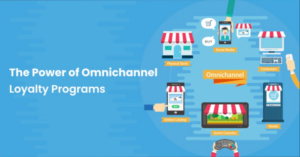
A restaurant EPOS system should do more than just process transactions; it should integrate with the other tools you rely on. When your EPOS software speaks to key systems, such as your reservation platforms, loyalty programmes and omni-channel ordering solutions, you can benefit from a seamless flow of information.
Look at which systems you use at different stages of the customer journey and consider how integration can streamline operations. When your software is in sync, it will improve accuracy and efficiency, and prevent issues with data loss.
Budget and Pricing Structure
Your budget is always an important factor when investing in new software. When it comes to a restaurant EPOS system, you need to consider the total cost of ownership, not just the upfront price. In addition to initial setup costs, covering hardware and installation, there are often ongoing subscription fees to be aware of.
Factors such as number of users and locations, amount of cloud data storage, customer support and updates, and also additional features will all impact the monthly costs associated with an EPOS system. When comparing costs, it’s important to factor the long-term return on investment into your decision too. While one EPOS system may cost more, if it offers significant benefits that can boost revenue, it could be more cost-effective over time.
Scalability and Future-Proofing
It’s wise to think ahead when you’re investing in new software. Choosing an EPOS system that can grow with your business can save you a lot of hassle in the long run. You can avoid having to switch platforms and re-train staff if your small business expands into new locations.
A future-proof EPOS solution should allow you to add more locations, terminals or users easily, supporting business growth. It should also support updates and new technologies, ensuring your restaurant remains compliant with industry standards and continues to meet customer expectations. With improved business intelligence, EPOS software can even help you grow your restaurant quicker. By using reporting tools, you can make data-driven decisions and reach your goals much sooner.
Technical Support and User Experience
Your software should always be straightforward to use, for both customer-facing and back-of-house teams. A confusing interface can slow down service and result in mistakes that negatively affect customer experience, especially during busy periods. Training should be simple too, making it easy to take on new staff and hit the ground running.
For restaurant EPOS systems, responsive customer support is essential. Whether you need help setting up hardware, adding new features or troubleshooting an issue, a provider with reliable technical support can make a huge difference. You can have peace of mind that your EPOS software is robust and reliable, and you will have an uninterrupted service.
Choosing the Best EPOS Software for Your Restaurant
Choosing an EPOS system is a key decision and one that will have a direct impact on your operations moving forward. At NFS Hospitality, we understand that no two restaurants are the same, and we deliver the best of breed software. Our EPOS solutions are designed to adapt to a wide range of operational needs, and they provide you with one smart, centralised system.
Our expert team will work closely with you to evaluate your current setup, identify your pain points, and recommend tailored solutions that suit your goals and budget. We have experience working with the biggest brands in hospitality and invite you to read some of the case studies on our website. If you have any questions about EPOS software for restaurants, feel free to get in touch with NFS Hospitality today.
Forget a swipe-right kind of relationship – today’s hospitality guests want a proper romance with your restaurant. In this article, you’ll discover what happens when good loyalty programmes go bad, and how AI is powering up data to create long-lasting partnerships with customers.
Because guests have changed – they want a love relationship with your business. The simple equation of “You make my food = I pay for it” just doesn’t add up to success anymore.
In other words, transactional has been blown away by experiential customer service.
What’s the difference between transactional and experiential?
You can compare it with someone seeking romance and long-term potential, rather than just a swipe right…and like any life relationship, that takes effort and commitment from you.
How offers can ruin your relationship
Good personalised loyalty programmes are solid gold. As one recent report on next generation dining says: “In a highly competitive hospitality environment, creating memorable guest experiences is the ultimate differentiator.”
Research shows in 2025:
– 29% Of consumers and
– 32% Of families will actively seek out discounts or offers for dining or drinking out.
But a badly-targeted offer can cost you money – or threaten the relationship you want to encourage – See Full Research
When loyalty goes wrong – an example:
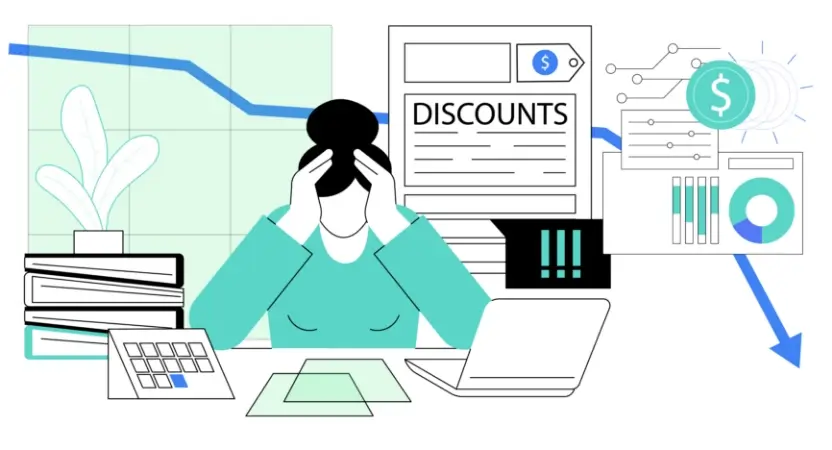
You need to drive more business on a Monday, so you decide to send your customers an offer for big discounts. But if you haven’t fully worked out the economics, you’ll end up out of pocket.
Will the extra business cover the labour and supply costs? Even worse…might some of your high spenders simply change to a cheaper day to eat? Or – ouch – will you cause offence by offering, say, committed vegans a steak deal?
Experiential dining? It’s not dating, but data
You want your restaurant to be their One and Only, the ultimate in customer loyalty. Tailoring the experience to their exact requirements is the way to win their hearts, but you need to truly know what they want.
As New York restaurateur Danny Meyer says:
“Hospitality is present when something happens FOR you. It is absent when something happens TO you. Those two simple prepositions – for and to – express it all”.
You definitely want your guests to believe your service is FOR them, in the most individual of ways.
So, building a great experiential relationship is not exactly dating, but it is all about data – segmenting your market using technology-captured information that enables personalised, effective reward programmes and grows your business.
We know each other sooo well…
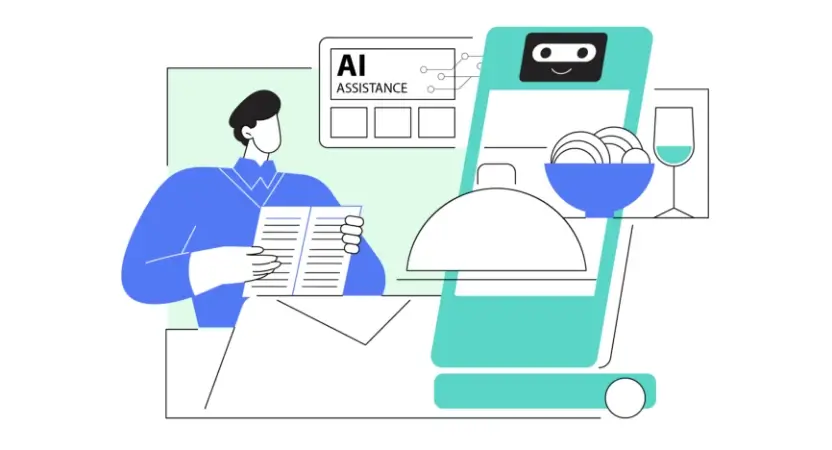
AI, working with specialised hospitality technology, is making incredible strides forward in capturing and analysing customer data to power up customer engagement.
“Artificial intelligence allows restaurants to go far beyond generic service, offering true personalization at scale. AI-driven systems can remember dietary restrictions, favorite dishes, preferred seating, and even special occasions like birthdays or anniversaries. This data enables staff to offer tailored greetings, suggest relevant menu items, or seat returning guests at their usual table — all without extra training or manual entry. The result? A guest experience that feels effortless and genuine.” – AI Time Journal
Customers’ personal requirements are now really specific. High spenders might demand a special menu just for them, or exclusive events or dishes. Maybe they want you to understand without asking that they always prefer salad to chips.
Even in fast food the experiential approach pays off, with easy and responsive kiosk ordering – McDonald’s Chairman and CEO Chris Kempczinski cited AI adoption among his top three trends in 2025 for the quick service restaurant industry.
So that disastrous offer of steak to a vegan? With great data at your fingertips, that kind of slip is never going to happen. There’s going to be nothing to break up this growing relationship.
AI helps the human in the room
AI as a data-harvester and analyst is not an alternative for your restaurateur’s knowledge and expertise, but simply an enhancer and enabler. As EY comments:
“Technology should not be considered a replacement for human touchpoints but as an enabler for better human-led experiences… an AI-led customer experience will be far richer if it has a human element at the right time.”
Unprecedented opportunity
As hospitality technology experts, we can’t agree more with this. As our Chairman Luis De Souza says:
View Luis’ podcast on experiential dining and AI
WATCH NOW
×
Imagine your restaurant bustling with eager patrons. Each diner delights in a special dish, crafted just for today, igniting excitement with each bite. Harness this enthusiasm through a limited time offer — a flash sale with a special discount that drives both footfall and online engagement, capturing the imagination of discerning diners and maximising revenue through anticipation and unique storytelling.
Limited-time offers (LTOs) help restaurants boost sales and customer loyalty by creating urgency.
Benefits of Limited Time Offers
Drive immediate sales and bookings
Attract new diners and reward regulars
Test new menu items before launch
Build brand excitement and customer loyalty
Popular Types of Limited Time Offers
Seasonal or holiday dishes/drinks
Discounts and meal deals
Exclusive events (chef’s specials, themed nights)
Best Practices for Running a Limited Time Offer
Set a clear timeframe (short enough to build urgency).
Track results and gather feedback for improvement.
Use restaurant tech (POS, reservations, ordering systems) to manage and analyze performance.
Key takeaway: A well-planned limited-time offer can deliver a quick revenue boost while strengthening long-term customer relationships.
What is a Limited Time Offer (LTO)?
A Limited Time Offer (LTO) is a strategic marketing tool where a restaurant introduces a new dish, beverage, or unique experience for a specific, brief period, stimulating urgency and interest.
These promotions often entice visitors with the promise of something special and fleeting.
Ingeniously designed, Limited Time Offers tap into the human desire for novelty and exclusivity, creating buzz (particularly around seasonal or cultural celebrations).
This marketing tactic not only attracts attention but also provides invaluable insights into customer preferences, enhancing future menu innovations.
Moreover, Limited Time Offers are instrumental in reinvigorating loyal customer bases, blending the allure of exclusivity with the anticipation of fresh and exciting culinary delights that patrons are eager to savour and share.
Ultimately, the essence of a Limited Time Offer lies in the delicate balance of allure and urgency, and scarcity, an enchanting marketing dance that can significantly elevate a restaurant’s profile and purchases.
Importance of Limited Time Offers
Limited time offers create a sense of urgency.
This urgency stimulates immediate decision-making, which can significantly increase patron footfall and order volume. Through limited time offers, restaurants tap into the psychological phenomenon of FOMO – the fear of missing out – encouraging patrons to act quickly. Consequently, LTOs become a driving force in enhancing customer engagement and recognition, enabling restaurateurs to build momentum and boost their establishment’s visibility and appeal.
Customers relish exclusivity and novelty, while fearing scarcity.
LTOs provide a platform for testing new ideas – be that novelty items, adventurous menu extensions, or even collaborations with renowned chefs – all while gauging customer response without long-term commitment.
Furthermore, when executed effectively, LTOs can cultivate meaningful interactions between restaurants and their audiences, forming crucial connections. Social media ordering and delivery apps, in particular, offer dynamic tools to broadcast these limited-time offerings widely, creating ripples of excitement and transforming fleeting experiences into enduring culinary adventures. As you embark on your journey to harness the magnificent potential of LTOs, gather inspiration from these compelling elements and watch your restaurant flourish with newfound vitality.
Benefits of Limited Time Offers for Restaurants
Limited time offers (LTOs) in restaurants present a unique opportunity to captivate new customers, boost sales, and induce a palpable sense of urgency. These offers nurture a perception of exclusivity.
Such heightened interest often leads to increased foot traffic and online engagement during the offer period. This results in amplified visibility and customer interaction.
Simultaneously, restaurants can use LTOs as a strategic tool to differentiate themselves from competitors in a crowded market. This distinction is vital for brand recognition.
Moreover, LTOs can encourage customers to try new menu items, thus expanding their culinary horizons. They serve as a testing ground for future permanent menu additions.
Ultimately, limited time offers evoke excitement and prompt immediate action, leading to repeat visits, customer loyalty, and increased conversion rates. Delivering consistent quality enhances long-term relationships.
Therefore, the power of LTOs lies in their ability to seize attention swiftly. Their strategic use can result in maximum exposure and revenue optimisation when effectively managed.
Identifying the Right Timing for Offers
Determining the perfect timing for a limited time offer is crucial for maximising its effect.
Strategically, this involves understanding your clientele’s peak activity periods, such as lunch and dinner rushes, aligning your promotional efforts with these high-traffic times, and considering events or holidays that naturally attract more patrons. Offers launched during these periods can lead to increased customer volume, engagement and purchases, thereby enhancing your brand’s reach and appeal.
Furthermore, market research can identify trends where specific demand fluctuates. By leveraging these insights, you gain the opportunity to anticipate customer cravings and supply timely promotions that satisfy these emerging desires.
Incorporating social media ordering and delivery apps amplifies this timing advantage, as notifications and app alerts can nudge consumers towards your offer at precisely the right moments. This method aligns with modern consumption habits and ensures your message reaches your target audience promptly, fostering immediate action and building ongoing customer relationships.
Creating Compelling Offer Descriptions
Crafting powerful offer descriptions propels your message forward.
To ensure your limited time offer resonates, consider both clarity and enticement. Each word should ignite the curiosity of potential customers, prompting them to explore your restaurant’s current treasure. Strategically, aim to go beyond mere assertions of affordability or exclusivity to include storytelling elements that evoke vivid imagery.
Elevate your descriptions by incorporating sensory details.
Words like ‘succulent’ or ‘crispy’ paint a culinary portrait that is as inviting as it is memorable, coaxing potential diners to envision themselves tasting your offers. By interweaving sensory details with a sense of urgency and identifying psychological triggers – perhaps a countdown or a reminder of the deal’s fleeting nature – you invite an emotional connection.
Social media is a powerful ally in this endeavour, offering a visual platform to reinforce written descriptions. Utilising striking images or engaging videos to accompany text enhances curiosity and excitement, which could contribute to a substantial increase in orders. Harnessing these contemporary digital tools allows you to extend the vibrancy of your limited time offer beyond mere words.
Utilising Social Media for Promotions
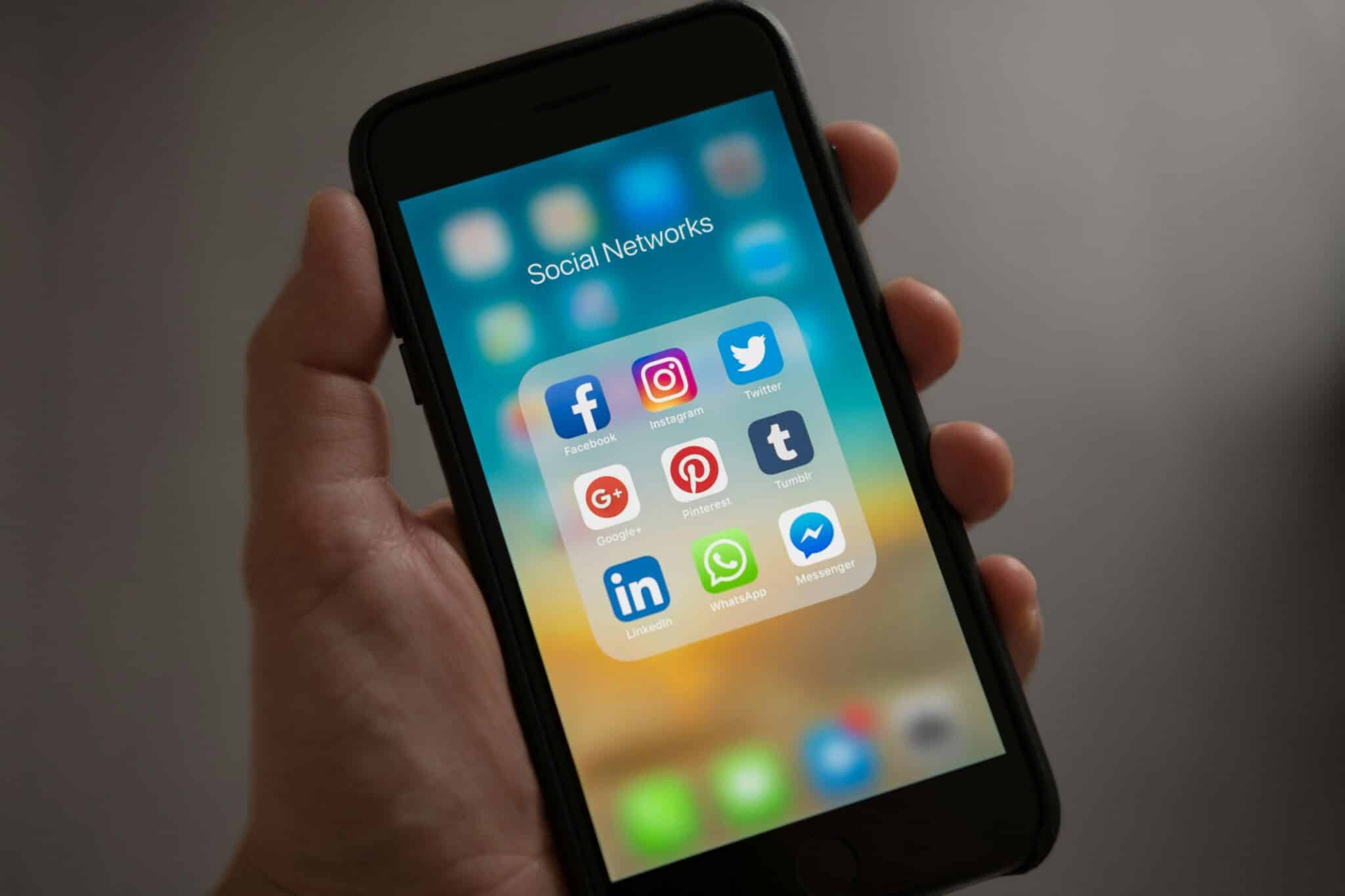
Embrace the digital tapestry of social media, a conduit for extraordinary engagement, where your limited time offer can defiantly shine. Leverage platforms like Instagram and Facebook to create dynamic content, using captivating visuals and hashtags that resonate with your audience, while interactive features such as polls and countdowns weave a tangible sense of interconnectedness. This strategic approach not only amplifies your offer’s allure but also forges a community around your culinary creations, inspiring a sense of participation and urgency.
Engaging Content Strategies
Crafting content that captivates and compels, a tapestry of authentic storytelling, moves hearts and appetites alike. Presenting your limited time offer with this strategy can invigorate interest effortlessly.
Connect emotively by blending visuals and narratives effectively, such as “behind-the-scenes” insights. This kindles curiosity, providing customers with a glimpse of your culinary creativity, fostering loyalty and anticipation.
Story-driven campaigns are captivating and have been shown to increase customer engagement by up to 80%.
Leverage social media’s potential: engage creatively with platforms, showcasing teaser content and interactive stories. Utilise delivery apps to amplify reach, ensuring your exclusive offering finds the eager plates it deserves, while strengthening your brand’s dynamic voice.
Timing and Frequency of Posts
Timing and frequency of posts, though often overlooked, are crucial elements that can significantly enhance the success of your limited time offer.
When strategising, it’s vital to post consistently within a structured schedule that aligns with customer habits, ensuring your promotional posts capture maximum visibility and attract the attention your offer merits. Analytical tools on social media platforms and delivery apps allow you to understand peak engagement periods, thereby honing the precision of your posting strategy.
Synchronised, well-timed posts during a promotional campaign can yield remarkable outcomes. By focusing your efforts, you can ensure your engaging content reaches the right audience during periods of heightened interest and favourable engagement metrics.
Consequently, focus on increasing exposure by maintaining regular posting cycles throughout your promotion. This persistent approach keeps your limited time offer fresh in the minds of your audience, allowing you to create a sustained dialogue with potential patrons and consistently nurturing their enthusiasm and anticipation.
Leveraging a sophisticated marketing campaign system can significantly streamline and automate the myriad tasks involved in executing successful marketing strategies. These systems not only automate the dissemination of promotional content across various channels but also provide insightful analytics to refine future campaigns. This automation empowers restaurant owners to focus on crafting exceptional dining experiences, confident that their marketing efforts are both efficient and impactful, driving customer engagement and boosting sales with precision and ease.
Partnering with Delivery Apps
Incorporating delivery apps can significantly boost your restaurant’s visibility, ease operational burdens, and maximise your offer’s reach.
These platforms can optimise the customer experience (CX) journey by providing seamless access to your limited time offer, thus allowing customers to effortlessly explore options and make swift on-the-go decisions.
Integrating with delivery platforms has never been more seamless, thanks to the cutting-edge systems provided by NFS Hospitality. These systems are designed with user-friendly interfaces and robust compatibility, allowing restaurants to effortlessly connect with popular delivery services. This integration ensures that limited time offers and menu updates are instantly reflected across all platforms, enhancing operational efficiency and customer satisfaction.
By automating the synchronization of orders and promotions, restaurants can maintain a consistent brand presence and deliver exceptional service without the hassle of manual updates. This streamlined process not only saves time but also optimizes the customer journey, ensuring that every interaction is smooth and rewarding. With such powerful tools at their disposal, restaurant owners can confidently embrace the digital age, knowing that their delivery operations are both efficient and scalable.
Maximising Reach with App Promotions
Captivating the attention of potential customers lies in harnessing the technological marvels at our disposal, including diverse app promotions. These innovations can propel your marketing outreach to unprecedented levels, ensuring your limited time offer resonates with hungry patrons eager for a novel dining experience.
Utilising apps enhances promotional visibility, ensuring your offers reach beyond traditional customers.
App platforms allow for targeted promotional messages to inspire and entice potential customers, fostering a vibrant digital presence.
These digitally-driven avenues of advertisement empower restaurateurs to unleash their limited time offers, delivering content that resonates, and should not be underestimated. Moreover, they provide a dynamic performance feedback loop, allowing your marketing strategies to adapt with agility in an ever-evolving marketplace.
Ultimately, the use of apps does not only ensure access to myriad customers. It also fortifies your standing by establishing a perpetual link between delectable offerings and your restaurant’s innovative spirit.
Streamlining Orders through Apps
Harnessing the power of technology can revolutionise how your restaurant manages orders efficiently and attracts new customers.
Enhance Visibility: Use delivery and social media apps to boost your restaurant’s presence.
Targeted Promotions: Deploy promotional messages tailored to your audience using app analytics.
Seamless Experience: Ensure an intuitive ordering process to foster a positive consumer experience.
Real-Time Feedback: Leverage app feedback to refine your offers and services continuously.
These platforms provide the tools to showcase limited time offers effectively.
Ultimately, these app-driven methodologies establish a strong brand, aligning technological innovation with exceptional customer service.
Setting Up Effective Email Campaigns
Navigating the digital age requires mastery over diverse marketing channels, with email campaigns playing a crucial role.
Since their inception, email campaigns have evolved to become powerful tools for restaurant marketing, providing direct communication with potential patrons. They enable personalised interactions and nurturing of customer relationships, fostering a sense of loyalty.
To set up an effective email campaign, the foundation must begin with a robust contact list. This should be meticulously curated and segmented, ensuring that messages resonate with different audience groups. The personalisation of content, combined with a compelling subject line, significantly increases open rates.
Moreover, integrating your email campaigns with limited time offers and a free gift can enhance customer engagement. Highlight exclusive discounts and unique menu items that are only available for a short period. This creates urgency and drives immediate action from your subscriber base.
Essentially, emails should be used as a conduit to broadcast your restaurant’s essence and culinary innovations directly to eager diners. This helps build a community around your brand.
Rewarding Customer Loyalty with Limited Offers
Rewarding customer loyalty through limited-time offers and exclusive discount deals is an indispensable strategy.
These offers not only inject a sense of exclusivity but also create a win-win scenario, enchanting your loyal program base and enticing new guests. Utilising these offers, combined with state-of-the-art social media ordering and delivery apps, elevates your customer engagement, offering an exciting reason for repeat visits and sustained relationships.
Recognising loyalty by offering special deals transforms occasional customers into brand ambassadors. Through limited-time offers, you breathe life into the dining experience, making each return visit a voyage of culinary discovery, thus fostering an environment of anticipation and excitement.
Ultimately, deploying well-crafted limited-time offers serves as a double-edged sword, enhancing guest satisfaction while boosting revenue. With platforms like social media and delivery apps aiding in dissemination, you can meticulously track customer preferences and adapt your services to exceed expectations, propelling your restaurant towards culinary excellence.
Analysing the Success of Your Campaigns
To ensure your limited-time offer is reaching its full potential, strategic analysis is crucial. But what indicators should you observe to gauge the efficacy of your restaurant’s limited-time offers?
In an era defined by digital connectivity, key performance indicators (KPIs) provide actionable insights into customer responses. Reviewing metrics like engagement rates on social media, click-through rates from delivery apps, and redemption figures can illuminate the success of your campaign beyond mere financial returns.
Moreover, qualitative data such as customer feedback and reviews can offer profound insights into the experiential aspect of your offers. This nuanced data will guide you in understanding whether your limited-time promotions align with customer expectations and preferences, thus fostering meaningful enhancements.
By consistently tracking performance, focus shifts from ephemeral gains to sustained growth, as data-driven adjustments optimise future campaigns. Harness analytics tools that help pinpoint when it’s time to recalibrate, ensuring your restaurant consistently surpasses culinary aspirations.
Remember, it’s not just about the immediate results but also long-term customer loyalty and increased brand resonance.
Potential Challenges and Solutions
Adopting a limited time offer strategy, a beacon of promotional vibrancy, comes with risks. Addressing these concerns involves meticulous planning, engaging tools like social media and delivery platforms that streamline visibility, catering to a dynamic customer base with panache.
To mitigate the pressures of a short run, adopt an “ask-and-improve” mindset. Pivot swiftly in response to feedback, keeping pace with customer expectations. In turn, the adaptation of real-time insights will transform the fleeting into the enduring, ensuring your limited time offer leaves only a trail of satisfied palates.
Overcoming Common Hurdles
Navigating the landscape of limited time offers can initially seem overwhelming; however, with careful strategic planning, these hurdles are surmountable, allowing your establishment to flourish.
Mastery over these obstacles begins by leveraging industry trends and advanced technology.
Utilise social media ordering and delivery apps to maximise reach, tapping into a network of enthusiastic food lovers keen on exclusive experiences. Harness the power of online communities, encouraging time-bound engagement that aids in overcoming traditional marketing constraints.
Finally, continuous improvement within the framework of a limited time offer campaign is vital. Encourage customer feedback, using it to refine the process and adapt swiftly to shifting demands. This proactive stance transforms potential stumbling blocks into stepping stones for success, ensuring that heartening results endure long past the offer’s end.
Ensuring a Seamless Customer Experience
Seamless experiences resonate well with patrons.
Delivering exceptional service extends beyond the kitchen. The key lies in creating an intuitive and engaging customer journey, informed by the latest technological innovations. From online ordering systems to delivery apps, integrate these tools to simplify the dining experience for customers, ensuring minimal friction and maximal enjoyment.
Streamline all aspects of the customer journey.
Building anticipatory expectations through previews on social media can create a buzz, elevating the entire dining escapade even before it begins. Combining this with attentive in-house service, your customers’ expectations are not only met but surpassed.
By leveraging analytics and feedback garnered from these interactions, your endeavour to refine service becomes a continual journey, not just an objective. This dynamic approach fosters a lasting relationship with customers, embedding your limited time offers not just in their memory, but in their dining routine.
Conclusion
In conclusion, harnessing the power of limited time offers through advanced marketing systems and seamless delivery platform integration can revolutionize your restaurant’s approach to customer engagement and sales growth. By automating key marketing tasks and ensuring a smooth delivery experience, you can focus on what truly matters—delighting your customers with exceptional culinary experiences. As the hospitality industry continues to evolve, embracing these innovative tools will position your restaurant at the forefront of the market, ready to captivate and retain a loyal customer base.
If you’re ready to elevate your restaurant’s marketing strategy and explore the transformative potential of these technologies, we invite you to reach out to us today. Our team of experts is eager to guide you through the process, ensuring that your restaurant not only meets but exceeds its business goals. Let’s embark on this exciting journey together and unlock new avenues of success for your establishment. Contact us now to get started!
Is your restaurant thriving in a competitive market?
Imagine a scenario where your eatery buzzes with satisfied patrons drawn by clever marketing strategies, eagerly coming back for more.
The traditional strategies of mere advertisements are evolving into immersive experiences ‘compelling’—contexts which astutely captivate not just the taste buds but the imaginations, thereby creating ambassadors out of your diners and stimulating enduring loyalty.
Inspire. Innovate. Revolutionise your approach, but keep your restaurant marketing budget under control.
1. Leveraging Social Media
Social media platforms are your digital stage, the backdrop where your culinary artistry can shine vibrantly, inviting an audience captivated by visual storytelling.
As it has been for the last few years, social media will prove indispensable for restaurants seeking growth.
Harness the power of video content to create dynamic, tantalising portrayals that become a feast for the eyes. This medium is particularly effective for showcasing new menu items, culinary techniques, and behind-the-scenes glimpses, engaging audiences with authenticity and flair.
Furthermore, social ordering allows customers to place orders directly through social media platforms, creating a streamlined and convenient experience. This not only enhances customer satisfaction but also taps into the vast potential of social media as a marketing channel. By enabling patrons to order with just a few clicks, restaurants can significantly increase their reach and engagement.
2. Personalise Customer Experiences
Crafting personalised experiences for diners is the golden opportunity that awaits to set restaurants apart in 2025. When diners feel uniquely catered to, they are more inclined to return.
Utilise data to tailor these experiences for particular patron preferences.
Consider how an extraordinary night can be enhanced through small gestures that speak to a diner’s interests, creating a symphony of bespoke flavours and special touches that resonate with their expectations, preferences, and delights. Ideally, this can lead to user generated content on social media that will speak highly of restaurant.
The digital age offers a plethora of tools enabling restaurants to weave narratives from the moment of reservation. Be it through custom menu recommendations or curated seating options, diners can indulge in a holistic and immersive journey. Whether it’s celebrating moments or tapping into “nostalgia” with menu choices, restaurants can create memories that last a lifetime.
3. Develop a Strong Brand Identity and Website
In 2025, establishing a compelling brand identity is paramount for restaurants aiming to captivate and retain a discerning clientele. Your brand is more than just a logo or a colour scheme; it is the essence of your restaurant’s story, values, and the unique dining experience you offer. A well-defined brand identity sets the stage for meaningful connections with your audience, distinguishing your establishment in a crowded marketplace.
Central to this endeavour is the creation of a professional and engaging website. In an era where digital interactions often precede physical visits, your website serves as the cornerstone of your online presence. It is the first impression many potential customers will have of your restaurant, and it must reflect your brand’s personality and promise.
A thoughtfully designed website provides a seamless user experience, showcasing your menu, ambiance, and unique offerings. It should be visually appealing, easy to navigate, and optimised for mobile devices, ensuring accessibility for all users. Beyond aesthetics, your website is a powerful tool for communication, offering insights into your restaurant’s story, values, and the culinary journey you invite guests to embark upon.
Moreover, integrating features such as online reservations, gift card purchases, and a blog or news section can enhance engagement and drive customer loyalty. By investing in a robust website, you not only elevate your brand identity but also create a dynamic platform that invites guests to connect with your restaurant on a deeper level. This strategic approach not only attracts new patrons but also fosters lasting relationships, ensuring your restaurant’s success in the years to come.
4. Automate Your Restaurant Marketing Tasks
As we advance into 2025, the efficacy of automation in restaurant marketing cannot be overstated. Automation offers a streamlined way of managing marketing campaign efforts.
These technologies have evolved to the point where they handle complex operations with remarkable efficiency.
Imagine, routine tasks such as email marketing, scheduling posts, and even personalising offers (leveraging data analytics) are automated.
Automation tools now can craft tailored marketing messages to captivate and retain customer interest, optimising your team’s strategic endeavours.
Such systems were once intimidating but have now become intuitive and user-friendly, allowing non-tech savvy restaurant managers to focus their resources on more creative pursuits.
Ultimately, the goal is clear: leverage automation to maintain customer engagement. Harnessing technology wisely ensures your restaurant remains at the cutting edge.
5. Implement Mobile Ordering Solutions
Embrace the future by adopting mobile ordering.
In 2025, mobile ordering solutions are no longer a luxury; they are a necessity. The conveniences they provide not only improve the dining experience but also streamline operational efficiencies in astonishing ways. Consider this: today’s patrons desire the freedom to interact with your menu on their smartphones, facilitating quick and seamless transactions with just a few clicks.
The ability to offer customers effortless QR code ordering boosts your competitive advantage.
This trend reflects a change that is here to stay—by enabling mobile ordering, you expand your customer base effortlessly while decreasing wait times. Consequently, your restaurant enjoys heightened efficiency and customer satisfaction levels rise phenomenally.
Investing in mobile solutions like QR code ordering fosters enhanced customer experiences through personalised interactions, ensuring you are not merely keeping pace but indeed leading into 2025. It is imperative to marry convenience with ambition, creating a dynamic dining environment that speaks to contemporary diners.
6. Build Repeat Business through Loyalty Programs
In an era defined by rapidly evolving consumer expectations, offering loyalty programs can transform occasional guests into loyal patrons, fostering a rich relationship that extends beyond transactional exchanges.
Loyalty programs offer an exciting avenue to create exclusivity and are becoming a cornerstone tool in restaurant marketing.
When customers feel valued and appreciated, they tend to remain with the brand, enjoying (and promoting) what makes the experience exceptional.
Dynamic tiers open up tailored offerings, aligning with customer preferences and ensuring their unwavering allegiance, enhancing overall business growth.
Focus should be placed on communicating value in tangible benefits, ensuring that all program advantages are clearly outlined and executed with excellence, reinforcing your brand’s promise and beckoning customers into a world of tailored excellence.
Ultimately, the goal is simple—make every member’s visit an experience to remember. Unique, personalised rewards have the power to evoke fond loyalties and transform your restaurant into their home away from home.
7. Harness the Power of Gift Cards
In the dynamic realm of restaurant marketing, gift cards stand out as a versatile and impactful tool to enhance customer engagement and drive revenue growth. As we look towards 2025, the strategic use of gift card integration can significantly bolster your marketing efforts, offering a multitude of benefits that extend beyond mere transactions.
Gift cards serve as a dual-purpose restaurant marketing instrument. Firstly, they act as a direct revenue stream, with customers purchasing them for friends, family, or colleagues, thereby introducing new patrons to your establishment. This word-of-mouth marketing is invaluable, as it comes with a personal endorsement that can effectively convert recipients into loyal customers.
Moreover, gift cards encourage repeat visits. When recipients redeem their cards, they often spend beyond the card’s value, increasing the average transaction size. This not only boosts sales but also provides an opportunity to showcase your restaurant’s offerings, potentially turning a one-time visitor into a regular guest.
To maximise the impact of gift cards, consider integrating them into your broader marketing strategy. Offer them as rewards in loyalty programs, or as incentives during special promotions and events. Digital gift cards, in particular, can be seamlessly shared via email or social media, expanding your reach and making it easier for customers to purchase and gift them.
By leveraging gift cards as a marketing tool, your restaurant can tap into new customer segments, enhance brand visibility, and foster a community of diners eager to experience what you have to offer. This approach not only drives immediate sales but also lays the foundation for sustained growth and customer loyalty.
Finally, lets not forget about the great little bonus that is breakage. Gift card breakage refers to the phenomenon where a portion of purchased gift cards remains unredeemed, resulting in pure profit for the issuing restaurant. This aspect of gift card marketing can be a strategic advantage, as it enhances cash flow without the corresponding cost of goods or services.
While breakage should not be the primary goal, it underscores the financial benefit of gift cards as a marketing tool.
By understanding and anticipating breakage, restaurants can better manage their financial forecasts and reinvest these funds into further marketing initiatives or operational improvements. This not only strengthens the restaurant’s financial position but also provides an opportunity to enhance customer engagement strategies, ensuring that the value of gift cards is maximised for both the business and its patrons.
8. Utilise Data Analytics for Insights
As the restaurant marketing landscape evolves, leveraging data analytics becomes an indispensable tool for driving success.
In 2025, advanced analytics offer powerful insights, enabling restaurant owners to decipher customer preferences and forecast trends with precision. This data-driven approach allows businesses to tailor their offerings, ensuring they remain relevant and appealing to their target audience.
Data analytics not only aids in understanding patron behaviour but also enhances operational efficiency. By analysing patterns, restaurants can optimise inventory levels, reduce waste, and improve service quality, creating a seamless dining experience for customers.
Harnessing the power of data can illuminate hidden opportunities, guiding strategic decisions that fuel growth. Whether it’s identifying the best marketing channels or refining menu choices, data analytics equips restaurateurs with the foresight to adapt swiftly and thrive.
Embrace the future by investing in sophisticated analytical tools, transforming data into actionable intelligence for unparalleled growth.
9. Optimise Your Google Business Profile
As we step into 2025, the importance of a robust online presence cannot be overstated, and optimising your Google Business Profile is a pivotal strategy for restaurant marketing success. This powerful tool allows restaurants to enhance their visibility and engage with potential customers right at the moment they are searching for dining options.
A well-maintained Google Business Profile serves as a digital storefront, offering a snapshot of your restaurant’s offerings, ambiance, and unique selling points. By ensuring your profile is complete with high-quality images, up-to-date contact information, and engaging descriptions, you can capture the attention of diners and entice them to choose your establishment.
Moreover, leveraging features such as Google Reviews and Q&A sections fosters trust and authenticity. Encouraging satisfied customers to leave positive reviews not only boosts your restaurant’s credibility but also improves its ranking in local search results. Responding promptly to reviews and inquiries demonstrates excellent customer service, further enhancing your reputation.
In a digital-first world, your Google Business Profile is a critical component of your marketing strategy. By optimising it effectively, you can attract new patrons, retain loyal customers, and ensure your restaurant stands out in a competitive landscape. This approach not only drives foot traffic but also establishes a strong foundation for sustained growth and success.
10. Explore Sustainable Practices
In 2025, embracing sustainability will not only benefit the environment but also enhance your restaurant’s appeal and value to patrons. As global awareness of environmental impact grows, catering to this consciousness is a strategic necessity.
Restaurants are uniquely positioned to lead by example through sustainable practices. Sourcing local produce, reducing waste, and incorporating energy-efficient appliances are key areas of focus. As we tread into a future where eco-friendliness is championed, diners will undoubtedly gravitate towards establishments that reflect their environmental values.
Adopting sustainable practices can significantly bolster your restaurant marketing strategy as well. By prioritising eco-conscious choices, you create a narrative of responsibility and innovation that resonates with environmentally aware consumers. This narrative, communicated effectively, can differentiate your brand and attract a devoted clientele.
Moreover, sustainable practices have the potential to reduce operational costs and improve profitability in the long run. For instance, investing in sustainable packaging or reducing food waste can lead to substantial savings. As you adopt a “green” ethos, highlighting these efforts in your marketing campaigns will not only reinforce your commitment but also inspire current and prospective customers to choose your establishment for its values.
Conclusion
As we navigate the vibrant and ever-evolving landscape of 2025, these restaurant marketing strategies offer a roadmap to success, empowering your establishment to thrive in a competitive market. By embracing innovative tools like social ordering, leveraging the power of gift cards, and optimising your Google Business Profile, your restaurant can captivate audiences, foster loyalty, and drive growth. Each strategy is a stepping stone towards building a brand that resonates with diners and stands the test of time.
Now is the time to take action and elevate your restaurant marketing efforts. If you’re ready to transform your marketing strategy and unlock new opportunities for growth, we invite you to get in touch with us. Our team of experts is here to guide you every step of the way, ensuring your restaurant not only meets but exceeds its potential. Reach out today and let’s embark on this exciting journey together.
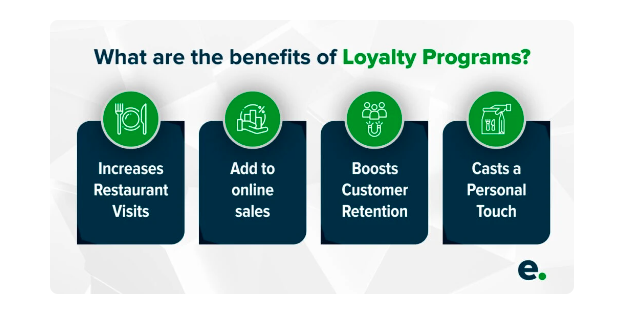
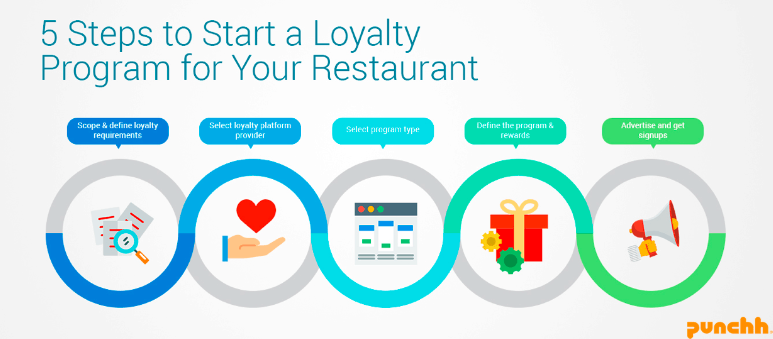
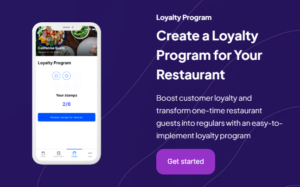
Developing arestaurant loyalty program can be a game-changer for building customer retention and driving repeat business.
A well-designed loyalty program rewards your regular customers, encourages them to visit more often, and fosters brand loyalty.
In this guide, we’ll explore the essential steps to create an effective restaurant loyalty program that not only enhances customer satisfaction but also boosts your bottom line.
Steps to Develop a Successful Loyalty Program
Understanding the Importance of Loyalty Programs
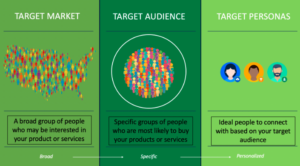
Identifying Your Target Audience
Choosing the Type of Loyalty Program
Setting Clear Objectives
Choosing the Right Rewards
Implementing Digital Loyalty Solutions
1. Understanding the Importance of Loyalty Programs
How Loyalty Programs Drive Customer Retention
Customer loyalty is a crucial driver of success in the restaurant industry.
Loyalty programs encourage repeat visits by providing customers with tangible rewards for their patronage, fostering a sense of connection and value.
When customers feel appreciated, they are more likely to return and become regulars, leading to increased revenue over time.
Loyalty programs also create a psychological incentive for customers to choose your restaurant over competitors, knowing that they are working towards rewards with each visit.
Statistics on the Benefits of Loyalty Programs in the Restaurant Industry
Research consistently shows that customer loyalty programs can significantly improve a restaurant’s performance.
Repeat customers spend more: Studies show that a loyal customer spends67% more than new customers.
Increased customer lifetime value (CLV): Loyal customers tend to visit more often, leading to a higher CLV. In fact, data suggests that loyal customers are worthup to 10 times their initial purchase.
Improved retention rates: According to the National Restaurant Association, customer retention can be boosted by25-95% with an effective loyalty program.
The Competitive Loyalty Programs
Customers are often influenced by where they can maximise value, and loyalty programs are a direct way to offer that.
For instance, in highly competitive urban areas, restaurants that implement loyalty programs report an increase in customer retention and even new customer acquisition through word-of-mouth.
Additionally, loyalty programs provide a way to gather valuable customer data—such as ordering habits and preferences—which can be used to refine marketing efforts and create more personalised experiences.
2. Identifying Your Target Audience
Importance of Understanding Your Customer Base
To create a successful restaurant loyalty program, you’ll need to understand your customer base.
Knowing who your regulars are, what they like to order, how often they visit, and what incentivises them to return is the foundation of a successful loyalty program.
By analysing data like transaction history, demographic information, and feedback, you can craft a loyalty program that resonates with your audience and provides meaningful rewards.
Segmenting Customers to Tailor Rewards and Offers
Not all customers visit your restaurant with the same frequency, and not all are motivated by the same types of rewards.
By segmenting your customers into distinct groups—such as frequent diners or occasional visitors—you can offer rewards and incentives that appeal to each segment specifically. For example:
Frequent diners may value free meals, exclusive menu items, or invitations to VIP events.
Casual visitors might appreciate discounts or perks that incentivise them to visit more often, such as a 20% off coupon after their third visit.
This targeted approach can improve customer satisfaction and participation, as customers feel they are receiving rewards that truly match their loyalty and spending habits.
Differentiating Rewards for Frequent Diners vs. Casual Visitors
Offering the same rewards to both groups may lead to disengagement from one segment or over-rewarding another.
For frequent diners, offering something special like a free entrée or access to an exclusive menu item after a certain number of visits may be a great way to maintain their loyalty.
On the other hand, casual visitors may need smaller, more immediate incentives to encourage them to visit more frequently—such as a discount on their next meal after their second visit in a month.
This distinction allows you to keep both groups engaged without overextending rewards for those who already frequent your establishment, while also encouraging occasional diners to become regulars.
3. Types of Restaurant Loyalty Programs
Selecting the right structure for your restaurant loyalty program depends on your goals and customer behaviour.
Here are four common types of programs, each offering distinct ways to engage and reward customers:
Points-Based Programs
Points-based loyalty programs are among the most popular in the restaurant industry.
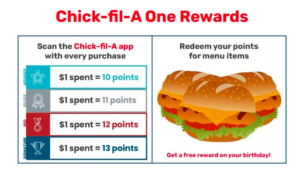
Customers earn points based on their spending—typically, every dollar spent equals a certain number of points. These points can later be redeemed for rewards, such as discounts or free menu items.
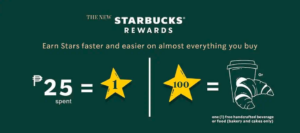
How it works: A customer might earn 1 point for every £1 spent, and after accumulating 100 points, they can redeem them for a free appetiser or drink.
Why it works: This structure motivates customers to spend more to accumulate points and encourages frequent visits. It’s simple and provides flexibility for customers regarding how to redeem their points.
Example: Starbucks Rewards is a widely recognised points-based program, allowing customers to earn stars that can be redeemed for free drinks or food.
Tiered Programs
Tiered loyalty programs offer customers increasing rewards as they reach higher spending or visit thresholds.
These programs create a sense of progression, as customers progressively unlock more valuable perks.
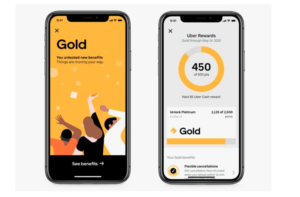
How it works: A restaurant might have three tiers: Bronze (0-10 visits), Silver (11-25 visits), and Gold (25+ visits). As customers move up tiers, they receive better rewards.
Why it works: Tiered programs tap into customers’ desire for status and recognition. They’re effective because they create a long-term engagement strategy, rewarding customers more for their loyalty over time.
Example: Panera Bread’s loyalty program offers different rewards based on spending levels, with higher-tier members enjoying perks like free delivery and exclusive menu items.
Visit-Based Programs
Visit-based loyalty programs are straightforward and focus on rewarding customers for their repeat business, regardless of how much they spend per visit.
After a set number of visits, customers receive a reward.
How it works: A typical program might offer a free item after every 5th or 10th visit. For example, “Buy 9 meals, get the 10th one free.”
Why it works: Visit-based programs are easy to implement and are particularly effective for restaurants with consistent foot traffic and lower price points.
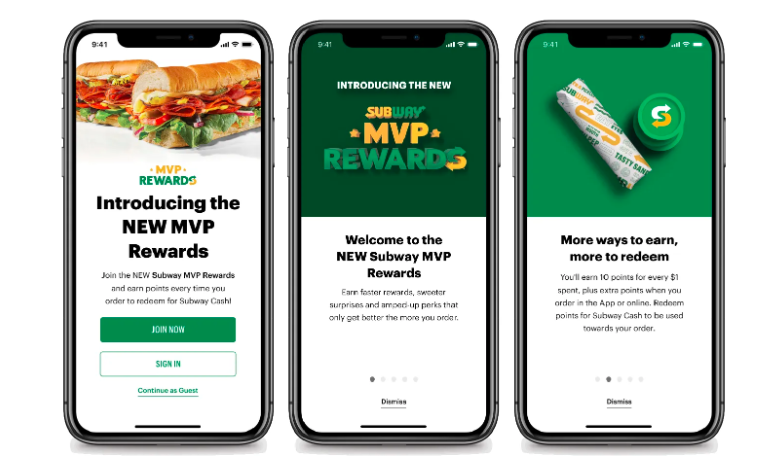
Example: Many quick-service restaurants, such as Subway, use visit-based punch cards that reward customers after a certain number of purchases.
VIP or Exclusive Programs
VIP or exclusive loyalty programs are designed for your most valuable customers.
These offer premium perks that regular customers do not have access to, creating a sense of exclusivity.
How it works: VIP members might receive benefits like priority seating, personalised service, access to exclusive events, or special menu items.
Why it works: Exclusive programs appeal to your top-tier customers by making them feel valued and recognised. Offering experiences that go beyond discounts—such as personalised service or behind-the-scenes access—strengthens their loyalty and engagement.
Example: Some fine dining establishments offer membership-based VIP programs that grant diners priority booking during busy seasons and invitations to chef’s table events or wine tastings.
4. Setting Clear Objectives
Before launching a restaurant loyalty program, it’s essential to define clear, measurable objectives that align with both your business goals and customer preferences.
This way, you can track the success of your program and make adjustments as needed.
Defining What You Want to Achieve
The goals of a loyalty program can vary depending on the type of restaurant, customer base, and market conditions.
Common objectives for a restaurant loyalty program include:
Increase foot traffic: Encourage more frequent visits from existing customers and attract new ones. This can be particularly valuable for restaurants looking to boost off-peak hours or counter seasonality dips.
Example: Offer time-limited rewards, like a free drink during happy hour after a certain number of visits, to drive foot traffic during slower times.
Boost average check size: A well-designed loyalty program can encourage customers to spend more per visit. For instance, offering extra points for purchasing certain menu items or reaching a spending threshold can help increase average order values.
Example: “Earn double points when you spend over £20 on your next visit,” or a free dessert when a customer orders a multi-course meal.
Enhance customer retention: Retaining loyal customers is more cost-effective than constantly acquiring new ones. A successful loyalty program fosters long-term relationships and keeps your customers coming back.
Example: Offering a “surprise and delight” bonus, such as a free birthday meal, can create emotional connections and enhance retention.
Promote specific menu items or new offerings: A loyalty program can be a great way to introduce customers to new dishes or beverages. By offering bonus rewards for trying these new items, you not only drive sales but also encourage customers to explore your menu.
Example: “Earn triple points when you try our new seasonal dish.”
Collect customer data: Many loyalty programs help gather valuable customer data, such as favourite dishes, average spend, and visit frequency. This information can inform marketing strategies, menu development, and overall customer experience enhancements.
Example: Use data gathered from loyalty programs to send personalised offers to specific customer segments, such as discounts on items they frequently order.
Aligning Objectives with Customer Preferences and Business Goals
A mismatch between what you want to achieve and what your customers value can result in disengagement or frustration.
Understand customer preferences: Leverage data and feedback to understand what drives your customers. Do they value discounts, exclusive experiences, or free menu items?
Example: If your customer base consists primarily of frequent lunch-goers, offering free lunch items after a certain number of visits may be more effective than a discount on a high-end dinner experience.
Balance short-term promotions with long-term goals: While promotions like “double points day” can drive immediate traffic, ensure that your loyalty program supports sustained engagement. Your overall strategy should balance quick wins with ongoing rewards that reinforce customer loyalty over time.
Example: While a time-limited promotion may drive immediate traffic, maintaining a core loyalty structure that consistently rewards customers for spending and visiting will help sustain long-term engagement.
Focus on profitability: Ensure that the rewards you offer are profitable for your business. A loyalty program should increase customer lifetime value without drastically cutting into your margins.
Example: If offering a free meal is too costly, consider offering lower-cost rewards like exclusive access to events or small add-ons like a free coffee or dessert.
5. Choosing the Right Rewards
Selecting the right rewards is one of the most critical aspects of designing a successful restaurant loyalty program.
The rewards should resonate with your customers and incentivise them to return, but they must also be structured in a way that maintains your restaurant’s profitability.
Types of Rewards That Resonate with Your Customers
The rewards you offer should be attractive and meaningful to your customer base.
These are a few common reward types that tend to work well in restaurant loyalty programs:
Free Items: Offering a complimentary item, such as a free appetiser, dessert, or drink, is a classic way to reward loyal customers.
Discounts: Percentage-based or flat-rate discounts, such as 10% off the next purchase or £5 off after spending £50, can encourage customers to return for their next meal.
Exclusive Experiences: Offering VIP experiences, such as a chef’s table, a private tasting, or early access to new menu items, can provide an experience that goes beyond financial value.
Surprise Rewards: Surprising customers with unexpected rewards, such as a free meal on their birthday, can create a memorable experience and foster emotional loyalty.
Points for Perks: Allowing customers to accumulate points that can be redeemed for a variety of perks gives flexibility and lets customers choose rewards that appeal most to them.
Balancing Value for the Customer While Maintaining Profitability
While it’s important to offer rewards that customers find appealing, you must also ensure that the program remains profitable.
Calculate the Cost of Rewards: When offering free items or discounts, calculate the cost to your restaurant. For example, if a free dessert costs £5 to produce but brings back a customer who spends £30, the reward may be worth the investment.
Structure Spending Thresholds: Encourage customers to spend a certain amount to qualify for rewards. For example, offering 10% off after spending £50 not only rewards customers but also incentivise them to increase their average order value, which helps offset the cost of the discount.
Opt for Low-Cost, High-Perceived Value Rewards: Some rewards may have a high perceived value to customers while costing relatively little to your business. For example, offering an exclusive invite to a tasting event or allowing loyal customers to try a new dish before it’s on the menu can be a powerful motivator without significantly affecting your bottom line.
Example: “Loyalty members get a sneak peek of our new seasonal menu.”
Set Reasonable Accumulation Rates: Make sure customers have to put in a reasonable amount of spending or visits to earn high-value rewards. If rewards are too easy to earn, you may end up giving them away too frequently.
Example: Free Dessert After Five Visits or 10% Off After Spending a Certain Amount
Consider these two examples:
Free dessert after five visits: This reward is simple and effective for casual diners. If the cost of the dessert is minimal (e.g., £2 to produce), and customers are encouraged to return for multiple meals, the total revenue generated from their visits far outweighs the cost of the dessert.
10% off after spending £30: Offering a percentage discount after reaching a certain spend threshold is a great way to increase average check size. If your typical customer spends £20, setting the threshold at £30 incentivises them to add extra items (appetisers, drinks, etc.) to their order to qualify for the discount. This boosts revenue and helps cover the cost of the reward.
6. Implementing Digital Loyalty Solutions
Managing a loyalty program manually is generally clunky, inefficient and prone to error.
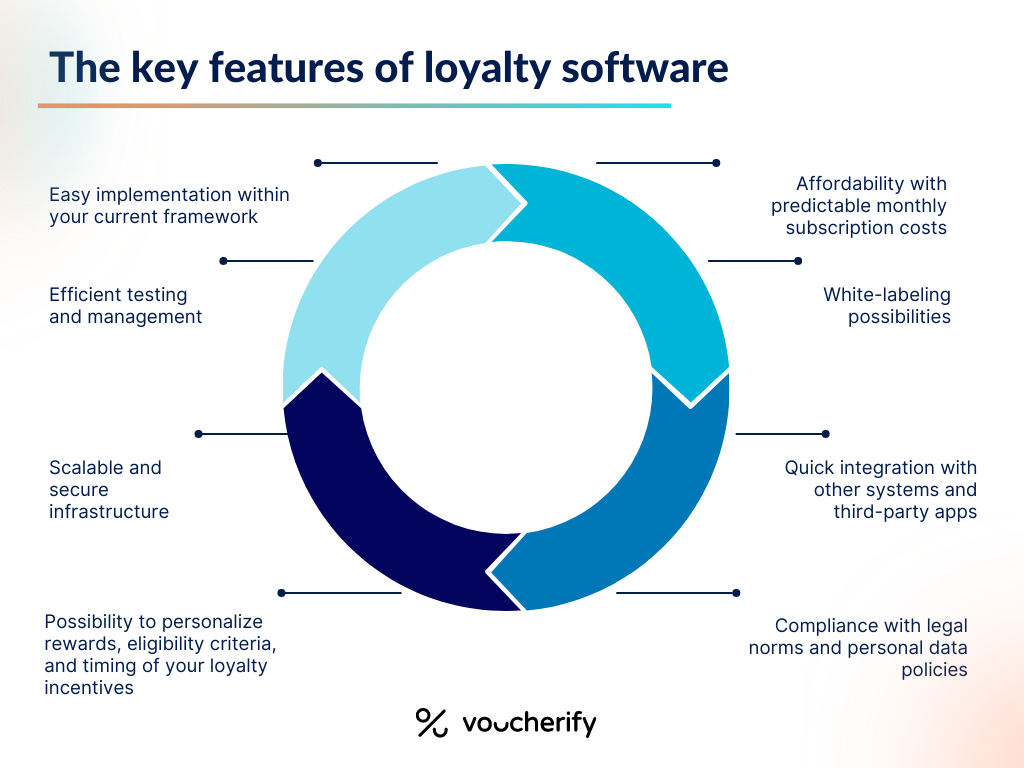
Fortunately, digital solutions, such as restaurant CRM (Customer Relationship Management) systems and specialised loyalty software, make it easy to create and manage a successful loyalty program.
Leveraging these tools allows restaurants to streamline processes, track customer data, and provide a seamless experience for diners.
Overview of Restaurant CRM and Loyalty Software
Restaurant CRM and loyalty software play a crucial role in automating the management of loyalty programs and improving customer engagement.
These platforms allow restaurants to track customer behaviour, providing valuable insights that can inform marketing efforts and loyalty strategies.
Centralised customer data: CRMs collect and store customer information in one place, making it easy to monitor interactions, preferences, and engagement with the loyalty program. This data can be used to personalise offers and create targeted promotions.
Automated rewards tracking: Instead of using punch cards or manually tracking points, the software automates the process. Customers can track their progress through a mobile app or an online portal, reducing the burden on staff and enhancing the customer experience.
Personalised marketing: Many CRM systems integrate with marketing tools, enabling restaurants to send personalised emails, text messages, or in-app notifications to customers based on their activity. For instance, you can automatically send a discount code to a customer who hasn’t visited in a while, encouraging them to return.
Data analytics and insights: CRM and loyalty platforms provide detailed reports on the performance of your loyalty program. You can track metrics like customer retention, average spend per visit, and the popularity of specific rewards, allowing you to make data-driven decisions.
Examples of software: Some popular loyalty and CRM platforms include Toast, Upserve, Punchh, and Lightspeed. Each offers features like rewards tracking, customer segmentation, and integration with point-of-sale (POS) systems to simplify program management.
Importance of Mobile-Friendly Programs
In the age of smartphones, mobile-friendly loyalty programs are essential for delivering a seamless customer experience.
Mobile apps, digital wallets, and customer engagement platforms provide an easy way for diners to participate in loyalty programs, track their rewards, and engage with your restaurant.
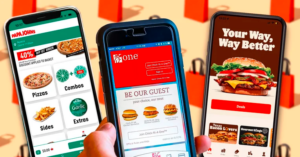
Mobile apps: Offering a mobile app provides convenience and boosts participation. Apps also provide opportunities for push notifications, encouraging users to engage with the program . For example, you can send a message about a new menu item or an exclusive offer to app users.
Digital wallets and contactless engagement: Integrating loyalty programs with digital wallets like Apple Pay or Google Wallet allows customers to store loyalty points directly on their smartphones. This contactless, easy-to-use option is particularly appealing in the post-pandemic era.
Seamless integration with online ordering: By integrating your loyalty program with your online ordering system, you ensure that customers can earn points and redeem rewards even when they’re not dining in. This also allows you to capture more data on customer preferences.
Personalised offers and engagement: Mobile apps and digital platforms allow restaurants to engage customers with personalised promotions based on their behaviour. For instance, you can offer a special discount to someone who has recently joined the loyalty program or send a reward to a customer after they hit a spending milestone.
Gamification to boost engagement: Many digital loyalty platforms allow for gamification, such as badges, achievements, and leaderboards, which can make the experience more engaging. For example, customers might earn badges for trying new menu items or visiting the restaurant on special occasions, adding a fun element that encourages repeat visits.
The Benefits of Digital Solutions
Convenience for customers: Mobile-friendly programs and apps make it easy for customers to track rewards and participate in loyalty programs on the go, increasing their engagement.
Reduced administrative burden: Automating loyalty program management reduces the workload on restaurant staff, allowing them to focus on providing excellent service instead of manually tracking rewards.
Real-time updates and promotions: With digital platforms, you can update your loyalty program or launch new promotions in real time. For example, you could introduce a “double points” day with the click of a button and notify customers through the app.
By adopting digital loyalty solutions and integrating mobile-friendly tools, restaurants can create a more streamlined, efficient, and engaging loyalty program. This not only benefits the customer experience but also enhances the restaurant’s ability to gather valuable data and drive business growth.
Conclusion
Well-designed restaurant loyalty programs can be powerful tools for driving customer retention, increasing revenue, and building long-term relationships with your diners.
By understanding your target audience, setting clear objectives, choosing rewards that resonate, and leveraging digital loyalty solutions, you can create a program that benefits both your customers and your business.
As competition in the restaurant industry continues to grow, having an effective loyalty program offers a key advantage in keeping your customers coming back for more.
For advice on picking the right platforms for your rewards program, reach out toNFS Hospitality.
Throughout the hospitality industry, delivering stellar customer experiences is crucial for success.
This is especially true for restaurant owners.
One of the most effective ways to achieve this is by making use ofCustomer Relationship Management (CRM) systems, tailored specifically for the unique needs of restaurants.
From streamlining reservations and managing customer feedback to creating custom marketing campaigns, the right CRM can transform how you connect with your patrons and optimise your operations for all-round success.
That’s why we’ve curated a list of the top 10 restaurant CRM systems for restaurants that can help you boost customer satisfaction, encourage loyalty, and ultimately drive your business growth.
Whether you’re a small café or a large restaurant chain, these CRM tools offer a variety of features to meet your specific needs.
Paytronix CRM is a robust customer relationship management solution designed specifically for the restaurant and hospitality industry.
It offers a comprehensive platform that not only helps you manage customer relationships but also drives engagement and loyalty through its powerful suite of tools.
Key Features
Personalised Marketing Campaigns: Paytronix CRM allows you to create highly targeted marketing campaigns based on customer data and behaviour. Whether it’s sending tailored offers to frequent diners or re-engaging lapsed customers, the platform’s segmentation capabilities ensure your messaging resonates with each customer.
Loyalty Programs Integration: Seamlessly integrate your loyalty programs with Paytronix CRM to reward customers and keep them coming back. The platform tracks customer interactions across various channels, allowing you to offer individualised rewards that enhance customer retention.
Advanced Analytics: Paytronix provides in-depth analytics that offer insights into customer preferences, spending habits, and overall satisfaction. These insights enable you to make data-driven decisions to improve your marketing strategies and operational efficiency.
Online Ordering and Delivery Integration: With Paytronix, you can integrate online ordering and delivery services, ensuring a cohesive customer experience both in-person and digitally. This integration helps you capture valuable customer data from all touchpoints, which can be used to further enhance and personalise their dining experience.
Why Choose Paytronix CRM?
Paytronix stands out for its ability to combine customer relationship management with powerful loyalty and marketing tools, making it an all-in-one solution for restaurants looking to enhance customer engagement.
Its focus on personalisation and data-driven insights ensures that you can build lasting relationships with your customers while driving repeat business.
Airship is a versatile CRM system designed to help restaurants build meaningful relationships with their customers through effective data management and targeted communication.
Known for its user-friendly interface and powerful features, Airship CRM is a popular choice for restaurants looking to easily elevate their customer engagement strategies.
Key Features
Data-Driven Campaigns: Airship CRM excels at turning customer data into actionable insights. By analysing customer behaviour and preferences, the platform allows you to create targeted marketing campaigns that resonate with your audience. Whether it’s sending out special offers or seasonal promotions, Airship ensures your messages hit the mark.
Seamless Integration: One of Airship’s standout features is its ability to integrate smoothly with your existing systems, including POS systems and reservation platforms. This ensures that all customer data is centralised, giving you a complete view of each customer’s journey and interactions with your restaurant.
Automated Workflows: Save time and increase efficiency with Airship’s automated workflows. From welcome emails to birthday offers, the platform can automate a wide range of customer communications, ensuring timely and consistent engagement without the need for costly manual intervention.
Rich Analytics: Airship provides robust analytics that help you understand the impact of your campaigns. Track metrics such as open rates, conversion rates, and customer retention to continually refine your strategies and achieve better results.
Why Choose Airship CRM?
Airship CRM is ideal for restaurants looking to streamline their customer engagement processes and maximise the value of their data.
Its ability to integrate with existing systems, coupled with powerful automation and analytics, makes it a comprehensive solution for enhancing customer loyalty and driving repeat business.
Stampede CRM is an innovative platform designed to help restaurants increase footfall, improve customer retention, and boost revenue through intelligent customer engagement.
With a focus on automation and simplicity, Stampede provides the tools you need to manage customer relationships efficiently while driving growth.
Key Features
Automated Customer Engagement: Stampede CRM excels at automating customer interactions, allowing you to send personalised messages and offers without manual effort. From welcome messages to re-engagement campaigns, the platform ensures that your customers are consistently engaged with your brand.
Guest Wi-Fi Integration: One of Stampede’s unique features is its integration with guest Wi-Fi. This allows you to capture valuable customer data when they log into your Wi-Fi network, which can then be used to create targeted marketing campaigns and personalised experiences.
Loyalty Programs and Rewards: Stampede makes it easy to set up and manage loyalty programs that encourage repeat visits. Whether it’s points-based rewards or exclusive offers, the platform helps you keep your customers coming back.
Comprehensive Analytics: With Stampede, you can access detailed analytics that provide insights into customer behaviour, campaign performance, and overall business impact. These insights enable you to make informed decisions and continuously optimise your marketing strategies.
Why Choose Stampede CRM?
Stampede CRM is ideal for restaurants looking to enhance customer engagement through automation and data-driven strategies.
Its integration with guest Wi-Fi and its focus on loyalty make it a powerful tool for building strong, lasting relationships with your customers while driving repeat business.
SevenRooms CRM is a comprehensive platform that goes beyond traditional customer relationship management by offering tools designed to enhance the entire guest experience.
From reservations to tailored service, SevenRooms empowers restaurants to deliver exceptional hospitality while building meaningful relationships with their customers.
Key Features
Guest Profiles and Personalisation: SevenRooms creates detailed guest profiles that capture important information such as dining preferences, allergies, and past visits. This allows your staff to provide personalised service that delights customers and makes them feel valued, ultimately enhancing the overall dining experience.
Reservation Management: SevenRooms seamlessly integrates with your reservation system, enabling you to manage bookings more efficiently. The platform not only tracks reservations but also helps optimise seating arrangements and reduce no-shows through automated reminders.
Marketing Automation: With SevenRooms, you can automate your marketing efforts by sending targeted messages and offers to specific guest segments. Whether it’s a birthday promotion or a follow-up after a special event, the platform ensures that your communications are timely and relevant.
Loyalty and Retention: SevenRooms helps you build customer loyalty through tailored loyalty programs and rewards. By understanding your guests’ preferences and behaviours, you can create experiences that encourage repeat visits and long-term loyalty.
Actionable Insights: SevenRooms provides powerful analytics that give you a deep understanding of your customers and business performance. From tracking guest satisfaction to monitoring campaign success, these insights allow you to continuously refine your strategies.
Why Choose SevenRooms CRM?
SevenRooms CRM is perfect for restaurants that prioritise guest experience and personalisation.
Its ability to manage reservations, deliver personalised service, and automate marketing makes it an invaluable tool for restaurants looking to foster strong customer relationships and improve retention.
Braze is a powerful customer engagement platform that enables restaurants to connect with their customers across multiple channels in a personalised and meaningful way.
Known for its scalability and advanced capabilities, Braze CRM is an excellent choice for restaurants looking to create cohesive, data-driven customer experiences.
Key Features
Cross-Channel Messaging: Braze allows you to reach your customers through a variety of channels, including email, SMS, push notifications, and in-app messages. This ensures that your communications are delivered in the right place at the right time, maximising engagement and response rates.
Personalisation at Scale: With Braze, you can create highly personalised marketing campaigns tailored to individual customer behaviours and preferences. The platform’s sophisticated segmentation and automation tools make it easy to deliver relevant content to the right audience, whether it’s a special offer or a loyalty reward.
Real-Time Data and Analytics: Braze provides real-time data that allows you to monitor customer interactions and campaign performance as they happen. This enables you to make quick adjustments and optimise your strategies on the fly, ensuring that you’re always delivering the best possible customer experience.
Integration Capabilities: Braze integrates seamlessly with a wide range of other systems, including POS systems, loyalty programs, and analytics tools. This ensures that all your customer data is connected and accessible, providing a holistic view of each customer’s journey.
Campaign Orchestration: Braze’s orchestration tools allow you to manage complex marketing campaigns across multiple channels with ease. From scheduling messages to coordinating cross-channel efforts, the platform helps you maintain consistency and coherence in your customer communications.
Why Choose Braze CRM?
Braze CRM is ideal for restaurants looking to engage customers across multiple touchpoints with personalised, data-driven messaging.
Its ability to handle complex campaigns and provide real-time insights makes it a powerful tool for enhancing customer engagement and driving business growth.
Como Sense is a versatile CRM platform designed to help restaurants enhance customer engagement and loyalty through advanced data analysis and personalised experiences.
With a focus on creating seamless and rewarding customer journeys, Como Sense empowers restaurants to build strong, lasting relationships with their patrons.
Key Features
Personalised Loyalty Programs: Como Sense offers robust tools for creating customised loyalty programs that resonate with your customers. Whether it’s a points-based system, punch cards, or exclusive VIP rewards, the platform allows you to design a loyalty program that fits your brand and encourages repeat visits.
Advanced Customer Segmentation: With Como Sense, you can segment your customers based on their behaviour, preferences, and demographics. This allows you to deliver highly targeted marketing campaigns and offers that are tailored to each customer group, maximising engagement and conversion rates.
Mobile App Integration: Como Sense provides seamless integration with mobile apps, enabling you to offer a personalised and convenient experience to your customers. Through the app, customers can easily access their loyalty rewards, receive personalised offers, and make reservations, all while staying connected to your brand.
Automated Marketing Campaigns: The platform’s automation capabilities allow you to set up and run marketing campaigns with minimal manual effort. From sending welcome messages to new customers to re-engaging lapsed ones, Como Sense ensures that your communications are timely and relevant.
Comprehensive Analytics: Como Sense offers detailed analytics that give you insights into customer behaviour, campaign effectiveness, and overall business performance. These insights help you make informed decisions and continually optimise your marketing strategies.
Why Choose Como Sense CRM?
Como Sense CRM is perfect for restaurants that want to build personalised loyalty programs and engage customers through data-driven marketing.
Its mobile integration and automation features make it easy to provide a seamless and rewarding customer experience, helping to drive loyalty and increase revenue.
Punchh CRM is a leading customer loyalty and engagement platform tailored specifically for the restaurant industry.
Known for its ability to drive repeat business through personalised marketing and robust loyalty programs, Punchh helps restaurants build strong connections with their customers across multiple channels.
Key Features
Omnichannel Loyalty Programs: Punchh allows you to create and manage comprehensive loyalty programs that operate seamlessly across in-store, online, and mobile channels. Whether customers are dining in, ordering takeout, or engaging with your brand online, Punchh ensures a consistent and rewarding experience.
AI-Driven Personalisation: Punchh leverages artificial intelligence to deliver personalised marketing campaigns that are tailored to individual customer behaviours and preferences. The platform’s AI capabilities enable you to predict customer needs and engage them with the right offers at the right time, boosting customer satisfaction and loyalty.
Real-Time Data Insights: Punchh provides real-time data analytics that give you a deep understanding of customer behaviour, campaign performance, and overall business impact. These insights help you refine your marketing strategies, optimise your loyalty programs, and make informed decisions that drive growth.
Mobile App Integration: With Punchh, you can easily integrate your loyalty programs into a custom-branded mobile app. This allows customers to access rewards, receive personalised offers, and engage with your brand directly from their smartphones, improving both convenience and engagement.
Simple Integrations: Punchh integrates with a wide range of POS systems, online ordering platforms, and other restaurant technologies, ensuring that all customer data is centralised and accessible. This integration enables you to create a unified customer experience across all touchpoints.
Why Choose Punchh CRM?
Punchh CRM is an excellent choice for restaurants looking to enhance customer loyalty through personalised, data-driven engagement.
Its AI-driven personalisation, omnichannel loyalty programs, and real-time analytics make it a powerful tool for building lasting customer relationships and driving repeat business.
Wisely CRM is a powerful customer engagement and intelligence platform designed to help restaurants understand and connect with their customers on a deeper level.
By combining advanced data analytics with targeted marketing capabilities, Wisely enables restaurants to deliver exceptional customer experiences and drive loyalty.
Key Features
Comprehensive Guest Profiles: Wisely CRM creates detailed guest profiles that capture important information such as dining preferences, visit history, and spending patterns. This allows you to tailor interactions, as well as your service, to meet the unique needs of each guest, enhancing their overall experience.
Waitlist and Reservation Management: Wisely offers robust tools for managing waitlists and reservations, ensuring a smooth and efficient dining experience for your guests. The platform’s predictive analytics help optimise table turnover and reduce wait times, improving customer satisfaction.
Predictive Analytics: Wisely’s predictive analytics capabilities allow you to anticipate customer needs and behaviours, enabling you to engage them with timely and relevant offers. Whether it’s predicting when a customer is likely to return or identifying high-value guests, these insights help you make data-driven decisions that boost loyalty.
Personalised Marketing Campaigns: With Wisely, you can create highly targeted marketing campaigns that resonate with your customers. The platform’s segmentation and automation tools ensure that your messages reach the right audience at the right time, increasing the effectiveness of your campaigns.
Integrations: Wisely integrates seamlessly with a variety of restaurant technologies, including POS systems, reservation platforms, and loyalty programs. This integration ensures that all customer data is connected and accessible, providing a holistic view of each guest’s journey.
Why Choose Wisely CRM?
Wisely CRM is ideal for restaurants that want to deepen their understanding of their customers and deliver personalised experiences that drive loyalty.
Its advanced analytics, reservation management, and seamless integrations make it a comprehensive solution for enhancing customer engagement and improving operational efficiency.
OpenTable Relationship Management is a CRM solution that leverages the power of one of the world’s most popular reservation platforms to help restaurants build and maintain strong relationships with their guests.
Designed with the unique needs of the restaurant industry in mind, OpenTable’s CRM tools offer valuable insights and personalised engagement opportunities.
Key Features
Integrated Reservation Management: OpenTable CRM is seamlessly integrated with OpenTable’s reservation platform, allowing you to capture and utilise guest data directly from reservations. This integration ensures that you have access to comprehensive guest profiles, including dining preferences, special requests, and visit history.
Personalised Guest Experience: With OpenTable CRM, you can deliver a more personalised dining experience by leveraging guest data to tailor your service. From greeting repeat customers by name to anticipating their favourite dishes, these personalised touches enhance the overall guest experience and encourage repeat visits.
Automated Marketing Campaigns: OpenTable allows you to create and send automated marketing campaigns based on guest data. Whether it’s a thank-you message after a visit, a special offer for a birthday, or a re-engagement campaign for lapsed guests, OpenTable helps you stay connected with your customers in a meaningful way.
Feedback and Reviews Management: OpenTable provides tools to manage and respond to guest feedback and reviews directly through the platform. This helps you maintain a positive online reputation while addressing any issues that may arise, ensuring that guests feel heard and valued.
Actionable Insights: OpenTable CRM offers detailed analytics that provide insights into guest behaviour, dining trends, and the effectiveness of your marketing campaigns. These insights enable you to make informed decisions that enhance guest satisfaction and drive business growth.
Why Choose OpenTable Relationship Management?
OpenTable Relationship Management is an excellent choice for restaurants that want to leverage the extensive data captured through reservations to enhance customer engagement.
Its integration with the reservation platform, coupled with personalised marketing and feedback management tools, makes it a powerful solution for improving guest relationships and driving loyalty.
Eagle Eye is a leading digital marketing platform that empowers restaurants to connect with their customers through personalised, data-driven engagement strategies.
By offering a suite of tools designed to enhance loyalty and drive customer retention, Eagle Eye helps restaurants build stronger relationships and increase repeat business.
Key Features
Digital Loyalty Programs: Eagle Eye allows you to create and manage digital loyalty programs that are easy for customers to join and use. Whether it’s through a mobile app, email, or in-store, Eagle Eye’s platform ensures that your loyalty programs are seamlessly integrated across all touchpoints.
Personalised Marketing Campaigns: With Eagle Eye, you can design and execute personalised marketing campaigns that resonate with your customers. The platform’s segmentation and targeting capabilities enable you to send relevant offers and messages based on customer preferences and behaviours, increasing the likelihood of engagement.
Real-Time Customer Insights: Eagle Eye provides real-time analytics and insights into customer behaviour, helping you understand what drives engagement and loyalty. These insights allow you to tailor your marketing strategies to better meet the needs of your customers and optimise your campaigns for better results.
Omnichannel Engagement: Eagle Eye supports omnichannel engagement, allowing you to reach your customers through various channels such as email, SMS, social media, and mobile apps. This ensures that your brand remains top of mind, no matter where your customers are interacting with you.
System Integrations: Eagle Eye integrates with a wide range of existing systems, including POS systems and CRM platforms, to ensure that all customer data is centralised and accessible. This integration helps create a unified customer experience across all platforms.
Why Choose Eagle Eye CRM?
Eagle Eye CRM is ideal for restaurants looking to enhance customer loyalty through digital innovation and personalised engagement.
Their focus on real-time insights, omnichannel marketing, and seamless integration makes it a powerful tool for building lasting customer relationships and driving business growth.
Conclusion
As more and more of the competition adopt CRM’s, staying connected with your customers and delivering personalised experiences is more important than ever.
The right CRM platform can make all the difference in how you manage customer relationships, drive loyalty, and ultimately grow your business.
Whether you’re looking for advanced analytics, seamless integrations, or powerful marketing automation, the CRMs we’ve highlighted offer a range of features designed to meet the unique needs of the restaurant industry.
By investing in one of these top CRMs, you can streamline your operations, enhance customer satisfaction, and build lasting relationships that keep your guests coming back.
Explore these options, evaluate your specific needs, and make a decision that will support your restaurant’s growth and success in the long run.
ContactNFS Hospitality for help choosing the right platform for your needs.
Fosteringcustomer loyalty has never been more crucial for a restaurant’s success.
In a time where diners are spoiled for choice, businesses need to go beyond offering great food and service—they need to build lasting relationships with their patrons.
Designed to reward repeat visits, restaurant loyalty programs not only incentivise customers to return but also create a sense of belonging and value that can turn occasional diners into regulars.
To help set you up for success, we’ll explore how effective customer loyalty programs can be a game-changer for restaurants, driving repeat business and improved customer satisfaction.
Why Loyalty Programs Matter for Restaurants
With customer preferences and trends always evolving, loyalty programs have emerged as a powerful tool to not only attract but also retain customers.
Here’s a closer look at why these programs are crucial for a restaurant’s success:
Increasing Customer Retention
Customer retention is generally more cost-effective than acquiring new customers. Loyalty programs improve customer retention by offering incentives that encourage diners to return.
For example, a loyalty program that rewards customers with points, which can be redeemed for discounts or free items, creates a strong motivation for customers to choose your restaurant.
When customers know they are working towards a reward, they are more likely to make your restaurant their go-to choice, even if there are other options available.
Building Brand Affinity
Brand affinity goes beyond recognition—it’s about forming an emotional connection between the customer and your restaurant.
A well-executed loyalty program can make customers feel valued and appreciated by offering personalised rewards and experiences, which in turn fosters deeper loyalty.
For instance, a loyalty program that offers rewards like early access to new menu items or invitations to special events can make customers feel like they are part of an exclusive club.
This sense of belonging can lead to a stronger attachment to your brand, making customers not only return more frequently but also advocate for your restaurant within their social circles.
Competitive Advantage
In a market saturated with dining options, standing out requires more than just offering excellent food and service. A well-designed loyalty program can be the differentiator that sets your restaurant apart.
While other restaurants may rely solely on traditional marketing or word of mouth, a loyalty program offers a tangible reason for customers to choose your establishment repeatedly.
This is especially significant in areas where customers have an abundance of choices.
A loyalty program that is easy to use, offers meaningful rewards, and aligns with your brand’s values can make your restaurant the preferred choice in a crowded marketplace.
The Psychology Behind Loyalty Programs
By tapping into fundamental human behaviours and motivations, restaurants can create programs that not only reward customers but also foster long-term loyalty.
Here’s how psychology plays a role in the success of these programs:
The Reward Principle
At the core of any successful loyalty program is the concept of positive reinforcement.
The Reward Principle, rooted in behavioural psychology, suggests that when a behaviour is followed by a positive outcome, such as earning points or receiving a discount, that behaviour is likely to be repeated.
Over time, this consistent positive reinforcement can lead to habitual behaviour, where the customer automatically chooses your restaurant because they associate it with positive outcomes.
Creating a Habit
Habits are formed when behaviours are repeated regularly and become automatic responses to specific cues. Loyalty programs can play a crucial role in transforming occasional visits into habitual dining experiences.
By providing consistent incentives, such as points, discounts, or exclusive perks, loyalty programs create a pattern of behaviour that customers are likely to repeat.
This can develop into a routine where visiting your restaurant becomes a default choice, driven by the anticipation of earning rewards. The key is to design the program so that it seamlessly integrates into the customer’s life, making it easy and rewarding to keep coming back.
Fostering a Sense of Community
The desire to belong to a community is a powerful motivator.
Loyalty programs can tap into this by creating a sense of exclusivity and shared experience among members. When customers see others participating in the program and enjoying the rewards, it indicates that the program is valuable and worth joining.
Loyalty programs can enhance this sense of community by offering rewards that are best enjoyed in a group setting or by fostering interactions between members.
For example, a restaurant might host special events for loyalty program members, such as tasting nights or member-only happy hours. These events create opportunities for customers to connect with each other, strengthening their bond with the brand.
Key Features of A Successful Restaurant Loyalty Program
Creating a successful restaurant loyalty program requires a careful balance of simplicity, personalisation, and diversity in rewards.
These features are what make a loyalty program not only attractive to customers but also effective in driving repeat business and fostering long-term loyalty.
Simplicity and Accessibility
The foundation of any successful loyalty program is simplicity and accessibility. If a program is too complicated or difficult to join, customers are likely to be discouraged from participating.
To ensure high participation, the enrollment process should be straightforward, allowing customers to sign up with minimal effort—whether through a mobile app, website, or in-person at the restaurant.
Customers should find it easy to understand how to earn and redeem rewards.
Clear communication of the program’s structure—such as how points are accumulated, what rewards are available, and how they can be redeemed—is crucial. A simple, intuitive system encourages more frequent participation and reduces the chances of customer frustration.
Personalisation
Personalisation is a powerful tool in making customers feel valued and appreciated.
By tailoring rewards to individual preferences, restaurants can create a more engaging loyalty program.
For instance, using customer data collected through the loyalty program, restaurants can identify customer preferences, such as favourite dishes, dining times, or spending habits.
This data can then be used to offer tailored rewards, such as complimentary appetisers that the customer often orders or a discount on their next visit at their preferred time.
Personalisation can also extend beyond the rewards themselves to the way they are communicated.
Personalised emails or app notifications that address the customer by name and highlight relevant rewards or promotions can make the program feel more exclusive and tailored to the individual.
A Variety of Rewards
A successful loyalty program offers a variety of rewards to appeal to different customer motivations and preferences. While discounts and free items are always popular, offering a diverse range of rewards can make the program more appealing and cater to a broader audience.
In addition to traditional rewards like free meals or discounts, consider offering unique experiences that cannot be easily accessed by non-members.
These could include invitations to exclusive tasting events, cooking classes with the restaurant’s chef, or early access to new menu items.
These types of rewards not only incentivise customers to participate in the loyalty program but also create memorable experiences that deepen their connection to the brand.
Another approach is to incorporate non-monetary rewards, such as priority seating, personalised service, or even recognition within the restaurant. For example, a customer who reaches a certain loyalty tier could have their name displayed on a plaque or receive a special thank-you note.
These small gestures can have a big impact on customer satisfaction and loyalty.
Offering a variety of rewards also allows customers to choose the rewards that best align with their preferences, making the program feel more flexible and accommodating.
Challenges and Pitfalls to Avoid
While loyalty programs can be highly effective in driving repeat business and fostering customer loyalty, they are not without their challenges.
Here are some common pitfalls and how to avoid them:
Overcomplicating the Program
One of the most significant risks in designing a loyalty program is overcomplicating it. While it may be tempting to create a program with multiple tiers, varied rewards, and complex rules, this can often backfire.
Simplicity is key to success.
Customers should be able to easily grasp the program’s mechanics—how to earn rewards, what they need to do to redeem them, and the benefits of participating.
If customers find the user interface difficult to navigate, they are less likely to participate.
Ensuring the program is easy to join, easy to use, and easy to understand will help maintain customer interest and participation.
Lack of Customer Engagement
Another challenge is maintaining customer engagement over the long term. Even the best-designed loyalty program can lose its appeal if customers don’t feel continually motivated to participate.
One way to maintain engagement is by regularly updating the rewards and introducing new, exciting incentives. Another strategy is to personalise the rewards based on customer preferences, making them more relevant and appealing.
Communication is also crucial in keeping customers engaged. Regularly reminding customers of their progress towards rewards, upcoming promotions, or special offers can keep the program top-of-mind.
Finally, incorporating elements of gamification, such as challenges, leaderboards, or bonus points for completing certain tasks, can add an element of fun and competition to the program.
Failing to Adapt
Customer expectations are regularly evolving.
A loyalty program that was effective when first launched may become outdated if it doesn’t evolve with changing trends and customer preferences.
To avoid this, it’s critical to continuously gather and analyse customer feedback.
Surveys, focus groups, and direct feedback through digital channels can provide valuable insights into what customers like and dislike about the program.
Staying abreast of industry trends is vital too. For example, if mobile payments and digital wallets are becoming more popular, integrating these into your loyalty program could enhance the customer experience.
Integrating Loyalty Programs with Other Marketing Strategies
A well-designed loyalty program is more than just a standalone initiative; it can be a powerful component of your broader marketing strategy.
By integrating your loyalty program with other promotional activities, you can amplify its impact, increase customer engagement, and enhance your overall marketing efforts.
Here’s how:
Cross-Promotions
By tying your loyalty program into other promotions and events, you can create a cohesive and compelling customer experience.
For example, you might offer double points during special events, such as holidays or restaurant anniversaries, encouraging customers to participate in both the event and the loyalty program.
Another strategy is to link the loyalty program with seasonal promotions.
If you’re running a summer special menu, you could offer bonus points for trying new dishes from that menu. This not only drives traffic during the promotion but also incentivises customers to return, knowing they’re working towards a reward.
Cross-promotions can also extend beyond your restaurant.
Partnering with local businesses or brands that align with your values can add an extra layer of appeal to your loyalty program. You could offer loyalty points for purchases made at a nearby boutique or give members access to exclusive deals with partner brands.
This creates a win-win situation where both businesses benefit from increased visibility and customer engagement.
Data-Driven Insights
Every interaction, purchase, and reward redemption provides insights into customer behaviour, preferences, and spending patterns. Leveraging this valuable customer data can enhance your marketing strategies.
By analysing loyalty program data, you can identify your most loyal customers and tailor marketing messages specifically to them. This could include personalised offers, invitations to exclusive events, or early access to new menu items.
The more you know about your customers, the better you can meet their needs and expectations, resulting in higher engagement and satisfaction.
Additionally, loyalty program data can help you identify trends and preferences across your customer base. If you notice that a particular dish or drink is popular among your loyalty members, you could feature it more prominently in your marketing campaigns or create special promotions around it.
Data from your loyalty program can inform broader business decisions as well, such as menu changes, pricing strategies, and even the introduction of new services.
By continuously analysing and acting on this data, you can stay ahead of customer expectations and maintain a competitive edge in the market.
Social Media Integration
Encouraging customers to share their loyalty milestones on social media not only boosts their sense of achievement but also acts as organic promotion for your restaurant.
You can promote social sharing by offering additional rewards or points for customers who post about their loyalty program achievements, such as reaching a new tier or redeeming a reward.
Creating a unique hashtag for your loyalty program can help you track these posts and build a community around your brand.
Beyond individual posts, you can leverage social media to highlight your loyalty program in broader marketing campaigns. Feature customer stories, loyalty milestones, and exclusive rewards on your restaurant’s social media channels to create buzz and encourage others to join the program.
Finally, social media can be a platform for interactive campaigns tied to your loyalty program.
For instance, you could run a contest where customers earn points for participating in online challenges, like posting a creative dish photo or tagging friends who haven’t visited your restaurant yet.
Conclusion
Customer loyalty is more valuable and important than ever.
A well-designed loyalty program is a powerful tool to drive repeat business, build lasting relationships, and differentiate your restaurant from the competition.
By understanding the psychology behind loyalty programs, avoiding common pitfalls, and integrating these programs with broader marketing strategies, restaurants can create a loyalty experience that keeps customers coming back time and again.
From increasing customer retention to fostering brand affinity and leveraging data-driven insights, loyalty programs offer numerous benefits that extend far beyond simple rewards.
As you consider implementing or refining your loyalty program, remember that simplicity, engagement, and adaptability are key. Stay connected with your customers, listen to their feedback, and continuously evolve your program to meet their needs and expectations.
For assistance selecting the best platform for your loyalty program, talk toNFS Hospitality.
For restaurants looking to stand out,customer loyalty is more critical than ever. Restaurants not only need to attract new guests but also foster relationships that keep them returning and reward customers.
This is the goal of customer loyalty programs, offering innovative ways to reward repeat customers and turn casual diners into devoted regulars by encouraging brand loyalty.
Whether you’re a cosy café or a bustling fine dining establishment, the right loyalty program can enhance your customer experience, drive sales, and build a consistent customer base of loyalty program members.
To get you started on your journey, we’ll explore the top 10 loyalty systems for restaurants, helping you find the perfect fit for your business to cultivate lasting loyal customers with your customers.
What’s the Best Customer Loyalty Program for Restaurants?
Overview: Paytronix is a leading loyalty platform designed to help restaurants create personalised, data-driven customer experiences.
With its robust set of features, Paytronix enables businesses to engage customers at every touchpoint, from the first visit to long-term loyalty.
Key Features:
Personalised Engagement: Paytronix allows you to tailor your rewards program and offers based on individual customer preferences and behaviour’s, increasing the relevance and effectiveness of your rewards programs.
Omnichannel Integration: Whether customers order online, dine-in, or use a mobile app, Paytronix seamlessly integrates across all channels, ensuring a consistent experience.
Data-Driven Insights: The platform provides comprehensive analytics and reporting tools, helping you understand customer trends and optimise your loyalty strategies accordingly.
Automation: With automated marketing campaigns and loyalty management, Paytronix reduces the manual workload while enhancing customer engagement.
Flexible Rewards Structure: The platform supports various types of rewards, including the points based loyalty program, the tiered loyalty program, and special promotions, giving you the flexibility to design a program and program benefits that best suit your restaurant’s needs.
Why It Stands Out: Paytronix stands out for its ability to deliver highly personalised customer experiences.
Its powerful analytics tools enable restaurants to make data-driven decisions, ensuring that your restaurant loyalty program are not just effective but also continually evolving to meet customer expectations and encourage customers to return.
Overview: Revel Systems offers a comprehensive loyalty scheme that integrates seamlessly with its point-of-sale (POS) system, providing restaurants with an all-in-one solution for retaining customers.
Known for its user-friendly interface and robust functionality, Revel Systems helps restaurants of all sizes create and manage effective loyalty programs that keep customers coming back.
Key Features:
Integrated POS Loyalty: The loyalty program is fully integrated with Revel’s POS, allowing for real-time tracking of customer purchases and rewards directly at the point of sale.
Customisable Programs: Revel Systems enables you to design a loyalty program that fits your brand, whether customers earn points, use punch cards, or receive custom promotions.
Real-Time Analytics: Access detailed reports and insights into customer behaviour and program performance, enabling data-driven decisions to enhance your loyalty strategy.
Mobile App Integration: Loyalty members can easily track their rewards and receive offers through a mobile app, creating a seamless experience from in-store to on-the-go.
Automated Marketing: Revel Systems offers automated marketing tools that allow you to send targeted promotions and rewards to customers based on their preferences and purchase history.
Why It Stands Out: Revel Systems is particularly appealing for restaurants already using or considering its POS system, as the integrated loyalty program offers a streamlined approach to managing customer rewards.
The ease of use and depth of customisation make it a strong contender for businesses looking to build and maintain customer loyalty.
Overview: Arch Loyalty, developed by Arch Software, is a sophisticated loyalty management solution designed to help restaurants foster stronger relationships with their customers.
With a focus on flexibility and ease of use, Arch Loyalty allows restaurants to create and manage personalised loyalty programs that drive repeat business and increase customer satisfaction.
Key Features:
Customisable Loyalty Programs: Arch Loyalty offers a wide range of customisation options, enabling restaurants to design program benefits that align with their brand and customer expectations, whether through points, tiers, or specific rewards.
Real-Time Data Access: The platform provides instant access to customer data and program performance metrics, allowing for quick adjustments and targeted marketing efforts based on real-time insights.
Multi-Channel Integration: Arch Loyalty supports integration across various channels, including in-store, online, and mobile, ensuring a seamless experience for customers no matter how they engage with your restaurant.
Automated Communication: The system includes tools for automated customer communication, such as sending personalised offers, birthday rewards, and reminders, all tailored to individual customer behaviour.
Scalable Solution: Whether you’re a small café or a large restaurant chain, Arch Loyalty is designed to scale with your business, making it a versatile option for growth.
Why It Stands Out: Arch Loyalty is particularly valued for its flexibility and the ability to tailor loyalty programs to the specific needs of a restaurant.
Its multi-channel integration and real-time data capabilities ensure that restaurants can effectively engage customers wherever they are, making it a robust choice for those looking to boost customer loyalty.
Overview: Teya offers a powerful and intuitive loyalty platform that helps restaurants cultivate lasting relationships with their customers.
With a focus on simplicity and effectiveness, Teya’s loyalty system is designed to make it easy for restaurants to reward repeat customers, enhance customer engagement, and drive sales growth.
Key Features:
Simple Setup and Management: Teya’s loyalty program is easy to set up and manage, allowing restaurant owners to create effective loyalty campaigns without needing extensive technical knowledge.
Customisable Reward Structures: The platform supports various types of loyalty schemes, from points-based rewards to cashback offers, giving restaurants the flexibility to tailor their programs to their specific customer base.
Integrated Payment Solutions: Teya’s loyalty system is seamlessly integrated with its payment processing services, providing a smooth experience for both customers and staff at the point of sale.
Real-Time Analytics: Gain insights into customer behaviour and program performance with Teya’s real-time analytics, helping you refine your loyalty strategies and better understand your customers.
Omnichannel Experience: Teya ensures that your loyalty program works across all customer touchpoints, including in-store, online, and mobile, offering a consistent experience no matter how your customers interact with your brand.
Why It Stands Out: Teya is particularly well-suited for restaurants looking for a loyalty system that’s easy to implement and manage.
Its seamless integration with payment processing and its focus on providing a smooth, omnichannel experience make it a compelling choice for restaurants aiming to enhance customer loyalty without added complexity.
Overview: Oracle Customer Loyalty is a comprehensive and advanced loyalty management platform that caters to restaurants looking to build strong, data-driven relationships with their customers.
Part of Oracle’s broader suite of customer experience solutions, this platform offers powerful tools for creating sophisticated loyalty programs that enhance customer engagement and drive long-term loyalty.
Key Features:
Advanced Personalisation: Oracle Customer Loyalty allows restaurants to create highly personalised loyalty experiences, using AI and data analytics to tailor rewards and offers to individual customer preferences and behaviours.
Scalable and Flexible: The platform is designed to scale with your business, supporting everything from single-location eateries to large restaurant chains with multiple locations and complex loyalty requirements.
Omnichannel Loyalty Management: Oracle provides seamless integration across various customer touchpoints, including in-store, online, and mobile, ensuring a consistent and engaging experience for all customers.
Comprehensive Analytics: With Oracle’s robust analytics tools, you can gain deep insights into customer behaviour, program performance, and market trends, allowing for data-driven decision-making and continuous optimisation of your loyalty strategies.
Integration with Oracle Ecosystem: Oracle Customer Loyalty integrates seamlessly with other Oracle CX solutions, enabling restaurants to create a unified customer experience across marketing, sales, and service.
Why It Stands Out: Oracle Customer Loyalty is ideal for restaurants that require a highly customisable and scalable solution.
Its integration with Oracle’s broader ecosystem and its advanced personalisation capabilities make it a top choice for businesses looking to create sophisticated, data-driven loyalty programs that can grow with their needs.
Overview: Stampede offers a straightforward and effective loyalty solution designed to help restaurants turn one-time visitors into repeat customers.
With an emphasis on simplicity and ease of use, Stampede Loyalty provides restaurants with the tools needed to engage customers, reward loyalty, and drive long-term business growth.
Key Features:
Easy Setup and Use: Stampede’s loyalty program is designed for quick setup, allowing restaurants to start rewarding customers with minimal effort. The user-friendly interface makes managing the program simple, even for those without technical expertise.
Customisable Rewards: Restaurants can easily tailor their loyalty programs, choosing from a variety of reward structures such as points-based systems, discounts, or exclusive offers, to suit their customer base.
Automated Marketing: Stampede includes automated marketing features that allow you to send targeted promotions and rewards to customers based on their behaviour, encouraging repeat visits and increased spending.
Customer Insights: The platform provides valuable insights into customer behaviour and program performance, helping restaurants optimise their loyalty strategies and better understand what drives customer loyalty.
Integrated Wi-Fi Marketing: One of Stampede’s standout features is its integration with Wi-Fi marketing, allowing restaurants to capture customer data and engage with guests who connect to their in-house Wi-Fi network.
Why It Stands Out: Stampede Loyalty is an excellent choice for restaurants looking for an easy-to-implement solution that doesn’t require extensive resources to manage.
Its integration with Wi-Fi marketing is particularly beneficial for capturing customer data and engaging guests in real-time, making it a unique and effective tool for boosting customer loyalty.
Overview: Acteol Hospitality Loyalty, part of The Access Group’s suite of hospitality solutions, is a powerful loyalty management system designed to help restaurants build and nurture lasting relationships with their customers.
The platform focuses on delivering a seamless and personalised customer experience, making it easier for restaurants to drive repeat business and enhance customer satisfaction.
Key Features:
Tailored Loyalty Programs: Acteol Hospitality allows restaurants to create tailored loyalty programs that align with their brand and customer preferences, whether through points-based rewards, tiered memberships, or special promotions.
Omnichannel Integration: The platform supports integration across multiple channels, ensuring a consistent loyalty experience for customers whether they engage online, in-store, or via mobile.
Data-Driven Insights: With advanced analytics and reporting tools, Acteol Hospitality provides deep insights into customer behavior, helping restaurants make informed decisions to improve their loyalty strategies.
Seamless POS Integration: The loyalty system integrates smoothly with Acteol Hospitality’s POS solutions, ensuring that customer rewards are tracked and managed efficiently at the point of sale.
Automated Customer Engagement: The platform includes tools for automated marketing and communication, allowing restaurants to send personalised offers, reminders, and promotions based on customer data and behaviour.
Why It Stands Out: Acteol Hospitality Loyalty is particularly well-suited for restaurants that already use or are considering Access Group’s broader hospitality solutions.
Its seamless integration with POS and other systems, along with its strong focus on data-driven decision-making, makes it an excellent choice for restaurants aiming to deliver a personalised and consistent loyalty experience across all customer touchpoints.
Overview: Como Sense is a robust and versatile customer engagement and restaurant loyalty software that empowers restaurants to create personalised and effective loyalty programs.
With a focus on data-driven marketing and seamless integration, Como Sense helps restaurants boost customer retention, increase spending, and enhance the overall customer experience.
Key Features:
Advanced Personalisation: Como Sense enables restaurants to create highly personalised loyalty programs by leveraging valuable customer data to deliver tailored rewards, offers, and experiences based on customer profiles.
Comprehensive Analytics: The platform provides powerful analytics and reporting tools, offering deep insights into customer preferences, program performance, and campaign effectiveness, allowing for continuous optimisation.
Omnichannel Integration: Como Sense supports seamless integration across multiple channels, ensuring a consistent and engaging loyalty experience for customers.
Automated Marketing Campaigns: The platform includes automated marketing tools that allow restaurants to send targeted promotions, birthday rewards, and other personalised communications, enhancing customer engagement.
Flexible Reward Options: Como Sense offers a wide range of reward structures, from points-based systems to tiered programs and exclusive offers, giving restaurants the flexibility to design a loyalty program that fits their brand and customer base.
Why It Stands Out: Como Sense is a top choice for restaurants looking to harness the power of data-driven marketing to enhance their loyalty programs.
Its advanced personalisation capabilities and comprehensive analytics tools make it ideal for businesses that want to create highly targeted and effective loyalty strategies that resonate with their customers.
Overview: SevenRooms Perks is a loyalty and customer engagement platform that’s part of the broader SevenRooms ecosystem, designed specifically for the hospitality industry.
This platform allows restaurants to create bespoke loyalty programs that not only reward repeat customers but also enhance the overall dining experience through personalised service and engagement.
Key Features:
Integrated Guest Management: SevenRooms Perks is fully integrated with SevenRooms’ guest management system, allowing restaurants to track customer preferences, dining history, and special requests to deliver personalised experiences that drive loyalty.
Customisable Loyalty Programs: The platform offers flexibility in designing loyalty programs, whether through points, perks, or exclusive access to events, allowing restaurants to tailor their offerings to their customer base.
Seamless Integration: SevenRooms Perks integrates smoothly with other systems, including reservations, POS, and marketing tools, ensuring that customer rewards are consistently applied and managed across all touchpoints.
Data-Driven Insights: The platform provides detailed analytics on customer behaviour and program performance, helping restaurants to refine their loyalty strategies and better understand what drives repeat visits.
Automated Engagement: SevenRooms Perks includes tools for automated communication, enabling restaurants to send personalised offers, reminders, and follow-ups based on customer activity and preferences.
Why It Stands Out: SevenRooms Perks is particularly appealing for restaurants that prioritise personalized service and guest engagement.
Its integration with the broader SevenRooms platform allows for a seamless customer experience, making it a powerful tool for restaurants looking to elevate their loyalty programs through personalised interactions and data-driven insights.
Overview: Lunchbox Loyalty is a cutting-edge loyalty platform designed specifically for restaurants, offering a comprehensive suite of tools to create, manage, and optimise customer loyalty programs.
With a focus on customisation and integration, Lunchbox Loyalty helps restaurants drive repeat business and increase customer lifetime value by delivering personalised and engaging experiences.
Key Features:
Highly Customisable Programs: Lunchbox Loyalty allows restaurants to design bespoke loyalty programs that fit their brand, including points-based rewards, tiered systems, and special promotions tailored to customer preferences.
Omnichannel Integration: The platform supports seamless integration across all customer touchpoints, for a consistent and engaging experience wherever customers interact with your brand.
Real-Time Analytics: Lunchbox provides real-time insights into customer behaviour and program performance, enabling restaurants to make data-driven decisions and continuously improve their loyalty strategies.
Automated Marketing Tools: With built-in automation features, Lunchbox Loyalty makes it easy to send targeted offers, reminders, and rewards based on customer activity and preferences, enhancing engagement and encouraging repeat visits.
Integration with Lunchbox Ecosystem: Lunchbox Loyalty is part of the broader Lunchbox ecosystem, which includes tools for online ordering, delivery, and marketing, providing a unified platform for managing customer interactions and loyalty.
Why It Stands Out: Lunchbox Loyalty stands out for its high level of customisation and seamless integration with the broader Lunchbox platform.
It’s particularly well-suited for restaurants looking to create a unified and personalised experience across all customer touchpoints, making it a powerful tool for driving customer loyalty and engagement.
Elevate Your Restaurant’s Success with the Right Loyalty System
The right loyalty system not only encourages repeat visits but also rewards customers and helps you build deeper connections, turning them into loyal advocates for your brand.
From robust platforms like Oracle Customer Loyalty and SevenRooms Perks to more streamlined options like Stampede and Lunchbox Loyalty, there’s a solution out there for every type of restaurant, regardless of size or style.
When choosing a loyalty system, consider your restaurant’s specific needs, including the level of customisation you require, the integration with existing systems, and the kind of customer experience you want to create.
Whether you’re looking to drive repeat business through free food or exclusive rewards, leverage data-driven insights, or streamline your customer interactions, the loyalty platforms highlighted in this article offer the tools you need to succeed and continue retaining customers.
In the ever-competitive hospitality industry, attracting new customers is only half the battle; retaining them is just as crucial for long-term success.
Customer loyalty software is as a game-changing tool that can help restaurants build lasting relationships with their patrons.
Loyalty programs offer personalised rewards, tracking customer preferences, and providing valuable insights into dining habits. This software not only enhances the dining experience but also drives repeat business via additional rewards.
Why Restaurant Loyalty Software?
The Importance of Customer Retention in the Restaurant Industry
While attracting new customers is an achievement worth celebrating for any company, it’s just the beginning.
The real battle is the struggle to retain those customers and convert them into frequent diners. Customer retention is crucial for several reasons:
Cost Efficiency: Securing new customers is often more expensive than retaining existing ones. Marketing campaigns, promotions, and advertisements aimed at attracting new customers require substantial investments. In contrast, retaining customers involves leveraging existing relationships and enhancing customer satisfaction, which is generally more cost-effective.
Revenue Stability: Loyal customers tend to visit more frequently and spend more per visit compared to new customers. This consistent patronage provides many benefits, such as a stable revenue stream, helping restaurants manage cash flow and plan for growth more effectively.
Word-of-Mouth Marketing: Satisfied, loyal customers are likely to become advocates for your restaurant. They recommend your establishment to friends, family, and colleagues, providing valuable word-of-mouth marketing that can attract new customers without additional marketing expenses.
Increased Lifetime Value: The lifetime value of a customer increases significantly when they return repeatedly. By retaining customers, restaurants can maximise the revenue generated from each individual over time, contributing to long-term profitability.
Competitive Advantage: In a crowded market, rewards programs can be a significant differentiator. Restaurants that build strong relationships with their customers can stand out from the competition, fostering a sense of community and belonging that competitors may struggle to replicate.
Customer Loyalty Software as a Solution
Customer loyalty software is a powerful tool to the challenge of customer retention and developing loyal consumers.
This technology leverages data and automation to create personalised, engaging experiences that keep customers coming back out of brand loyalty.
Here’s how customer loyalty software can transform your restaurant:
Personalised Rewards: Customer loyalty software allows you to develop reward programs tailored to your customers’ preferences. Whether it’s points for each visit, discounts on favourite dishes, or exclusive access to special events, to earn rewards make customers feel valued.
Customer Insights: By tracking customer interactions, preferences, and purchasing habits, loyalty software provides valuable insights that can inform your marketing strategies and operational decisions. Understanding what your customers love in this way helps you tailor your offerings to meet their needs more effectively.
Enhanced Engagement: Loyalty programs incentivise repeat visits and encourage customers to engage more deeply with your brand. Features such as mobile apps, digital loyalty cards, point systems, and real-time notifications about special offers keep your restaurant top of mind.
Data-Driven Marketing: With access to detailed customer data, you can create targeted marketing campaigns that resonate with your audience. Segmented promotions, tailored emails, and timely offers can drive higher engagement and increase the effectiveness of your marketing.
Operational Efficiency: Automating the loyalty process reduces the administrative burden on your staff, allowing them to focus more on providing exceptional customer service. It also ensures consistency and accuracy in reward tracking and redemption.
Building Long-Term Relationships: Loyalty software helps you build lasting relationships with your customers by consistently recognising and rewarding their loyalty. This fosters a sense of connection and loyalty that extends beyond a single dining experience.
Benefits of Customer Loyalty Software
Enhanced Customer Engagement
Personalised Rewards
By analysing purchase history and behavioural data, restaurants can offer rewards that resonate with each customer and cater to individual customer preferences.
Special Promotions
Loyalty software allows restaurants to offer exclusive promotions and deals to their most loyal customers. These promotions could include early access to new menu items, invitations to special events, birthday surprises, a free product, or limited-time discounts.
Exclusive deals not only encourage repeat visits but also a sense of exclusivity and privilege among loyal customers, making them feel special and appreciated.
Increased Customer Retention
Repeat Visits
Whether through a points system, punch cards, or tiered membership levels, rewards programs provide incentives for customers to continue choosing your restaurant over its competitors.
Customer Appreciation
A well-executed loyalty program demonstrates that the restaurant values and appreciates its customers. By consistently recognising and rewarding loyalty, restaurants can build strong emotional connections with their customers.
Valuable Customer Insights
Data Collection
Customer loyalty software provides valuable data on customer preferences, behaviours, and spending patterns. This data can be collected through various touchpoints, such as purchase history, feedback forms, and loyalty program interactions.
By analysing this data, restaurants can gain a deeper understanding of what drives customer satisfaction and tailor their offerings accordingly.
Targeted Marketing
With detailed insights into customer preferences and behaviours, restaurants can create highly targeted marketing campaigns and relevant push notifications.
Targeted marketing campaigns are more likely to resonate with customers and drive higher engagement and conversion rates.
Boosted Revenue
Higher Spend Per Visit
Loyalty programs can encourage customers to spend more per visit by offering targeted promotions and opportunities to earn rewards.
Additionally, tailored upsell suggestions based on past purchases can boost average order values.
Long-Term Loyalty
By nurturing long-term loyalty, these programs can help build a stable and consistent revenue stream. Loyal customers are more likely to visit regularly, spend more, and refer others to the restaurant.
This steady patronage not only contributes to immediate revenue but also helps create a reliable customer base that can sustain the restaurant through fluctuations in the market.
Key Features of Effective Customer Loyalty Software
Ease of Use
User-Friendly Interface
A user-friendly interface is vital for successfully adopting customer loyalty software.
The software should be intuitive and straightforward, allowing staff to quickly learn and use it without extensive training. For customers, the enrollment process and participation in the loyalty program should be seamless and easy to navigate.
Integration
Ideally, customer loyalty software should integrate seamlessly with the restaurant’s existing POS systems and other technologies.
This integration allows for smooth data flow between systems, ensuring that loyalty points are accurately tracked, rewards are correctly applied, and customer data is consistently updated.
Compatibility with other technologies, such as payment processors and reservation systems, would further improve the functionality and efficiency of your loyalty program.
Customisable Reward Programs
Flexible Options
An effective loyalty program offers flexibility in the types of rewards that can be provided to customers.
Options can include points for each purchase, discounts on future visits, a free dessert, or exclusive access to special events. This flexibility allows restaurants to tailor their reward offerings to align with their brand, customer preferences, and marketing goals.
Tiered Programs
Tiered loyalty programs add an element of gamification and motivation for customers.
By offering different levels of rewards based on the customer’s loyalty and engagement, restaurants can encourage increased participation. This structure not only incentivises repeat business but also makes customers feel valued as they progress through the tiers.
Real-Time Data and Analytics
Instant Feedback
Real-time data and analytics are essential for monitoring the success of a loyalty program and making informed decisions. The software should provide instant feedback on loyal consumers, such as purchase patterns, reward redemptions, and overall engagement.
This real-time insight allows restaurants to quickly identify trends, measure the effectiveness of promotions, and adjust their strategies to better meet customer needs.
Reporting Tools
Detailed reporting tools are a key feature of a rewards program.
These tools should generate comprehensive reports on various aspects of the loyalty scheme, including customer demographics, customer experience, reward usage, and overall program performance.
By analysing these reports, restaurants can refine their loyalty strategies, identify areas for improvement, and make data-driven decisions to enhance customer engagement and retention.
Mobile Accessibility
Mobile Apps
Mobile accessibility is a critical feature in today’s digital age. Effective customer loyalty software should offer a dedicated mobile app that provides a seamless and convenient experience for customers.
Through the app, customers can easily track their rewards, receive personalised offers, and stay informed about special promotions.
The app should also facilitate easy enrollment and participation in the loyalty program, enhancing customer convenience and engagement.
Digital Wallets
Integration with digital wallets and payment systems further enhances the convenience of customer loyalty software. Customers should be able to link their loyalty accounts with digital payment methods for online ordering, allowing for easy reward redemption and seamless transactions.
This integration not only simplifies the customer experience but also encourages more frequent use of the loyalty program, driving increased engagement and retention.
Implementing Customer Loyalty Software in Your Restaurant
Choosing the Right Software
Feature Comparison
When selecting customer loyalty software, remember evaluate various options based on your specific needs and goals. Create a checklist of must-have features such as ease of use, customisation options, integration capabilities, and data analytics.
Compare different software solutions to see which ones offer the best combination of features that align with your restaurant’s requirements. Consider how each software handles reward management, customer engagement, frequent diners, and reporting to ensure it meets your operational needs.
Vendor Reputation
The reputation and reliability of the software vendor are crucial factors to consider.
Research potential vendors to understand their track record in the industry. Look for customer reviews, case studies, and testimonials to gauge their performance and reliability.
Additionally, consider the level of support and training they offer. A vendor that provides robust support services, including onboarding assistance and ongoing technical support, can significantly enhance the implementation process and long-term success of the software.
Training Staff
Adequate staff training is essential to ensure the successful implementation of customer loyalty software. Provide comprehensive training sessions to ensure all team members understand how to use the software effectively.
Training should cover all aspects of the software, from enrolling customers and managing rewards to generating reports and troubleshooting issues.
Promoting Your Loyalty Program
In-Restaurant Promotion
Promoting your loyalty program within the restaurant is essential for attracting customer participation. Use eye-catching signage, such as posters, table tents, and digital displays, to inform customers about the program and its benefits.
Ensure that staff members actively promote the program during customer interactions, such as at the point of sale, during table service, or while customers wait.
Digital Marketing
Use social media platforms to share updates, success stories, and special promotions related to the loyalty program.
Email newsletters can keep your existing customers informed and engaged with exclusive offers and reminders to join the program.
Ensure that your website prominently features information about the loyalty program, including how to sign up and the benefits of participation. Consider creating a dedicated landing page that provides detailed information and a signup form.
Monitoring and Adjusting the Program
Continuous Improvement
Regular monitoring and evaluation of your loyalty program is essential for its long-term success.
Use the data and analytics provided by your loyalty software to track key performance indicators (KPIs) such as enrollment rates, spend, reward redemption, and customer retention, for example.
Regularly review these metrics to identify trends and areas for improvement. Make necessary adjustments to the program based on your findings, such as modifying rewards, updating marketing strategies, or addressing any operational challenges.
Customer Feedback
Customer feedback is invaluable for refining and enhancing your loyalty program. Encourage customers to provide feedback through surveys, suggestion boxes, or direct communication with staff.
Actively listen to their suggestions and concerns, and use this feedback to make improvements to the program. Regularly communicating changes and updates to customers based on their feedback can demonstrate that you value their input and are committed to providing the best possible experience.
Conclusion
Introducing customer loyalty programs to your restaurant is a strategic move that can dramatically improve customer engagement, retention, and overall revenue.
In this increasingly competitive space, fostering long-term relationships with customers is more crucial than ever. By leveraging the power of personalised rewards, gaining valuable customer insights, and using data-driven marketing, your restaurant can create a compelling loyalty program that keeps customers coming back.
Choosing the right loyalty software, ensuring ease of use, and integrating it seamlessly with your existing systems are foundational steps.
Proper training for staff and effective promotion of the program both in-restaurant and through digital channels are key to driving customer participation and maximising the program’s impact.
Regularly monitoring performance and incorporating customer feedback will help you continuously refine and improve your loyalty program, ensuring it remains relevant and effective.
By investing in customer loyalty software and committing to its successful implementation, your restaurant can build a loyal customer base, increase repeat visits, and create a stable revenue stream.
When hundreds of new restaurants come and go every year, attracting and retaining repeat customers is a taller order than ever before.
While top-class food and service are essential ingredients to success, they alone may not be enough to ensure repeat business from existing customers.
A successful loyalty program is a great way to build and maintain strong relationships with diners. Restaurants can increase customer retention, boost revenue, and enhance overall guest satisfaction, while repeat customers can enjoy exclusive rewards and various significant benefits.
This article explores the key benefits of implementing customer loyalty software in your restaurant, helping you to not only meet but exceed customer expectations.
Advantages of the Best Loyalty Programs
Increased Customer Retention
Boosts in Revenue
Enhanced Customer Engagement
Data-Driven Decision Making
Improved Customer Experience
Benefits of Implementing Customer Loyalty Programs
1. Increased Customer Retention
Loyalty Programs Encourage Repeat Visits
Digital loyalty programs are designed to reward repeat customers, making them feel valued and appreciated.
By offering incentives such as discounts, free food, special members only events, bonus points, or exclusive offers, the best restaurant loyalty programs establish a sense of belonging among their patrons.
This sense of loyalty motivates customers to return more frequently to earn and redeem their rewards.
For example, a points-based system that offers a free meal after ten purchases encourages diners to keep coming back until they reach that goal.
Statistics on Customer Retention Rates
Studies have shown that increasing customer retention rates by just 5% can lead to a profit increase of 25% to 95%.
Restaurants with a successful program often see significant improvements in retention.
According to areport by Accenture, 77% of consumers are more likely to stay with a brand that has a strong loyalty program and program benefits. This data underscores the value of loyalty software in fostering repeat business and long-term customer relationships.
2. Boost in Revenue
The Financial Impact of Retaining Customers vs. Acquiring New Ones
Acquiring new customers can be five to seven times more expensive than retaining existing ones.
By focusing on customer retention through loyalty programs, restaurants can save on marketing costs while maximising the lifetime value of each customer.
Loyal customers are more likely to spend more per visit to earn loyalty points, increasing overall revenue without the need for continuous customer acquisition efforts.
How Loyalty Programs Lead to Higher Average Spend Per Visit
Loyalty programs often encourage customers to spend more to reach a threshold established by the rewards program.
For instance, if a program offers birthday rewards or loyalty points for purchases over a certain amount, customers may choose to order an extra dish or dessert to reach that level.
Additionally, exclusive offers for loyalty members, such as limited-time discounts on premium menu items or a free beverage, can also drive higher spending.
Data from industry reports suggest that members of loyalty programs can spend up to 18% more than non-members.
3. Enhanced Customer Engagement
Personalised Marketing and Promotions Based on Customer Preferences
One of the key advantages of loyalty software is the ability to collect and analyse data from your existing customers.
This data can be used to tailor your marketing strategies to individual preferences, increasing the effectiveness of promotions.
For instance, if a customer frequently orders vegetarian dishes, the restaurant can send personalised offers on vegetarian specials or new menu items.
This level of personalisation not only improves the customer experience but also strengthens the bond between the restaurant and the customer.
The Role of Push Notifications, Email Campaigns, and Targeted Offers
Loyalty software enables restaurants to stay connected with their customers through various channels.
Push notifications and emails can be used to remind customers of their rewards, inform them of new promotions, or invite them to exclusive events.
These targeted communications help keep the restaurant top-of-mind and encourage frequent visits. Additionally, special offers tailored to a customer’s past behaviour—such as free drinks or a discount on their favourite dish—can drive immediate engagement and repeat business.
4. Data-Driven Decision Making
How Loyalty Software Provides Valuable Insights into Customer Behaviour
A good digital rewards program tracks a wealth of data, including customer preferences, purchase history, and visit frequency. This data is invaluable for understanding customer behaviour and identifying trends.
For example, a restaurant may discover that a particular dish is popular among loyalty members, prompting them to promote it more widely or develop similar menu items.
The ability to analyse this data allows restaurants to make informed decisions that align with customer interests.
Using Data to Optimise Menu Offerings, Pricing Strategies, and Promotions
By leveraging the insights gained from loyalty software, restaurants can fine-tune their menu offerings to better meet customer demands.
They can also experiment with pricing strategies, such as offering bundle deals to loyalty members or introducing dynamic pricing during off-peak hours.
In addition, data-driven promotions—such as offering a discount on a slow-moving item to frequent customers—can help boost sales and reduce waste.
Overall, data-driven decision-making ensures that the restaurant’s strategies are both effective and customer-centric.
5. Improved Customer Experience
Creating a Seamless, Rewarding Experience for Customers
Loyalty software is designed to enhance the overall customer experience by making it easy and rewarding for customers to participate in the reward program.
Features such as automatic point tracking, instant redemption of rewards, and personalised offers contribute to a seamless experience.
When customers feel redeeming rewards is easy to do and that they are genuinely benefiting from the loyalty scheme, their satisfaction and loyalty to the restaurant increase.
Mobile-Friendly Platforms that Make Loyalty Programs Easy to Access and Use
In today’s digital age, customers expect convenience from restaurant loyalty software and mobile-friendly loyalty platforms deliver that. Many loyalty programs are accessible through smartphone apps, allowing customers to check their points, view available rewards, and receive notifications on the go.
This level of accessibility not only improves the customer experience but also encourages more frequent engagement with the program.
Furthermore, mobile platforms can integrate with other digital services, such as online ordering or reservation systems, creating a unified and convenient experience for the customer.
What is Customer Loyalty Software
1. What Customer Loyalty Software Is and How It Works
Restaurant loyalty software are specialised tools designed to help businesses, generally restaurants, build and manage customer loyalty programs.
These programs aim to encourage repeat business by rewarding customers for their continued patronage. The software automates various aspects of loyalty programs, such as tracking customer purchases, managing rewards, and collecting valuable customer data.
Loyalty software typically collects this data from customer interactions, such as purchases or engagement with marketing campaigns, and then uses this data to assign points, unlock birthday rewards, or provide personalised offers.
The software also often includes a user-friendly interface for both customers and staff, making it easy to enroll customers in the program, track their progress, and redeem rewards.
2. Types of Loyalty Programs
Points-Based Programs
In a points-based program, customers who participate in the loyalty scheme earn points for each purchase they make.
These points can be accumulated and redeemed for rewards such as discounts, free items, or special offers. For example, a customer might earn one point for every dollar spent, with 100 points redeemable for a free entrée.
Points-based systems are simple and straightforward, making them popular among restaurants.
Tiered Programs
Tiered loyalty programs reward customers based on their level of engagement, often categorised into tiers such as Bronze, Silver, and Gold.
As customers reach higher tiers, they unlock more valuable rewards or exclusive benefits.
A Gold member might receive priority seating or access to limited-time menu items. Tiered programs incentivise customers to increase their spending to achieve higher status.
Paid Membership Programs
In a paid membership program, customers pay a fee to join an exclusive club that offers special benefits. These benefits might include discounts on every purchase, complimentary items, or access to members-only events.
Paid membership programs create a sense of exclusivity and can generate additional revenue streams for restaurants while fostering loyalty among committed customers.
Referral Programs
Referral programs encourage existing customers to refer new customers in exchange for rewards.
For example, a customer might receive a discount or free item for each friend they successfully refer. Referral programs leverage word-of-mouth marketing to attract new customers while rewarding loyal patrons for their advocacy.
3. Integration with Existing Systems
POS Integration
Integration with the POS system allows the loyalty software to automatically track purchases and assign points or rewards based on real-time data.
This streamlines the process for both customers and staff, as points are added immediately after a transaction is completed. It also ensures that rewards are applied accurately at the time of purchase, enhancing the overall customer experience.
CRM Integration
By integrating with CRM tools, loyalty software can leverage customer data to personalise the loyalty program experience.
This includes sending targeted marketing messages, tracking customer preferences, and analysing customer behaviour to identify trends.
CRM integration helps create a more tailored and effective loyalty program that resonates with individual customers.
Mobile App Integration
Many modern loyalty programs are accessible via mobile apps, allowing customers to check their points balance, view available rewards, and receive notifications about special offers on their smartphones.
Mobile app integration also enables features like mobile ordering and payment, making it convenient for customers to engage with the loyalty program anytime, anywhere.
This level of accessibility not only enhances the user experience but also encourages ongoing participation in the program.
Future Trends in Restaurant Loyalty Programs
1. The Impact of AI and Machine Learning on Loyalty Programs
Personalised Customer Experiences
Artificial Intelligence (AI) and Machine Learning (ML) are transforming how restaurants design and implement loyalty programs. By analysing vast amounts of customer data, AI can identify patterns and preferences that might not be immediately obvious.
For example, AI can determine which types of rewards are most effective for different customer segments, allowing restaurants to tailor their loyalty offerings more precisely.
This level of personalisation leads to more engaging and relevant loyalty scheme experiences, increasing the likelihood of customer retention.
Predictive Analytics for Customer Behaviour
ML algorithms can predict customer behaviour based on historical data.
If a customer typically visits on weekends, the loyalty program could automatically send them a special offer on a Friday to encourage their return.
Additionally, predictive analytics can identify customers at risk of not returning and trigger targeted incentives to bring them back. This proactive approach helps restaurants maintain a loyal customer base by addressing potential issues before they arise.
Dynamic and Real-Time Rewards
AI also enables dynamic loyalty programs where rewards can be adjusted in real-time based on current demand, customer behaviour, or inventory levels.
For example, if a particular menu item is overstocked, the loyalty program could offer double points for ordering that dish, helping to manage inventory while rewarding customers.
This flexibility ensures that loyalty programs remain relevant and valuable to both the restaurant and its customers.
2. Growing Emphasis on Sustainability and How Loyalty Programs Can Support Eco-Friendly Practices
Eco-Friendly Rewards
As consumers become more environmentally conscious, there is a growing demand for loyalty programs that align with sustainable practices.
Restaurants can respond by offering eco-friendly rewards, such as discounts for bringing reusable containers, or points for opting out of disposable utensils.
These initiatives not only reduce waste but also resonate with customers who prioritise sustainability, strengthening their loyalty to the brand.
Incentives for Sustainable Choices
Loyalty programs can encourage customers to make sustainable choices by rewarding them for actions like choosing plant-based menu items or participating in recycling programs.
For example, customers might earn extra points for ordering from a “green” menu or for returning packaging for reuse.
By integrating sustainability into the digital rewards program, restaurants can promote eco-friendly behaviour while building a positive brand image.
Partnerships with Sustainable Brands
Restaurants can also enhance their loyalty programs by partnering with sustainable brands.
A loyalty program might offer rewards that include products from environmentally responsible companies or donate a portion of earned points to environmental causes.
These partnerships can broaden the appeal of the loyalty program and attract customers who value ethical consumption.
3. The Rise of Mobile and Digital Wallets in Loyalty Program Integration
Seamless Integration with Mobile Wallets
As mobile payments become more prevalent, integrating loyalty programs with digital wallets like Apple Pay, Google Wallet, and others is becoming increasingly important.
This integration allows customers to earn and redeem rewards directly through their mobile wallets, without the need for separate loyalty cards or apps.
The convenience of this system enhances the user experience and encourages more frequent participation in the loyalty program.
Enhanced Customer Engagement Through Mobile Platforms
Mobile integration allows for a more interactive and engaging loyalty experience.
Customers can easily access their loyalty accounts, check their points balance, and receive personalised offers on their smartphones.
Push notifications can alert customers to special deals or remind them of expiring rewards, keeping them engaged with the program.
The portability and accessibility of mobile platforms make it easier for customers to stay connected with the loyalty program, no matter where they are.
Contactless and Secure Transactions
Digital wallets also support contactless payments, which have become increasingly popular due to their convenience and security.
Loyalty programs that integrate with these payment methods offer a seamless, one-tap experience where customers can earn points and redeem rewards without needing to handle physical cards or cash.
This not only speeds up the transaction process but also aligns with the growing consumer preference for touch-free payment options.
Future of Cryptocurrency in Loyalty Programs
Some forward-thinking loyalty programs are exploring the integration of cryptocurrencies as a form of reward.
While still in its early stages, the ability to earn and spend cryptocurrency through a loyalty program could appeal to tech-savvy customers and offer a unique value proposition.
As digital currencies become more mainstream, their role in loyalty programs may expand, offering new opportunities for both customers and businesses.
Omnichannel Loyalty Programs
1. Connecting Online and Offline Experiences
The Rise of Omnichannel Loyalty Programs
Omnichannel loyalty programs are designed to provide a seamless and consistent experience for customers across all interaction points, whether online or offline.
As technology advances and consumer behaviour shifts, restaurants are increasingly recognising the importance of integrating these experiences.
Omnichannel programs ensure that a customer’s journey is cohesive, whether they are dining in, ordering takeout via an app, or engaging with the brand on social media.
Integrating In-Restaurant and Digital Interactions
An omnichannel loyalty program connects traditional in-restaurant experiences with digital platforms.
For instance, customers can earn and redeem loyalty points not only when dining in but also when ordering through a restaurant’s app or website.
Some programs might even extend to interactions on social media, where customers can earn points for engaging with posts, sharing content, or participating in online campaigns.
This integration ensures that no matter where or how a customer interacts with the restaurant, their loyalty is recognised and rewarded.
Enhanced Customer Engagement Through Multi-Channel Touchpoints
By connecting online and offline experiences, restaurants can maintain a continuous dialogue with their customers. For example, after a customer dines in and earns points, they might receive a follow-up email or app notification encouraging them to redeem those points on their next visit or online order.
This consistent engagement across channels helps keep the restaurant top-of-mind and fosters a deeper relationship with the customer.
Examples of Successful Omnichannel Loyalty Programs
Several restaurant chains have successfully implemented omnichannel loyalty programs.
The Starbucks loyalty program, for example, allows customers to earn and redeem rewards whether they order in-store, via the mobile app, or online.
The Starbucks loyalty program is also integrated with the brand’s digital wallet, enabling customers to pay and earn points in one seamless transaction, regardless of the platform used.
This unified experience is key to the program’s success and customer satisfaction.
2. Leveraging Cross-Platform Data
Creating a Unified Customer Profile
Omnichannel loyalty programs leverage data from multiple platforms to create a comprehensive view of each customer. This includes data from in-store transactions, online orders, app interactions, and social media engagement.
By consolidating this data, restaurants can develop a unified customer profile that reflects the individual’s preferences, behaviours, and loyalty status across all touchpoints.
This unified profile is crucial for delivering personalised experiences that resonate with customers.
Personalised Offers and Promotions
With a unified customer profile, restaurants can tailor their loyalty programs to meet individual customer needs. If a customer frequently orders through an app but rarely dines in, the restaurant might offer a promotion that encourages them to visit the physical location.
Similarly, if a customer shows a preference for a particular menu item, targeted offers or recommendations for related items can be sent across various platforms.
This tailored approach improves the relevance of the loyalty program and boosts customer satisfaction.
Consistency Across Touchpoints
One of the main advantages of an omnichannel loyalty program is the ability to offer consistent rewards and recognition across all customer touchpoints.
Whether a customer earns points in-store or online, their loyalty status and available rewards remain the same, providing a seamless experience.
This consistency helps build trust and reliability in the program, encouraging continued participation.
Additionally, consistent messaging across platforms ensures that customers always know where they stand in the loyalty program, reducing confusion and enhancing the user experience.
Using Data for Strategic Insights
Cross-platform data not only enhances the customer experience but also provides valuable insights for the restaurant. By analysing data from various sources, restaurants can identify trends, such as which channels are most popular among loyal customers or which promotions drive the most engagement.
These insights can inform future marketing strategies, menu development, and even operational decisions, helping the restaurant optimise its offerings and improve overall performance.
Challenges and Considerations
While omnichannel loyalty programs offer numerous benefits, they also come with challenges.
Integrating data from multiple platforms requires robust technology infrastructure and a commitment to data privacy and security.
Restaurants must ensure that their systems are capable of handling large volumes of data and that customer information is protected at all times.
Additionally, creating a seamless experience across channels requires careful planning and coordination, particularly when it comes to aligning online and offline rewards.
Optimising Your Customer Loyalty Program
1. Consistency in Communication and Engagement
The Importance of Regular Communication: Consistent communication is key to keeping loyalty program members engaged and active. Regular updates through various channels—such as newsletters, push notifications, and social media—ensure that customers are always informed about new rewards, upcoming promotions, and exclusive offers. This ongoing communication helps maintain the program’s visibility and encourages continued participation.
Utilising Multiple Channels: Different customers prefer different methods of communication, so it’s important to use a multi-channel approach. Email newsletters are ideal for detailed updates and special announcements, while push notifications provide instant alerts for time-sensitive offers or reminders about expiring rewards. Social media can be used to engage customers more interactively, sharing success stories, customer testimonials, and new program features. By tailoring the message to the channel, restaurants can maximise their reach and ensure that no customer feels out of the loop.
Personalising Communications: Personalisation plays a crucial role in making communication more effective. By using the data collected from the loyalty program, restaurants can send custom messages that resonate with individual loyalty program members.
2. Offer a Mix of Rewards
Catering to Different Customer Preferences: To keep customers motivated and excited about participating in the loyalty program, it’s important to offer a variety of rewards that cater to different preferences. Some customers may appreciate immediate gratification, such as a free drink or dessert with their next purchase. Others might be more motivated by long-term goals, such as accumulating points for a significant discount on a large order or an exclusive dining experience.
Balancing Short-Term and Long-Term Incentives: A successful loyalty program strikes a balance between short-term and long-term rewards. Short-term rewards keep customers engaged by offering quick wins that make them feel valued. Long-term rewards, on the other hand, encourage customers to continue participating in the program over time, fostering deeper loyalty. For example, a program could offer instant rewards for smaller purchases while providing more substantial benefits, like a free meal or VIP event access, for customers who reach higher point thresholds.
Seasonal or Limited-Time Rewards: To add variety and maintain interest, consider introducing seasonal or limited-time rewards. These could be tied to holidays, special events, or new menu launches, creating a sense of urgency and exclusivity. Limited-time rewards encourage customers to visit the restaurant more frequently to take advantage of the offer before it expires. This approach also allows the restaurant to experiment with different rewards and see what resonates most with their customer base.
3. Encourage Social Sharing and Referrals
Leveraging Social Media for Word-of-Mouth Marketing: Social media is a powerful tool for amplifying the reach of your loyalty program. Encouraging customers to share their rewards and experiences on platforms like Instagram, Facebook, or Twitter can generate organic word-of-mouth marketing. For example, customers might post a photo of their free dessert or share a story about their VIP experience, tagging the restaurant in the process. These social shares not only promote the loyalty program but also build a sense of community among participants.
Creating Shareable Content and Incentives: To facilitate social sharing, provide customers with shareable content, such as branded hashtags, photo-worthy rewards, or stories highlighting other customers’ experiences. Additionally, consider offering incentives for social sharing, such as bonus points or exclusive discounts for customers who post about their rewards online. This not only encourages sharing but also enhances the perceived value of the program.
Implementing Referral Programs: Referral programs are another effective way to expand the customer base while rewarding existing members. By offering incentives, such as bonus points or free items, for referring friends and family, restaurants can tap into their loyal customers’ networks. A successful referral program should be easy to use, with clear instructions on how to refer others and what rewards are available. Consider offering rewards not just to the referrer but also to the new customer, creating a win-win situation that encourages participation from both sides.
Tracking and Optimising Referral Efforts: It’s important to track the effectiveness of referral programs to understand which incentives are driving the most referrals and how new customers are responding. Use this data to optimise the program over time, adjusting the rewards or communication strategies to maximise its impact. Successful referral programs not only bring in new customers but also deepen the engagement of existing ones, as they become active promoters of the brand.
Conclusion
Customer loyalty is a crucial component to success for any restaurant.
Implementing an effective loyalty program can be a powerful tool to reward customers and build long-term relationships that drive repeat business and ultimately boost revenue.
By understanding the benefits of loyalty software, staying ahead of future trends, and following best practices, restaurants can create a loyalty program that not only meets customer expectations but exceeds them.
From integrating online and offline experiences to leveraging cross-platform data and offering a diverse mix of rewards, a well-executed loyalty program can transform occasional diners into loyal patrons.
As the functionality of customer loyalty continues to evolve, staying flexible and responsive to customer needs will be key. By continuously refining and optimising their loyalty programs, restaurants can ensure they remain relevant and valuable to their customers.