Technology plays a crucial role in streamlining restaurant operations, enhancing customer experiences, and driving growth. However, as restaurant owners and operators look to build or upgrade their tech stacks, they face a critical decision: should they opt for best-in-class solutions for each specific need, or is an all-in-one platform a more efficient approach? This blog explores the pros and cons of each option, offering insights to help you make the best choice for your restaurant.
Best-in-Class Solutions: Tailored Excellence
Pros:
Specialisation:
Best-in-class solutions offer specialised features that cater to specific aspects of restaurant operations, such as reservations, point-of-sale (POS) systems, inventory management, or customer relationship management (CRM). This specialisation often means these solutions are more advanced in their specific domain, offering deeper functionality and customisation.
Flexibility:
By choosing individual best-in-class solutions, restaurants can mix and match technologies based on their unique needs, ensuring they’re getting the best tool for each aspect of their operations.
Innovation:
Because these solutions focus on a specific niche, they are often at the forefront of innovation within their domain, quickly integrating new technologies and trends.
Cons:
Complexity in Integration:
Utilising multiple specialised solutions can lead to challenges in integration, as not all systems may work seamlessly together. This can result in data silos and inefficiencies in operations.
Higher Costs:
Investing in several best-in-class solutions can be more expensive than a single all-in-one platform. Subscription fees, integration costs, and the need to potentially hire experts to manage and maintain multiple systems can add up.
Management Overhead:
Each solution comes with its learning curve, updates, and support needs, requiring more time and resources for staff training and management.
All-in-One Platforms: Streamlined Simplicity
Pros:
Integration:
All-in-one platforms are designed to offer a cohesive experience, with various functionalities integrated into a single system. This eliminates data silos and ensures smoother operations across all areas of the restaurant.
Cost-Effectiveness:
Generally, all-in-one solutions can be more cost-effective than the cumulative expense of multiple best-in-class systems. With a single subscription, you get a range of functionalities.
Simplified Management:
Managing a single system is inherently simpler. Training staff, performing updates, and accessing support become more straightforward, freeing up time and resources for other tasks.
Cons:
Jack of All Trades, Master of None:
While all-in-one solutions cover a wide range of functionalities, they may not offer the depth or customisation that a specialised solution does in each particular area.
Limited Flexibility:
With an all-in-one platform, restaurants are somewhat at the mercy of the provider for updates and new features. If the platform is slow to innovate in a particular area, the restaurant might miss out on leveraging new technologies that could benefit its operation.
Potential for Unnecessary Features:
These platforms often come with a wide range of features, not all of which may be relevant to every restaurant. This can lead to paying for functionalities that go unused.
Making the Choice: Aligning with Your Restaurant’s Needs
The decision between best-in-class solutions and an all-in-one platform ultimately depends on your restaurant’s specific needs, goals, and resources. Here are some considerations to guide your choice:
Assess Your Specific Needs:
Understand the unique challenges and opportunities within your restaurant. Are there areas where specialised functionality could drive significant improvements? Or would a streamlined, integrated system better suit your operational model?
Consider Your Growth Plans:
If you’re planning to scale, think about how your tech stack will need to evolve. Flexibility and the ability to integrate innovative solutions might become increasingly important.
Evaluate Your Resources:
Consider both the financial and human resources available to manage your tech stack. A larger, more tech-savvy team might handle a complex ecosystem of best-in-class solutions, while smaller teams may benefit from the simplicity of an all-in-one platform.
Building your restaurant’s tech stack is a critical decision that can significantly impact your operation’s efficiency, customer satisfaction, and bottom line. Whether you choose best-in-class solutions for their specialised functionality and innovation or opt for the streamlined simplicity of an all-in-one platform, the key is to select a strategy that aligns with your restaurant’s needs and growth objectives. By carefully considering your options and making an informed decision, you can ensure your technology investment supports your restaurant’s success in the competitive hospitality landscape.
Digital transformation shapes every corner of the business landscape, and the restaurant industry is no exception.
The dynamic, fast-paced nature of this sector demands tools that not only keep up but push the pace on efficiency and customer satisfaction. Driving profits and increasing customer lifetime value are also key goals vital for long term growth.
The restaurant EPOS system is the pivotal technology that modern restaurants cannot afford to overlook. It is clear a restaurant POS system software is more a necessity than a luxury in 2024. Integrated with other hardware and software solutions it can become the centrepiece of your restaurant operation.
There are many reasons why you should use a POS system for restaurant. This blog explores five of the main reasons.
Enhanced Efficiency and Speed
A sophisticated POS system for restaurant is designed precisely to streamline every operational aspect—from taking orders directly at the table to processing payments swiftly and all points in-between.
The system minimises human error, reduces waiting times, and ensures a smooth workflow between the kitchen and the dining area.
Staff can manage orders more effectively, with updates and changes instantly communicated, leading to a significant improvement in service speed and customer satisfaction.
Faster order preparation: Aloha integrates seamlessly with kitchen display systems (KDS). Orders can be sent from the handheld device to the restaurant POS system software to the KDS in seconds. No more jammed printers and flying pieces of paper, the integration brings efficiency. Orders can be fired to multiple prep areas.
Streamlined operations: the Aloha EPOS restaurant software streamlines operations, increases efficiency, boosts revenue, and offers features like fraud prevention, labour control, stock control, allergen control, and more to enhance overall efficiency in managing a restaurant business.
Guest management and labour control: the system helps in managing guest reservations, seating, ordering, billing, loyalty programs, and also assists in scheduling staff efficiently to keep labour costs down and maximise productivity.
Mobile ordering and stock control: with robust handheld technology for mobile ordering and tight stock control features like accurate purchase forecasting and real-time management reporting, Aloha EPOS ensures efficient transactions at the front of the house and effective inventory management.
Improved Customer Experience
In today’s market, a memorable dining experience is as much about the service as it is about the food. A restaurant EPOS system enhances customer experience by ensuring orders are taken accurately and bills are settled quickly. Moreover, with integrated CRM capabilities, restaurants can offer personalized services based on customer preferences and past orders. This level of personalization and efficiency not only delights customers but also encourages repeat business, fostering loyalty in a competitive landscape.
Fully integrated with Aloha restaurant EPOS software, the Paytronix guest engagement platform offers several features that enhance customer experience, including:
Loyalty programs: Paytronix provides a comprehensive loyalty program that helps businesses engage with customers and improve loyalty programs.
Online ordering: The platform integrates online ordering with loyalty programs, creating a seamless experience for customers and increasing order frequency by, on average, 18%.
Omnichannel messaging: Paytronix delivers omnichannel messaging capabilities, allowing businesses to reach customers through various channels for a more personalized experience.
AI Insights: by incorporating Artificial Intelligence capabilities, Paytronix enables businesses to gain deeper insights into guest behaviours and preferences, leading to more tailored and effective marketing campaigns.
Payments integration: The platform includes payment integration features, streamlining the payment process for customers and enhancing overall convenience.
Inventory and Stock Management
Effective inventory management is vital for maintaining profitability in the restaurant business. With a restaurant EPOS software, owners can keep a real-time tab on stock levels, track ingredient usage, and even predict future inventory needs based on historical data. This precision reduces waste, lowers costs, and ensures that the restaurant never runs out of customer favourites.
Automated alerts for low-stock items and the ability to place orders directly with suppliers make inventory management a breeze, allowing restaurateurs to focus more on their culinary creations and less on backend operation.
Comprehensive Reporting and Analytics
The EPOS software for restaurant offers advanced reporting and analytics tools that provide insights into sales, customer preferences, and operational efficiency. These data points are invaluable for making informed decisions about menu changes, marketing strategies, and operational improvements. By understanding customer behaviour and operational efficiencies, restaurants can tailor their offerings to meet market demand, optimize costs, and boost profitability.
Aloha EPOS offers real-time reporting solutions, enabling businesses to track sales efficiently. Moreover, Aloha EPOS provides a 360-degree view of the business with the ability to monitor key performance indicators (KPIs) in real-time from anywhere thanks to Aloha Pulse.
Integrated payment solutions
In an age where contactless and mobile payments are becoming the norm, restaurants need to adapt to these changing consumer preferences. A modern POS system offers a variety of payment solutions, ensuring that transactions are not only fast but also secure. These systems support the latest in payment innovation, providing customers with the convenience and flexibility they expect.
Aloha works with mobile payment solutions providers to offer an intuitive and convenient mobile payment option to your diners.
With the mobile payment app customers can:
Pay at table – they can check, split and pay their bill at the table without a waiter. Ideal for groups
Order and collect – customers can order and pay for their food for pick up
Order at table – customers can place their order for food, extras and drinks without a waiter
At the same time, you enjoy two key benefits:
Enhanced operations – save on average 7 minutes per table
Improved loyalty – you can offer promotions and tailored offers to your guests
Conclusion
As we move further into 2024, the argument for adopting a POS system in restaurants becomes increasingly compelling. From streamlining operations and enhancing customer experience to providing actionable insights through data analytics, the benefits are clear to see.
Implementing a restaurant POS system is not just about keeping pace with technology—it’s about setting your operation apart in a crowded and competitive field. Embracing this technology is a step toward not just surviving but thriving in the dynamic world of the restaurant industry.
Our best of breed Aloha solution will help you break from the pack. Contact us today for impartial advice on the best solution to meet your needs.
We spent the morning on Tuesday this week, networking with the hospitality tech community and the operators they serve.
The restaurant industry is witnessing a significant transformation, propelled by the integration of automation into its operations. This change is not just about adopting new technologies but also redefining the customer journey to enhance their experience and streamline business processes. As we delve into various industry verticals, from upscale dining at JKS Restaurants to the bustling environment of Ballie Ballerson and the unique demands of food halls like Sessions and Market Halls, the impact of automation becomes increasingly apparent.
A recent survey by Tech on Toast highlighted a critical issue: 78% of customers stated their experience could be negatively impacted by delays in being seated, ordering, and paying. These are pivotal moments in the customer journey where efficiency can either make or break the dining experience. Further research by McKinsey supports this, showing that reducing wait times can not only improve customer satisfaction but potentially increase restaurant revenue by nearly 15%.
Addressing Efficiency and Productivity
In response to these challenges, industry leaders are turning to automation to streamline operations. For example, innovative solutions like restaurant ePOS software are being implemented to reduce wait times during crucial customer journey stages. These technologies are not just about speeding up transactions but also enhancing the overall service quality, leading to a more satisfying dining experience.
The Perceived Wait Time Dilemma
Insights reveal that once a wait surpasses three minutes, customers’ perception of time begins to distort, feeling much longer than it actually is. This perception can deter customers from returning, highlighting the importance of adopting technologies that minimise wait times and simplify transactions.
Operational Benefits and Customer Satisfaction
The adoption of automation technologies has shown substantial benefits in operational efficiency and customer satisfaction. For operators, this means not only smoother day-to-day operations but also an opportunity to significantly enhance the dining experience, turning first-time visitors into regular patrons.
The Shift Towards Off-Premise Dining
With off-premise dining expected to account for over 50% of restaurant sales by 2025, the need for efficient, automated systems becomes even more critical. This shift demands solutions that can handle the increased volume and complexity of orders without compromising service quality.
Looking to the Future
The ongoing advancements in hospitality technology promise to reshape the industry landscape further. As automation becomes more integrated into operations, we can anticipate improvements in customer experiences and significant business growth. This evolution towards a more digital, efficient operation model offers a win-win for both operators and customers alike.
In conclusion, the journey towards operational efficiency through automation is not just a trend but a strategic move to adapt to the evolving expectations of customers and the dynamic needs of the restaurant industry. By embracing these changes, restaurants can look forward to not only saving time and money but also securing a competitive edge in the market.
Customer satisfaction has always reigned supreme in the hospitality business – probably more than in any other consumer-facing industry.
So restaurants constantly seek innovative ways to keep their clientele happy and engaged. These days, technology plays a huge role in achieving this.
Among the tools available, Customer Engagement Platforms (CEPs) and Customer Relationship Management (CRM) systems stand out as powerful instruments for nurturing customer relationships and driving business growth.
So what’s the difference between the two – and which one is for you?
Understanding the distinctions between these differing client engagement software platforms can help you make informed decisions about which solution best suits your needs.
So, let’s dig into the comparison between Customer Engagement Platforms and Customer Relationship Management systems – and explore how each customer engagement tool can elevate your business.
Customer Engagement Platform (CEP)
Comprehensive insight: CEPs offer a comprehensive view of your customer interactions across various touchpoints, including social media, email, website visits and more. This fully rounded perspective gives you a deep understanding of your customers’ behaviour patterns and preferences in depth.
Customised engagement: Through advanced analytics and AI-driven insights, CEPs help you create personalised engagement strategies. With the help of data-driven intelligence, you can tailor your interactions with customers – such are marketing emails and offers – delivering relevant content and offers at the right time and through the preferred channels.
Omnichannel ability: One feature of these customer engagement tools is their ability to integrate seamlessly with multiple communication channels. Whether it’s email, messaging, live chat, or social media, these customer engagement platforms put you right in touch with your customers across diverse platforms, making sure your messaging is consistent and cohesive.
Making predictions: CEPs use predictive analytics to forecast customer behaviours and identify the potential opportunities and risks for your business. By analysing historical data and trends with these customer engagement platforms, you can anticipate your customers’ needs and proactively address issues.
Automated workflows: CEPs streamline your business processes by using workflow automation, eliminating the need for manual tasks while improving the efficiency of your operations. By automating routine processes such as nurturing leads, follow-ups and customer support ticketing, your business can make the most of its resources and focus on the activities that add value.
Customer Relationship Management (CRM)
A centralised database of customers: A CRM is a customer interaction platform that centralises your customer information – everything from contact details to purchase history and communication preferences. By consolidating data from various sources in a single place, CRM systems provide a unified view of customer interactions, so your different departments can collaborate and co-ordinate their efforts.
Sales pipeline management: By tracking leads, opportunities, and deals throughout the sales cycle., your CRM provides a real-time view real-time of sales performance and forecasting.
Enhancing customer service: The CRM streamlines support processes and supports resolutions. By tracking customer inquiries, complaints and feedback, they ensure you can deal with issues promptly, enhancing customer satisfaction and encouraging loyalty.
Managing marketing: With a CRM, you can create targeted marketing campaigns by segmenting customers based on their demographics, behaviour and preferences. Then you can use automation tools to create personalised campaigns that resonate with specific audience segments.
Integration ability: CRMs integrate seamlessly with other business applications, such as marketing automation platforms, ERP systems and epos platforms. This means your company has consistent data., even across a broad group.
Every business is different, but this is exceptionally so when it comes to hospitality, and there are 5 things you should consider when making your decision about your customer experience management platform:
Your business goals: Is your main focus customer engagement and loyalty, or are you more interested in firming up sales processes and driving revenue growth?
Customer insight: How deep do you need to go when capturing and understanding customer insights? Do you need advanced analytics capabilities to draw actionable insights from customer data, or is a centralized database for managing customer interactions enough?
Scalability and flexibility: How scalable and flexible is the platform you are looking at? Will it grow to fit in with your future plans, and is it flexible enough to integrate with other systems you need?
Your users: Who’s going to be using the system in your restaurant, and how user-friendly is it? Will deployment and training be easy?
ROI: Assess the cost carefully and determine what level of return on investment you expect to achieve – don’t forget to factor in implementation costs, maintenance and potential revenue gains or cost savings.
The expert touch
There’s no doubt that both Customer Engagement Platforms and Customer Relationship Management systems are huge assets to any hospitality business, fostering insightful relationships with customers and enabling your business to provide the kind of exceptional customer experience you need to succeed.
Both are an essential part of the digital toolkit now available to restaurateurs to sharpen up their business. They integrate in particular with epos systems that enable operational efficiencies such as tableside ordering and payment, speeding up service, and also online reservations and ordering.
The modern-day diner is highly demanding, and competition remains intense. Providing diners with the convenience, choice and seamless service they now require is essential if your business is to stand out from the rest and foster the loyalty that brings repeat business.
Ultimately, though, the key to success lies in selecting the right solution that best aligns with your business needs and empowers you to cultivate lasting relationships with your customers.
Expert help is, of course, on hand from companies such as NFS Restaurant Technology, and you should seek those who offer a consultative approach that understands your business and guides you through the maze of good decision making.
Platforms that provide you with deep customer insight are an invaluable part of this. By understanding the unique strengths and capabilities of CRMs and CEMs, and aligning them with your business objectives, they will help you elevate your hospitality business and deliver exceptional customer experiences.
The multinational craft brewery and pub chain BrewDog has become a huge hit around the world in recent years – and its well-deserved reputation is built on providing the best in customer service.
When the company planned its biggest ever UK venue – a fantastic fun venue in Waterloo, London – it required an epos system up to the job of satisfying all the requirements of a huge number of highly demanding customers.
The solution
BrewDog turned once again to its longstanding partner NFS Technology, who stepped up to the challenge.
Chris Cartmell, Chief Operations Officer for restaurant technology at NFS, said: “We’ve partnered with BrewDog over many years and are delighted to have played our part in their amazing success.
Our Aloha epos technology supports 97 BrewDogs across the UK, India, Australia, Germany, Shanghai and Tokyo, so we were more than ready to provide everything the company needed for the amazing new Waterloo development.”
The bar epos software at the new BrewDog was one of the expert NFS team’s biggest installations to date.
Chris said: “The Waterloo bar has no fewer than 16 Aloha tills, and our team made sure everything was perfectly in place for the grand opening. It was a great job for a truly great client!”
The results
On its Waterloo website, BrewDog describes the new venue: “Two floors and 27,500ft of craft beer joy inside Waterloo station, next to the iconic London Southbank.
“With a restaurant, an on-site microbrewery and 60 taps of draft beer over two bars, we’re serving some of the freshest beer in London and some of the greatest food that’s ever graced the inside of a train station.
“But why stop there? With our Grind Cafe for your brunch and caffeinated needs, a cocktail hideaway, a co-working space, a podcast recording studio, duckpin bowling and AN ACTUAL SLIDE, there’s plenty to keep you occupied while they clear the leaves off the line.”
Marugame Udon is the world’s largest udon noodle chain, with more 800 fast casual restaurants in Japan and 250 across Asia. It opened its first European restaurant in London in 2021 with a noticeably QSR-style low price point, with freshly-made noodles from £3.45.
Four further London sites were lined up before the first opened, with the restaurant in the O2 also now open, and the company has big plans for a speedy further expansion.
Marugame Udon has a global audience on social platforms ranging from Tiktok to Facebook and Instagram, and is leveraging this presence – and the power of the Muragame Loyalty Scheme – to extend brand awareness and position the offering perfectly in its new market.
Marugame Udon Chief Executive Keith Bird says: “It’s crucial to get the values and culture right.” Helping customers to feel part of the Marugame Udon community is crucial – for example, in the run-up to opening, visitors were invited to take pictures of themselves in front of a special screen to share worldwide on social media.
The innovative use of digital technology is helping Marugame Udon to establish and grow its community of enthusiasts across the UK and beyond. A unique level of integration is enabling the company to gain an extraordinarily deep insight into its customers, enabling better customer service and engagement.
The loyalty system, implemented via Aloha EPOS from NFS, is so well integrated that important customer information is automatically shared across all platforms ranging from the till to wifi and email marketing.
It means Marugame Udon has a 360 degree view of the customer’s requirements and preferences – what the company calls a ‘single point of truth’ – and it eliminates the need to repeatedly input data into different systems.
The integration makes the customer journey effortless. It enables Marugame Udon to send highly-targeted marketing emails that are sure to hit the mark – and when the customer pays, the till automatically applies any discounts. On opening, members who had already signed up to the loyalty programme were given popular offers including free noodles.
Further integration means customers are never disappointed when ordering. When a menu change is made on the till it is instantly reflected across all menu screens and collection screens, and the company is now working with NFS to extend this to delivery channels.
Customer safety is also a priority, and as well as providing allergen alerts, the Aloha EPOS system deployed by Marugame Udon offers diners the ability to input an allergen and see an online menu of dishes they can eat safely. Calorie counts are also updated through the system.
* Discover how Aloha EPOS can benefit your restaurant:
Mobile ordering is massive now – but what’s the future? In this video, James Brown of BrewDog, Katy Moses of KAM and Daniel Rodgers of Qikserve share their opinion on what lies ahead in hospitality when it comes to ordering and payment.
Following a stylish renovation, the Rose and Crown at Essendon in Hertfordshire is enjoying its reputation as a venue that offers local people London quality without having to travel into the capital.
With a new Head Chef with Michelin stars under his belt, the pub and restaurant has roared back from the pandemic with a fantastic offering for guests – and a new tablet EPOS system from NFS.
It’s all paying off brilliantly, according to General Manager Rebecca Starling.
“Our owners Debbie and Charles Davis found our Head Chef Alex Parker, who came out of Claude Bosi at Bibendum at Chelsea, and he has created a fabulous a la carte menu,” she said.
“We’ve completely revamped and stay true to the ideology of being a country pub. We have the pub side and the restaurant side, so we need an epos system that can handle both.”
NFS Tablet EPOS
A highly flexible and capable system was needed – and the answer came in the shape of the tablet EPOS from NFS, leading providers of hospitality technology across the UK.
Rebecca said: “Our heavy footfall means we need to be speedy on the till on the pub side when people want to come up to the bar and pay for a single drink.
“On the restaurant side, you need to be able to really hone things down if people are having a drink in a certain way or the food in a certain way.
“You need to be able to add different options – even in areas such as the coffee menu where we have three different coffees to choose from. So we’ve had to create almost two separate sites and two separate approaches.”
Stringent selection process
Debbie and Charles’ son Glenn, the company Director, decided on the NFS tablet EPOS after a stringent selection process.
“He didn’t want to go for a huge system, he wanted something that was a little smaller and more intimate,” said Rebecca. “We wanted one-on-one time with people, rather than just telephone helplines or a company based in America.
“The whole ethos of this place is growing more intimate relationships with businesses, and that’s one of the big reasons we chose NFS.
“We were also pleased with the option NFS offers to have 4G back-up in case our wi-fi goes down. I’ve worked in so many placed where the wi-fi packs up and the whole till system goes down – so the 4G offering really stood out for us.”
Next steps for the Rose and Crown
NFS swiftly carried out the deployment of the tablet EPOS system and trained up the Rose and Crown team to make the most of it. The new system is working well at the busy venue, and the leadership team are now considering further developments with the NFS tablet EPOS.
“We’re very pleased with the way everything has gone, and particularly with the direct support we’ve received from the NFS team – it’s been really good,” said Rebecca.
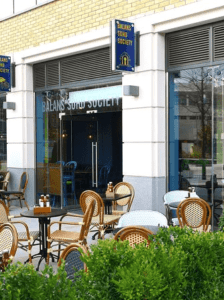
The famous Balans Soho Society group of restaurants and bars was about to open its seventh restaurant, in Ealing, London.
With a particularly demanding clientele – its slogan is: “A haven for the convivial” and the group numbers many celebrity guests – Balans decided to continue its relationship with NFS and deploy the Aloha restaurant management system that has already proved its worth at their other branches.
The deployment has paid off – and the group is particularly impressed with the loyalty programme it has been able to set up, with loyalty customers spending more than 40% more than non-loyalty guests.
At a glanceWho? Balans Soho Society’s new Ealing restaurant Where? London What? Aloha Table service EPOS software from NFS Why? Operational efficiency and great customer service, loyalty When? 2019 at the new Ealing branch
Balans Soho Society
Balans has always been ahead of trends. First started by business partners David Taylor and Prady Balan in the 1970s as a sandwich outlet, the group has become famous for hosting celebrity hangouts and delicious late-night dining.
Balans (now run by David Taylor) now has no fewer than seven restaurants across London and beyond, from Soho to Stratford City. Attracting the most up-to-date and savvy clientele, its menu is big on breath-taking brunches, quintessentially Balans mains and fabulous cocktails.
The challenge
Opening a new restaurant in Ealing – in the extraordinarily competitive London market – this famed group bills itself as a “haven for the convivial”.
So it knew it was crucial to deliver the same impeccable standards of operational efficiency and delicious customer service that have made its other six restaurants and bars such a celebrated three-decade success.
The results
The Ealing restaurant got off to a great start and is proving a real hit with customers with the help of its Aloha EPOS software.
“The system does exactly what we need – we find working with NFS very smooth thanks to having a key account person allocated.” – Kieran Crosby, Operations Director, Balans Soho Society
The benefits for Balans
As well as keeping operations streamlined and customer service moving effortlessly, Balans has had great success using its Aloha EPOS software to create targeted loyalty schemes and offer gift cards to enhance the customer experience.
The company believes the restaurant management software has created a big uplift – loyalty customers on average spend up to 42% more than non-loyalty customers.
“We’ve created an online loyalty programme where our customers are in control of how they use it, and that’s really helping to drive repeat visits,” says Kieran.
Balan’s staff also use Aloha Mobile to take customer orders and payments at tableside, using iPads. It means orders go directly to the kitchen for swift delivery, without any chance of human error.
Aloha EPOS software can integrate with kitchen automation to streamline food production, and the intuitive interface means it’s simple to get staff up and running on the system.
“Our FOH staff find Aloha very easy to use – the system is common in the restaurant industry and many have used it before, so they have familiarity with it.” – Kieran Crosby
Aloha has moved well beyond simple EPOS, and now creates a better-connected workflow within the restaurant and throughout the customer journey from online reservations through seating, dining, paying and loyalty – it even monitors social media reputation.
Like other users of Aloha, Balans also benefits from the business insight provided by the system. For restaurant groups, it gives an unprecedented end-to-end view of operations, with comprehensive reports including sales, labour and stock control, and accurate forecasting.
Why NFS?
NFS has a long-standing relationship with this prestigious restaurant chain, which made Aloha a natural choice when Balans was getting ready to open the new Ealing branch.
“We chose NFS because Aloha is working well in the rest of our estate,” says Kieran.
“Aloha does exactly what it needs to do – and we find it very reliable. We’d recommend it.”
What’s next?
Balans anticipates that using Aloha Mobile will increase efficiency, table turn and revenue during the coming summer months.
Watch this video to discover how Andy uses Aloha restaurant management technology to turn his business round – streamlining operations, improving guest service and increasing revenues