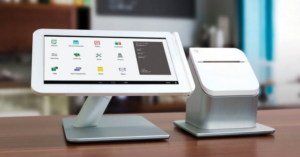
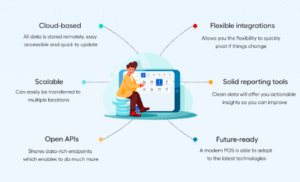
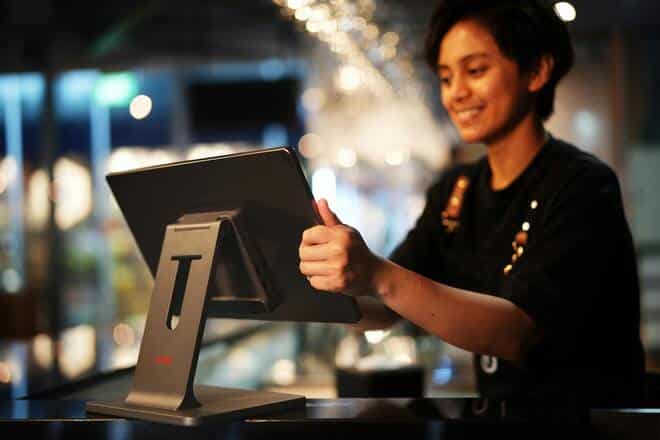
Unlike traditional EPOS systems, a cloud based POS system offers real-time data access, greater flexibility, and seamless integration with other software, making them an essential tool for modern dining.
Reasons Restaurants Use Cloud EPOS
Streamlining Operations and Reducing Errors
Improved Customer Experience
Real-Time Data & Analytics
Seamless Integration with Other Tools
Scalability for Growing Businesses
1. Streamlining Operations and Reducing Errors
Automating Key Restaurant Tasks
One of the greatest advantages of cloud-based EPOS systems is automating essential restaurant tasks.
Traditional methods of order processing, inventory management, and staff scheduling are prone to human error. Cloud EPOS automates these tasks, ensuring these tasks are managed smoothly and more accurately.
For example, orders placed at the front of the restaurant are instantly sent to the kitchen, reducing the chances of miscommunication or order mix-ups.
Automation not only enhances accuracy but also speeds up service, improving workflow.
Real-Time Inventory Tracking
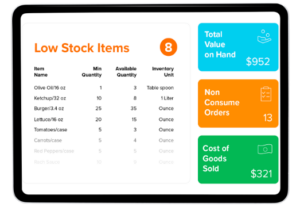
Restaurant management software helps restaurant managers keep a constant eye on stock levels by automatically adjusting inventory based on sales.
This ensures that restaurants always know what they have in stock, reducing the likelihood of shortages or over-ordering.
Real-time updates allow for more precise control over inventory, helping prevent costly mistakes and wastage.
Optimised Staff Scheduling
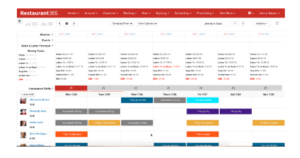
Scheduling staff becomes a lot easier with cloud EPOS systems.
By analysing sales and foot traffic data, managers can create more efficient work schedules.
This ensures that the restaurant is neither overstaffed or understaffed at any given time. Additionally, cloud EPOS platforms can integrate with payroll systems, allowing staff hours to be automatically calculated and recorded.
Remote Oversight and Decision Making
With cloud EPOS systems, managers and owners can monitor sales, orders, and operational performance remotely.
This gives them full control over operations, even if they are not physically at the restaurant. Tracking key metrics in real-time helps managers make quick, informed decisions, improving overall oversight.
2. Improved Customer Experience
Speeding Up Service
Cloud EPOS systems significantly improve service speed by allowing orders to be sent instantly from the server to the kitchen.
This reduces wait times and ensures that dishes are prepared more quickly, particularly during busy periods. Whether for dine-in or takeaway, faster service leads to increased customer satisfaction and higher table turnover.
Boosting Order Accuracy
Manual processes often lead to errors, but cloud EPOS systems ensure that orders are accurately recorded and delivered to the correct stations in the kitchen.
Special instructions, such as dietary requirements or modifications, are transmitted in real-time, reducing the risk of mistakes and ensuring customers receive exactly what they ordered.
Offering Flexible Payment Options
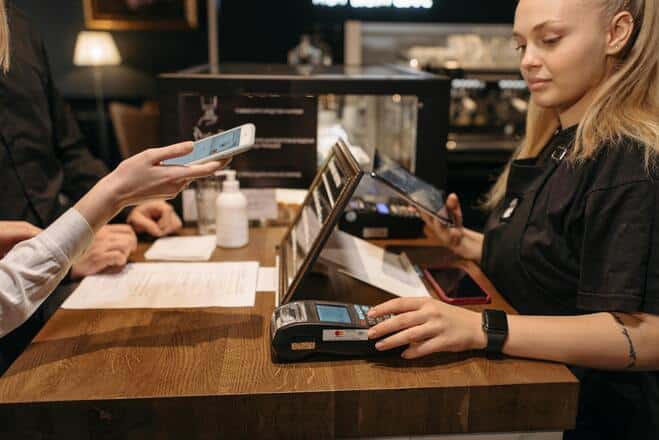
Cloud EPOS systems accommodate a wide range of payment processing methods, from traditional cards to mobile and contactless payments like Apple Pay and Google Pay.
This flexibility ensures a frictionless checkout experience for customers, making it easier for them to complete their transactions quickly and conveniently.
Additionally, cloud EPOS systems support split payments and self-checkout options, enhancing customer convenience.
Enhancing Loyalty Programs and Personalised Promotions
Restaurants can leverage the data collected by cloud EPOS systems to create personalised promotions and loyalty programs.
By analysing customer preferences and purchase history, restaurants can offer tailored discounts, special offers, and rewards, fostering customer loyalty.
Integrating these programs directly into the EPOS system makes them easy to manage and track, encouraging repeat business.
3. Real-Time Data and Analytics
Valuable Insights into Sales Trends
Cloud based POS systems provide restaurants with instant access to detailed sales data.
This allows them to track which menu items are performing well, which dishes may need adjustments, and identify peak sales periods.
With this real-time information, restaurants can quickly spot trends and make data-driven decisions that can enhance their menu offerings, optimise pricing, and boost sales.
Understanding Customer Behaviour
Beyond just tracking sales, cloud EPOS systems offer insights into customer behaviour, such as dining frequency, spending patterns, and preferred payment methods.
By analysing this data, restaurants can tailor their service offerings and create targeted promotions that resonate with their customer base.
For instance, a restaurant might notice that a particular demographic prefers certain dishes, allowing them to create specials that attract repeat business.
Real-Time Inventory Monitoring
Cloud EPOS systems update inventory levels in real-time, allowing restaurants to maintain precise control over stock levels.
This helps reduce waste by alerting managers when items are running low or about to expire.
With a clear view of what’s in stock and what needs replenishing, restaurants can avoid over-ordering or understocking, improving inventory management and reducing the likelihood of wasteful spoilage.
Demand Forecasting for Better Planning
This real-time data also aids in demand forecasting.
By analysing historical sales data and identifying seasonal trends, restaurant owners can predict which items will be in higher demand during specific times.
This allows for more accurate ordering of ingredients and better staff scheduling, helping the restaurant run smoothly, even during peak periods.
Demand forecasting reduces the risk of stock shortages and ensures that the restaurant is prepared to meet customer demand, ultimately boosting profitability.
Boosting Profitability Through Data-Driven Decisions
With real-time analytics, restaurant owners can make strategic decisions to improve profitability.
By tracking metrics like average spend per customer or the performance of special promotions, managers can identify opportunities to maximise revenue.
The ability to reduce food waste, optimise labour costs, and improve overall efficiency through data-driven insights can lead to significant cost savings over time.
4. Seamless Integration with Other Tools
Flexibility in Integrating with Third-Party Applications
One of the standout features of cloud EPOS systems is integration with third-party tools, making them a powerful hub for managing various aspects of a restaurant’s operations.
From accounting software to delivery platforms and customer relationship management (CRM) systems, cloud EPOS systems offer a high degree of flexibility.
This integration centralises operations and reduces the need for manual data entry across different platforms.
Many cloud EPOS systems integrate directly with payroll and accounting tools, such as QuickBooks, Xero, or Sage, helping restaurants automatically sync sales data, calculate staff wages, and generate financial reports with ease.
This eliminates the hassle of transferring data manually and minimises the risk of accounting errors.
Integrating with Delivery Platforms
With the rise of food delivery services, restaurants need to keep up with demand across both dine-in and delivery channels.
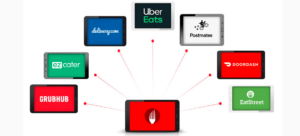
Cloud EPOS systems offer integrations with popular delivery platforms like Uber Eats, Deliveroo, and Just Eat, allowing restaurants to manage orders from these services directly.
These integrations help streamline the process by sending delivery orders straight to the kitchen.
This real-time synchronisation prevents any delays or miscommunication between platforms, ensuring a seamless customer experience across all sales channels.
Cloud EPOS systems also integrate with CRM tools, helping restaurants build and maintain strong relationships with their customers.
By connecting with CRM systems like Salesforce or HubSpot, restaurants can track customer interactions, purchase history, and preferences.
This data can be used to send personalised offers, create tailored loyalty programs, or automate marketing campaigns. Centralising customer data allows restaurants to create deeper connections with their diners, driving repeat business and fostering long-term loyalty.
Streamlining Operations with Kitchen Display Systems (KDS)
Cloud EPOS systems often integrate with KDS to further streamline order management.
Instead of relying on printed tickets or manual processes, orders are instantly sent to digital displays in the kitchen.
This increases the speed and accuracy of order preparation, especially during busy periods.
KDS integrations help ensure that the kitchen and front-of-house teams are always in sync.
Other Useful Integrations
Cloud EPOS systems can also integrate with inventory management systems, reservation platforms, and employee scheduling tools.
These integrations simplify workforce management by automatically pulling sales data to adjust staffing needs based on real-time demand.
Examples of Popular Cloud EPOS Integrations
QuickBooks, Xero, Sage (Accounting)
Uber Eats, Deliveroo, Just Eat (Delivery Platforms)
Salesforce, HubSpot (CRM Tools)
7shifts, Deputy (Staff Scheduling)
MarketMan, BlueCart (Inventory Management)
Toast KDS, Square KDS (Kitchen Display Systems)
5. Scalability for Growing Businesses
Easily Expand to New Locations
Cloud EPOS systems are designed to scale seamlessly as your restaurant grows.
One of the key benefits of these systems is that they require minimal hardware, making expansion to new locations both simple and cost-effective.
Cloud-based solutions allow you to add new locations to your existing system without the need for additional costly equipment.
The cloud EPOS system is hosted off-site, so there’s no need to install physical servers or network infrastructure. This makes setting up a new location quicker and easier, allowing you to focus on growing your business rather than worrying about complex technical setups.
Centralised Management Across Locations
As your restaurant expands, cloud EPOS provides a unified management platform that lets you oversee multiple locations from a single dashboard.
You can monitor sales, track inventory, and manage staff across all your locations in real time. This centralised control simplifies operations and ensures consistency, no matter how many restaurants you open.
If you’re managing a franchise or chain, cloud EPOS systems allow you to implement company-wide menu changes, promotions, or pricing adjustments instantly.
There’s no need to manually update each location’s system. This centralised approach reduces complexity and ensures that all locations are operating under the same standards and guidelines.
Cost Savings and Reduced Infrastructure Needs
For growing businesses, cloud EPOS systems present significant cost savings.
Cloud-based EPOS systems eliminate the need for expensive servers and hardware at each location, resulting in lower upfront costs and minimal maintenance fees.
Since the system is cloud-based, there are no complicated installations required for new sites.
Most cloud EPOS providers offer scalable pricing plans, meaning you only pay for what you use.
This allows restaurants that experience seasonal fluctuations or gradual expansion to adjust their system needs according to demand without incurring unnecessary expenses.
Adapting to Growth and Change
Cloud EPOS systems are adaptable, making them ideal for restaurants with ambitious growth plans.
Whether you’re opening a second location or expanding into new regions, cloud EPOS can grow with you. As your business scales, the system can accommodate increased transaction volume, more staff, and additional inventory without affecting performance.
This flexibility allows restaurants to expand confidently, knowing that their EPOS system will support their operational needs as they grow.
Streamlined Employee Management
As a restaurant grows, managing a larger workforce becomes more complex.
Cloud EPOS systems can streamline staff management by tracking employee hours, managing shifts, and integrating with payroll systems.
These tools scale with your business, so as you hire more staff across multiple locations, your EPOS system can handle the increased data, ensuring efficient and accurate employee management.
Conclusion
Adopting cloud EPOS systems is not just a trend—it’s a necessity for long-term success. These systems streamline operations by automating key tasks, ensuring order accuracy, and providing real-time data that helps restaurants make informed decisions.
By integrating seamlessly with other tools, such as delivery platforms, accounting software, and CRM systems, cloud EPOS simplifies complex processes and enhances overall efficiency.
The flexibility to manage the restaurant remotely, adapt to menu changes, and expand to new locations without heavy infrastructure investments makes cloud EPOS the ideal solution for growing businesses.
It also elevates the customer experience by enabling faster service, personalised promotions, and a wide variety of payment options.
Ultimately, cloud EPOS systems empower restaurant owners and managers with the tools they need to stay competitive, reduce operational friction, and foster customer loyalty.
For helping finding the right cloud EPOS system for your business, contactNFS Hospitality.
When it comes to selecting a restaurant point of sale solution, there are two choices – either an on premise POS system or a cloud POS solution.
A traditional on premise POS system is typically linked to computer or server on the premises whereas a cloud POS solution is accessed online as all data processing is conducted in the cloud.
Let’s explore the advantages and disadvantages of both approaches so you can make an informed choice – whether you are looking to replace an existing solution or are starting fresh.
What is a cloud-based POS system?
A cloud based POS system or a SaaS (software as a service) based POS system is accessed through the internet.
A key feature of a cloud based POS system is that it doesn’t require a dedicated POS terminal – it will work happily on an iPad, a desktop PC or an Android tablet. It can, therefore, be a lot more portable than the traditional on premise POS system which is based around dedicated fixed terminals.
In terms of core functionality, a cloud POS solution will perform the same tasks as an on premise POS system – managing stock, printing receipts and processing orders.
What are the advantages of a cloud-based POS system?
The advantages of a cloud-based POS system are:
Remote access
With a cloud-based POS system you are not tethered to a physical location. You can run reports on the business from anywhere in the world with an internet connection.
Data security
SaaS technology is incredibly resilient. All data is backed up online in the cloud so even if you drop and break your iPad – no problem – the data is still there, protected and readily available.
Scalability
As restaurant operators grow their business it will be necessary for the POS system to be scaled up when needed to match their business size. Cloud POS systems are designed with scalability in mind so that restaurateurs can choose to scale up the POS without spending too much time, effort, and budget. Adding additional users and sites is straightforward.
Business insights
A cloud POS system enables you to track all transactions, or sale histories so you can view this information anywhere at any time with real-time data synchronisation. This is a great feature for multi-site operators as they can get a holistic view of their business in real-time at the touch of a button.
Choice of hardware
With an on premise POS system you are limited to relatively expensive and largely immobile terminals. With cloud POS systems you can use an iPad or Android tablet for table service or a desktop PC at the front desk. With appropriate accessories such as stands and cash drawers you can also use the tablet front of house as well as tableside.
Regular updates
The beauty of a cloud-based POS system is that all updates are rolled out automatically and there is no need for additional software installation. You can enjoy new features and benefits straight away at no additional cost!
What are disadvantages of a cloud POS solution?
While it is a great option, there are a few disadvantages to selecting a cloud POS solution:
Requires good internet
If you are in a location where internet is intermittent it may be prudent to consider an on premise POS system. A bad connection will at best impede service and, at worst, cause your POS system to fail completely with a potential loss of data.
Non-customisable Solution
POS cloud software solutions do not allow room for customisation. This poses no problem for small operators who lack time and budget for such upgrades. However, larger operators may prefer to be able to make changes to reflect their brand and/or their specific requirements.
Limited customer support
While they typically offer online support, cloud-based POS systems often do not require tailored support as they are usually intuitive and easy to use. For larger operators, a traditional on premise POS systems may be more suitable as support for these platforms can be tailored to suit their needs.
What are the advantages of an on premise POS system?
A traditional on premise POS system has some distinct benefits over its POS cloud counterparts. Simply, it is a perfect option for large enterprises and restaurants.
Not relying on the internet
Unlike cloud POS, a traditional system does not depend on the internet as servers are in a closed network. POS can work smoothly and efficiently with the Wi-Fi disconnection.
One-time payment
Most of the time, a traditional POS is sold with a one-time cost. Unlike the monthly subscription fee of cloud POS, you only pay once to own an on premise POS.
Full control and customisation
On premise POS systems reside entirely on your own servers, giving you complete control over the software configuration and customisation. You can tailor the system to your business’s specific needs and processes.
Data security and privacy
With on premise POS systems, your sensitive business data remains entirely within your physical premises. This enhanced security reduces the risk of data breaches or unauthorized access compared to cloud-based systems that store data remotely.
Faster transaction processing
On premise POS systems typically offer faster transaction processing compared to cloud-based systems, as they don’t rely on internet connectivity for data transfer and processing. This can be crucial for businesses with high transaction volumes.
Offline operation
On premise POS systems can operate independently of an internet connection, ensuring uninterrupted transactions even during network outages or power disruptions. This is crucial for businesses that rely on their POS systems for critical operations.
Local support and expertise
On premise POS systems typically provide local support from the provider or their authorized partners. This can be more convenient for businesses that need immediate assistance or prefer face-to-face interactions with support personnel.
What are the disadvantages of on premise POS system?
On premise POS systems also have certain disadvantages that may make them less appealing for some operators:
Higher initial investment
On premise POS systems involve a higher upfront cost due to the hardware and software purchase requirements. You’ll need to purchase or lease servers, manage hardware maintenance, and invest in software licenses.
Technical expertise required
On premise POS systems require technical expertise to install, configure, and maintain the software and hardware components. Businesses may need to hire IT staff or rely on external consultants to manage their POS infrastructure.
Limited scalability
On premise POS systems may have limited scalability in terms of the number of users or transactions they can handle. Adding more hardware or software components can become expensive and complex.
Data security concerns
While on premise POS systems offer greater data security, potential security breaches can still occur due to human error, malware attacks, or hardware malfunctions. Businesses need to implement proper security measures and regularly conduct backups.
Software updates and patches
On premise POS systems require businesses to manually install software updates and security patches, which can be time-consuming and error prone. Missed updates can leave the system vulnerable to security risks.
How to Choose the Right POS System for Your Restaurant
Selecting the best restaurant EPOS or cloud POS solution depends on your business’s specific needs. Consider the size of your restaurant, transaction volumes, and internet reliability.
For instance, a busy restaurant with high turnover may prioritise speed and offline capability, making an on-premise POS appealing. Meanwhile, smaller restaurants or multi-location operators often prefer cloud POS systems for scalability and remote management capabilities.
Integrating POS Systems with Other Restaurant Technologies
Modern restaurant EPOS and cloud POS systems can integrate seamlessly with other technologies, like kitchen display systems, inventory management software, and customer loyalty programs. These integrations streamline operations, reduce human error, and improve the customer experience.
For example, a cloud POS system can automatically update inventory levels in real time when orders are processed, saving time and effort for staff.
Cloud POS for Multi-Site Restaurants: A Game Changer
For restaurant groups or multi-location operators, a cloud POS system offers unparalleled convenience. These systems centralise data management, enabling owners to track performance across all sites in real time.
Whether analysing sales trends or making menu adjustments, a cloud POS ensures consistency and efficiency across locations.
Cost Comparison: On-Premise vs. Cloud POS Systems
An on-premise POS typically involves a higher initial investment, including the purchase of servers, dedicated hardware, and software licenses. These systems often require ongoing maintenance, which can lead to additional costs for technical expertise or IT staff.
A cloud POS system operates on a subscription model, spreading costs over time with a predictable monthly or annual fee. This reduces the upfront expense. Hardware requirements for cloud POS solutions are generally more flexible and affordable, as they can run on devices like tablets or desktop PCs.
For restaurant EPOS systems, the right choice depends on the its operational needs. Either way, choosing the right system can deliver a strong return on investment (ROI) by streamlining operations and enhancing efficiency.
Conclusion
Both cloud POS systems and on premise POS systems have their pros and cons. Generally speaking, cloud POS systems are an affordable option for smaller operations whereas on premise is ideal for larger operators particularly those where speed and volume are paramount.
An on premise POS system offers greater control, security, and offline capability, but they require higher upfront investment, technical expertise to implement and maintain, and need ongoing maintenance. With faster transaction speeds and specialised hardware, they are a good choice for, say, quick service.
Cloud POS systems offer a convenient approach to managing hospitality operations. They provide restaurants with 24/7 access, scalability, and flexibility. A POS cloud based system also simplifies updates and maintenance, ensuring that businesses always have the latest features and security patches. Additionally, a POS cloud based system offers real-time data insights, enabling businesses to make informed decisions about inventory management, marketing, and customer service.
At NFS we offer a best of breed approach as one size does not fit all. We recommend solutions which will meet your needs today and into the future.
Contact us today so we can discuss which option best meets your needs.
Choosing the right restaurantPOS system for your business is the best way to up its efficiency.
To summarise, EPOS systems (or electronic point of sale systems) are an end-to-end solution to all manner of daily problems in the hospitality industry.
They cover everything from payment processing and stock control, to table management and custom pricing. Hospitality Businesses also use them to track online orders and dispense digital receipts.
Good POS systems can manage all this and more across multiple locations, while providing a wealth of reporting features to make sure you get the most out of your tools.
Aloha is designed as a holistic solution for restaurant EPOS management across multiple locations.
The system is easy to use, but extensive and regularly updated to meet the evolving needs of restaurant owners, while offering stellar customer support.
Aloha excels in managing the entire process from ordering to delivery, with a suite of cloud-based support features.
Where the Aloha point of sale system truly thrives is in its management of stock control, labour, payroll, and other back-house operations.
The key focus of the system is automation of these processes.
Ease of Use
Aloha scores major points for its accessible, easy-to-understand user interface.
Anyone familiar with Windows will have no trouble using Aloha and its layout can be easily customised to suit the needs of you and your staff.
Customer Experience Management
Aloha provides everything restaurant owners need to integrate their customer loyalty programs with the EPOS, as well as the means to customise orders and split bills easily.
Reporting and Analytics
Clear, actionable reporting and pertinent insights oninventory management, sales, and staffing costs are included.
Compatibility
The system integrates well with a range of other services and software such as payroll and accounting tools.
For an all-purpose restaurant EPOS that’s easy to set up, frequently updated, and scalable, consider Revel. This POS system is designed to support both front-of-house and back-of-house operations.
It provides robust controls for menus, stock management ordering, and reporting.
In a market where point of sale systems are becoming increasingly overcomplicated, Revel’s simplicity is one of its greatest strengths.
Revel is optimised for order accuracy and provides tools for preventing delays and boosting customer satisfaction through tableside ordering.
More advanced features include the ability to map out a unique floor plan for individual sections of your restaurant for seamless order management, schedule management, and focused reporting.
Ease of Use
Revel’s design and user interface are simple and adaptable, with a personalised onboarding process that provides guidance on both the hardware and operating system.
Customer Experience Management
Customer retention is one of Revel’s primary concerns. The platform contains various tools forloyalty programs, customer relationship management, discounts, gift cards, and online ordering.
Reporting and Analytics
This restaurant EPOS Operations Report feature combines critical data on sales, order history, product mix, and more into one detailed report, providing a holistic view of the business’ performance.
Compatibility
Revel is designed for compatibility with your existing EPOS hardware, but replacing old systems with their solutions is recommended to get the most out of their impressive suite of features.
Pricing
The comprehensive monthly package comes in at around £80 per month.
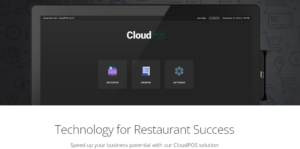
CloudPOS is an easy-to-use restaurant EPOS system with multiple features designed to assist order management, integrated payments, sales reports, online ordering, and more.
Better yet, CloudPOS kitchen display system and other user interfaces are built from the ground up for accessibility, dramatically reducing necessary staff training time.
An all-in-one order management tools allows users to easily edit and filter orders, make advance bookings, and take partial payments accordingly.
Speaking of payments, CloudPOS boasts some of the lowest payment processing rates available, as well as simple bill splitting, tipping, and gratuity features.
Ease of Use
The CloudPOS touch screen register is built for simplicity, while its manager dashboard includes straightforward customisations tools for catering the system to your staff.
Customer Experience Management
Every part of the CloudPOS platform is streamlined to smooth and speed up the checkout process, allowing customers to tip and sign directly on your device.
Reporting and Analytics
You can expect to receive daily sales reports, in-depth monthly summaries, and information on your top sellers, allowing you to tailor your operations for productivity and your menu for your customer’s tastes.
Compatibility
Their custom touch screen POS system is designed as the ideal replacement for traditional cash registers and takes minimal hassle to set up. It also integrates well with programs like QuickBooks, SHOGO, and XERO. Additionally, it won’t drop you when your wi-fi does.
Pricing
CloudPOS’ basic package runs at £16.65/MO, its Pro package at £41.65/MO, and its Enterprise package at £74.99/MO.
The Square restaurant POS system implements numerous features specifically designed to cater to the restaurant industry, with a transparent pricing model, multi location management, reporting, and more.
It’s tool add-on system enables restaurant owners to pay for only what they need and cut costs in other areas. While the system is operational from any mobile device, the Square EPOS system also has a range of bespoke, optional hardware available.
The Square EPOS system is capable of processing customer payments in person, via mobile, or online, while their custom hardware requires little to no set up to get working.
Better yet, the system is built to easily customise menus, speed up the check out process, provide in-depth sales and product reports, and consolidate customer data into automated customer profiles.
Ease of Use
Navigating the Square user interface is intuitive from beginning to end and set up is painless, catering to operations of all sizes.
Customer Experience Management
Square allows restaurant owners to open direct lines of communication with customers for resolving any feedback, sending coupons, and delivering tailored service accordingly.
Reporting and Analytics
The interface lays all the groundwork for informed decision making by providing detailed reporting on best sellers, average customer spend, employee performance, and stock.
Compatibility
The Square dashboard is fully compatible with a wide range of devices, but your chosen point of sale device may limit the features you have access to.
Pricing
The Square POS platform begins as free-to-use, but charges when you begin taking payments, with 1.75% processing rate on chip and PIN or contactless payments, 2.5% for virtual terminal and invoices, and its hardware range beginning at £19, not including VAT.
Toast is one of the most popular EPOS in the restaurant business for a reason.
It offers all-encompassing solutions for order and inventory management, menu management, payments, and more.
It provides seamless payment processing, menu customisation and profitability tools, CRM functionality, and thorough analytical reporting on performance and operations.
Ease of Use
Toast is arguably most well known for its excellent user interface. While the initial setup may contain a learning curve, everyday usage is quick and easy.
Customer Experience Management
The package contains all the features you’d expect for tableside payments and quick, bother-free feedback collection from your guests.
Reporting and Analytics
Toast provides key data points across all channels in real time, cutting out waiting times and directly emailing daily results to your inbox every night.
Compatibility
While Toast integrates well with a variety of hardware and software, it’s worth noting that the platform is Android inclusive and doesn’t work on iOS devices.
Pricing
The Starter package goes for £50, while the Essentials package, designed for restaurant owners looking to scale their business, is £150.
Lightspeed’s features focus on saving time and automation. It offers personalised user support with various multilocation tools and integrations to get you up and running quickly and efficiently.
It offers all the features needed to manage your teams, inventories, and suppliers from one location.
It’s specifically designed to increase visibility in key areas for multilocation operations and offers plenty of customisation options to help you get your ideal experience and functionality.
Ease of Use
Its user interface is simple and intuitive and set up is no challenge, though getting to grips with its various features will take some time.
Customer Experience Management
A key feature here is Lightspeed’s ability to offer customers the same benefits online that they would when visiting your restaurant.
Reporting and Analytics
Its detailed reports give you everything you need to know about staff performance, popular items, and more via its interactive reporting dashboard.
Compatibility
The Lightspeed POS system is compatible with a range of devices, as well as both the Windows and Mac operating systems.
Pricing
Users can expect to pay anywhere between £50 and £300+ for the service, depending on their chosen package.
What To Look For in a EPOS System
When you sign up with a restaurant EPOS, you’re entrusting a huge part of your operations and performance onto software. In other words, it’s no small decision.
In fact, it’s something like choosing a business partner. As with any kind of relationship, there are a couple of key green flags you should be looking out for before making a choice.
Ease of Use
You want to lower the learning curve for you and your staff as much as possible. Something as simple as a receipt printer should never be a headache.
Restaurant POS should have an intuitive, logically laid out user interface. You’ll need simple functionality for tipping and splitting bills, modifying menus, loyalty programs, and a strong customer support team.
Reliable, advanced features will minimise errors and stress, lower training time, and ensure quicker service across the board.
Customer Experience Management
From online ordering to the self service kiosk, an ideal cloud based POS software is designed to improve the customer experience from beginning to end.
Look out for products that personalise the customer’s service, track customer feedback, and organise customer data clearly, allowing you to develop targeted insights about their behaviour.
These can be used to market more directly to existing customers or enhance your customer loyalty programs.
Reporting and Analytics
Data management and analysis is one of the key bedrocks to improving any business’ performance. Hospitality is no different.
Your POS system should tell you about sales trends, item popularity, customer preferences, and more.
Whether it’s a chain franchise or independent restaurant, collecting and analysing data is how you judge the performance and operations of your business.
That means your POS terminals are a centralised location for data-based decision making, boosting revenue and efficiency, managing expenses, and viewing sales reports.
Stock Control
Monitoring stock levels is a key touchstone for a good restaurant EPOS.
With the right features at hand, the restaurant’s point of sale system becomes the best way to get ahead of stocking issues via automated ordering or more accurately track the cost of your dishes.
Compatibility
You’ll need to understand early on exactly what you’ll need in terms of tablets, printers, payment devices, and the like.
The idea is to avoid any surprises that could slow down service in the future and ideally to opt for an EPOS system that easily integrates with your existing hardware.
The same consideration should be made for integration with other essential technologies, such as your chosen accounting software.
Pricing
The cost of restaurant EPOS systems can vary significantly, especially when considering both hardware and software, as well as the potential costs involved in integration.
Different softwares may be based on either monthly or yearly subscriptions. They may be tailored to the size of your restaurant or multi location restaurants.
Some provide various options when it comes to contracts, while others may lock you into uncomfortable terms or feature a wealth of hidden costs and transaction fees.
Conclusion
The best restaurant POS systems in 2024 are those that most seamlessly combine advanced tools with user-friendly interfaces.
They provide restaurant owners, managers, and staff with what they need to improve the quality and efficiency of their inventory management, customer engagement, payment, online orders, and more.
A robust EPOS system is one whose sales systems work with minimal input or set up, allow for both payments via portable card machines, mobile payments, or integration with any accounting software.
Tools that allow you to customise your floor plan, manage bookings, tailor your menu, or receive analytical sales reports are extremely valuable as well.
Once again, the ideal point of sale system for you is dependent on your needs and the nature of your business.
Contact NFS Hospitality for helping picking the best platform for your needs.
It’s tough out there in hospitality land. Customers facing cost of living squeezes, labour hard to come by, costs soaring and competition at an all-time high. But the best operators are doing impressively well – and we know exactly why.
Big names like GAUCHO, Dishoom, Marugame Europe and Doner Shack – valued clients of NFS Hospitality – are leveraging the power of technology to support their thriving operations.
Read on to discover the tips you can take from the big names – and to know 5 ways technology can improve your restaurant operations.
Boosting efficiency and customer satisfaction
Both of these factors are major players when it comes to success, and as a result leveraging technology in restaurant operations has become indispensable.
From streamlining order management to enhancing customer experiences and promoting loyalty, restaurant technology is important in in optimising workflow and maximising profitability in restaurant operations of all sizes. It’s why restaurant pos system software represents a good investment.
5 ways technology can improve your restaurant operations
Streamlining the ordering process
Optimising your labour
Enhanced customer engagement and loyalty
Better inventory management
Data-supported decision making
Streamlining the ordering process
Customers want convenience these days, and for many that means the ability to browse menus and order their meal online.
The best epos offers an online food ordering system, that integrates with online ordering platforms such as Grubhub or Uber Eats. This is not only quick and easy for customers but also provides increased accessibility to your services to a wider audience.
Customised mobile apps allow customers to browse the menu and make their selection effortlessly whether they are at home or in your outlet, leading to improved engagement and driving up the possibility of repeat ordering.
Optimising your labour
Labour is at a premium these days, and restaurants are working hard to ensure a good working environment where staff are happy to stay. It’s also crucial to operations and the bottom line to make the best use of the staff available.
That’s where epos comes in. Implementing tableside ordering tablets for either the diners or your serving staff enables orders to be sent immediately to the kitchen, eliminating human error that gets food sent back and reducing the time it takes for the order to arrive. It also reduces the time staff need to run back and forth to the kitchen, so they can put their valuable efforts into engaging with the diners and upselling.
POS systems also streamline order processing, simplify payment transactions – payment can also be taken at tableside – and provides valuable insights into sales trends and staff performance thanks to comprehensive reporting.
Your data can be used to organise shift scheduling, ensuring that you have optimal staffing levels and busy and less busy times – it’s a good way to minimise staff costs while maximising efficiency and offering the best customer service. Providing good training alongside the epos technology equips your staff with the necessary skills to give great service and enjoy their work.
Enhanced customer engagement and loyalty
All the big-name NFS clients we mentioned above (and many others) have exceptional reputations for customer engagement and effective loyalty programmes that reward diners and build up a valuable bond.
They use customer loyalty program software to achieve the best results, and also enable their customer base to act as ambassadors by using gift card management software to treat their friends and relatives to a meal.
Implementing Customer Relationship Management (CRM) systems allows restaurants to gather incredibly valuable customer date and personalise interactions with them. This means marketing offers are targeted to people who are likely to make the most of them, and encourages a sense of belonging.
Feedback management programmes allow restaurants to collect, analyse and respond to customer feedback promptly. It’s a great way not only to head off complaints at the pass, but also to foster a culture of continuous improvement across the whole organisation.
All of these facilities can be accessed online by managers anywhere, reducing the need to duplicate head office functions in multi-location groups and creating an end-to-end view of the business at all times – something that can otherwise be hard to achieve in the hurly-burly of hospitality operations.
Better inventory management
Reducing food waste is high on the agenda of any hospitality business seeking to create a sustainable environment, and it also makes huge sense financially.
Restaurant management software, with its real-time reporting, enables excellent inventory tracking so stock levels are accurately recorded and wastage is drastically reduced. It also enables your staff to quickly understand when a dish becomes unavailable, allowing them to manage the expectations of guests by offering an alternative.
Predictive analytics is a further ingredient in the recipe for restaurant success, helping forecast demand trends so you can optimise stock levels and make proactive decisions and cost savings.
Integrating with your suppliers via technology streamlines your procurement process, making sure deliveries are timely and inventory levels are kept up to scratch.
Data-supported decision making
Business intelligence tools designed specifically for hospitality operations enable restaurant owners to analyse key metrics for performance, identify upcoming trends and make data-drive decisions that will improve operational efficiency and the profitability of the business.
Leveraging the real-time reporting capabilities of epos provides managers and owners with up-to-the-minute insights into sales performance, inventory levels and customer feedback so you can take timely corrective actions where needed and create long-term strategies for continued success.
Integrating various restaurant technology solutions into your epos platform, such as a table reservation system ensures seamless data flow across the different operational functions, taking the guesswork out of decision-making and providing firm foundations on which to grow your business.
Conclusion – technology is the special sauce
What does real restaurant success look like these days? Great food, outstanding customer service, costs and wastage under control and happy, motivated staff who are not run off their feet meeting diner expectations every day.
No surprises there – but supporting all these excellent ambitions in today’s hospitality industry is technology, the special sauce that brings it all together and makes the magic happen.
It’s why the most successful restaurants and groups in the UK have deployed epos technology and its integrated facilities, and are reaping the benefits even as we speak. It’s an investment that makes perfect sense – a gift to operations that will keep on giving however circumstances in the industry evolve.
The hospitality landscape is constantly changing, and convenience is king, especially when it comes to ordering food. Customers expect more than just a transaction; they desire a seamless and personalised ordering experience. If your restaurant isn’t offering online ordering, you’re missing out on a significant opportunity to cater to these expectations and drive business growth.
But fear not! Implementing an online ordering system doesn’t have to be daunting or expensive. In fact, with the right system in place, it’s easier and more affordable than you might think. Let’s explore why online ordering is a must for restaurants and how it can revolutionise your business.
Advantages of Online Ordering for Restaurants
Online ordering offers several key advantages for restaurants, including streamlining operations, increasing revenue, and improving order accuracy. Let’s dive into each of these benefits and see how they can transform your business.
Streamlining Restaurant Operations
Running a restaurant is no easy feat, but online ordering can help simplify and streamline your operations. By centralising your online ordering system with one provider, you can integrate various functions such as ordering, payments, and menu optimisation into a single, easy-to-use platform.
This streamlines your operations, saving time and resources for both your team and your customers. Additionally, a unified system provides enhanced analytics and reporting, giving you valuable insights into guest data and supporting better decision-making and business planning.
Increasing Restaurant Revenue
Boosting revenue is crucial in the competitive restaurant industry, and online ordering can help you achieve this goal. By investing in a scalable online ordering system, you can save money in the long run and accommodate future growth without breaking the bank.
Moreover, powerful analytics and reporting tools provided by online ordering systems allow you to identify trends and patterns in customer behaviour. Armed with this information, you can optimise everything from pricing to promotions, ultimately improving profitability and revenue.
Improving Order Accuracy
Order accuracy is paramount in the restaurant business, and online ordering systems can significantly reduce errors compared to traditional phone orders. When customers can specify their selections and preferences online, they feel more in control of their orders, leading to increased satisfaction and loyalty.
Furthermore, online ordering systems can facilitate upselling opportunities by promoting recommended menu items and limited-time offers. This can incentivise customers to spend more per order and drive additional revenue for your restaurant.
How to Get Started with Online Ordering
Now that you understand the benefits of online ordering, it’s time to take the plunge and get started. Here are a few tips to help you navigate the process:
Choose the right online ordering system for your restaurant, considering factors like features, integrations, and cost.
Follow industry best practices for a successful implementation to optimise your usage and maximise benefits.
Promote your online ordering platform to raise awareness among customers and incentivise them to place orders online.
Online ordering is no longer a luxury; it’s a necessity for restaurants looking to thrive in the digital age. By embracing online ordering, you can streamline operations, increase revenue, and improve customer satisfaction—all while staying ahead of the competition.
Now is the time to launch online ordering for your restaurant. Don’t miss out on this opportunity to take your business to new heights.
As we approach April 1st, 2024, operators across various sectors are gearing up for the implementation of the National Living Wage (NLW) and other wage rate increases. This move, following the acceptance of the Low Pay Commission’s (LPC) recommendations, aims to fulfil a Conservative manifesto pledge to abolish low pay, defined as below 66% of median earnings. While this is a significant step towards ensuring fair compensation for workers, it also poses challenges for businesses, particularly those in sectors where labour costs constitute a substantial proportion of turnover.
Throughout the year, industry representatives have been actively engaging with the LPC and government officials, highlighting the potential adverse effects of such significant wage increases on businesses within the sector. It’s essential to recognise that these increases do not merely impact entry-level staff but have broader ramifications throughout the management structure.
Let’s delve into the new rates set to come into effect:
National Living Wage (21-years-old and over)
Rate from 1 April 2024: £11.44
Increase in pence: £1.02
Percentage increase: 9.8%
18- to 20-year-old rate
Rate from 1 April 2024: £8.60
Increase in pence: £1.11
Percentage increase: 14.8%
16- to 17-year-old rate
Rate from 1 April 2024: £6.40
Increase in pence: £1.12
Percentage increase: 21.2%
Apprentice rate
Rate from 1 April 2024: £6.40
Increase in pence: £1.12
Percentage increase: 21.2%
Accommodation offset
Rate from April 1, 2024: £9.99
Increase in pence: £0.89
Percentage increase: 9.8%
The LPC’s aim was to ensure that the NLW reached 66% of median earnings, a target they believe has been achieved. However, the forecasted level to reach this, as of March 2022, was £11.16 per hour. The significant rise in average earnings has pushed this target level higher. Additionally, other wage bands have also increased to prevent too great a discrepancy between them.
Strategies for Operators to Navigate the Wage Increase:
Better Align Staffing Needs to Optimise Labour Costs: It may sound obvious, but it’s often overlooked, cutting staff isn’t the solution. The key is to manage the value equation in the eyes of customers and avoid raising prices while cutting service levels. Operators should align staffing needs with consideration given to peak versus off-peak staffing rotas.
Take a Demand-Based Approach to Pricing: Reviewing item-level data across the estate will reveal which restaurants could be organised into different price bands based on customer reactions to previous price moves. Understanding customer willingness to spend ensures they see value for money without crossing price barriers.
Leverage Technology: In today’s hospitality landscape, technology plays a pivotal role. From kitchen automation to online ordering, technology can enhance the customer experience while allowing staff to focus on delivering exceptional service.
Have a Long-Term Game Plan: Unlike food inflation, labour costs can be planned for. Operators need a long-term plan to address these costs, making price changes in smaller increments spread over time. This approach allows for testing and assessment before full implementation.
Streamline Your Menu: Reduce labour costs and improve execution by streamlining the menu. Evaluate menu items for operational impact and consider whether profitable items may be slowing down service. Identify bottlenecks and adjust menu offerings accordingly.
While the upcoming wage increases present challenges for operators, proactive planning and strategic decision-making can help navigate these changes effectively. By prioritising employee well-being, investing in development, and leveraging technology, businesses can adapt to the new landscape and continue to thrive in the ever-evolving market. Let’s embrace these changes as opportunities for growth and progress.
We spent the morning on Tuesday this week, networking with the hospitality tech community and the operators they serve.
The restaurant industry is witnessing a significant transformation, propelled by the integration of automation into its operations. This change is not just about adopting new technologies but also redefining the customer journey to enhance their experience and streamline business processes. As we delve into various industry verticals, from upscale dining at JKS Restaurants to the bustling environment of Ballie Ballerson and the unique demands of food halls like Sessions and Market Halls, the impact of automation becomes increasingly apparent.
A recent survey by Tech on Toast highlighted a critical issue: 78% of customers stated their experience could be negatively impacted by delays in being seated, ordering, and paying. These are pivotal moments in the customer journey where efficiency can either make or break the dining experience. Further research by McKinsey supports this, showing that reducing wait times can not only improve customer satisfaction but potentially increase restaurant revenue by nearly 15%.
Addressing Efficiency and Productivity
In response to these challenges, industry leaders are turning to automation to streamline operations. For example, innovative solutions like restaurant ePOS software are being implemented to reduce wait times during crucial customer journey stages. These technologies are not just about speeding up transactions but also enhancing the overall service quality, leading to a more satisfying dining experience.
The Perceived Wait Time Dilemma
Insights reveal that once a wait surpasses three minutes, customers’ perception of time begins to distort, feeling much longer than it actually is. This perception can deter customers from returning, highlighting the importance of adopting technologies that minimise wait times and simplify transactions.
Operational Benefits and Customer Satisfaction
The adoption of automation technologies has shown substantial benefits in operational efficiency and customer satisfaction. For operators, this means not only smoother day-to-day operations but also an opportunity to significantly enhance the dining experience, turning first-time visitors into regular patrons.
The Shift Towards Off-Premise Dining
With off-premise dining expected to account for over 50% of restaurant sales by 2025, the need for efficient, automated systems becomes even more critical. This shift demands solutions that can handle the increased volume and complexity of orders without compromising service quality.
Looking to the Future
The ongoing advancements in hospitality technology promise to reshape the industry landscape further. As automation becomes more integrated into operations, we can anticipate improvements in customer experiences and significant business growth. This evolution towards a more digital, efficient operation model offers a win-win for both operators and customers alike.
In conclusion, the journey towards operational efficiency through automation is not just a trend but a strategic move to adapt to the evolving expectations of customers and the dynamic needs of the restaurant industry. By embracing these changes, restaurants can look forward to not only saving time and money but also securing a competitive edge in the market.
Investing in a new EPOS software solution is a significant undertaking both in terms of time and money. It is easy to make mistakes when choosing a restaurant EPOS software.
When considering the implementation of a restaurant EPOS software system to streamline your restaurant’s operations, selecting the right one is obviously crucial. The POS system you opt for will serve as the engine of your operation ensuring efficiency and streamlining operations.
Given its significance, it’s imperative to avoid errors during the purchase process, as a poor choice could result in being saddled with an ineffective system that offers no benefit and will leave you out of pocket. Below are the five most common mistakes made by purchasers of POS systems.
1. Buying the cheapest EPOS
The saying is “buy cheap, buy twice”. You certainly don’t want to be buying a restaurant EPOS twice – it needs to be a carefully thought-out and balanced decision. Unlike the worst restaurant pos systems, a great EPOS for restaurant will generate a return on investment from day one.
You may find a cheap restaurant EPOS system that does the basics, but you need to carefully weigh up whether it will give you the functionality you need – not just today but in the future.
Also, look into the hidden costs – the basic EPOS for restaurant software may be “cheap’ but if you need to pay extra to unlock features then it is a false economy and it can quickly start to add up and even surpass the more expensive solution.
With a fully-fledged EPOS software for restaurant, you will get more than just order processing and you will get additional features such as stock control, multi-site reporting, guest management and handheld ordering.
2. Choosing the wrong supplier
A trustworthy supplier ensures a dependable EPOS system for restaurant. Therefore, investigate potential EPOS system for restaurant suppliers before deciding.
Key questions to pose to your prospective EPOS supplier might encompass:
What is the duration of the company’s operation in the industry?
What is the scale of the company? How many staff members are dedicated to support the EPOS systems for restaurants?
What does the after-care service consist of? Is it phone based? Is there an actual human you can speak to?
What can they provide in terms of client references? Are they successful businesses and can you speak to them for an unbiased view?
Do they offer any value addition? Can they offer unbiased consultancy, and do they offer the full solution such as hardware and integrated software?
What do their support contracts cover? Are there any hidden charges?
Do they offer any training sessions or guidance materials for the product?
3. Overlooking future needs
An EPOS system becomes a repository for a vast array of your business information, making it crucial to choose a solution that won’t require replacement in just a few short years.
Therefore, it’s advisable to seek a solution that not only resolves your current challenges but also aligns with your future needs. Begin with a forward-looking strategy, outlining your objectives for the next five years (or more!), prioritizing your requirements, and ensuring that your plan is in harmony with your financial resources.
A cloud-based solution offers scalability as and when you need it – simply increase user licenses as your business grows and you open more sites. With a monthly licensing model, you can keep track of your investment while also ensuring that your software is fully up to date with all the latest features. New functionality is updated automatically – you never get left behind. With minimal implementation required and working on iPad/Android tablets the initial investment of time and money is very affordable.
4. Expecting a one-size-fits-all system
Every sector comes with its distinct demands, and each enterprise has its specific needs as well.
Discovering an EPOS that fulfills all your criteria right off the bat can be challenging. Therefore, aiming for a system that meets roughly 95% of your needs, with the option for customisation to cover the remaining aspects, is a practical approach.
Look for a solution which integrates online ordering, mobile payment apps, kitchen automation and loyalty programmes to manage all the key aspects of your operation.
5. Insufficient Training and Support
You may be tempted to cut costs on training and support. Resist this temptation at all costs.
It is a vital investment in your business to ensure that your staff get the most and best training they can. Learning from product experts means they will get exposure to the best practices that will ensure you get the best from your investment and will increase your staff’s efficiency in using the system.
Great after-care is vitally important. Look for a solution that covers all your opening shifts – having to pay per call outside covered hours can prove much more costly than investing in an annual support contract!
What NFS Technology offers
As a leading supplier NFS Technology offers:
Award-winning training and support – available 24/7, 365 days a year. Your support calls will be answered by a real human – not a chat bot. With their extensive IT expertise and hospitality experience you can rely on them to answer any questions promptly and knowledgeably.
Our helpdesk team is comprised of industry experts. Our training plans are designed so that you and your teams get the maximum return on your investment.
You will also be assigned a dedicated account manager to support you and guide you post-installation. We are supplier agnostic so we will only give advice and recommend solutions that align with your long-term business goals.
A long-term partnership – we have been supplying solutions for nearly thirty years and we work with many leading bar and restaurant operators from award-winning independents to large international chains. Our client references speak for themselves.
Check out this success story to discover how our solution is driving growth at the leading bar operator BrewDog.
Best of breed solutions – we provide best of breed solutions managing all aspects of our clients’ operation encompassing order processing, kitchen automation, enterprise management reporting, guest management, handheld ordering, stock control and labour management. And much more!
For group operators we offer enterprise solutions custom built to enable them to manage their whole estate from one powerful dashboard enabling them to make impactful decisions even on the fly.
Integration with leading partner solutions – we work with a carefully selected partner network. One size does not fit all so integration is a great way of delivering the solution that will truly meet your needs.
NFS solutions are designed to integrate seamlessly with loyalty programmes, kitchen display systems, mobile ordering apps, digital signage and online ordering to digitally transform your operation and provide an ecosystem that is future proof.
Conclusion
Choosing the right solution for your restaurant needs to be a considered choice – one that cannot be made on cost alone.
As we have shown, there are several factors to consider – from scalability to support to integration capabilities. You need to evaluate whether your supplier is going to be a long-term partner who can offer the best solutions that will help your business grow – today and into the future.
Contact us today to see how we can digitally transform your business.
Restaurant operations are notoriously difficult to organise, because of their immense complexity – not only are there everyday issues of the business to sort out, but there are also the ever-evolving behaviours of customers to satisfy.
It’s not surprising, then, that the integration of restaurant management technology has become the secret of success for many operations.
Restaurant systems are sophisticated solutions designed to streamline operations, enhance customer experiences and elevate profitability. From optimising order processing to facilitating inventory management, it’s fair to say that these systems are revolutionising the way modern restaurants operate.
A restaurant management platform integrates various functionalities, including point of sale, inventory management, and customer relationship management, eliminating the need for multiple disparate systems.
As your restaurants grow and evolve, management systems offer scalability, allowing for seamless expansion and integration of additional features and modules.
In helping you grow your business in what is always an incredibly crowded market, restaurant management software helps give you a competitive edge, whether you run a single independent outlet or a whole group.
7 top benefits of restaurant management systems:
Better relationships with your customers
An end-to-end view of your business
Analysis and forecasting
Employee satisfaction and retention
Better labour and stock control
Enhanced financial management
Targeted marketing for wider reach.
Better relationships with your customers
Restaurant’s relationships with customers have always been intense and important, but since the days of the pandemic they have evolved to cater for new and changed demands.
Customers now have a strong emphasis on convenience and speed as well as on the quality of food and service you provide. Restaurant systems that include EPOS are an immense help in this area, making it quicker for customers to place their order and also to pay.
For instance, serving staff provided with Epos on a tablet or phone can send orders direct from the table to the kitchen so food preparation can begin immediately, and service is faster. There’s no room for human error, either, so fewer dishes get sent back and there’s less waste.
Once the meal is over, your staff can take payment at tableside so the customer can pay and go. It adds up to a satisfying customer experience that encourages loyalty and repeat visits.
Restaurant management systems also make it easy for customers to order online or to make a table reservation, a valuable and convenient service that also cuts down the time your staff have to spend on the phone.
An end-to-end view of your business
The complexity of restaurant operations can mean it’s tricky to keep an overview. A restaurant management system is available online and provides up to date reports on all aspects of your business from automated inventory showing stock levels to sales.
For groups, this online availability of reports is invaluable when keeping track of the position of the business at any given time.
Analysis and forecasting
Data has become the lifeblood of most organisations these days. Coupled with effective analysis, it gives insight into everything from customer preferences to your busiest times and best-selling dishes. It can even provide forecasts to help you anticipate when extra labour etc is likely to be required.
Employee satisfaction and retention
A real hot potato in the industry, which has seen such labour shortages in recent years that some outlets have decided to curtail their hours or even shut on certain days of the week.
Restaurant management systems can help you provide a healthy and enjoyable working environment that encourages valuable staff to stay and reduces the time you need to spend recruiting and training.
A restaurant order management system reduces the amount of time serving staff need to spend running back and forth to the kitchen with orders, and also minimises admin when it comes to taking reservations – when customers can do it themselves online, staff involvement is minimised.
It all allows more time for your people to engage with customers, building loyalty and creating the friendly impression they will appreciate – and it makes the working day more rewarding for your staff and encourages them to stay.
Managers can also track employee performance metrics, identify training needs, and recognise top performers, fostering a culture of accountability and excellence.
Better labour and stock control
The cost of living crisis has exacerbated problems for the industry as restaurants struggle to cope with increases in the cost of supplies and balance that with keeping customers happy.
A restaurant order management system will give you far better control of your stock, providing real-time information on inventory and also on your supply chain.
The same systems make it easier to control labour, highlighting busy and quiet times and enabling you to have the right staffing levels at the right times.
A further enhancement that keeps things running smoothly is integration with restaurant maintenance software, which helps identify potential equipment issues, enabling proactive maintenance and minimising downtime.
Enhanced financial management
Using the reports generated by your restaurant software on sales, expenses and profits, empowers you and your managers to make data-driven decisions and take measures that optimise financial performance.
By tracking costs and identifying areas of inefficiency, restaurant management platforms enable proactive cost control measures, ultimately boosting your profitability.
Targeted marketing for wider reach
Special offers can make a huge difference to your hospitality business, keeping existing customers happy and enticing those who have never tried your restaurant to give it a to.
When it comes to loyal customers, your restaurant management platform and CRM can give incredible insight into their preferences. By capturing data every time they book or eat, you identify their preferences so you can produce timely and appropriate marketing emails that you know will hit the mark.
For instance, if you know they visited last Valentine’s Day, you can offer them two free glasses of champagne this year; or you can send them a birthday greeting that will put your restaurant top of their mind when they want to celebrate.
Restaurant management software also helps you with your social media presence, alerting you to any adverse reviews so you can put the situation right immediately and put a shine on your reputation.
Conclusion
Deploying carefully-selected restaurant software represents a strategic investment in operational efficiency, customer satisfaction, staff retention and financial performance – and it’s an investment that provides definite ROI.
By leveraging the power of technology, you can optimise your processes, empower their staff, and deliver unparalleled dining experiences. From order management to inventory control, these systems serve as the cornerstone of modern restaurant operations, paving the way for sustained success.
Whether your business is a bustling bistro or a multi-location group, the benefits of a restaurant management system are undeniable. And in a world where customers are increasingly demanding, staff are hard to find and competition is raging, it can give you the edge you need to succeed.
Discover more about how a restaurant management system will benefit you: