


























Dan Smith, Chief Revenue Officer, and Jack Holt, Account Executive, highlight how payment systems have become the backbone of the integrated tech stack and their role in customer experience and data analytics.
Dan Smith, Chief Revenue Officer, and Jack Holt, Account Executive, highlight how payment systems have become the backbone of the integrated tech stack and their role in customer experience and data analytics.
Dan Smith, Chief Revenue Officer, and Laura Raccanello, COO, explore the impact of new technologies such as QR code ordering and payments on the guest experience.
You walk into a restaurant on a busy Saturday night. You’re hungry, tired, and looking for a relaxed experience. But as you step inside, you’re not sure where to go or who you should speak to. That little moment of uncertainty sparks an immediate rise in stress, a feeling you recognise instantly, even if you rarely acknowledge it.
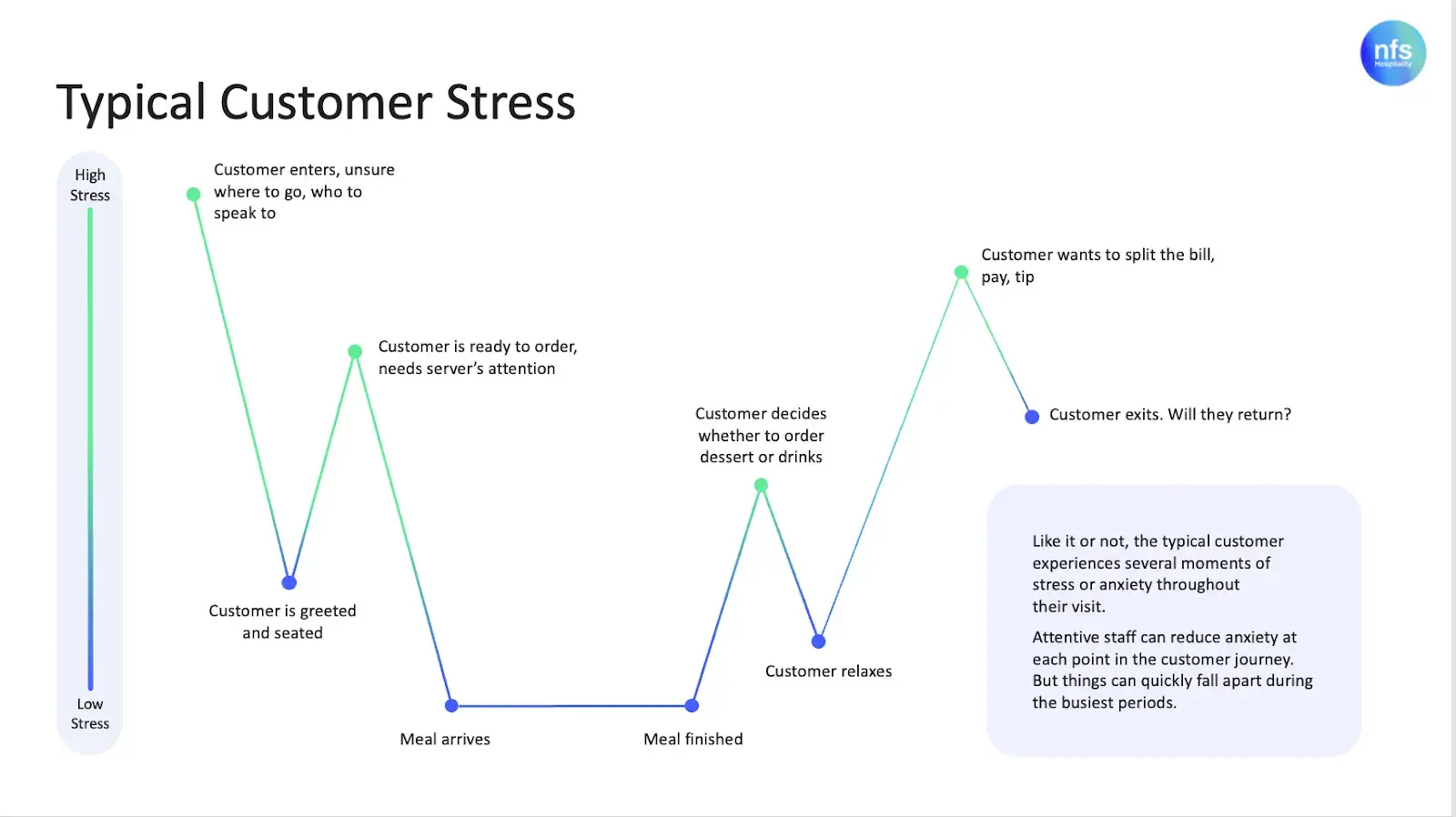
You’re shown to your table and the tension eases. When you’re ready to order and no one’s nearby, it creeps back in. Your food arrives and you relax, until you fancy another drink or dessert and the wait starts again. Then comes the bill – the stress of splitting it, tipping, and waiting for the card machine. That final spike hits just as you hoped the night would end smoothly. Only when you step outside does the pressure lift. These hidden stress points shape how you feel about the entire experience, often more than the food itself. These moments feel emotional to guests, but they’re operational at their core.
“The guest experience begins long before the food arrives.”
Guests feel stress when the operation behind the scenes is under pressure. Slow ordering, missing items, overwhelmed staff, and clunky payment processes all stem from one issue – disconnected systems. These moments aren’t about the food. They’re about the systems supporting the team. When technology isn’t connected, everything slows down, and guests feel the impact immediately. This isn’t just a technology problem – it’s a sign that the wider hospitality ecosystem isn’t working in harmony.
“A smooth service creates a calmer, more enjoyable experience once guests walk through the door.”
Whether guests walk in or book ahead, their emotional journey starts early. When EPOS is connected to a smart booking system, the team knows who’s arriving, any dietary needs, and special occasions before the guest even sits down. It’s not extra tech; it’s a joined‑up journey that reduces stress and helps guests feel recognised and respected. This is what a true hospitality ecosystem looks like – booking, EPOS, payments, and operations all connected, all sharing information, and all working together instead of in silos.
“A booking is not just a transaction. It is the first chapter of the guest experience and journey.”
That first click on the EPOS is where the guest experience truly begins, and everything until the first bite is shaped by how smoothly that technology works.
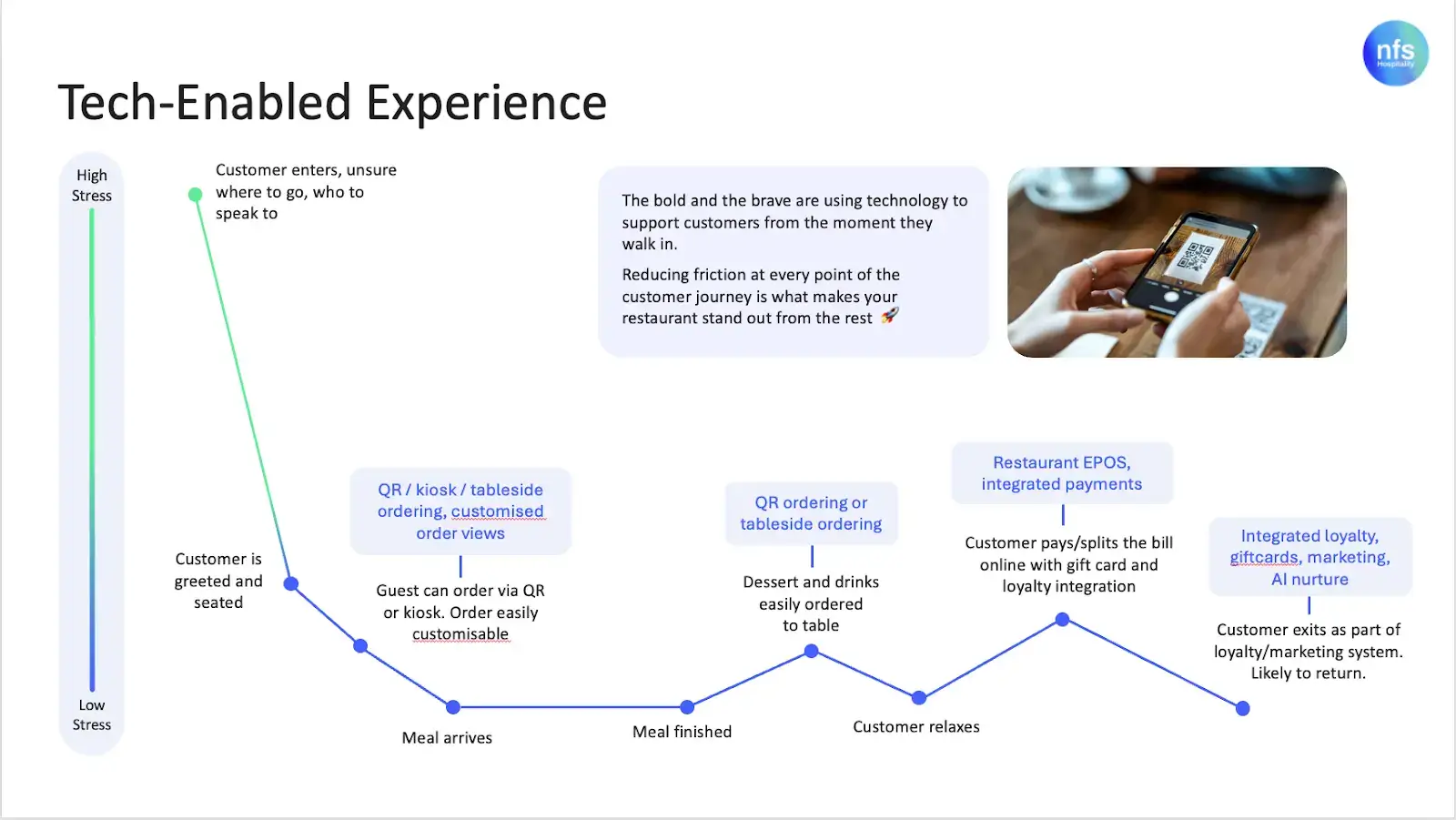
When the pressure eases for guests, it eases for staff too. A connected EPOS removes the frantic back‑and‑forth, the guesswork, and the bottlenecks that drain energy during service. Teams feel more in control, more supported, and more able to focus on hospitality rather than firefighting. And when staff morale rises, the atmosphere of the venue rises with it.
“The last impression is as important as the first; a seamless goodbye keeps guests coming back.”
When EPOS works quietly in the background, guests feel:
And that emotional ease leads to better reviews, higher spend, and more return visits.
Every venue has its own challenges and pressure points. That’s why NFS works closely with operators to understand what really happens on the floor – the bottlenecks, the stress moments, the guest expectations.
Rather than delivering a one-size-fits-all system, NFS focuses on building the right setup with operators, creating an environment that supports teams, fits existing workflows, and strengthens the guest journey from first click to first bite.
At the heart of this approach is a connected hospitality EPoS ecosystem – one designed to support smoother operations, reduce stress points, empower staff, and create consistency across sites. When the ecosystem works, the business works, and guests feel the difference.
This isn’t a transaction. It’s a partnership built around understanding how hospitality really operates and shaping the technology around it.
An Electronic Point of Sale (EPOS) system can optimise restaurant operations. This comprehensive software will manage all key aspects of your restaurant business, from order-taking to inventory control, providing you with one central system that can improve overall efficiency. However, it’s important to ensure you’re choosing the right EPOS software for your specific needs to truly reap the benefits of this powerful tool.
When narrowing down the available options, it’s important to consider more than just the features available. It’s essential to find an EPOS system that suits your operations, budget and long-term goals. Regardless of what type of restaurant you operate, you should evaluate your business needs and ensure the software is suitable for the day-to-day running of your business. Below, we have explored the key factors that will influence which EPOS system will work best for your restaurant and how you can make the most informed decision.
The type of restaurant you operate and the scale of your operations will play a crucial role in determining which EPOS system is best. For instance, smaller independent restaurants often have simpler workflows and fewer members of staff. Therefore, a user-friendly system that covers all the essentials, such as order-taking, payment processing and simple reporting, might be sufficient. Budget may also be a key consideration for smaller businesses.
On the other hand, larger restaurants or franchises typically need a more powerful system. Multi-location restaurants can benefit from cloud-based EPOS systems that provide centralised control over all sites and make it easy to manage operations from anywhere. Whether it’s updating menus or monitoring sales performance, having the ability to do so from a single dashboard offers several benefits and can streamline operations.
Whether you have a simple menu that doesn’t change much throughout the year or a complex menu with multiple promotions and seasonal offerings will also impact which EPOS software is best suited to your needs. If your menu includes various customisation options and multiple courses, an EPOS system that sends orders directly to kitchen display systems can be beneficial, reducing the likelihood of mistakes and speeding up service.
Review your entire current workflow, from order-taking to payment processing, and consider the current communication between front-of-house and kitchen staff. The best EPOS software for restaurants should solve any pain points, such as offering tableside ordering to reduce wait times and optimise table turnover, or tracking inventory in real-time to update menus and prevent customer disappointment.
A restaurant EPOS system should do more than just process transactions; it should integrate with the other tools you rely on. When your EPOS software speaks to key systems, such as your reservation platforms, loyalty programmes and omni-channel ordering solutions, you can benefit from a seamless flow of information.
Look at which systems you use at different stages of the customer journey and consider how integration can streamline operations. When your software is in sync, it will improve accuracy and efficiency, and prevent issues with data loss.
Your budget is always an important factor when investing in new software. When it comes to a restaurant EPOS system, you need to consider the total cost of ownership, not just the upfront price. In addition to initial setup costs, covering hardware and installation, there are often ongoing subscription fees to be aware of.
Factors such as number of users and locations, amount of cloud data storage, customer support and updates, and also additional features will all impact the monthly costs associated with an EPOS system. When comparing costs, it’s important to factor the long-term return on investment into your decision too. While one EPOS system may cost more, if it offers significant benefits that can boost revenue, it could be more cost-effective over time.
It’s wise to think ahead when you’re investing in new software. Choosing an EPOS system that can grow with your business can save you a lot of hassle in the long run. You can avoid having to switch platforms and re-train staff if your small business expands into new locations.
A future-proof EPOS solution should allow you to add more locations, terminals or users easily, supporting business growth. It should also support updates and new technologies, ensuring your restaurant remains compliant with industry standards and continues to meet customer expectations. With improved business intelligence, EPOS software can even help you grow your restaurant quicker. By using reporting tools, you can make data-driven decisions and reach your goals much sooner.
Your software should always be straightforward to use, for both customer-facing and back-of-house teams. A confusing interface can slow down service and result in mistakes that negatively affect customer experience, especially during busy periods. Training should be simple too, making it easy to take on new staff and hit the ground running.
For restaurant EPOS systems, responsive customer support is essential. Whether you need help setting up hardware, adding new features or troubleshooting an issue, a provider with reliable technical support can make a huge difference. You can have peace of mind that your EPOS software is robust and reliable, and you will have an uninterrupted service.
Choosing an EPOS system is a key decision and one that will have a direct impact on your operations moving forward. At NFS Hospitality, we understand that no two restaurants are the same, and we deliver the best of breed software. Our EPOS solutions are designed to adapt to a wide range of operational needs, and they provide you with one smart, centralised system.
Our expert team will work closely with you to evaluate your current setup, identify your pain points, and recommend tailored solutions that suit your goals and budget. We have experience working with the biggest brands in hospitality and invite you to read some of the case studies on our website. If you have any questions about EPOS software for restaurants, feel free to get in touch with NFS Hospitality today.
Digital transformation shapes every corner of the business landscape, and the restaurant industry is no exception.
The dynamic, fast-paced nature of this sector demands tools that not only keep up but push the pace on efficiency and customer satisfaction. Driving profits and increasing customer lifetime value are also key goals vital for long term growth.
The restaurant EPOS system is the pivotal technology that modern restaurants cannot afford to overlook. It is clear a restaurant POS system software is more a necessity than a luxury in 2024. Integrated with other hardware and software solutions it can become the centrepiece of your restaurant operation.
There are many reasons why you should use a POS system for restaurant. This blog explores five of the main reasons.
A sophisticated POS system for restaurant is designed precisely to streamline every operational aspect—from taking orders directly at the table to processing payments swiftly and all points in-between.
The system minimises human error, reduces waiting times, and ensures a smooth workflow between the kitchen and the dining area.
Staff can manage orders more effectively, with updates and changes instantly communicated, leading to a significant improvement in service speed and customer satisfaction.
A solution such as the Aloha restaurant POS system software enhances speed and efficiency in several ways:
Faster order preparation: Aloha integrates seamlessly with kitchen display systems (KDS). Orders can be sent from the handheld device to the restaurant POS system software to the KDS in seconds. No more jammed printers and flying pieces of paper, the integration brings efficiency. Orders can be fired to multiple prep areas.
Streamlined operations: the Aloha EPOS restaurant software streamlines operations, increases efficiency, boosts revenue, and offers features like fraud prevention, labour control, stock control, allergen control, and more to enhance overall efficiency in managing a restaurant business.
Guest management and labour control: the system helps in managing guest reservations, seating, ordering, billing, loyalty programs, and also assists in scheduling staff efficiently to keep labour costs down and maximise productivity.
Mobile ordering and stock control: with robust handheld technology for mobile ordering and tight stock control features like accurate purchase forecasting and real-time management reporting, Aloha EPOS ensures efficient transactions at the front of the house and effective inventory management.
In today’s market, a memorable dining experience is as much about the service as it is about the food. A restaurant EPOS system enhances customer experience by ensuring orders are taken accurately and bills are settled quickly. Moreover, with integrated CRM capabilities, restaurants can offer personalized services based on customer preferences and past orders. This level of personalization and efficiency not only delights customers but also encourages repeat business, fostering loyalty in a competitive landscape.
Fully integrated with Aloha restaurant EPOS software, the Paytronix guest engagement platform offers several features that enhance customer experience, including:
Loyalty programs: Paytronix provides a comprehensive loyalty program that helps businesses engage with customers and improve loyalty programs.
Online ordering: The platform integrates online ordering with loyalty programs, creating a seamless experience for customers and increasing order frequency by, on average, 18%.
Omnichannel messaging: Paytronix delivers omnichannel messaging capabilities, allowing businesses to reach customers through various channels for a more personalized experience.
AI Insights: by incorporating Artificial Intelligence capabilities, Paytronix enables businesses to gain deeper insights into guest behaviours and preferences, leading to more tailored and effective marketing campaigns.
Payments integration: The platform includes payment integration features, streamlining the payment process for customers and enhancing overall convenience.
Effective inventory management is vital for maintaining profitability in the restaurant business. With a restaurant EPOS software, owners can keep a real-time tab on stock levels, track ingredient usage, and even predict future inventory needs based on historical data. This precision reduces waste, lowers costs, and ensures that the restaurant never runs out of customer favourites.
Automated alerts for low-stock items and the ability to place orders directly with suppliers make inventory management a breeze, allowing restaurateurs to focus more on their culinary creations and less on backend operation.
The EPOS software for restaurant offers advanced reporting and analytics tools that provide insights into sales, customer preferences, and operational efficiency. These data points are invaluable for making informed decisions about menu changes, marketing strategies, and operational improvements. By understanding customer behaviour and operational efficiencies, restaurants can tailor their offerings to meet market demand, optimize costs, and boost profitability.
Aloha EPOS offers real-time reporting solutions, enabling businesses to track sales efficiently. Moreover, Aloha EPOS provides a 360-degree view of the business with the ability to monitor key performance indicators (KPIs) in real-time from anywhere thanks to Aloha Pulse.
In an age where contactless and mobile payments are becoming the norm, restaurants need to adapt to these changing consumer preferences. A modern POS system offers a variety of payment solutions, ensuring that transactions are not only fast but also secure. These systems support the latest in payment innovation, providing customers with the convenience and flexibility they expect.
Aloha works with mobile payment solutions providers to offer an intuitive and convenient mobile payment option to your diners.
With the mobile payment app customers can:
Pay at table – they can check, split and pay their bill at the table without a waiter. Ideal for groups
Order and collect – customers can order and pay for their food for pick up
Order at table – customers can place their order for food, extras and drinks without a waiter
At the same time, you enjoy two key benefits:
Enhanced operations – save on average 7 minutes per table
Improved loyalty – you can offer promotions and tailored offers to your guests
As we move further into 2024, the argument for adopting a POS system in restaurants becomes increasingly compelling. From streamlining operations and enhancing customer experience to providing actionable insights through data analytics, the benefits are clear to see.
Implementing a restaurant POS system is not just about keeping pace with technology—it’s about setting your operation apart in a crowded and competitive field. Embracing this technology is a step toward not just surviving but thriving in the dynamic world of the restaurant industry.
Our best of breed Aloha solution will help you break from the pack. Contact us today for impartial advice on the best solution to meet your needs.
Restaurant operations are notoriously difficult to organise, because of their immense complexity – not only are there everyday issues of the business to sort out, but there are also the ever-evolving behaviours of customers to satisfy.
It’s not surprising, then, that the integration of restaurant management technology has become the secret of success for many operations.
Restaurant systems are sophisticated solutions designed to streamline operations, enhance customer experiences and elevate profitability. From optimising order processing to facilitating inventory management, it’s fair to say that these systems are revolutionising the way modern restaurants operate.
A restaurant management platform integrates various functionalities, including point of sale, inventory management, and customer relationship management, eliminating the need for multiple disparate systems.
As your restaurants grow and evolve, management systems offer scalability, allowing for seamless expansion and integration of additional features and modules.
In helping you grow your business in what is always an incredibly crowded market, restaurant management software helps give you a competitive edge, whether you run a single independent outlet or a whole group.
Restaurant’s relationships with customers have always been intense and important, but since the days of the pandemic they have evolved to cater for new and changed demands.
Customers now have a strong emphasis on convenience and speed as well as on the quality of food and service you provide. Restaurant systems that include EPOS are an immense help in this area, making it quicker for customers to place their order and also to pay.
For instance, serving staff provided with Epos on a tablet or phone can send orders direct from the table to the kitchen so food preparation can begin immediately, and service is faster. There’s no room for human error, either, so fewer dishes get sent back and there’s less waste.
Once the meal is over, your staff can take payment at tableside so the customer can pay and go. It adds up to a satisfying customer experience that encourages loyalty and repeat visits.
Restaurant management systems also make it easy for customers to order online or to make a table reservation, a valuable and convenient service that also cuts down the time your staff have to spend on the phone.
The complexity of restaurant operations can mean it’s tricky to keep an overview. A restaurant management system is available online and provides up to date reports on all aspects of your business from automated inventory showing stock levels to sales.
For groups, this online availability of reports is invaluable when keeping track of the position of the business at any given time.
Data has become the lifeblood of most organisations these days. Coupled with effective analysis, it gives insight into everything from customer preferences to your busiest times and best-selling dishes. It can even provide forecasts to help you anticipate when extra labour etc is likely to be required.
A real hot potato in the industry, which has seen such labour shortages in recent years that some outlets have decided to curtail their hours or even shut on certain days of the week.
Restaurant management systems can help you provide a healthy and enjoyable working environment that encourages valuable staff to stay and reduces the time you need to spend recruiting and training.
A restaurant order management system reduces the amount of time serving staff need to spend running back and forth to the kitchen with orders, and also minimises admin when it comes to taking reservations – when customers can do it themselves online, staff involvement is minimised.
It all allows more time for your people to engage with customers, building loyalty and creating the friendly impression they will appreciate – and it makes the working day more rewarding for your staff and encourages them to stay.
Managers can also track employee performance metrics, identify training needs, and recognise top performers, fostering a culture of accountability and excellence.
The cost of living crisis has exacerbated problems for the industry as restaurants struggle to cope with increases in the cost of supplies and balance that with keeping customers happy.
A restaurant order management system will give you far better control of your stock, providing real-time information on inventory and also on your supply chain.
The same systems make it easier to control labour, highlighting busy and quiet times and enabling you to have the right staffing levels at the right times.
A further enhancement that keeps things running smoothly is integration with restaurant maintenance software, which helps identify potential equipment issues, enabling proactive maintenance and minimising downtime.
Using the reports generated by your restaurant software on sales, expenses and profits, empowers you and your managers to make data-driven decisions and take measures that optimise financial performance.
By tracking costs and identifying areas of inefficiency, restaurant management platforms enable proactive cost control measures, ultimately boosting your profitability.
Special offers can make a huge difference to your hospitality business, keeping existing customers happy and enticing those who have never tried your restaurant to give it a to.
When it comes to loyal customers, your restaurant management platform and CRM can give incredible insight into their preferences. By capturing data every time they book or eat, you identify their preferences so you can produce timely and appropriate marketing emails that you know will hit the mark.
For instance, if you know they visited last Valentine’s Day, you can offer them two free glasses of champagne this year; or you can send them a birthday greeting that will put your restaurant top of their mind when they want to celebrate.
Restaurant management software also helps you with your social media presence, alerting you to any adverse reviews so you can put the situation right immediately and put a shine on your reputation.
Deploying carefully-selected restaurant software represents a strategic investment in operational efficiency, customer satisfaction, staff retention and financial performance – and it’s an investment that provides definite ROI.
By leveraging the power of technology, you can optimise your processes, empower their staff, and deliver unparalleled dining experiences. From order management to inventory control, these systems serve as the cornerstone of modern restaurant operations, paving the way for sustained success.
Whether your business is a bustling bistro or a multi-location group, the benefits of a restaurant management system are undeniable. And in a world where customers are increasingly demanding, staff are hard to find and competition is raging, it can give you the edge you need to succeed.
Discover more about how a restaurant management system will benefit you:
In today’s fast-paced world, customers prioritise convenience, speed, and personalised experiences, driving the escalating demand for online food ordering, delivery, and takeout. While off-premise dining boasts advantages like increased revenue, an expanded customer base, and higher check sizes, some restaurant owners remain hesitant due to concerns about losing valuable in-person customer interactions. To address these apprehensions and empower restaurateurs to elevate their online ordering experiences, here are four insightful tips for staying connected with customers in the digital realm.
Consider your restaurant’s page on third-party platforms as a virtual storefront—a canvas that needs to captivate potential customers. Infuse it with the essence of your brand’s voice and personality. Craft a compelling introduction that narrates the story of your restaurant, its culinary offerings, and your vision. The menu, the heartbeat of the experience, should showcase delivery-friendly, high-quality, and customisable dishes.
Engage potential customers through visually appealing content, such as high-definition images of your culinary creations. Complement this with imaginative dish names and clever descriptions that evoke curiosity. For instance, would you prefer ordering a “Large Cheese Plate” or a “Sweet Dreams are Made of Cheese Plate?” Descriptions offer a unique opportunity to let your brand personality shine in the digital space.
Social media stands as a potent tool for fostering customer interaction. Establish a connection with your followers through contests, giveaways, and user-generated content. Organise engaging photo contests, encourage customers to share their culinary experiences, and create custom hashtags exclusive to your restaurant. Use the platform to share behind-the-scenes stories, communicate hygiene measures, and introduce the faces behind your brand.
Invest time in nurturing your social media accounts to establish a genuine connection with customers. The organic growth of these accounts over time can serve as a cost-effective means to disseminate messages to your loyal customer base.
Once an order embarks on its delivery journey, it’s essential to maintain a connection with the customer. Employ a point-of-sale (POS) system integrated with your online ordering solution to ensure precision and completeness. Timeliness and order accuracy resonate deeply with customers, making it imperative to get these aspects right.
Elevate customer interaction by personalising food orders. Consider including handwritten thank-you notes, short messages, or branded freebies like stickers or utensils. Thoughtfully branded packaging contributes to a unique ‘unboxing’ experience, potentially prompting customers to share their delight on social media.
Consider offering a ‘build your own’ meal option to provide customers with an ultra-personalized dining experience. This showcases an understanding of personal preferences without burdening your kitchen staff.
While reaching customers who utilise third-party services can be challenging, actively seek feedback through alternative channels. Utilise polls, surveys, and social media platforms to encourage customers to share their thoughts. Include a feedback card in delivery and take-out bags, complete with a custom QR code for seamless online submissions. Consider incentivizing feedback with discounts or coupons.
Monitor and respond to reviews on delivery platforms, transparently communicating actions taken based on feedback. For those with their own delivery service or online ordering app, leverage customer relationship management (CRM) data to send personalised offers, discounts, and feedback forms.
In conclusion, fostering customer interaction in the online realm may pose challenges, but it’s far from impossible. By tailoring your platform, leveraging social media, infusing a personal touch into each order, and actively seeking feedback, you can bridge the gap and forge meaningful connections with customers. Embrace these strategies not only to streamline operations but also to cultivate growth and customer loyalty in the competitive landscape of online food ordering.